The Legend of Mingyue - Reviews

The Legend of Mingyue
+Add to Custom List
Sort
Add review
... Read More
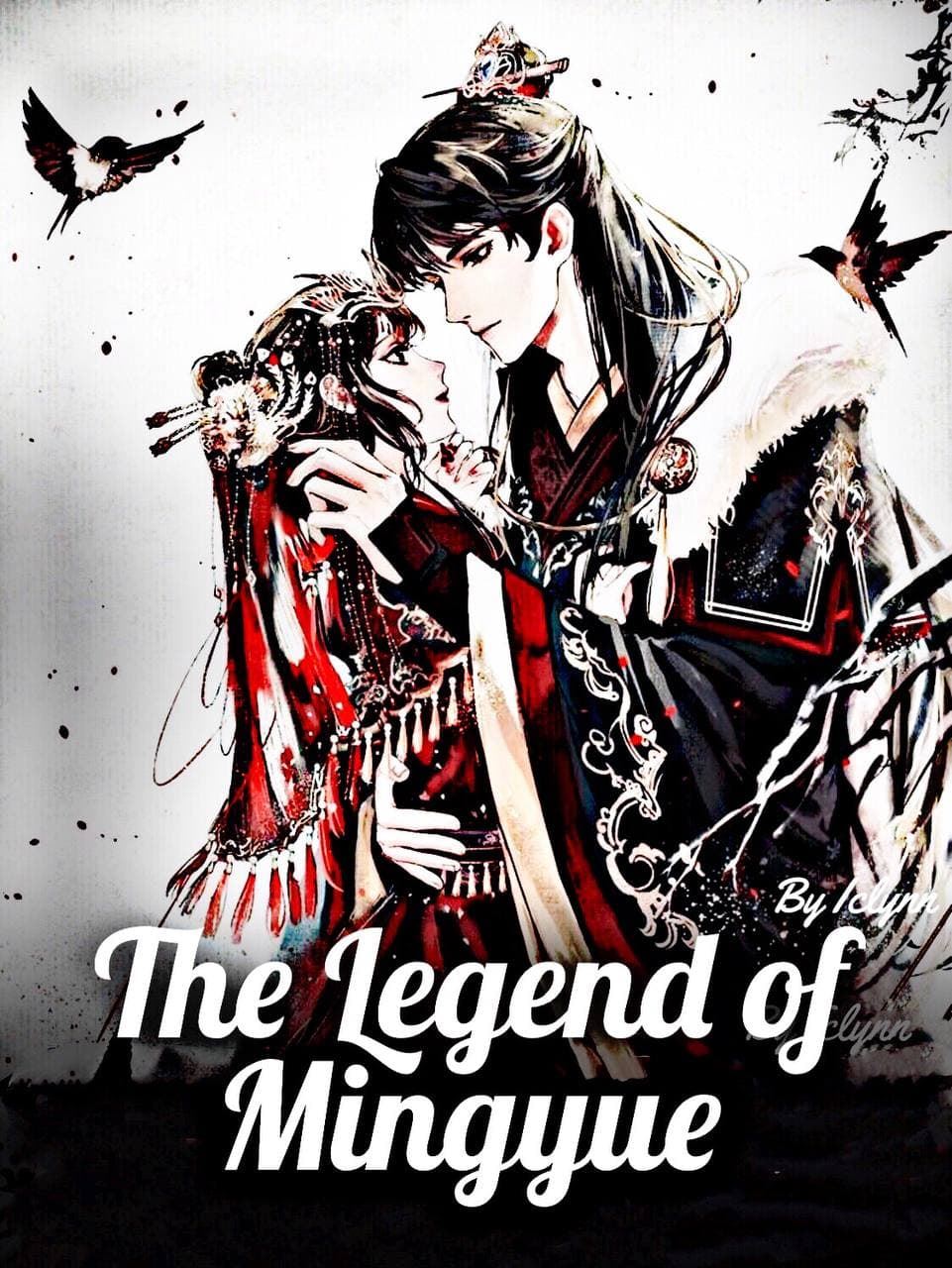
Let me just start by saying the visual storytelling in these chapters is absolutely INSANE and I need the art team for the adaptation immediately. The demon kill scene opens with this incredible imagery — a man trembling, about to be slain, and then a BELL SOUND cuts through the darkness. Not a sword clash, not a magic blast, but a bell. And then we get the lady in red appearing under moonlight, face completely veiled, holding a red tambourine as her weapon. Red against dark, veil hiding beauty, the instrument of death being something associated with performance and joy. The dissonance is haunting. Blood flying from the demon's eyes and nose, the body falling, then silence returning. And THEN the lady speaks with this 'gracious voice' from behind the veil and vanishes. One moment she's this terrifying supernatural force, the next she's gone like smoke. The man is left standing there, stunned, processing what just happened. This is cinematic framing at its finest. Then we cut to the tea house near the city gate — and the shift in atmosphere is remarkable. From nighttime terror and blood to daylight gossip and tea. But the author doesn't lose the atmosphere in this transition. The tea house has a white silk curtain separating the lady in white (Feng Mingyue) from the rest of the room. She's physically separated, observing, part of the space but hidden from it. The silk curtain is such a perfect metaphor — she's visible to us, the readers, but invisible to the people gossiping about her. The dialogue itself builds the world in real time. Ah Zhao's companion casually drops the entire history of Dark Lord Limu — the demon massacre three years ago, the half-night wipeout, the mocking critics who were silenced, the black-robed figures with half-masks. All of this comes out in what sounds like natural conversation between two friends catching up. No info-dump energy, just people sharing gossip the way people actually do. And the color palette across all these scenes! Red (Lady Mingzhu's dress and tambourine), black (Dark Lord Limu's robe and mask), white (Feng Mingyue's silk curtain and dress). These aren't accidental choices. The visual coding is so precise that even without knowing the full story, you can feel the thematic weight of each color.
... Read More
Okay so let me just—this chapter is absolutely filthy in the best way. I went in expecting another scheming transmigration trope and got hit with several layers I didn't see coming. First, the Long Huayan thread. "Is there any other choice?" He says it so casually while fiddling with a golden bell like this isn't a life-altering decision. The emperor literally dropped a joke marriage on the most powerful duke in the capital and Long Huayan just... accepts it? But then he murmurs "Maybe this is also a good thing" while looking at that damn bell and I am NOT okay with how intriguing this is. This isn't a resigned acceptance. This is someone who sees something nobody else does. Then cut to Feng Mingyue and her brother under the moon, which is such a serene image before she drops the Yunru Restaurant reveal. She's not just some transmigrated fool playing dress-up—she's a BUSINESS WOMAN. A restaurant owner with bodyguards named Sheng Yi and Wei Xue who literally leap out of trees. And her plan for Feng Baiming? Instead of giving him money she makes him "count all the money the restaurant earned every month" which is honestly so perfectly evil I'm wheezing. She turns his righteous independence into an accounting job and he can't even argue back. But the real plot flex is the pouch. Feng Mingyue orchestrates the whole scapegoat operation—leaving evidence for Feng Zhongshan's men to find, letting them draw their own conclusions, and watching the Old Master sacrifice a maid to protect his genius daughter. "Tomorrow, take Jue Ching to the main hall." That's it. That's the line that made me sit up straight. The political machinery is already grinding and she's just sitting in the garden drinking tea, listening to Mei... The ending of this chapter (or what we have here) cuts off right as everyone gathers in the main hall, and I'm already screaming because the reader knows exactly what's about to go wrong. Feng Zhongshan thinks he's controlling the narrative but Feng Mingyue set every piece on the board. Plot-wise this is delicious.
... Read More
"Someone killed her by using poison." Just like that. No drama, no emotional framing, just cold factual delivery. This is Feng Baiming's voice throughout this entire passage and honestly it's one of my favorite character voices I've read. When he describes Feng Ling's smile—"that woman seemed to smile, but her eyes didn't smile at all, it was heartless and filled with ridicule"—you can feel the teenager's bitterness and observational skill simultaneously. His language is precise, sharp, and completely unguarded because he has no reason to perform emotion for anyone. Compare that to Feng Mingyue's dialogue, which is warm and teasing but carries an underlying steel: "Sometimes you shouldn't believe so much in rumors. Besides, aren't you the same as me? Concealing your power, hm?" She tests him immediately, probes, and then switches to genuine care when she offers to teach him. And then there's Fu Hanji's whole personality expressed through dialogue—"Your highness, I'm not a saint doctor. You're not an immortal either. Can you please be more extra careful next time?" This man is genuinely exhausted by his own concern, and the narrative voice captures his exasperation perfectly. The contrast between Feng Baiming's icy minimalism and Fu Hanji's warm rambling creates this incredible verbal texture. Even the silence speaks—Feng Baiming's quiet acquiescence when asked about his mother's death says more than any monologue could.
... Read More
I need to talk about this one moment that absolutely wrecked me. When Feng Mingyue asks about his martial arts, Feng Baiming hesitates before revealing the truth: "I learn it myself. Mother gave me a cultivation book, she bought it secretly when she went out." That's it. That's the whole emotional weight of the chapter compressed into one sentence. His mother is dead, lying in that coffin, and her last gift to him was something she risked buying secretly—a cultivation book, knowledge, power—so he could survive in a world that clearly didn't want him to. She knew something was coming, or she just wanted her son to be protected, and now she's gone and he's alone in this manor with people like Feng Ling who poisoned her. And Feng Mingyue, who reads this instantly, doesn't offer empty comfort. She says "Do you want to learn a detailed lesson?" and then simply, "I'll teach you personally." She's essentially stepping into the role his mother couldn't fulfill anymore. There's also this underlying current with the injured man on Jiangshi Mountain—hearing about the forced marriage and going completely still, Fu Hanji watching him with that mixture of worry and helplessness. Someone there cares about the Feng family's Second Miss in a way that transcends politics, and I just know that emotional thread is going to unravel in ways that hurt so good.
... Read More
The whole chapter orbits around food and its betrayal. The chef didn't just serve a bad meal — the implication is that he served something poisonous, at the Third Miss's direction. Food in this house was never just nutrition, it was the weapon. And Feng Mingyue is turning that same logic back on him by making him eat his own consequences. There's this recurring image of mouths and silence running through the text. Servants who "didn't even dare to breathe." The chef who couldn't speak the truth until his life was on the line. Feng Mingyue who yawns openly in front of everyone who was too scared to make a sound. Who gets to speak and who stays silent is really the question underneath the plot. The teacup is another symbol I can't shake. Warmth, domesticity, refinement — all the things associated with a lady's proper behavior. She holds it while dispensing violence. Is she corrupting the symbol of femininity, or is she showing that those symbols were always just props? The old Feng Mingyue might have drunk the poisoned tea and died. The new one sips her own cup and lives. And the number 30 reducing to 20 — is that mercy or cruelty dressed as mercy? She gets exactly what she wants either way. The chapter seems to be asking: when the system is rigged against you, do you play by its rules or break the table entirely?
... Read More
I need to talk about the spiritual ring because it is doing SO MUCH thematic heavy lifting in this short passage. On the surface, it's a plot device — oh look, she has ten million gold coins and rare herbs stored inside, convenient! But if you actually sit with it, the ring is a profound symbol of maternal love that outlives the mother. The text specifically notes: 'the white clothes were clearly prepared by the former madam for the original host. However, it was a pity that the other party couldn't use it.' And then: 'Looks like the former madam knew pretty well that her daughter absolutely fit nicely in red and white. She basically arranged everything for her, which made Feng Mingyue feel warm on behalf of the original host.' This is the author quietly weaving grief into the narrative without ever having a single dramatic funeral scene. The mother is dead. The original host never used these clothes. And now Feng Mingyue, a complete stranger who inherited this body, is the first person to actually appreciate what was meant for someone else. She feels warmth 'on behalf of the original host' — meaning she mourns a mother-daughter bond she never had, for a girl she never knew. The ring itself is another layer: a object of infinite storage, literally holding 'ten million gold coins' and carefully arranged outfits, suggesting a mother who planned for every possible future her daughter might face — even ones that never came to pass. It's heartbreaking in the quietest way. And Feng Mingyue's reaction isn't melodramatic. She just hums a tune, plays with the ring, grins from ear to ear. But underneath that casual exterior, she's carrying something heavy. The poison itself — '7-Days Living' — could also be read symbolically. Seven days, a full cycle, after which death is certain. It mirrors the idea that the original host's 'seven days' are over, and something new is being born from the ashes.
... Read More
I mean, okay, let me just say this: the transmigration trope is about as old as dirt, but I will admit there's something weirdly satisfying about the way this opens. Our girl dies in a car accident—boring, sure—and then suddenly she's inheriting this completely different life. But here's what actually got me hooked instead of rolling my eyes: the memory dump. Instead of just lazily info-dumping everything at once, the narrative actually lets us discover things alongside Feng Mingyue herself. She experiences the memories crashing into her all at once, and the author uses that chaos to layer in the backstory. That's smart writing. The original host wasn't just some generic victim—she had a specific, detailed downfall. Bullied by her stepsisters, ignored by her father, left to die from a treatable illness because nobody bothered to call a doctor. And then her dying wish? Revenge. Of course it is. That last line—'the soul of the current Feng Mingyue who had just died in the car accident came to reside in her body'—that's the kind of moment that makes you want to immediately keep reading. Because now you're wondering: what's our new protagonist actually going to do? She's going to inherit a weak body, a neglected reputation, and enemies who don't know she's been replaced. Does that give her an advantage, or is she walking into a trap?
... Read More
Okay so I need to talk about the guy in the light green robe and Xiao Xue because WOW. This little moment where a demon rushes him and BAM an arrow takes it down before it can even touch his robe? That's it. That's the tweet. The whole thing. Wei Xue's line 'Can you be more cautious next time?' with that tone described as having 'a trace of helplessness' — you can just IMAGINE the voice. Soft, gentle, but also like... yeah, we've been through this before, love. And his response 'Aren't you here beside me?' is genuinely one of those lines that made me stop reading for a second and just stare at my phone screen. They're both new subordinates who Feng Mingyue just took in, right? But already they have this whole dynamic between them — the flute summoner and the sniper. He plays music that summons snakes; she picks off targets from behind. Their combat styles literally complement each other. And that moment where they smile at each other before continuing to fight? Chef's kiss. I also love that Feng Mingyue herself treats these people — the demon she captured AND her new human recruits — with this weird mix of authority and genuine care. She stuffs pills into each of her four people's hands before the battle, whispers tactical instructions. She's not just a boss; she's someone who makes sure her team is actually ready to fight. That's rare in these novels.
... Read More
Let me just start by saying: the Feng family invited the Duke of Xing AND his brother to Concubine Xu's funeral. That is NOT a casual invitation. That is a political signal being sent, and everyone in the room knows it. Fu Hanji is the first to push back: 'The Feng Family has always been on the emperor's side. What's more, I heard that the second young miss of the Feng Family doesn't have a good relationship with her father.' He's right to be skeptical. This isn't a friendly gesture — it's calculated. Long Huayan puts it most bluntly: 'They just want to give us some face. Even if they aren't on our side, offending us is not a good way for them.' Transactional. Cold. Accurate. But then Changlei drops the real question: 'How old is she?' And when he hears she's seventeen, one year younger than the crown prince, his theory explodes — 'Is it possible that she is also one of the crown prince's women?' This is the plot actually GETTING INTERESTING. The Feng family's second miss, rumored to be close to the crown prince, now apparently linked to the Duke of Xing through a funeral invitation. The political web is thickening. What I find most fascinating is Long Huayan's reaction to all of this. Everyone expects him to have a plan — 'In their hearts, Long Huayan had always been prepared before doing something' — but instead he just says 'Let's wait.' And then later, alone in his thoughts, he murmurs 'Xiao Yue' like he's already made up his mind about something none of them understand. The engagement is announced almost casually here but I can feel the ground shifting. The Feng family thinks they're being smart, playing both sides. The crown prince probably has his own designs on Miss Feng. And Long Huayan — whose heart apparently belongs to someone named Xiao Yue — is about to marry into this mess. The convergence of these three storylines is what makes this chapter so gripping. Everyone thinks they're making a move, but nobody knows the full board.
... Read More
The dialogue here really captures Feng Mingyue's personality - she's decisive, occasionally sarcastic, but always purposeful. When she says "hiding is not a way to solve a problem either," that's not just plot advancement, that's character definition through speech. Her conversation with Fen Xiu about restoring the demonic clan's power feels natural. There's no exposition dump - she states her intentions directly, Fen Xiu responds with practical concerns, and they work through it together. The dialogue reveals their personalities without needing narration to explain. The maids' reactions to Concubine Xu's death feel authentic. Li Qin and Mei Li's shock, their confusion about why a low-key concubine would die, their speculation about Madam Wu Zhisu's involvement - it all sounds like real people processing shocking news. Fen Xiu's whispered explanation about the memory erasure is particularly well-done. She's cautious, strategic, but also shows she cares about the moral implications. "Those Master's people are not bad people either" - that line reveals her internal conflict without being melodramatic. Feng Mingyue's response to learning about Feng Baiming - asking his name, feeling pity, connecting it to her own experience - all shown through her questions and reactions rather than stated directly. The dialogue carries emotional weight without becoming overwrought.
... Read More
Feng Mingyue's dialogue in this chapter is chilling precisely because it's so polite. She never raises her voice. She uses words like "gentle smile" and "no loss in punishing you" and "I will punish you lightly" while doing the exact opposite of light. The gap between what she says and what she means is where the real voice lives. Compare her to the chef: "T-this servant…this servant…" Stuttering, self-interrupting, utterly without composure. His dialogue is all fragmentation and hesitation. She speaks in complete, measured sentences. It's a verbal cage match and she wins without ever throwing a real punch. The maids' dialogue is also worth noting for how restrained it is. "Miss, you flatter us" — perfectly Proper, perfectly invisible. They're trained to be unseen weapons. And that final line, "learn it next time," said casually to the servant boys while the chef is still recovering... that's Feng Mingyue's voice settling into something new. She's not performing authority anymore, she's just using it. The narration itself has this dry, almost amused tone that matches her internal state. Phrases like "nobody knew what she was thinking" and "the words seemed simple, nonetheless" give us access to her perspective without full confession. It's intimate without being confessional.
... Read More
There is a scene in this chapter that I keep coming back to, and it's not the most dramatic one — it's actually the quietest moment, and it wrecked me. Feng Mingyue tells Mei Li and Mei Hui that curing the poison requires soaking in medicinal water for eight hours, and that it will be 'really painful.' She doesn't push it on them. She asks, explicitly, 'can you really bear the pain?' And their response — 'Yes we can, no matter how painful it is, we can endure it' — is delivered with eyes filled with determination. They are seventeen-year-old girls facing a death sentence, and the only thing standing between them and death is a master who might be the only person in this entire world they truly trust. That line hits differently when you realize: they aren't just enduring pain for survival. They're enduring it for someone who chose to save them. What makes this emotionally rich is the reciprocity. Feng Mingyue doesn't just administer treatment and walk away. She personally prepares the remedies, she pulls out clothes her own deceased mother made, she covers her face with a veil to protect their identities when they go out together. Every action says: I see you, I won't let you die, and I'll make sure no one else knows your weakness. The mother-daughter subplot is the hidden emotional core here. The former madam arranged red and white clothes for a daughter who never got to wear them. Now Feng Mingyue, who literally has no biological connection to either the mother or the original host, becomes the first person to honor that love. When she feels 'warm on behalf of the original host,' that's the book's emotional language speaking — it's saying that love doesn't require blood. It requires someone willing to carry it forward. And the healing process itself — eight hours of agonizing medicinal baths — is essentially a metaphor for transformation. You have to go through fire to become someone new. Both the maids and Feng Mingyue are being forged in this moment.

Leave a comment

You must be logged in to leave comments. or
