The Group-Pampered Cub’s Thoughts Are Read, and the Capital’s Big Shots Chase After Her to Spoil Her - Reviews

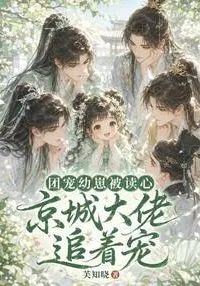
The Group-Pampered Cub’s Thoughts Are Read, and the Capital’s Big Shots Chase After Her to Spoil Her
+Add to Custom List
Sort
Add review
... Read More
The dialogue in this section is absolutely razor-sharp. Every conversation between Jiang Xiu and Wu Xiong reads like a fencing match where both are trying to land blows without showing the wound. Let me highlight a few exchanges that made me stop and re-read: Wu Xiong: "Between husband and wife, why be so distant?" Jiang Xiu: "Did the Marquis come today for Concubine Lin or for the birthday banquet?" In one line, Jiang Xiu strips away all of Wu Xiong's false concern and forces him to confront his actual motives. She's not playing his game of emotional manipulation. She's naming it. Then this exchange: Wu Xiong: "I know that in my heart." Jiang Xiu: "You want me to take charge of the birthday banquet?" She hears exactly what he's saying — four words: he wants to use her again — and she doesn't even acknowledge the emotional bait. She just pivots to the practical matter. But the real masterpiece is when Jiang Xiu turns his own words against him: "Didn't the Marquis say yesterday that Mother is toiling over household affairs and I shouldn't stand aside? I'm now willing to help with the preparations, which is already my utmost effort. But since I've handed over the household keys, I naturally can't use the household funds without authorization." She uses HIS complaint about her not helping as the justification for NOT spending money. It's so elegant it hurts. And then she tops it off with: "Otherwise, if word gets out, others might think I disrespect my mother-in-law, pretending to relinquish control while secretly holding onto it." She's essentially saying: if I spend money on this banquet, people will think I never actually gave up power. So I can't spend money. Logic so airtight he can't argue with it. And Fu Fu's inner voice? "Brilliant." Just one word. Perfect. The author's narrative voice also has this wonderful dry wit. When describing Wu Xiong's thoughts: "In the past, Jiang Xiu had always yielded to him. When had it ever been his turn to seek her out again and again?" This is the narrator gently mocking him while he remains completely unaware.
... Read More
This section is packed with symbolism that rewards careful reading. Let me unpack a few layers. The most powerful symbol is the old screen from the storeroom. It depicts the frontier — mountains, a lone city, battle flags, galloping horses. From a distance it looks impressive. Up close, the edges are worn. This is the Zhongbo Marquisate itself: a reputation built on appearances, held together by Jiang Xiu's dowry and management, now showing its cracks. Old Mrs. Wu's decision to display it anyway — "We'll make this banquet splendid!" — is the perfect encapsulation of the theme: the desperate performance of dignity when dignity is already gone. Then there's the concept of the "old almanac." Fu Fu says to Jiang Xiu: "Her little bits of future memories are now just an old almanac." This is the central thematic statement of the entire arc. Wu Ling believes her prophecies from a previous life give her power, but the world has changed. The border situation is different. Her uncle didn't die. Her predictions are useless — not because she's wrong, but because the context that gave them meaning no longer exists. This connects to a deeper theme about fate versus agency. Wu Ling thinks she's reading from a script. But Jiang Xiu is writing a new one. The contrast between Wu Ling's passive reliance on prophecy and Jiang Xiu's active strategic planning is the philosophical core of this section. The financial crisis is another layer of symbolism. The marquisate's inability to afford basic household expenses represents the collapse of a patriarchal system that always depended on women's labor and wealth (Jiang Xiu's dowry) but refused to acknowledge it. Old Mrs. Wu's anger at the diluted soup isn't just about food — it's about the humiliation of a matriarch who can no longer perform her role of generosity. And Fu Fu herself — described as "blessed with good fortune" by the Marchioness of Yong'an, but Fu Fu's own thought is: "I specialize in bringing misfortune to others." This inversion of fortune and misfortune runs through the entire text. What looks like blessing is curse, what looks like defeat is victory, what looks like prophecy is obsolescence.
... Read More
The worldbuilding in this section is so quietly devastating. You don't get fancy descriptions of palaces or battles—you get a list of people coming to collect debts. Huaxiang Tower. Silk shops. Medicine shops. Butcher shops. Taverns. The stables. The sewing room. Two shop managers from outside. It reads like a grocery list but it's actually a portrait of a household that has been living beyond its means for years, propped up entirely by Jiang Xiu's dowry. And the image of Old Mrs. Wu staring at that table piled high with bills—'sheet after sheet of black ink on white paper, like slaps to the face'—that's one of the most vivid financial horror scenes I've read. The Marquis household isn't just poor; it's performative poor. They're maintaining the appearance of aristocratic grandeur while the actual money ran out years ago. Wu Xiong's birthday banquet isn't a celebration, it's a desperate act of image management. And the front courtyard vs. side courtyard dynamic—the chaos in the front, the eerie quiet in the side where Jiang Xiu is just calmly reading her account books—this contrast tells you everything about who actually holds power in this house now.
... Read More
Okay so let me just say this: the author is setting up a trap within a trap and I am HERE for it. Wu Ling thinks she's going to use her 'prophecy' about the border victory at the birthday banquet to cement her status as the Auspicious Omen. Classic move, honestly. She's basically trying to recreate what happened in her previous life—predict the great victory, catch the nobility's attention, rise in status. But here's the thing that made me literally slap my thigh: Jiang Xiu ALREADY knows this is coming. She's not trying to stop the banquet. She's trying to MAKE it happen bigger than ever, because the more people who hear Wu Ling's prophecy, the harder the fall when it turns out to be wrong. That is some next-level chess thinking. And Fu Fu? The little gremlin is just sitting there thinking 'they'll have to cough up all this money later' like she's running a loan shark operation from a diaper. The plot threads are weaving together so neatly—the dowry records, the birthday banquet, the border situation, Wu Ling's prophecy—and they're all converging on this one moment. I can already feel the satisfaction building. This isn't just a revenge story, it's a carefully laid snare and everyone's walking right into it.
... Read More
I need to talk about Lin Shuang because this woman is terrifying in the best way. On the surface, she's the perfect concubine—humble, self-sacrificing, always putting others first. She literally offers her own jewelry to pawn so the household doesn't lose face. She tells Wu Xiong to go coax his wife because 'between husband and wife, what grudges last overnight?' She's painting herself as the understanding, gracious woman while Old Mrs. Wu and Wu Jiaojiao are over here losing their minds. But that faint smile at the corner of her lips when Wu Xiong agrees to go coax Jiang Xiu? That's the smile of someone who already knows exactly how this will play out. She's not just a concubine—she's a strategist. And the fact that she's using Wu Ling's prophecy as part of her own plan? Wu Ling wants to catch a noble's eye, and Lin Shuang wants her own status elevated. They're aligned, but for different reasons, and that tension is going to be so fun to watch unfold. Meanwhile, Wu Xiong is just sitting there thinking he's the one making decisions when really everyone's using him. The man has no idea he's being played from every direction.
... Read More
I need to talk about the emotional core of this section because it's what makes everything else land so hard. Jiang Xiu's transformation from the woman who served tea and water to make sure Wu Xiong was comfortable, to the woman who sits silently while he fidgets and never once offers him a cup — this isn't just plot. This is emotional catharsis. Every reader who has ever been taken for granted is going to feel something visceral reading this. The moment that got me the most was when Wu Xiong realizes she hasn't offered him tea. The text says: "He had been sitting there for so long, and Jiang Xiu had not asked him once if he was tired, nor had she ordered anyone to bring him fresh hot tea. She simply held her newborn daughter, her expression indifferent, as if he were nothing more than an insignificant guest. This feeling made Wu Xiong extremely uneasy." His unease isn't guilt. It's the discomfort of a man who's lost his power over a woman who used to orbit him. And Jiang Xiu's indifference isn't coldness — it's the hard-won peace of someone who finally stopped trying to earn love from someone incapable of giving it. But there's also tenderness here. The way Jiang Xiu gently strokes Fu Fu's swaddling clothes. The way she tucks the baby in when Fu Fu gets sleepy. The quiet moments between them where Fu Fu's thoughts reveal she's not just a vessel for Jiang Xiu's schemes but a genuine companion. "Finally, things are getting interesting." — this is a baby who's genuinely excited to watch her mother reclaim her life. And Wu Ling's desperation is heartbreaking in its own way. She's an infant who believes she has special knowledge, who nests in Lin Shuang's arms and feels her "eyes brighten" when she realizes Wu Xiong will have to go to Jiang Xiu. She's trying so hard to be useful, to be the "Auspicious Omen," to earn her place. But the tragedy is that her prophecies are already obsolete, and she doesn't know it yet. The emotional arc here isn't about romance — it's about a mother and daughter choosing each other over a family that only valued them when they were useful. And honestly? That hits harder than any love story could.
... Read More
Okay so this birthday banquet arc is honestly one of the most satisfying setups I've read in a while. Let me break down why it works so well. Jiang Xiu is playing 4D chess here and the Wu family has no idea. Wu Xiong comes crawling back because the household is broke, and Jiang Xiu agrees to help with the banquet arrangements — but here's the genius part: she deliberately makes the plan MORE expensive than ever before, invites ALL the gossip-loving ladies from the Jiang family, and makes sure everyone knows it's Old Mrs. Wu who's hosting it, not her. She's essentially handing the Wu family a loaded gun and saying "go ahead, pull the trigger." The plot structure here is brilliant because it operates on two levels. On the surface, it's a domestic drama about a family running out of money. But underneath, it's a strategic battle where Jiang Xiu is systematically stripping away the Wu family's last remaining dignity. Every invitation sent is a nail in their coffin. The fact that she invites "ladies who love to gossip the most" is the kind of detail that makes me want to scream with delight. And Fu Fu's inner monologue — "The bigger, the better. The more people invited, the greater the loss of face. Delightful, love to see it." — this is the narrator's way of telling us exactly what's happening while the characters remain blissfully unaware. It's dramatic irony at its finest. The tension builds perfectly from the kitchen scene (diluted soup, no money) all the way to the banquet day when they're forced to cut dishes and downgrade the wine. The screen from the old storeroom — worn edges but grand from a distance — is such a perfect metaphor for the entire marquisate. I literally gasped when I read that. Also, Wu Ling's prophecy subplot is set up as a ticking time bomb. She thinks she knows how this birthday banquet will go because she lived it before. But Fu Fu drops the line "Her little bits of future memories are now just an old almanac" and I literally threw my phone on the bed. The author is setting up a massive reversal and I am HERE for it.
... Read More
I need to talk about the dynamic between Jiang Xiu and Wu Xiong because it has COMPLETELY flipped and it is SO satisfying to watch. Remember how in the past, Jiang Xiu would revolve around him? Serving tea, offering water, making sure he was comfortable? Wu Xiong comes in expecting the same dynamic and is genuinely thrown off when she doesn't even ask if he's tired or offer him tea. She just sits there holding her baby, treating him like "an insignificant guest." The fact that THIS is what makes him uncomfortable — not the financial demands, not the grand banquet plan — tells you everything about what kind of man he is. But here's what makes Jiang Xiu's character development so rich: she's not being cruel for the sake of cruelty. She's being strategically detached. When Wu Xiong says "Between husband and wife, why be so distant?" she doesn't rise to it. She doesn't get emotional. She just says "Since it's the Marquis's birthday, I'm naturally willing to help" and then immediately puts up walls about money. She lets him hang himself with his own words — quoting back his own complaint that "Mother is toiling over household affairs" to justify why she can't spend household funds. The scene where Wu Xiong sits there for so long and she doesn't offer him tea once — that single detail is worth a thousand words of exposition. It shows how much has changed without the author having to spell it out. And Fu Fu's perspective on Wu Xiong is absolutely savage: "Oh, the dog is here. Today, he's cleaned up his face to look almost human. What? Is the front courtyard so poor they can't even afford food, finally remembering my mother as a big blood bag?" I literally laughed out loud. The baby has more shade in her thoughts than an entire courtroom. Meanwhile, Wu Ling's relationship with Fu Fu is fascinating. She sees the baby as "a freak who should never have been born" and wants to trample her. But Fu Fu just watches Wu Ling with those unnervingly calm eyes, knowing all of Wu Ling's secrets and planning to watch her destroy herself. That dynamic is going to be so good.
... Read More
The structure of these chapters is doing something really clever that I want to unpack. You start in media res with the front courtyard in absolute chaos—debts piling up, people shouting, Old Mrs. Wu nearly fainting. It's frantic, overwhelming, almost comedic in its intensity. And then—bam—you cut to the side courtyard and it's dead silent. Jiang Xiu is just sitting there with her children. The contrast is so sharp it's almost jarring. This isn't just a scene transition; it's a thematic statement. The household is burning down out there, but the woman who was keeping it from burning down for ten years has finally put down the bucket. The pacing then slows down even more as Jiang Xiu reads through her account books, and this quiet moment of review becomes the most powerful scene in the entire chapter. Ten years of dowry, every entry recorded. The author lets you sit with that weight. And then it builds again—Wu Xiong deciding to go coax Jiang Xiu, Lin Shuang's smile, Wu Ling's determination, Fu Fu's internal commentary about pawning the marquisate plaque. The tension rises not through action but through anticipation. We KNOW something big is coming at the birthday banquet, and the author is stretching out every moment of preparation like pulling taffy.
... Read More
The stakes in this section are layered in a way that most authors wouldn't attempt. On the surface, it's a household drama about money and face. But underneath that, you've got Wu Ling betting her entire social survival on a prophecy about a border victory that may or may not happen. If she's right, she becomes the Auspicious Omen and rises in status. If she's wrong? Well, Jiang Xiu is literally counting on her being wrong. 'When her so-called great victory turns into nothing more than a temporary lull in the fighting, will her little face turn green with fright?' That line from Fu Fu is pure malicious glee, and it tells you everything about where this is heading. But the real stakes go deeper than just Wu Ling's reputation. Wu Xiong's political career depends on that birthday banquet looking magnificent. The Marquis household's entire social standing hangs on this event. And Jiang Xiu? She's not just winning a petty feud—she's dismantling the system that exploited her for a decade. Every account book she brings out, every debt she refuses to pay, every decision she makes is a brick removed from the foundation that Old Mrs. Wu and Wu Jiaojiao have been standing on. The conflict isn't escalating; it's converging. And when it detonates at that banquet, it's going to take down everything.
... Read More
The atmosphere in this section is absolutely thick enough to cut with a knife. Let me start with the kitchen scene — it's early morning, before dawn, and the cook is diluting soup with half a pot of water because they literally have no money. The image of Old Mrs. Wu taking one spoonful and her face darkening is so vivid. You can feel her disgust, her panic, her desperate need to maintain appearances even as the foundation crumbles. But the scene that absolutely got me is the birthday banquet itself. The author describes it like a film sequence: "Servants hurried through the courtyards carrying tables and chairs. Footsteps, urgent calls, and the clatter of pots and pans filled the estate, making even the morning light seem flustered. Smoke from the kitchen wafted into the courtyards with the wind, mingling with the scent of wine, the smell of meat, and the damp, chilly morning mist." This is cinematic. I could SEE this. The chaos, the desperation masked as busyness, the sensory overload. And then the reveal: they cut two dishes, downgraded the wine, and dug out an old screen from the storeroom — worn edges but grand from a distance. The metaphor is so on the nose it's almost painful. The entire marquisate is this screen: looks impressive from far away, but up close you can see every flaw. Then there's the contrast between the front courtyard and the side courtyard. In the front, they're "tearing their hair out over money." In the side courtyard, Jiang Xiu is sitting calmly with her lamp lit, reviewing the guest list, watching the moonlight grow thicker. The visual of her in pale moon-white dress with a single jade hairpin, holding Fu Fu, while everyone else is in chaos — it's such a striking image. She's the eye of the storm. And that final image of the screen depicting the frontier — distant mountains, lone city, battle flags, galloping horses — positioned in the flower hall while the Wu family pretends everything is fine? That's not just set dressing. That's the author telling us the real story is about to begin. The frontier is calling, and Wu Ling's prophecy about it is about to collide with reality.
... Read More
There's this one moment that genuinely made me emotional and I'm not even going to pretend it wasn't. Jiang Xiu looking at Wu Zhan, who's leaning against her knee like he's afraid she'll disappear, and she says 'From now on, Mother won't be afraid anymore.' That's it. That's the whole thesis of her character arc right there. She spent ten years being the silent, yielding wife, filling the household's gaps with her dowry, swallowing every insult, and now? Now she's done. But what I love is that her transformation isn't just about power or revenge—it's about her children. Wu Che offering that saliva-stained wooden block to Fu Fu like it's a treasure, Fu Fu internally吐槽ing 'Not that much, actually' but still feeling warmth because her brother thinks she likes it... these tiny domestic moments are what ground the whole story. Jiang Xiu's strength isn't just in her scheming, it's in the fact that she's doing all of this for them. The line 'It was the first time in so many years that she had laughed so lightly and freely by her child's side' hit me like a truck. This isn't just a revenge novel, it's a story about a woman finally learning that she deserves to be happy.

Leave a comment

You must be logged in to leave comments. or
