The Greatest Astrologist - Reviews

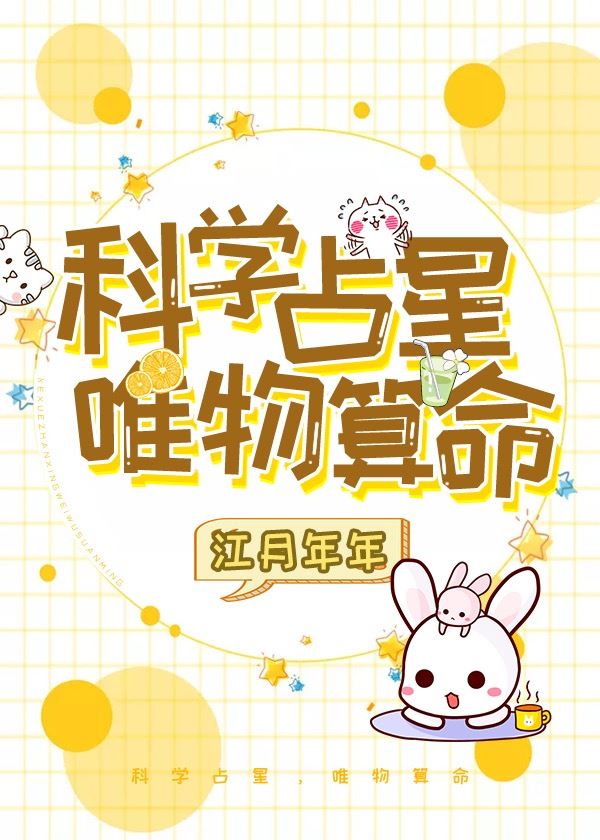
The Greatest Astrologist
+Add to Custom List
Sort
Add review
... Read More
Okay so this chapter is basically one long scene and if you think about it, that's kind of brilliant. The entire plot momentum rides on whether Qi Yan can successfully recruit Chu Qianli, and the author builds this whole sequence like a negotiation thriller disguised as a high school comedy. You've got Qi Yan coming in hot with offers—half her family business, handsome guys, whatever—then He Shichen crashes in as the opposition, and suddenly it's not just about astrology readings anymore. It's about who gets to claim Chu Qianli's talents. And then Chu Qianli herself drops that line about astrology being used for national decision-making in ancient times, which completely shifts the power dynamic. Up until that point she was hiding behind her deskmate like a scared bear, and suddenly she's defending her craft with actual gravitas. The way Qi Yan responds—softening, admitting Chu Qianli was right—that's a genuine plot turn. It's not every day you see the manipulative strong female lead get corrected by someone she was trying to recruit. The scene ends on an unresolved note with Qi Yan still pushing and He Shichen losing his mind, which is exactly the kind of cliffhanger that makes you click to the next chapter. I love how the author treats a classroom conversation like a geopolitical negotiation.
... Read More
Let me break down why this chapter hits different. We start with He Shichen's decision to detain Liu Kaijia, and the pacing is so controlled — you get the setup (the broken car lock), the execution (detainment), the aftermath (lawyer conversation), and then the emotional fallout (Liu Kaijia's realization about his master). Each beat lands perfectly before moving to the next. No filler, no dragging. What I love is how the author uses the detention scene as a pressure cooker. Liu Kaijia is locked in, desperate, trying to bargain with Chu Qianli, and she's sitting there completely unfazed, casually explaining workplace hierarchy through the lens of fortune-telling. The contrast between high-stakes tension and deadpan humor keeps the chapter from ever feeling heavy. The Wan Ketian reveal at the end is brilliant structurally — it pivots the entire narrative from 'Liu Kaijia vs. He Shichen' to 'Wan Ketian is the real threat behind the scenes.' We go from a resolved conflict to an open-ended tension, which is exactly how you end a chapter. You think it's over, but it's just getting started. And the subplot with Tan Muxing arriving for an appraisal, only to find Chu Qianli house-arrested? That's a microcosm of the whole chapter — setup, disruption, and then a new complication. The author understands how to chain these moments together so the reader never wants to put the book down.
... Read More
So this chapter does something really clever with its structure. It starts intimate—two people in a bedroom, going through old boxes, discovering connections between objects. Very slow burn, very character-driven. Then halfway through, it pivots hard into a social conflict: the mining dispute, the neighboring village's deception, the village head's powerlessness. That shift caught me off guard in the best way. What's interesting is how the author uses the dinner scene as a pivot point. The food comes out—stew and vegetables, simple village cooking—and suddenly we're hearing about corruption and loopholes and cross-province jurisdiction issues. It's not a jarring transition because the conversation flows naturally from one topic to the next. Wang Ping brings it up while they're eating, and it grounds the mystical investigation in real stakes. The pacing works because each segment has its own rhythm. The compass discovery is contemplative and curious. The mining conflict is urgent and frustrating. The rain-praying cram session at the end is almost comedic, like the chapter is saying 'we dealt with heavy stuff, now let's lighten the mood before we close.' I do want to mention that the rain-praying section at the end feels like it's building toward something bigger. Chu Qianli deciding to learn the Five Thunders Method on the fly, treating it like last-minute exam prep, is both funny and strangely tense. Can she actually do this? Should she? What happens if she gets it wrong? The chapter closes on that cliffhanger of uncertainty, which is perfect. The author clearly knows when to slow down and let details breathe, and when to accelerate toward conflict. The balance here is really well calibrated. Three out of five for pacing—would've been four if the mining explanation hadn't slightly undercut the mystical momentum right when it was building.
... Read More
The mountain scenes in these chapters are genuinely beautiful and I want to sit in them forever. Let me just — the green canopy blocking sunlight, tall grass reaching their knees, rustling sounds from small animals in the dense leaves. The author doesn't over-write this. It's sparse but every detail lands. I kept picturing this like a film sequence: the rough drive up in that tiny open vehicle, then switching to foot traffic through a forest that feels ancient and indifferent to human affairs. And then the reveal of the excavator in the distance, looking almost toy-like against the vastness of the mountain. That visual contrast hits so hard. The machinery looks small but its implication is massive — something enormous is about to be disturbed. What I also appreciate is how the world feels lived-in. Yinlong Village sits on a provincial border, there's already tension with the neighboring village, the mountain belongs to the state but the villagers treat it as theirs, and Chu Qianli's grandfather spent time choosing this specific spot for feng shui reasons. None of this is info-dumped. It emerges organically through conversation and observation. The mobile signal being poor is a tiny detail but it grounds everything — this isn't a magical village, it's a real rural place with real constraints. And the bamboo basket full of colorful wild ingredients that Tan Muxing photographs? That's the kind of domestic detail that makes worldbuilding feel warm instead of clinical.
... Read More
There are SO many symbols happening here I could write an essay but I won't, because who has the energy. Let's just talk about the rain. It keeps coming back, doesn't it? First the approaching thunderstorm that drives them home from the studio, then the downpour while Tan Muxing walks through the corridor, then Master Xu Qian disappearing into that same rain like a ghost. Rain as transition. Rain as the boundary between the world he knows and whatever terrifying truth he just learned. And the bamboo — "standing tall despite the heavy rain." That's Chu Qianli right there. Extraordinary talent, knows her fate, still standing. "Extreme wisdom leads to destruction" — that quote is everything. The book keeps coming back to this idea that knowing is its own kind of curse. She knows what's coming. She knows she can't stop it. She even told him birthdays aren't worth celebrating, and now you understand WHY. The dress is another symbol I can't let go of. It's something she asked him to fix, something she'll come collect later — a promise of future interaction, a thread connecting them forward in time. And now he's standing in his studio looking at it, and I just KNOW he's not going to be able to touch it the same way. Every object in this book feels weighted, like nothing is accidental.
... Read More
What hits me hardest about this scene isn't the divination skill—it's the power flip. Liu Kaijia came in as the authority figure, hired to gain face, and suddenly he's the one being dissected. The author makes this uncomfortable in the best way. Look at how the stakes shift layer by layer. First, there's the public competition—guess the guest's background. Chu Qianli wins that round easily. Then Master Liu tries to regain control by focusing on his own chart, but she redirects the attention back to him. Then—bam—he drops his real name, which was essentially signing his own warrant. The author has him say “Don't call me by my name!” at the end, and you realize his greatest mistake was assuming this was just a game. What makes the conflict land is that Liu Kaijia isn't a villain. He's a professional who takes his craft seriously, and Chu Qianli has just proven that his entire system is predictable to someone who understands it deeply. Her line about sects being “content to stick with their own methods” isn't malicious—it's almost sympathetic. That makes the defeat worse for him because it's justified. The physical details amplify the tension. The round-faced man touching his back instinctively, Master Liu sweating “profusely,” his face turning pale. These aren't decorative—they're the body betraying what the mind refuses to accept. And Qi Yan's dry commentary (“You should just say he looks older”) undercuts the drama just enough to keep the scene from becoming too heavy. The crowd scene at the end shifts the conflict one more time. It's no longer Chu Qianli versus Liu Kaijia—it's Chu Qianli versus everyone. People pressing forward with name requests, business naming questions, granddaughter name consultations. She shrinks behind Qi Yan like prey. The author flips from conquest to engulfment in one beat. I kept thinking about what Liu Kaijia stands to lose here. His expertise, his face, possibly his livelihood if word gets out that a girl crushed him at his own game. The stakes feel real because the author shows us his panic rather than just telling us he's embarrassed.
... Read More
Can we just take a moment to appreciate how good the dialogue is in this chapter? Because the character voices are so distinct that I could tell who's speaking without any tags. Chu Qianli's voice is probably the most striking. She's got this razor-sharp wit wrapped in casual confidence. Lines like "I need to save up for a proper burial. These days, you can't even afford a grave without money. Even dying has become too expensive, so of course I need to make some cash" are hilarious, but they're also character-revealing. She's making fun of the situation while simultaneously letting Wan Ketian know she's not intimidated. And then there's her response when he brings up her lifespan again: "We're back to this topic again? I figured this out before I even started elementary school." The eye-roll is practically audible. Wan Ketian, on the other hand, sounds like someone who's spent too long being right and has never had to adjust. His dialogue is stiff, formal, authoritative—until it isn't. The moment Chu Qianli starts playing with the compass, his speech breaks apart entirely. "Don't throw it around like that! Are you crazy? This is a priceless antique!" followed by "Stop it! Please, just stop tossing it around!"—that progression from commanding to desperate is one of the best verbal character arcs I've seen in a single scene. The banter between them has this rhythm that feels completely natural. They're not just exchanging lines—they're trading blows. Every quip from Chu Qianli is a direct counter to something Wan Ketian said earlier, and vice versa. Their dialogue is basically fencing with words, and the author writes it like someone who actually understands how real people talk when they're competing. Also, Tan Muxing getting to just say "All done?" outside like nothing happened? Perfect comic relief. The author knows exactly when to let the reader exhale.
... Read More
I need to talk about Tan Muxing because this guy is carrying so much subtext and the author barely lets him breathe. Here's this person who avoids Mr. Zhang at all costs after Qian Mountain, who has clearly been burned before, and yet when Chu Qianli says she'll go alone, he stops her with this quiet admission: "I'm afraid you'll get hit." Not "I don't trust the situation." Not "let me protect you." He says it like it's a factual prediction, not an emotion. Like he knows exactly howChu QianliProvokes people just by existing in their space. And it's fascinating because the book keeps showing us two different Chu Qianlis. At home, she's the one who sneaks up behind He Shichen and yells to startle him, completely unbothered. She calls him out on his parenting research with zero filter. But then she walks out into the world and apparently becomes this magnet for conflict. Tan Muxing sees both versions and is constantly caught between laughing at her and worrying for her life. The dynamic between these three — Chu Qianli, Tan Muxing, and He Shichen — is the real heart of the story. He Shichen is the strategic one who does his research on "how to educate children without hitting them" while quietly enduring her chaos. Tan Muxing is the protective one who would rather not go to the teahouse but goes anyway. And Chu Qianli is... well, she's the one who makes everything happen and doesn't even seem to realize why. Who is actually in control here? I'm not sure anymore. And that's what makes this relationship triangle so addictive to read.
... Read More
I genuinely felt Chu Qianli's anxiety through this entire chapter. Like, not metaphorically—I could feel her pacing, checking her phone, divining every five seconds, the whole restless energy of someone who believes something terrible is about to happen to them. The author does something really interesting emotionally here. Instead of making her fear abstract, they ground it in physical details: she switches seats, she won't go on the field, she squats against the wall like a wounded animal. Tan Muxing tries to help by offering her Marxist philosophy books (which is such a specific, weirdly funny detail that makes it real). He's genuinely trying, even though he doesn't understand what she's going through. And then—the release. When the basketball incident happens and she divines that her disaster is resolved, she literally transforms. 'The sky is clear, the rain has stopped, and I feel like I can handle it!' And Tan Muxing is just standing there going '...it was already a clear day?' The comedic timing of that emotional whiplash is chef's kiss. What hit me the most though is how her emotional state shifts from isolated fear to shared experience. She comes back to the sports field confident, swaps her seat back to the window, and seems almost giddy. The fear was real, the relief is real, and the person who took the hit for her is right there beside her. That's the emotional core of this whole thing—fear makes you small, but someone choosing to protect you makes you feel like you can face anything.
... Read More
Oh my god, I am still shaking from this chapter. Let me just say it: He Shichen played Liu Kaijia like a fiddle and I LOVED every second of it. So here's the setup — Liu Kaijia comes to He Shichen with this whole offer about the compass and the girl, complete with a contract, and He Shichen basically pretends to fall for it. He nods, he agrees, he acts like a selfish kid who just wants the money. Meanwhile — I'm not kidding — he was recording the entire conversation on his phone. The man is a chess player. He's been three moves ahead this whole time. The moment that made me literally gasp out loud was when they get to that isolated street corner, He Shichen asks Liu Kaijia whether he "calculated today's events before heading out," and then just… locks the doors from the outside. The driver is in on it too. The "broken lock" excuse? Ice cold. He Shichen looked Liu Kaijia dead in the eye and said "we're working on fixing it" and then just stood there. No panic, no regret. Just pure, calculated destruction. What I love about this plot move is that it subverts every expectation. First, we think He Shichen might actually sell out — the contract signing made it seem like he was going to betray Chu Qianli for money. Then the car ride conversation about fortune-telling rituals felt like small talk before the real deal. And then BOOM — the entire thing flips. Liu Kaijia thought he was the hunter, and he was prey the whole time. The only thing I'm slightly confused about is Wan Ketian's role — he's calling Liu Kaijia "Master" but also seems to be giving orders. Is Wan Ketian the real power behind this mystic group? Also, He Shichen called home during all of this to check on "her" — presumably his mother — which means he planned this entire takedown knowing his family situation. That's not just clever, that's ruthless. This author really knows how to twist a knife. I went from thinking He Shichen was being manipulated to realizing he was the one holding all the cards. Absolute masterpiece of misdirection.
... Read More
This chapter has such a good rhythm to it. It starts with the video clip from Yahun—which immediately sets up the conflict and gives us the antagonist's voice right away. Then we cut to Qiu Qingkong bringing it to Chu Qianli, who responds by fake crying and complaining about being called a goody-goody. The pacing here is excellent because it doesn't let the anger sit too long; it pivots to humor before the scene becomes too heavy. "Chu Qianli finished her fake crying. She wiped her face and said leisurely..." That moment where she stops performing and gets serious for a second is key. The author lets her be funny, then lets her be thoughtful, then lets her be smug again. Three beats in one paragraph. Then Tan Muxing asks about spiritual energy limits, which opens up this exposition about how Chu Qianli disrupted the market. This is the information dump section, but it's delivered through dialogue so it never feels like homework. The narrator explains the economics of the divination industry, and I absorbed it without even noticing. Finally, the crystal powder tangent comes in at the end, which is a brilliant comedic release valve. After all that tension about pricing ethics and market disruption, we end on Chu Qianli asking why anyone would eat stones when they could eat roasted duck. The chapter doesn't stay heavy for long. It knows when to punch and when to let you breathe. The cliffhanger of Qiu Qingkong not letting it go is subtle too—she's still fuming about Yahun while Chu Qianli has already moved on to food. Different emotional temperatures in the same room, perfect contrast.
... Read More
Oh my god, Tan Muxing. I need to just talk about him first because this character is so underrated and honestly, Chu Qianli is the ONLY person who sees him. He's described like this big cuddly bear — gentle, maternal, makes scarves and sews clothes — and the boys in his class tease him for being 'like a girl.' Can you imagine? The insecurity that builds up when people constantly tell you your softness is somehow wrong. He panics when Chu Qianli calls him warm and motherly, and then he just... spills everything. His real self. The crafts. The pain of being mocked for things he genuinely loves. And Chu Qianli — this girl who sleepwalks through class and eats snacks — delivers the most beautiful line about him: **"If someone only has one particular trait, that's incomplete. It's like how some people only define themselves by their sun sign but don't realize that everyone has the power of all twelve zodiac signs within them."** She called him COMPLETE. Not weird, not soft, not less-than. Complete. I literally sat there and went — YES. She sees him. For the first time, someone validates him without patronizing him. And his reaction? He says he's "starting to feel embarrassed" and that she "really knows how to compliment people." That's a boy who has never been spoken to kindly about who he actually is. But here's the thing that kills me — Tan Muxing's own words: "I'm nowhere near as good as him [He Shichen]." He compares himself to the golden boy and falls short every time. Chu Qianli tells him he hasn't found his strength yet. She's an astrologer, yes, but her reading of him feels genuinely perceptive. She's not just reading stars — she's reading PEOPLE. And the friendship that forms? It's so quiet and real. They sit together, eat, talk about little things. No grand declarations. Just two kids figuring out they might actually get along. Tan Muxing even ends up slightly confused: "So you listen to the stars entirely?" And Chu Qianli's answer is perfect — the stars point the way, but people have to do the work. She's not some mystic guru; she's just someone who pays attention. I love how their dynamic shifts from awkward (her asking for his birth details out of nowhere) to genuinely comfortable. The scene where he gets her food and she calls him motherly and he almost recoils but then opens up — that's character development happening in real time, not exposition. Also, He Shichen watching Chu Qianli sleep and eat and being genuinely frustrated in this weird older-brother-ish way? Their rivalry is already established but it has layers. He's judging her, yes, but he also can't stop noticing her. There's something underneath that tension I can't quite place yet but it's got potential.

Leave a comment

You must be logged in to leave comments. or