Summary

... Read More

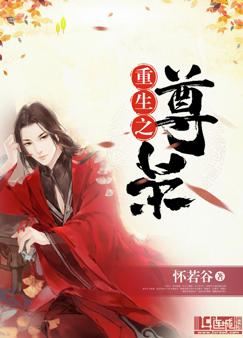
Ling Zhang, a noble-born young master of the Ling family in Tan Yang, endures a horrific end after his family is falsely accused of colluding with bandits. Following the murder of the Lu family, the Ling family is framed, their property looted, and dozens of members burned to death in public. Ling Zhang himself is thrown into a mass grave of rotting corpses, where he watches his uncle scream about heavenly injustice before being crushed by stones. As he dies, a dark green jade pendant absorbs his blood, turning crimson and triggering a mysterious resurrection. Ling Zhang awakens at age seventeen, standing in the pavilion of Jia Yuanling’s residence, moments before the incident that originally doomed his family. In his previous life, this moment marked the beginning of his ruin: he had been drugged, framed for adultery with a dancer, and subsequently blacklisted, leading to the destruction of his family’s reputation and lives.

Back in his body, Ling Zhang is initially disoriented but quickly recognizes the familiar setting of Jia Yuanling’s garden. He realizes he has returned to the past and now possesses the knowledge of his former life. Despite the trauma of his death, he acts with calculated coldness, masking his true intentions behind a facade of drunkenness when confronted by Jia Yuanling and his associates. At the banquet table, he sees through the feigned concern of his "friends" and detects the malicious relief in their eyes when they offer him hangover soup. Ling Zhang drinks the poisoned brew but secretly consumes an antidote hidden within his jade pendant, allowing him to remain清醒 while the others believe their plot has succeeded.

The servants then drag the unconscious Ling Zhang to the back garden, intending to plant him beside the comatose dancer to create the illusion of scandal. However, Ling Zhang recovers quickly and, drawing on latent memories of trap formations taught to him by his deceased mother, rearranges the potted plants and the dancer’s position. He constructs an illusory trap designed to mislead anyone who enters. When Jia Yuanling and Jia Yin arrive with local officials and other dignitaries to stage the discovery, they fall victim to the formation. Instead of finding Ling Zhang with the woman, they see only the dancer alone, covered in incriminating evidence of her own illicit activities. The trap shifts the perception of reality, exposing the dancer’s shame rather than Ling Zhang’s.

Ling Zhang emerges from his hiding place, appearing pristine and unblemished, and calmly confronts the shocked crowd. He refutes the accusations by pointing out the impossibility of the scenario: the concubine would not have sneaked into the son’s courtyard without the son’s knowledge or complicity. He accuses Jia Yuanling and his father of orchestrating the false accusation to frame him. The revelation leaves Jia Yuanling and his confederates visibly flustered, their faces flushing with guilt as the guests question the inconsistencies. The narrative establishes Ling Zhang’s determination to use his second chance to dismantle the schemes of the Jia family and reclaim his lineage’s honor, marking the beginning of a bitter war of revenge against those who destroyed his life.

Latest Release
DateGroupRelease
2026-09-26knoxt c6
2026-09-26knoxt c5
2026-09-26knoxt c4
2026-09-26knoxt c3
2026-09-26knoxt c2
2026-09-26knoxt c1

Community Reviews

Rating(4.2 / 5.0, 19votes)
5 stars
7(37%)
4 stars
8(42%)
3 stars
4(21%)
2 stars
0(0%)
1 stars
0(0%)

Popular reviews

... Read More
I need to talk about tension because this is masterclass-level pressure. You build a scene—whatever it is, doesn't matter—and then you let a character hit this absolute breaking point where language fails them. 's!' That's not dialogue. That's someone standing at the edge and either jumping or grabbing on for dear life. Every reader who's ever experienced genuine shock knows this sound. It's pre-verbal. It's what comes before the story you tell yourself afterward. And the stakes? They couldn't be higher because if a character can't even form a proper sentence, nothing less than existential threat is going on. The author doesn't need to explain the danger. The damage to the character's composure tells us everything. What happens next? That's what I turned the page for.
... Read More
Okay so this is the chapter where everything finally shifts and I am HERE for it. Let me just say — the entire trap setup scene is such a satisfying payoff. In his past life, Ling Zhang was completely powerless against Jia Yuanling's schemes. But here? He's got memories, he's got knowledge his mother once taught him, and he's using it like a goddamn chess master. The way he recalls all those formation details — even though only "less than ten minutes" passed in real time, it feels like an eternity of mental effort — that's such good writing. And then he adds fuel to the fire by repositioning the unconscious dancer inside the trap, right? That's not just defense, that's turning their own weapon against them. The reveal when he kicks that guy in the stomach? Perfect. "Open your damned eyes to see who I am!" — I literally said yes out loud to my phone screen. But what really got me is how Ling Zhang deconstructs the entire setup: if the concubine snuck into her son's courtyard, either the guards were complicit or she's done this before. Either way, he flips the accusation onto Jia Yuanling and his father's concubine. And then the final nail — everyone notices Jia Yuanling and his cronies are blushing, breathing fast, eyes red. The trap didn't just create illusion, it exposed the truth. What a turn. I keep re-reading that last line over and over because the way the author lets the evidence speak for itself without any moralizing is chef's kiss.
... Read More
Let me just say this upfront: I have never wanted to throw a phone at a fictional character more than I want to throw a phone at Ling Zhang right now and also HUG him at the same time. This man has died, been betrayed by his own family, had stones smashed into his skull by people laughing, and his FIRST impulse upon重生 is not "I hope everyone is okay" — it's calculating exactly what FACE to wear when he walks back into that hall. The transformation is subtle and SHREDDING. He walks out of the pavilion with this "silent and cold smile" and the SECOND he passes through the corner door, the coldness disappears and he puts on the mask of "tired, drank too much, leaning on people for support." Two servants grab him and "in an unfriendly manner drag him to the main hall" and he plays along perfectly. The act is SO good that even the narration has to clarify "his half-fallen eyelids hid his uncontrollably cold eyes and anger." He is performing vulnerability while feeling NOTHING but vengeance. And the reader is the ONLY one who knows this. THAT is dramatic irony done RIGHT. Now let's talk about the guy who comes to "support" him — this HANDSOME polite man everyone calls Brother Zhang (or wait, is that Ling Zhang? The translation is a bit confusing but you get the point). Someone at the table says "Why, you're a bad drinker, aren't you?" and the people LAUGH. In his past life, Ling Zhang would have thought this was "just a joke among friends." NOW he knows. And the narration says he could barely restrain himself from KICKING the person supporting him. But he doesn't. He plays the drunk. He says "I have a severe headache." And everyone at that table probably thinks he's still the foolish younger brother they can manipulate. The family dynamics here are DEVASTATING because we SEE what he's losing and what he's gained. Grandpa is alive. Uncles are alive. The family hasn't been destroyed yet. And he's walking into a room full of people who will eventually tear it all apart, pretending to be the naive drunk while his mind is already three moves ahead. The loyalty he shows by maintaining the act instead of exploding — that's not weakness, that's discipline forged in death. And the author's note about Yuwen Tong (the Marshal) being a "good man who loves his wife" and just a "scapegoat"? That changes EVERYTHING. If the Marshal is actually sympathetic and doesn't even know about the broken engagement, then Ling Zhang's revenge isn't going to be a simple "destroy everyone" story — it's going to be morally COMPLICATED. I need to know how this plays out immediately. This is character work at its finest. Not exposition. Not info-dumps. Just a man recalibrating his entire understanding of love, betrayal, and trust in approximately forty-five seconds.
... Read More
I need everyone to understand something: this chapter is roughly 3000 words and I have NEVER felt more tension in my LIFE. Let me break down WHY because the author is playing 4D chess with conflict and I am HERE for it. EXTERNAL CONFLICT: People threw stones at Ling Zhang's head while he was alive and then kept throwing them after he was dead. They mocked his eyes. They called him a demon. They said his family colluded with bandits. His legs were bent — he couldn't move. He was literally helpless. And then the jade pendant absorbs his blood and turns red. A "storm of revenge." This is not subtle — this is a MAN who has everything to prove and NOTHING left to lose. INTERNAL CONFLICT: He just woke up in his 17-year-old body and his first instinct is to check if his LEGS WORK. He's terrified. He's confused. He's experiencing what can only be described as existential whiplash — one moment you're dead in a pit, the next you're standing in a garden and you can feel PAIN when you kick the ground. The emotional whiplash of that is the real conflict here. How do you process grief for a life you just lived when that life no longer exists? How do you carry trauma from events that — from the world's perspective — haven't happened yet? RELATIONAL CONFLICT: This is where it gets GOOD. He walks back into the main hall — a space filled with people who, in his previous timeline, betrayed his family, framed them, and watched them die. And he has to SIT AT THEIR TABLE. He has to LET THEM HOLD HIM UP. He has to pretend he doesn't know that every smile they're wearing is a knife waiting to be drawn. The servants are dragging him "in an unfriendly manner" and he plays along. The guy calling him a bad drinker and the crowd LAUGHING — in the original timeline this was friendship. NOW it's humiliation. And he absorbs it all while his eyes stay cold. STAKES: EVERYTHING. His family is alive RIGHT NOW but they're walking toward destruction. The engagement with the Yuwen family hasn't been publicly broken — but it WILL be. The author's note literally SPOILS that the Marshal is innocent and the real villain is pulling strings behind the scenes. So Ling Zhang isn't just fighting enemies — he's fighting a SYSTEM that already destroyed him once, and he has to do it while pretending to be someone he never was. The genius is that the author makes us care about the STAKES before we even know the full plot. We saw him DIE. We felt the stones. We saw his eyes wide open with that grin afterward. And now? Now he's walking back into the same house, same people, same tragedy — but this time HE KNOWS. That's not just tension. That's ACHING. That's the kind of conflict that makes you stay up until 3 AM because you need to see what happens next. And the ending of this chapter — he's in the hall, surrounded by people who will betray him, playing the fool while his mind races. The conflict isn't coming. It's ALREADY HERE. It's sitting at the table right now laughing at him. And I swear to god if this author doesn't deliver on the revenge I will personally write them a strongly worded letter. How is the pacing? It moves like a CARRIAGE WITH ITS WHEELS ON FIRE. Every paragraph adds pressure. Every line raises the temperature. And the best part? We're only four chapters in and I already have STRONG opinions about who deserves what fate. The author's playing with a ticking clock — every scene Ling Zhang spends pretending is a scene his enemies spend underestimating him. And that makes every single interaction feel like walking a tightrope over a pit full of corpses. Which, honestly, is exactly where this story started.
... Read More
Let me tell you something about pacing. Most authors would kill to write this efficiently. Two characters, maybe three, a setting that could be anywhere, and then this explosion of pure sound. No setup. No padding. Just BAM. 's!' And then... the chapter ends? Or does it? That's the beauty of it. The author trusts us enough to not hold our hands through every beat. We feel the weight of what comes after that single character because we're given absolutely nothing to cushion the landing. It's fearless. Every word before it was doing work, and every word after it will be even heavier because of how sparse this moment is. If I were a writer, I'd study this for years.
... Read More
This chapter is a masterclass in building tension and I need to talk about why it works so well. It starts SO quietly. Ling Zhang is alone, recalling knowledge, moving potted plants in a silent garden. The prose slows down, we get these internal monologues about his past life, about what if he had known the trap back then, about regret. It's contemplative almost. And then — footsteps. Jia Yuanling's voice. The fake act of defending him while secretly setting him up. The pacing shifts immediately, the tempo picks up. Then the crowd arrives and suddenly we're in full chaotic scene mode with overlapping dialogue and accusations. But here's what I love — Ling Zhang doesn't rush out. He hides in the darkness first. Watches. Lets them build their own case. Then when he finally reveals himself, it's one line: "Are you looking for me?" And the silence that follows? The author doesn't fill it with description, just lets the moment breathe. That awkward silence is more powerful than any action scene. And then the kick. Boom. Physical action breaks the verbal sparring and everything explodes from there. Ling Zhang's counterattack comes fast and hard — no hesitation, no long speeches, just cold dismantling of Jia Yuanling's scheme. The chapter ends on this cliffhanger note with everyone realizing Jia Yuanling's guilty reaction. The structure goes from micro to macro, from one person's thoughts to a crowd scene, from stillness to chaos. I stayed up way too late reading this.
See all reviews

Custom lists

See all custom Lists