Summary

... Read More
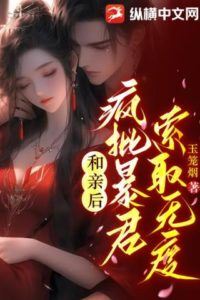
Li Zhiwei, the daughter of the wealthiest merchant family in Lanuo Kingdom, is reborn on her wedding day after a tragic existence in her previous life. She had been tricked by the Ruan Marquis Residence into marrying Lin Jitong, only to discover that he had already wed her cousin, Zhou Yutang, three days prior. In her past life, Li Zhiwei was forced into a humiliating secondary marriage, her vast dowry was stolen by her mother-in-law, and her family’s wealth was squandered by the conspirators. The betrayal culminated in her parents’ death and her own miserable end, orchestrated by Zhou Yutang who revealed that Li Zhiwei was merely a stepping stone for political gain and that she had been drugged to ensure infertility. Now awake in the bridal sedan, Li Zhiwei resolves to change her fate and deny the Ruan Marquis Residence the wealth they coveted.Outside the closed gates of the Ruan Marquis Residence, the wedding procession is interrupted by Xu Qingshi, the young heir of Prince An. Unaware of the girl’s identity or the grandeur of her dowry, Xu Qingshi impulsively orders his guards to kidnap the bridal sedan, intending to bring a new mother home for his father, whom he believes is lonely. He believes that a wealthy stepmother will provide him with toys and social superiority over his peers, particularly Wei Herui, who mocks him for being motherless. The entire wedding entourage, including over a thousand chests of dowry, is forcibly transported to the An Prince Residence, leaving the Ruan Marquis gates empty and the Lin family in shock.Inside the An Manor, the Old Princess and Prince Xu Heming are confronted with the bizarre situation. Li Zhiwei, sensing an opportunity to escape her doomed fate and protect her parents, presents the marriage contract and reveals the Lin family’s deception. She proposes a transaction: she will donate her substantial dowry to the imperial court to aid in flood relief efforts in exchange for the annulment of her engagement and the safety of her parents. Xu Heming, recognizing the political necessity and the value of the wealth, agrees. The Emperor, Zhu Jingchen, who has long suspected the Lin family of ulterior motives regarding the Li fortune, orders Xu Heming to marry Li Zhiwei himself, using the union as a legitimate means to seize the assets for the state and humiliate the Ruan Marquis Residence.Despite Li Zhiwei’s initial reluctance and confusion at being thrust into a marriage with a widowed nobleman, the wedding is hastily arranged. Xu Heming, though initially stern and focused on duty, finds himself drawn to Li Zhiwei’s beauty and intelligence. Their wedding night is complicated by the Old Princess’s meddling, which involves spiced tea and soup intended to consummate the union, leading to an intimate first night that surprises both parties. Xu Qingshi, initially jealous and protective, quickly bonds with his new stepmother when she offers him rare toys, solidifying her place in the household.The story moves to the Imperial Palace, where the Lin family confronts the Emperor. Lin Qihua and his wife plead for the return of the dowry, but the Emperor, aware of Consort Lin’s pregnancy and her family’s political scheming, dismisses their claims. The narrative sets the stage for Li Zhiwei’s new life as the Princess of An, navigating court politics, raising Xu Qingshi, and ensuring the downfall of those who ruined her in her previous existence. The Ruan Marquis Residence is left powerless, their scheme foiled by the very wealth they sought to exploit, now secured under the protection of one of the empire’s most powerful princes.

Latest Release
DateGroupRelease
2026-09-26akknovel c510
2026-09-26akknovel c509
2026-09-26akknovel c508
2026-09-26akknovel c507
2026-09-26akknovel c506
2026-09-26akknovel c505
2026-09-26akknovel c504
2026-09-26akknovel c503
2026-09-26akknovel c502
2026-09-26akknovel c501
2026-09-26akknovel c500
2026-09-26akknovel c499

Community Reviews

Rating(0 / 5.0, 44votes)
5 stars
0(0%)
4 stars
0(0%)
3 stars
0(0%)
2 stars
0(0%)
1 stars
0(0%)

Popular reviews

... Read More
Okay, I need to talk about this scene with the young noblemen because it's oddly perfect. Wei Herui: "My mother gave this to me." *shows off toy* Xu Qingshi: internally absolutely destroyed because he has no mother. The author doesn't even need to say much. Wei Herui's line is innocent on the surface—he's just a kid showing off a toy—but the reader immediately understands the wound it's inflicting. And Xu Qingshi's reaction? "Was this damned Wei Herui mocking him for not having a mother?" That's not narration, that's internal monologue that cuts straight to the bone. Then the whole stepmother debate between Xu Qingshi and Xie Yanzhi is gold. Xie Yanzhi suggests finding a stepmother from an ordinary but wealthy family so she'd be too afraid to mistreat him and would bribe him with silver instead. This is a CHILD thinking about money the way an adult merchant would. It's hilarious, pathetic, and heartbreaking all at once. And Xu Qingshi's counter-argument about Zhao Donglai's stepmother always hitting him—this is actual child logic. He's not thinking about love or family; he's weighing pros and cons like a tiny capitalist. The voice here is so distinct and natural. Meanwhile, the gossip from the commoners about the wedding is equally sharp: "Why rush to become someone's concubine?" "She could find any husband she wanted in the capital." These aren't just exposition dumps; they're building the public perception of Li Zhiwei's situation, which is exactly what she needs to manipulate. The dialogue in this book operates on two levels simultaneously—surface meaning and hidden stakes—and that's what makes every conversation feel alive.
... Read More
I need to talk about Lin Jitong because my blood pressure is not okay. Here's this guy who's SO upset about having to marry a merchant's daughter that he agreed to use a chicken in his place at the wedding ceremony. A literal rooster. And when the bride gets stolen, his first reaction is GENUINE RELIEF. Like, no remorse, no concern for the woman he was supposedly supposed to wed, just straight-up 'good riddance.' The man has the emotional depth of a puddle. But then! Zhou Yutang shows up and oh my god. She's pouting, telling him to go face his father, reassuring herself that 'as the primary wife, she would always outrank the newcomer.' She's sitting there convinced that because Lin Jitong's heart belongs to her, she'll win in the end. And he keeps reassuring her—"Yutang, don't worry. My heart is yours alone." BUT WAIT. He's ALSO going through with this marriage against his will. So his heart might be hers now, but what happens when he's forced to share his life with someone else? Is this going to fester? Because honestly, this gives me massive anxiety for their relationship. Meanwhile, I can't stop thinking about Li Zhiwei. She was just trying to navigate her own situation, and suddenly she's been wrenched into an entirely different life by a bratty young master who thinks kidnapping is a courtship strategy. When she steps out of the sedan and Xu Qingshi says "Not bad, pretty lady" and circles her like she's a prize at a county fair—my stomach dropped. There's something deeply unsettling about being valued purely for your appearance by someone who kidnapped you. But here's the thing that hooks me: underneath all this chaos, the Old Princess seems like the only adult in the room. She genuinely believes Xu Qingshi wants a mother figure. There's real warmth there, a grandmother who missed her dead daughter-in-law and wants someone to fill that space. It's sweet and messy at the same time.
... Read More
Keeping track of the scoreboard here because the stakes shift weirdly. Li Zhiwei: gains a prince, loses her agency. She's in a room she didn't choose, with a man who will divorce her when it's convenient. Her dowry is now 'protected' by marriage but the marriage is a legal shell. What does she actually have? A title. A divorce guaranteed (eventually). A 7-year-old who likes her. And she can't go back to Lin Jitong because 'the Ruan Marquis Residence came for her again' and she'd be with 'that beast.' So her options are: stay as a placeholder wife, or be thrown back into the one situation she's explicitly refusing to return to. The stakes are bad either way. 'Had fate given her a second chance only to leave her powerless again?' That's her internal line and I think it's the accurate summary. Even winning looks like being stuck. Xu Heming: gains a wife he didn't want, gains social punishment (the Emperor confined him to the mansion 'as punishment'), loses privacy ('people would forever accuse him of stealing the Ruan Marquis' betrothed'). His stake is REPUTATION. He's already paid for it. He's resigned. The Emperor will keep him locked in the mansion for days. So he's got: a wife he'll divorce, a son he needs someone to raise, and no freedom to leave the compound. The conflict for him is low. He's made his decision. It's over. He's in maintenance mode. Lin Qihua: LOSES the dowry. The whole point. He sent the chests, now they're legally attached to a prince's wife. He can't retrieve them without looking insane. His stake is MONEY and STATUS. His plan: 'Send word to the Li family immediately. Have them come here.' Make the bride's family compensate. So he's offloading the loss onto Li Zhiwei's original family. The conflict is unresolved. He will keep pushing. And Zhou Yutang wants HER half of the dowry from Lin Jitong, which means the internal Ruan conflict just got a new front. What I keep thinking: who is the ACTUAL antagonist here? Not Lin Jitong, not Zhou Yutang, not the Emperor. The system. The dowry-as-property system. The idea that a woman's marriage chest can be 'stolen' by another man's wedding. Li Zhiwei is not a person to the Ruan family, she's a package of goods that was delivered to the wrong address. And Xu Heming 'stealing' her is framed as theft in their vocabulary. 'Those thieves.' He's a thief. His mother is a thief. The Emperor's will is a theft. The suspense for me isn't 'will she survive the night.' It's 'when does the Ruan family escalate to something that actually threatens her人身安全' and I mean personal safety. Because Lin Qihua is not a man who lets property leave his reach quietly. He called Li Zhiwei's family. What happens when the Li family turns up at the Ruan mansion with the Li patriarch and they demand compensation for a daughter who is no longer a daughter to them? She married into the prince's line. The Li family has no leverage anymore. They're just... sad. And angry. And that anger is going to land on Li Zhiwei eventually. I'm bracing for the next batch to be the Li family confrontation and I genuinely don't know if Li Zhiwei has ANY cards left to play when they show up
... Read More
Two objects in this chapter destroyed me in completely different ways. First: the bracelet. The Old Princess says 'This was part of my dowry when I married your father. Today, I pass it to you, hoping you'll one day hand it down to your own descendants.' This isn't just a gift—it's a transfer of matriarchal authority, a symbolic thread connecting three generations of women in this household. The fact that Li Zhiwei 'recognized the bracelet's significance' means she understood immediately: this is trust being extended across class lines. A merchant's daughter is being welcomed into the lineage. But then there's the keys. In Li Zhiwei's past life, 'her dowry had long been moved to her mother-in-law's courtyard. The only saving grace was that she had hidden the keys on her person.' Those keys were her only leverage, her only claim to power in a household that systematically stripped her of everything. Now in this life, she sits across from a different mother-in-law who offers gifts openly rather than extracting concessions through control. The contrast between hidden keys and a displayed bracelet is the entire thesis of the novel compressed into two images: in her past life, a woman survived by hoarding secret power; in this life, she might actually be able to thrive through visible, legitimate belonging. The Old Princess's concern about the Ruan Marquis Residence 'exploiting the situation to extort the Li family' also opens up this theme of economic vulnerability versus noble protection. Li Zhiwei's merchant background isn't just flavor text—it's the source of her entire precarious position. Every gesture of inclusion from the An household is simultaneously kindness and power display, and Li Zhiwei navigates it with a grace that makes you want to hug her through the page.
... Read More
I'll be honest. I've been reading a lot of rebirth/time-travel stories lately where the emotional beats are all calculated. You know the drill. The hero remembers the betrayal, the villain monologues, the audience gasps. Predictable. This one just... let a five-year-old say 'I didn't have a mother, so I had nothing' to his new stepmother while his grandmother is sitting there going feral with rage. And Li Zhiwei's heart aching. That's it. That's the whole beat. No elaborate setup. No three-page description of how much he missed having a parent. Just a kid stating the most basic, devastating fact of his entire existence in a flat little grumble because he's too young to dramatize it. And somehow that hits ten times harder than any dramatic speech could. The relationship between Li Zhiwei and Xu Qingshi is still so early it's basically a skeleton. She's the new mom-in-waiting, he's the suspicious kid who thinks all adults are performing. But the puzzle ring exchange—her offering to get him three or five when Wei Herui only has ONE—is already such a clear statement of values. 'I'm not going to let you feel less than. I'm not going to play the scarcity game. If you want more, you get more.' For a kid who was defined by NOT having, that's the most powerful love language imaginable. I'll say one thing about the romantic/political tension though. Li Zhiwei seeing the emperor and going 'as a merchant's daughter, any lapse in etiquette before the emperor could mean execution' while her husband just calmly pats her hand. The reassurance isn't 'I'll protect you' or anything grand. It's just a physical, quiet 'don't be afraid.' And I think that's actually more reassuring than any speech because it implies 'I've dealt with this before and you're safe within my space.' Low-key but effective. The whole thing ends with Consort Lin curtsying while keeping her hand on her belly and the Old Princess having to dig up her own outdated dresses for Li Zhiwei because there's literally nothing appropriate in the house. And the emotional texture of that—this woman who was a merchant's daughter now has to borrow grandma's old clothes to face the emperor while the pregnant concubine smirks across the room—it's suffocating and I'm not even done with this chapter yet. What am I gonna feel when the actual meeting happens.
... Read More
This scene is CINEMATIC. I don't care who hears me say it—it's basically a movie playing out in your head. You've got the entire courtyard filled with red silk and dowry chests, this impossibly long procession stretching outside the estate, and Li Zhiwei standing there in bridal red like she walked out of a painting. The visual contrast alone is striking: a girl in wedding garb in someone else's manor, surrounded by wealth that belongs to a marriage she was never meant to have. And then there's the detail work—the fertility vases that took "ages to find," the red-lacquered chests being carried into the West Xiang Courtyard, Lin Jitong's furious face as he watches his prize slip away. The world feels SO alive in passages like this. You can smell the incense, hear the clatter of the dowry bearers' footsteps, feel the awkward silence when Xu Heming trips over a chest. The author doesn't just tell you the Li family is wealthy—they SHOW you through the sheer volume of stuff filling every corner of the An Manor courtyard. Even the character of the place matters: the Old Princess's residence isn't described in architectural detail, but you feel its weight, its history, the way it towers over everyone else. This is a world where a single wrong turn at a gate could change your entire destiny, and the setting reinforces that at every turn.
See all reviews

Custom lists

See all custom Lists