The Five-and-a-Half-Year-Old Imperial Grandson (Qing Dynasty Transmigration) - Reviews

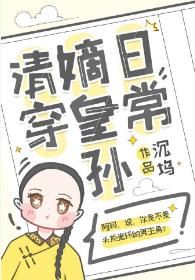
The Five-and-a-Half-Year-Old Imperial Grandson (Qing Dynasty Transmigration)
+Add to Custom List
Sort
Add review
... Read More
Okay can we just talk about how absolutely precious the Crown Prince is as a father? Like on the surface he's all cold and stern, ordering the feather duster and everything, but the second the Crown Princess shows up he's like 'oh this is a newly discovered toy'?? Bro was so desperate to play dad that he improvised a lie in half a second. And Hong Yan's internal monologue of just '...His father was shameless' — I literally gasped out loud. But then the text goes and absolutely DESTROYS me with the Emperor's dream sequence. I wasn't ready for that emotional whiplash. The man dreams of his son being imprisoned in Xian'an Palace, lifeless gaze, and then a golden dragon saves him. And what's the most heartbreaking part? The Crown Prince LIED about the dream. He said red clouds because a golden dragon would've gotten him executed for wanting the throne. He literally fabricated a vision to protect his son while also protecting himself. That man carries SO MUCH. And Hong Yan — this five-year-old who's apparently lived before — looks at his father and thinks about how much humiliation the Crown Prince endured in his previous life. The love between them isn't loud or dramatic, it's in these tiny moments. The Crown Prince calling Hong Yan his 'precious little darling' one day and then being frustrated the next because 'Yuanbao is far too audacious.' He's just a dad trying his best, and it's so painfully sweet.
... Read More
I need to talk about how the author structures this whole batch because it's genuinely impressive. You start with this intimate, almost comedic father-son moment — the feather duster, the Crown Princess rescue, the whispered conversation on the way back. It's warm and domestic, you're basically cooing over Hong Yan. And then — BAM — you're dropped into the Emperor's dream from twenty-some years ago. The shift is so sudden it makes you sit up straight. Then the text pivots again to the next morning at court, and the pacing here is absolutely ruthless. First the censors want to debate whether a five-year-old can handle official duties, and before they can even open their mouths, the Crown Prince and Fourth Prince have already delivered a THOROUGH REPORT. The Emperor praises them. The court is stunned into silence. And then the real shock hits — the corruption investigation results come out, and suddenly everyone's world is turned upside down. The Mingzhu confrontation is where the pacing really peaks though. Hong Yan drops that precise figure — 604,572 taels, sixty percent dubious — and the author takes their time showing us every reaction: Suo'tu barely holding back laughter, Da Age's face cycling through colors, Tong Guowei doing quick mental math about his family's 300,000 tael loan. Each character gets their moment, and by the time Hong Yan stutters 'I wasn't j-joking with you,' you're absolutely breathless. The author knows exactly when to pace slow and when to accelerate. No dragged-out scenes, no rushed moments. Every beat lands.
... Read More
I started reading this batch at 11 PM and it is now 2:47 AM and I have no regrets. The pacing in these chapters is absolutely ruthless. The author doesn't give you a single moment to breathe before hitting you with the next curveball. Let me walk through why this worked so well: Chapter 40-42 (the debt collection setup): This is the calm before the storm. The conversation between the Crown Prince and Mingzhu about borrowing from the National Treasury, the political calculations, the cautious optimism. It's slower, more dialogue-heavy, but it's doing crucial work — establishing the stakes and the web of relationships. I could feel the tension building like a rubber band being stretched. Then Chapter 43 (the sedan arrival): BAM. Right in the face. The transition from political maneuvering to pure chaos is so sudden and so well-timed. One moment you're reading about treasury debts, the next a golden sedan appears and everything explodes. This is the kind of pacing that makes you gasp out loud. Chapter 44 (Hong Yan's system activation): The Department of Extensive Storage scene is where the pacing really peaks. We go from the Crown Prince's suppressed anger to Hong Yan's internal battle with the system to the ACTUAL ARRESTS in one continuous, breathless sequence. The "beep beep beep beep" moment, the pointing, the gray-clad guards moving like ninjas — it's action-packed without feeling rushed. Every sentence propels you forward. The Yanxi Palace interlude (Chapter 45) is the only moment of relative calm, and it's strategically placed. After the high-energy court scene, we get this quieter, more intimate moment with Consort Hui and the rumors spreading. It's a breath of fresh air that actually HEIGHTENS the tension because now we know the news is spreading through the palace like wildfire. Chapter 46-47 (the aftermath and Desheng's arrest): The pacing here is satisfyingly methodical. We get the political fallout, the bondservant family dynamics, and then the final twist — Desheng being dragged away. The Fourth Prince's realization that his own maternal uncle is among the arrested is the perfect button to end on. It raises the stakes, complicates the family dynamics, and leaves you desperate for the next chapter. My only critique: the transition between the Qianqing Gate scene and the Imperial Household Department scene felt slightly abrupt. A brief moment of travel or reflection would have given me a second to process what just happened. But honestly? That might have ruined the breathless momentum. The author made the right call. This is exactly how you pace a political thriller. Build tension, release it catastrophically, let the dust settle just enough to build it again, then hit them one more time. I am physically incapable of stopping now.
... Read More
Okay, let me just say this first — Hong Yan showing up at the Qianqing Gate was the single best moment in this entire batch. I literally slammed my book shut and stared at the ceiling. The way the author set this up is *chef's kiss*. "Fourth Uncle, with Hanmafa's permission, I've come to assist you with official business." — and then the silence. The absolute deathly silence. Mingzhu's beads clattering to the ground. Suo'tetu's soul leaving his body. The Third Prince cautiously glancing between the Crown Prince and Fourth Prince like he's watching a tennis match. I was wheezing. But here's what really made the plot work: the author had been building this tension for chapters. The debt collection subplot with the imperial princes, the Crown Prince's cold calculations, Suo'tetu's scheming — all of it was铺垫 (铺垫 means setup, you know what I mean). Then BOOM, a five-year-old in a golden sedan drops in and completely flips the power dynamic. And the Department of Extensive Storage scene? Hong Yan activating his system ability and pointing out corrupt officials like he's playing whack-a-mole? "Seize the one with bulging eyes in the front row, the one with slanted eyebrows, and the ugliest one." I nearly fell out of my chair. The Fourth Prince recognizing his own maternal uncle Desheng being dragged away — that's the kind of plot twist that makes you immediately turn the page. The author is playing 4D chess here. On the surface it's a kid helping with paperwork, but underneath it's a full-scale purge of the Imperial Household Department's corruption network. And the Uya family connection? Consort De's clan? This isn't just about one department — it's about reshaping the entire power structure. But here's my one complaint: I wish we got a bit more of the Crown Prince's internal monologue during the sedan scene. His reaction was described externally (face cycling through red and green, steam practically rising from his head), but I wanted to hear what he was actually thinking. Was he more hurt that he was kept in the dark, or more calculating about what this means politically? Either way, this plot is hitting different and I cannot wait for the fallout.
... Read More
Let me just say this: Hong Yan's dialogue in this batch is one of the most delicious things I've ever read. The kid is FIVE and he's out here weaponizing politeness like it's a martial art. Watch this exchange with Mingzhu. The guy comes at him all smug, saying 'our Lord Prince's heir is still young and cannot contribute much' — classic veiled insult. And Hong Yan's response? He starts with a literary reference, all casual and conversational, like he's just making small talk. 'That year, when the pear blossoms were like snow—' and Mingzhu is probably thinking oh this kid's going to recite a poem, showing off his literary skills like some spoiled noble brat. The Crown Prince is definitely thinking the same thing, internally rolling his eyes at his son's 'meager skills before an expert.' And then Hong Yan pivots: '—The silver reserves in Nalan's private treasury. After deducting salaries, rewards, and legitimate official earnings, the total amounts to six hundred four thousand five hundred seventy-two taels.' SIX HUNDRED FOUR THOUSAND FIVE HUNDRED SEVENTY-TWO. He didn't even pause. He didn't even stutter on the numbers. But then — and this is the genius part — he STUTTERS on the next line: 'I wasn't j-joking with you.' That deliberate, noticeable stutter. He's performing innocence while delivering a kill shot. Mingzhu's entire face — 'his lips still held traces of an unretracted smile' — is one of the funniest descriptions I've read. The Crown Prince's voice is equally distinct. His exasperated sighs, his smug responses to Hong Yan, the way he deflects to his wife about rear courtyard affairs — every line sounds like a different person. And the Emperor's dream narration? Completely different register, almost mythic in tone. The author gives every character a voice so distinct you could tell them apart blindfolded.
... Read More
"Judging by the sedan's grandeur... Those who could approach the Qianqing Gate were certainly not imperial consorts. Moreover, golden ornaments were reserved for the imperial princes, with the sole exception being the Emperor's eldest grandson, who had received special permission." I need to stop and appreciate how the author builds atmosphere here. This isn't just a scene — it's a FULLY RENDERED WORLD that you can STEP INTO. The ministers walking together after morning court, the quicker ones already nearing the gate, the sharp-eyed official who spots the golden sedan and immediately starts speculating. You can FEEL the tension of those exchanged glances, the suppressed whispers, the eyes drifting toward the Crown Prince like moths to a flame. And then the curtain lifts. "A small, delicate hand lifted the sedan's curtain, revealing a face as finely carved as jade. Phoenix eyes, round cheeks, deep dimples, and a tiny upturned lip—utterly charming and adorable." The contrast between this incredibly detailed, almost tender description of a five-year-old's face and the deathly silence that follows is *devastating*. One moment you have this adorable child beaming at his Fourth Uncle, and the next you have a political earthquake that makes grown ministers freeze in place. But the worldbuilding goes way deeper than just this one scene. The author takes a whole passage to explain the Imperial Household Department — its structure, its corruption, the hereditary bondservant families who've entrenched themselves over decades. "No one dared offend them, and many unfavored masters even had to defer to them." This isn't just set dressing; it's the reason the plot matters. The Department of Extensive Storage courtyard scene is equally vivid. Box after box of ledgers being moved, stewards kneeling in terror, the gray-clad guards moving with "inhuman speed" to drag away the corrupt officials. And Hong Yan's system going wild — "beep beep beep beep" echoing in his mind, the overwhelming desire to confiscate homes activating. The sensory details here are incredible: the visual of glowing corrupt officials, the auditory hallucination of the system, the physical sensation of relief when the ability finally fires. Even the Yanxi Palace scene with Consort Hui and the aging Da Age's consort has this rich, layered atmosphere. The coughing, the small drum, the whispered rumors spreading through the palace — you can practically smell the incense and feel the oppressive weight of palace politics in every room.
... Read More
So let's talk about the Crown Prince for a second because THIS MAN is having the worst day of his life and I am here for it. His own son shows up at court with the Fourth Prince, everyone's been in on it EXCEPT him, and his reaction is... honestly kind of relatable? He grabs Hong Yan, lifts him up, and demands "Since when?" in this terrifying low voice. The kid immediately switches from mischievous to obedient mode — "All to share your burdens, Father" — and honestly that's such a smart kid move. Hong Yan knows exactly how to defuse his father's anger with just the right amount of flattery. But the real gold is the Fourth Prince's guilt face. "Second Brother, as Yuanbao said, this is my fault. Yesterday's summons took me by such surprise that I forgot to inform you..." FORGOT. He FORGOT to tell his own brother that his five-year-old nephew was coming to help with a major government investigation. The audacity. The sheer gall. And yet somehow this family dynamic feels so real — like actual brothers who bicker and keep secrets but are still bound together by blood and politics. Then there's Suo'tetu, this old fox who goes from being absolutely terrified of the Crown Prince's glance ("That glance carried a chill, making Suo'tetu uneasy") to suddenly being the perfect scapegoat that Hong Yan gazes at "as if looking at the perfect scapegoat." The kid is THREE GENERATIONS of palace intrigue ahead of everyone else and he doesn't even realize it. And I need to talk about Hong Yan's relationship with his father. The moment the Crown Prince's expression went dark, Hong Yan immediately "wiped the sweet smile off his face, adopting an expression of utmost obedience." This kid reads rooms like a seasoned diplomat. He's five years old and he already knows that when Father is angry, you don't push — you submit, you flatter, you survive. The mother-son dynamic with the Crown Princess is also fascinating. She just... watches. Kisses her other son Hong Yu. Thinks about how her firstborn was "born into a whirlpool where everyone wanted to consider his interests." There's so much love and so much exhaustion in that single paragraph. She's competing in this palace game but she's also terrified of what it means for her children. Yinzhen himself though — the man is walking a razor's edge. He needs Hong Yan's popularity with the Emperor but he's clearly resentful about being kept in the dark. He's a father AND a political player, and those two roles are constantly at war with each other. Every time he looks at his son, he's probably thinking two completely different things at once.
... Read More
There's this one image that's been stuck in my head since I finished Chapter 1: the Eldest Prince's face 'dark as a loach.' It's funny, sure, but it's also deeply symbolic if you think about it. A loach is slimy, hard to hold onto, disappears when you try to grasp it. That's basically the Eldest Prince's entire political situation—he's the eldest son, supposed to be the heir, and he's being reduced to a joke by the enfeoffment decree. Meanwhile, Hong Yan is described as 'tender and fair,' 'doted upon beyond measure,' surrounded by light and warmth. The contrast isn't accidental. The whole novel seems built around this theme of performance versus reality. Hong Yan's motto is literally about performing perfectly in public while doing the real work in private. The Crown Prince calls him out on it: 'the best at feigning obedience while doing the opposite.' Even the Emperor's favoritism is a kind of performance—the court is full of people playing roles. The enfeoffment ceremony itself is theater, with everyone's true feelings hidden behind proper etiquette. And then there's the system, which is this wild metaphor for the arbitrary nature of power itself. Hong Yan gets handed 'Good at Confiscating Homes'—an ability that sounds ridiculous but is actually one of the most powerful tools in imperial politics. The system treats it like a video game power-up, but in the context of the Qing court, confiscating someone's home means destroying their family's wealth, status, and future. It's dark humor as social commentary: the machinery of imperial power reduced to a monthly ability drop. The 'Nine Dragons Contending for the Throne' becoming 'Nine Dragons Contending for the Imperial Grandson' is the novel's central thematic joke. The succession struggle isn't about the princes anymore—it's about who can win over the one person who can shape the next reign. Power has shifted from the battlefield of brothers to the classroom of a five-year-old.
... Read More
I keep coming back to that dream sequence and what it's really saying about power, perception, and survival in this world. The Emperor dreams of a golden dragon — the ultimate symbol of imperial authority — but the Crown Prince changes it to red clouds. Why? Because 'a golden dragon was too risky.' This single lie becomes the foundation of everything that follows. The Emperor's entire treatment of Hong Yan, the brainwashing of the court, the political capital the Crown Prince builds — it all rests on a fabricated omen. And then there's the nightmare version: the golden dragon soaring into the heavens to dispel the nightmare of the Crown Prince imprisoned and dead. The dragon is both salvation and threat. It saves the Emperor from despair but also condemns his son to a lifetime of being treated as something other than human — a blessed star, a xiezhi incarnation, a political tool wrapped in mysticism. The moths in the Department of Extensive Storage keep appearing too. Moths drawn to light, consumed by it. Corruption hiding in plain sight, feeding on the system. And Hong Yan — this tiny child who sees through everything — is the one extinguishing those moths. The silver figures he drops (604,572 taels, 60% dubious) aren't just plot points. They're the physical weight of the empire's rot, quantified and exposed by a five-year-old who's supposedly just playing. The text keeps asking: what do we believe? The Emperor believes the red clouds. The court believes Hong Yan is a child prodigy. Hong Yan believes he's surviving. And the reader? We're left wondering how much of this world is destiny and how much is performance. Everyone's playing a role, and the most dangerous player is the one who looks like a child.
... Read More
Let's talk stakes, because this book plays it straight even when it's being ridiculous. Hong Yan knows history. He knows his father Yinreng gets deposed twice. He knows the Crown Prince's only daughter dies young in Mongolia. He knows the whole family trajectory heads toward tragedy. And he's five years old. The opening chapter immediately establishes the central tension: the enfeoffment decree is a blow to the Eldest Prince, a humiliation that sets off the succession conflict in motion. But Hong Yan is already three steps ahead because he's been planning since he could walk. The stakes aren't abstract—they're survival. 'Merely surviving wasn't enough; he refused to be imprisoned in Zhengjiazhuang or rebel against Qianlong as a traitor.' This kid has read the ending and he's trying to rewrite it. What makes the conflict so gripping is that every scene operates on two levels. On the surface, it's a comedy about a smart kid and his system. Underneath, it's a political thriller where one wrong move means the end of everyone Hong Yan loves. When Yinzhen asks about Hong Yan's study schedule with 'phoenix eyes tinged with worry,' he's not just being an uncle—he's assessing a political asset who might determine the fate of the succession. When the Eldest Prince seethes because his two-year-old son isn't compared favorably to Hong Yan, that's not petty jealousy—that's the raw, desperate anger of a man who knows his political position is crumbling. The system's arrival raises the stakes to absurd new heights. 'Good at Confiscating Homes' isn't just a funny ability—it's a weapon that could reshape the entire political landscape. And Hong Yan is five. The tension between the comedic tone and the genuine danger is what makes this book addictive. Every chapter feels like walking a tightrope, and the author keeps you leaning forward wondering: what will this kid do next, and how far can he push it before someone notices?
... Read More
Okay so I need to talk about this uncle-nephew dynamic because it is EVERYTHING. The novel sets up this whole 'Nine Dragons Contending for the Throne' setup and then—plot twist—Hong Yan becomes the eleventh player and somehow flips the entire board. Let me just say this: the way Yinzhen (the Fourth Prince, aka future Yongzheng) is already treating Hong Yan with this mix of admiration and genuine concern is genuinely touching. He's twenty-one, freshly enfeoffed, and his first instinct is to ask about his five-year-old nephew's study schedule. That's not just political calculation—that's actual affection. And then there's the Eldest Prince. Oh man. The moment where he hears the Crown Prince casually say 'that boy is the best at feigning obedience while doing the opposite' and it hits him like a truck because HIS SON is still clinging to a wet nurse at two years old—this scene had me wheezing. The facial expression description 'face dark as a loach' is the funniest thing I've read all year. But underneath the comedy, there's something genuinely tragic about the Eldest Prince. He's been publicly humiliated by the enfeoffment decision, reduced to being on par with his younger brother, and now he has to watch his rival nephew be doted on by the Emperor himself. The tension between these two families is already crackling. The Crown Prince's relationship with Hong Yan is the real gem though. He's proud, worried, and exhausted all at once. Ordering snacks from Square Garden House because his son won't stop studying? That's a dad move. And the fact that Hong Yan's motto is basically 'perform perfectly in public, study like a maniac in private' shows this kid has been running this family's survival strategy since he could hold a brush. The system dropping 'Good at Confiscating Homes' on him at age five is the cherry on top of this absolutely unhinged premise.
... Read More
I want to talk about the emotional core of this book because on the surface it's a comedy about a transmigration kid with a cheat system, but dig a little deeper and there's this aching layer of a child who is terrified of failing his family. Hong Yan's backstory hits hard. He was a workaholic chip researcher in his past life—no parents, no attachments, just deadlines and salary. Then he gets reborn into the most dangerous family in the Qing Dynasty, with a father who historically gets deposed TWICE, and he immediately decides: I will not let this family fall. Not on my watch. The scene where he's swaddled in his cradle at age two, blowing a bubble and thinking 'Fine, I'm just destined to toil'—this kid has accepted his fate with the weary resignation of someone who's been managing executive teams for decades. But here's what got me: despite all his scheming, despite treating this like a political project, there are moments where the humanity breaks through. When He Zhuer looks at him with 'earnest devotion, his eyes even growing slightly moist' because he's worried the boy will exhaust himself—Hong Yan's internal reaction is just '…Here we go again.' This kid is surrounded by people who genuinely love him, and he doesn't quite know how to process it because his entire operating system is 'secure the throne or everyone dies.' The relationship with his parents is what makes this work emotionally. The Crown Prince's pride mixed with helplessness, the Crown Princess sending Quan Momo to check on him—this is a family that cares about each other, and Hong Yan's entire mission is to protect that. The system arriving and giving him 'Good at Confiscating Homes' feels almost cruel in its irony: the kid who just wanted to be a carefree slacker gets handed the tools of political destruction. But honestly? I think that's the point. This is a story about a child who never gets to be a child, and the comedy is how he copes.

Leave a comment

You must be logged in to leave comments. or
