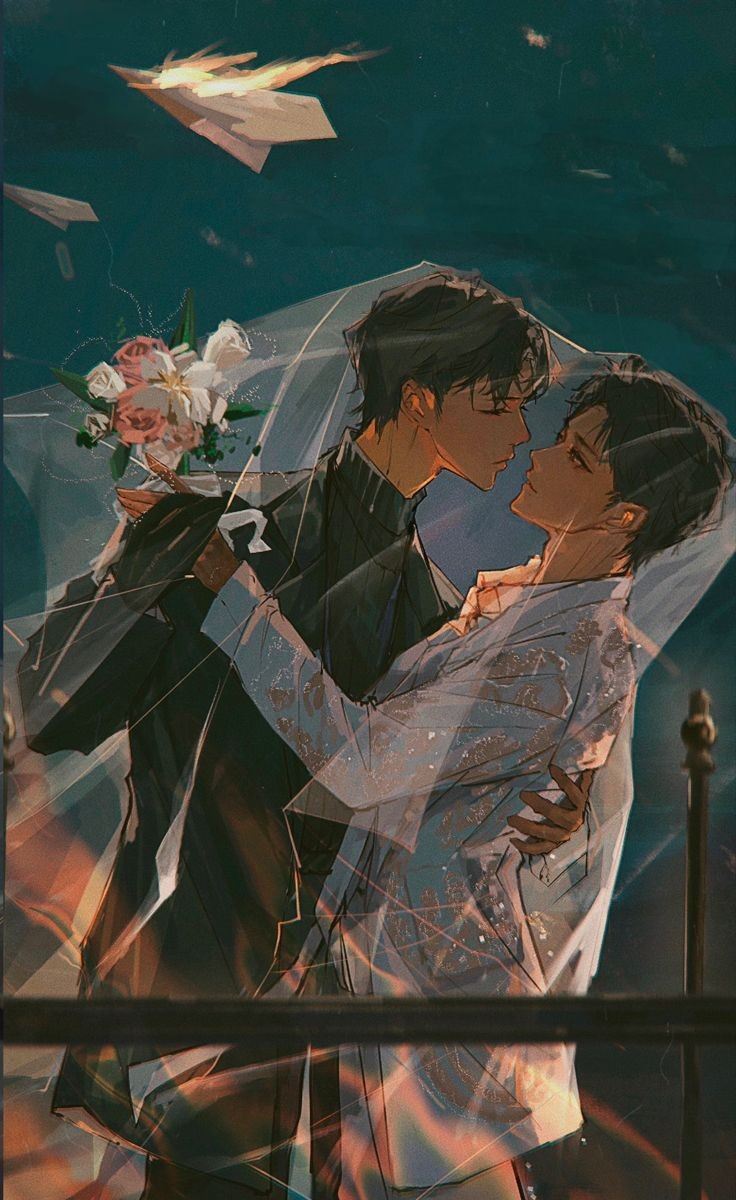
The End of This Contract Marriage
+Add to Custom List
Novel Info
  • Author:
  • Status:Ongoing

Summary

... Read More

Melian Raison is the younger son of a declining Viscount family in the southern region of the continent. Once a noble house with a proud military history, the Raisons have fallen into poverty following the collapse of the Empire and the disappearance of monsters that once provided avenues for military glory. Melian lives a humble life caring for his infirm father, working the land, and managing the household chores alone after their mother’s death. His elder brother, Reuben, had run away from home earlier in the year claiming he would restore the family’s fortune through business, but instead vanished into a life of gambling and debt.

The story begins when Melian receives a letter from Reuben, written in frantic, messy handwriting. The letter reveals that his brother has been imprisoned in a watch house for unpaid gambling debts and loan shark loans. Desperate to save his family from ruin, Melian travels to Millium Manor to seek help from Helena Millium, a wealthy Duchess-level noblewoman and his former classmate at the National Academy. Their past relationship was defined by Melian’s silent, unrequited admiration, while Helena remained dignified and distant. Melian initially asks to borrow money, but Helena rejects the request coldly, noting his shamelessness and the inadequacy of his position.

However, Helena surprises Melian by proposing marriage instead. She reveals that she needs a husband to fulfill her dying grandfather’s final wish to see her married before he passes away. In exchange for becoming her husband, she offers to repay all of the Raison family’s debts and provide financial support. Melian initially refuses, citing his pride and the lack of genuine affection between them. He returns home only to find debt collectors have trashed his family’s estate. Realizing he has no other choice, he accepts the proposal, despite his internal conflict and lingering feelings for Helena.

The two parties formalize their arrangement through a contract engagement. Helena dictates the terms: they must act as lovers in public for four months, maintaining the appearance of a romantic courtship until the wedding in autumn. After her grandfather’s death, she intends to divorce Melian, taking the blame to protect his honor and allowing him to remarry freely. The terms also specify that they will not engage in physical intimacy beyond holding hands in public, and they will avoid marital relations entirely. Melian agrees, though he struggles with guilt over using her wealth and the deception involved.

Helena promptly deposits a large sum of money into the Raison account, clearing Reuben’s debts and securing his release. Melian manages to explain the situation to his father by framing it as a genuine romantic relationship that developed during their academy days, a lie that Viscount Raison accepts with a mix of relief and sadness. The narrative shifts to Helena’s visit to the Raison estate, where both parties attempt to perform the roles of devoted lovers in front of the Viscount. Despite their awkwardness and internal turmoil, they manage to convince the father, who is grateful for Helena’s kindness. Throughout these interactions, Melian battles his own desire and self-loathing, while Helena reveals subtle signs of warmth and competence that challenge Melian’s previous perceptions of her.

The core conflict revolves around the tension between duty and desire. Melian is trapped by his family’s financial collapse and his love for Helena, forcing him to suppress his true feelings behind a facade of contractual obligation. Helena, driven by filial piety and perhaps hidden personal motives, maintains a composed exterior while navigating this strange new relationship. The story follows their progress as they prepare for the autumn wedding, balancing the performance of romance against the reality of their transactional union, and hinting at the emotional complications that will arise when the deadline for their divorce approaches.

Latest Release
DateGroupRelease
2026-10-03dusk blossoms c12
2026-10-03dusk blossoms c11
2026-10-03dusk blossoms c10
2026-10-03dusk blossoms c9
2026-10-03dusk blossoms c8
2026-10-03dusk blossoms c7
2026-10-03dusk blossoms c6
2026-10-03dusk blossoms c5
2026-10-03dusk blossoms c4
2026-10-03dusk blossoms c3
2026-10-03dusk blossoms c2
2026-10-03dusk blossoms c1

Community Reviews

Rating(0 / 5.0, 19votes)
5 stars
0(0%)
4 stars
0(0%)
3 stars
0(0%)
2 stars
0(0%)
1 stars
0(0%)

Popular reviews

... Read More
Okay so let me just say—this scene where Helena lays out her marriage proposal like it's a business contract is absolutely delicious and also painful. She's sitting across from Melian, totally calm, explaining that she needs someone who looks good on paper, someone she can control, and somehow she's picked HIM. And Melian knows it. He knows exactly what she's planning. The setup is this: Helena needs a fake fiancé to shut up her family/society while she figures out her own situation (probably about her grandfather, based on the 'until he passes away' line). Melian's family is in debt, his brother Reuben is in trouble. The Milliums drop a mountain of cash and suddenly Melian is engaged to a woman he's clearly had feelings for. But here's what gets me—the plot doesn't treat this like a rom-com meet-cute. It's brutal. Helena literally says he's 'perfectly suitable' because he'll be obedient. She's choosing him precisely because he won't threaten her authority. And Melian? He agrees. Not because he's a pushover, but because he has nowhere else to go. Then there's the father subplot—Viscount Raison wants to meet Helena, which sends Melian into a full panic. The stakes are compounding: debt, family honor, this marriage that's supposed to be fake but is making him feel very real things. The chapter ends with him writing a letter to her about the money being received, then losing his mind alone in his room. That transition—from formal negotiation to private unraveling—is Chef's kiss. The plot is tight. Every element feeds the next.
... Read More
Can we just talk about Melian for a second because holy. This guy is losing his mind over a contract engagement and he doesn't even realize it yet. Like, he's literally having sexual thoughts about his fake fiancée right before she walks through the door, AND he's furious at himself for getting impatient when his own father walks slowly. The self-loathing is off the charts—he keeps calling himself hopeless trash, and meanwhile his hand feels like it's on fire when Helena barely brushes the fabric of his sleeve. And that moment when he actually smiles and she can't tell if it's real or acting? He becomes displeased that she might have been with someone before. BRO. You are deeply implicated at this point. But honestly what gets me is how different Helena is here compared to what Melian remembers from academy days. She's warm, lively, using this gentle voice, making a show of being shy—Viscount Raison basically gets treated to a version of her that Melian has NEVER seen. And yet there's something so deliberate about it. She's performing the perfect future daughter-in-law, and she's good at it. The scene where she blushes when his hand touches her shoulder—Melian doesn't even think deeply about it. That's the kind of detail that haunts me. Is it the act? Or is it not entirely the act? The father-son dynamic is also quietly devastating. Viscount Raison noticing everything while pretending not to, the way he lets go of Melian's hand so easily because he sees his son is distracted. "Lian, what are you doing standing there blankly?" — that gentle scolding must have cut. Melian had been so worried about appearing like a proper lover that he almost abandoned his crippled father. The guilt he carries is a whole personality trait at this point.
... Read More
I need a moment. Just... a moment. Melian rides all day to see Lady Millium, gets rejected (well, technically he rejects HER but same energy), and comes home to find his entire world destroyed. Not just metaphorically — literally. The gate torn off. The chicken coop empty. Vegetables trampled. And his father collapsed on the floor among broken porcelain and scattered papers, clinging to a cane like it was the only thing keeping him alive. The line that killed me: "The Viscount clutched the long wooden cane tightly as though it were a lifeline." A CANE. His father is holding a piece of wood like it's the only thing anchoring him to this earth. And Melian — sweet, exhausted, muddy-booted Melian — he doesn't even yell. He doesn't ask what happened first. He runs to the VOICE. "Lian..." and he just goes straight to him. Then later when the Viscount starts coughing and Melian asks if he should bring medicine and the dad says "Do not worry about me. I am more worried about you and Reuben." And Melian just... keeps patting his shoulder. Playing the role of the dutiful son while his whole family is falling apart around him. And the father's guilt! "Of all times, you had to be born in such difficult days, and because you were given the wrong family..." BRO. This man is bankrupting himself emotionally before he's even bankrupted himself financially. He looks at his younger son and sees bad luck personified. Meanwhile Reuben — the brother who supposedly came home to help, who boasted he'd restore the family — is in a watch house because of gambling. And Melian protected his father from knowing. He took the stagecoach alone to beg a duke's daughter for money and came back empty-handed to a wrecked house and his dad having health episodes. No one is taking care of MELIAN in this scene and that's what made me upset. I want someone to bring Melian a cup of tea and sit with him for five minutes. Is that too much to ask?
... Read More
This one line hit me so hard I had to stop reading for a full minute: "She was holding the fabric of his sleeve, so there was no way he should have felt her warmth, and yet the place where she touched him burned. It was a painful and blissful sensation." Painful and blissful. That's literally the entire romance genre compressed into twelve words and I am NOT okay. Melian is simultaneously the happiest and most tormented man alive in this scene. He got what he wanted—he's here with the woman he's had a crush on since first love, everyone thinks they're engaged, his father likes her—and he is actively suffering through it because he knows it's all a performance. The secret between them is supposed to make them closer but it's also the thing creating this unbearable tension where every glance and every accidental touch feels like betrayal. And then Helena does this thing where she completely reinvents herself around his father. The shy smile, the gentle voice, the way she calls Melian "family" — and Melian is over there questioning his own memories of who she actually is. Was she always capable of this warmth? Or is this performance so good that it makes him wonder if he ever really knew her at all? The dinner scene is where it all peaks. When she says the food is delicious and means it, his smile comes naturally for the first time. Not an act. Just pure, unguarded relief and happiness that someone he cares about actually enjoys something he made. He spends so much of this novel trying to hide his real emotions behind calculated expressions, and in that one moment the mask just... slips. Because it's real. The food is genuinely good because he COOKED. He took care of his father, he learned to cook, he did all this quiet domestic labor while his family fell apart, and now the woman he loves is eating it and smiling. I lost it.
... Read More
Let's talk about how this thing is structured because wow. The prologue sets up this light, almost rom-com energy. A tall boy helps a short girl reach a book. There's blushing. There's a faint scent of soap. It feels like the kind of opening that promises fluffy academy romance and I was fully buying it. Then chapter 1 hits like a truck—cut from youthful fluttering to a twenty-two-year-old man whose family has fallen on hard times, waking up to stale bread and washing water he fetches himself. The tonal shift is violent and intentional and I love it. The pacing within chapter 1 is also tight. It opens with routine—very slow, very quiet, almost meditative—and then the courier arrives and everything accelerates. You can feel the shift in Melian's head as he reads that letter. His complexion goes through white, bluish, red. The prose matches his physical reaction in real time. Then the journey montage, the muddy boots, arriving at this impossibly grand manor, and bam—rejection at the gate, then another soft rejection inside. No false hope, no dramatic confrontation, just a quiet, devastating no. By the end of chapter 2, we've gone from prologue romance to full-on desperate plea and the pacing hasn't missed a beat. The author is clearly building toward something bigger—a sister's illness, a brother in debt, a fallen house—but hasn't dumped exposition on us. Everything is earned through scene. That said, I'm still curious whether the middle chapters will maintain this pressure or let up. Right now it feels like one long exhale building into a scream and I need to know what happens next.
... Read More
The way this chapter structures the visit is brilliant on a technical level. You start with the debt collectors having already wrecked the place—the rugs trampled, ornaments smashed, the family's disgrace exposed in the most visceral way possible. Then the housemaid returns and scrubs everything spotless, replacing what she can without asking questions. This is basically the entire story in miniature: the Raison household is holding itself together through sheer performance, pretending the damage didn't happen while everyone in the house works overtime to make sure nothing shows. Melian's preparations mirror this exactly. He's not just cooking a meal—he's cooking a performance. The elaborate dinner, the changed clothes, the practiced smile, the scripted dialogue about their relationship. Every detail is calibrated. And the script itself is hilarious and tragic: do not reveal the sham, use formal speech, say you've been together since last spring. They wrote themselves a rulebook for lying and Melian is treating it with more importance than most people treat marriage vows. The tension builds through these tiny moments of near-exposure. The father's burn scar. The cane. The missing ornaments that no one mentions. Every single thing could unravel the whole fabrication if looked at too closely. And Melian's internal panic about his father noticing how distracted he is? That's the real plot here—the fear that the people who know you best will see through the act. The Viscount watching back and forth between them like he's reading a book he's already finished, that ending image is such a good hook. What does he know? What has he figured out?
See all reviews

Custom lists

See all custom Lists