Summary

... Read More

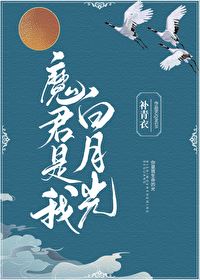
Mu Xiyun was once the top disciple of Moyun Mountain’s Tianliang Peak, a prodigy renowned for his swordsmanship and cold demeanor. Fifty years prior, during the decisive Battle of Linmo Yuan—the frontier between the human and demon worlds—he witnessed his senior brother, Gu Qingqiao, betray the immortal sect. Under the pressure of a life-and-death confrontation, Gu Qingqiao’s eyes turned blood-red as black qi erupted from his body, shattering Mu Xiyun’s golden core and killing him. As Mu Xiyun lay dying, he heard Gu Qingqiao’s agonized cry before losing consciousness.

Five decades passed in darkness. Mu Xiyun’s soul was preserved in a soul-gathering bottle by Elder Huang of Tianji Peak, who refused to accept the inevitability of death. After thirteen years of crafting a new body from spiritual jade and a thousand-year-old plum tree, Elder Huang successfully resurrected Mu Xiyun. However, the reincarnation came with severe drawbacks: his meridians were narrow, his spiritual energy was depleted, and he had lost his golden core, reverting him to a low-level cultivator. The elder, who had spent fifty years waiting for this moment, introduced him as Mu Yun and allowed him to settle on Tianji Peak under a new identity.

Adapting to this second life proved difficult. While Mu Yun quickly regained proficiency in basic sword techniques and mastered medicinal skills under Elder Mo Zhiqi, his cultivation remained stagnant. He discovered that a mysterious, invisible force hindered his spiritual advancement whenever he attempted to break through to the foundation establishment stage. The only time this obstruction vanished was when he recalled memories of Gu Qingqiao, suggesting a deep, unresolved emotional knot tied to his progress. During this period, Gu Qingqiao himself reappeared in the mortal world, having survived the aftermath of the battle. Resurrected by a mysterious figure named Zhang Jinjin using rare medicinal herbs and spells, Gu Qingqiao now traveled incognito as a sickly young man, searching for answers regarding his past and his fractured relationship with Mu Yun.

The narrative shifts when Mu Yun is selected alongside Su Yanjun, a favored disciple of the Sect Master, to inspect the Spirit Array in Yiyun Town. Their mission soon entangles them in a grim investigation following the discovery of a child’s corpse with its heart removed. The brutality of the crime points to demonic activity, prompting Mu Yun to delve into the mystery with a perceptiveness beyond his current cultivation level. His investigation leads him to an orphanage where a fire had killed four children months prior. There, he encounters a masked stranger who reveals inconsistencies in the fire scene, implying the children were already dead before the blaze. This stranger, later identified as Gu Qingqiao, warns Mu Yun that what he sees may not be the truth.

As the inquiry deepens, a missing Tianxiang Peak disciple, Guo Qi, returns in a traumatized state. He reveals that his younger brother disappeared fifty years ago in the same mountains where the current murders are taking place. Guo Qi had dug up graves in a mass burial site, finding multiple bodies with their chests hollowed out, mirroring the recent victim. The convergence of past tragedies and present killings suggests a cult or demon faction operating within the human realm, targeting children for their hearts. Mu Yun finds himself drawn back into the web of fate that once destroyed him, forced to confront the shadows of Linmo Yuan while navigating his fragile new existence and the lingering, complicated bond with the man who once betrayed him.

Latest Release
DateGroupRelease
2026-09-26knoxt c7
2026-09-26knoxt c6
2026-09-26knoxt c5
2026-09-26knoxt c4
2026-09-26knoxt c3
2026-09-26knoxt c2
2026-09-26knoxt c1

Community Reviews

Rating(4 / 5.0, 156votes)
5 stars
52(33%)
4 stars
53(34%)
3 stars
51(33%)
2 stars
0(0%)
1 stars
0(0%)

Popular reviews

... Read More
Let me just say this: the moment Gu Qingqiao spoke those two words—"Ah Yun"—and then his face went completely white? I have never felt anything like that in a book. It hit me like a punch to the chest. These two. They grew up together. They fought side by side. And somehow, everything changed. What struck me most was Gu Qingqiao's reaction when he saw Mu Xiyun. He didn't immediately attack. He closed his eyes first, like he was steeling himself. Then he smiled. That smile is something I can't get out of my head. Is it desperation? Is it love for his martial brother? Or is it something darker, something the black qi has already begun to twist inside him? And Mu Xiyun—oh, Mu Xiyun. He didn't hesitate. He walked onto that platform with a sword, pale and exhausted, and he pointed it at the person he trusted most. But notice how the text describes him: “His hand holding the blade did not shake in the least, and his face was icy.” That's not the description of someone who wants to kill. That's the description of someone who had to, who was forcing himself to be cold because if he allowed even one crack in that armor, he might have broken down completely. The most devastating part comes later, when Mu Xiyun wakes in the cave and his memory floods back. “The one who played with him and fought alongside him in times of difficulty, whose every word and deed he treasured, and whose smile warmed his heart.” Yet here is that same person, covered in black qi, trying to slash his throat. I keep wondering: did Gu Qingqiao actually want to hurt Mu Xiyun? Or did the black qi take control the moment it touched him? The text says his eyes changed back from blood red to normal after Mu Xiyun pressured him. Does that mean Gu Qingqiao was in there the whole time, trapped inside his own corrupted body, forced to attack the person he loved most? This relationship is everything to me. It's not just master and junior brother. It's childhood friends. It's the kind of bond that makes betrayal feel like a physical wound. And I cannot stop thinking about what happens next when these two are finally alone together. Who will forgive whom? Or will there even be anyone left to do the forgiving?
... Read More
'Lin Xuewu clutched his heart with his hands and fell to the ground.' In six words, the entire scene pivots from procedural to primal. The stakes skyrocket from “solve a mystery” to “stop a man from becoming a monster.” The cyan totem isn't just a clue; it's a threat that bypasses reason and attacks the body. Gu Qingqiao's paralysis isn't cowardice—it's the terror of recognition. He knows this mark. It's linked to a death, to a past he can't outrun. That personal stake raises the tension exponentially. Meanwhile, Mu Xiyun, the closest witness, draws the totem from memory, his hands steady but his mind already racing ahead to a face in a dream. The external conflict—the unknown force behind the possession, the investigation across multiple locations—collides with internal conflict: guilt, fear, the burden of knowledge. Zhang Jinjin's confrontation with Gu Qingqiao on the roof adds another layer: the stakes aren't just about solving the puzzle, but about whether he'll survive the emotional fallout. Every character is Gamblerizing something. Lin Xuewu risks his sanity, Gu Qingqiao risks his silence, Mu Xiyun risks his sleep, Su Yanjun risks his journey. And the reader? We're left hanging on a single line—“It's Li Yao.”—with no resolution, only the dread that the face behind the totem is about to walk out of the past and into the present. The suspense isn't just “what happens next?” It's “who will break first?”
... Read More
This chapter absolutely wrecked me emotionally. The way Gu Qingqiao is sitting there with this massive secret about his Southwest Valley origins, watching Mu Xiyun react to the news of Gu worms with visible fear... and he just can't tell him. That porcelain bottle on the stone table is such a perfect symbol for their entire relationship right now - present, visible, but sealed shut. The author does something devastating here. Mu Xiyun clearly remembers finding out that Li Yao lost his blue dragon pendant. He remembers seeing something flash on the master's face - a blue totem. And now Gu Qingqiao extracts Gu worms using his own blood. These two things are connected. Mu Xiyun is standing right there in the courtyard processing all of this, and Gu Qingqiao is too afraid of losing whatever friendship they've built to connect the dots for him. I love how Mu Xiyun handles it too. When he says he's 'a little afraid of bugs since I was a child,' he's giving Gu Qingqiao an out. He's protecting him even while he's spiraling internally. That's the kind of quiet, desperate loyalty that defines their dynamic. And then Zhang Jinjin just barging in like 'hey cousins, you two go together and take care of each other' while having a toothache? This man is the emotional support character we all need.
... Read More
Okay so this whole Lingshan formation thing is really interesting from a plotting standpoint. On the surface it looks like just another tournament arc, but the way Nie Yao describes it — that it won't let you make judgments easily — is a massive red flag wrapped in a hint. The author keeps dropping breadcrumbs: the formation tests the mind, not the weapons; the ancestor was a blacksmith who saw peace, famine, and prosperity; weapons in the wrong hands become instruments of disaster. All of this is world-building that's also foreshadowing. It's subtle though, not heavy-handed. I love that the author trusts readers to connect the dots instead of spelling it out. "The trial will not let you make judgments easily." That line alone makes me want to turn the page immediately. It's basically telling us: prepare to be wrong about everything. And then there's the Lin Xuewu subplot hanging in the background — a supposed lunatic, a rescued mother and son, and the Lingshan law taking personal interest. Three separate threads that haven't collided yet but are clearly heading toward the same explosion. I'm betting the trial and the Lin Xuewu case are going to intersect in a way nobody expects. The pacing here is masterful — nothing's rushed, but nothing feels idle either.
... Read More
Okay so let me just talk about Gu Qingqiao for a second because THIS MAN occupies so much space in Mu Xiyun's head and I am HERE for it. Like, the entire chapter is basically Xiyun's internal monologue about a guy he saw for five seconds on a bridge twelve years ago. The author does this thing where Xiyun is investigating a bunch of missing children cases, deadpan and efficient, and then suddenly his eyes land on a bridge and the whole world shifts. That transition from detective mode to "oh god it's him" mode is so clean. And the flashback—listen to this: "That smile came and went just as fast, but it was like a dragonfly lightly tapping on the lake's stilled surface, leaving a faint trace in the heart of the twelve-year-old boy." A DRAGONFLY. Not some dramatic lightning bolt, not a tidal wave. A dragonfly. That's so specific and so telling about Xiyun himself, right? He's a cultivator, he deals in massive spiritual forces, but the moment that actually got to him was the lightest possible touch. And he carried it for twelve years. Twelve years. What gets me is how he describes himself in that memory. He's the kid who stays behind to practice while everyone else goes out to play. He's watching other families—the mother helping the child up, the father smiling—and then he looks up and sees THIS boy on the bridge railing, free and uninhibited, like nothing in this world would leave traces in his life. The contrast is almost painful. This kid who can't quite fit into his own world catches a glimpse of someone who seems to belong to no world at all, and that's the moment everything changes. And now the guy's supposedly dead, his soul scattered, and Xiyun is down here solving murders and telling himself it's just about repaying the Tianji Peak elders, but we all know that's not it, right? "What's more, up to this day, he still had not yet been able to confirm what kind of feelings he truly had for the young man who was called a traitor." He can't even figure out his own heart and he's out here solving mysteries for everyone else. Classic.
... Read More
That jade piece. Just look at it for a moment. A deer carved in round, warm jade — 'as warm and moist as congealed fat,' the text says, as if the deer itself is alive underneath the stone. And then the legend: a thousand-year-old deer that transforms into a goddess who prays for rain in the Gobi desert and whose blood keeps souls alive. I keep coming back to this image because it feels like the novel is asking us something fundamental about what the world here actually values. Is it power? Is it compassion? The goddess didn't become powerful through conquest — she became a goddess by *praying for others*. That's a theme this story seems to carry quietly in its pockets. Then there's the bigger question raised by the disciples: if Lingshan is supposed to be a blessed land of immortals, why does a mudslide destroy villages? The word 'illusion' is interesting here. One disciple asks if the disaster was 'an illusion in Lingshan.' That word — illusion — opens up this whole philosophical can of worms. What is real in this world? The mudslide was undeniably physical, devastating, real. But maybe the 'blessed land' reputation of Lingshan is the illusion. Maybe the immortals aren't what they seem. The jade connects to something older, something pre-sect, pre-hierarchy — a goddess who cares about desert rain and human souls, not sect politics or cultivation rankings. Zhu Li shuttling between the two fire camps, linking cultivators and villagers, feels symbolically significant too. She's the thread holding both worlds together.
See all reviews

Custom lists

See all custom Lists