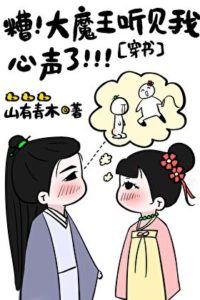
The Demon Lord Heard That I Want to Seduce Him
+Add to Custom List
Novel Info

Summary

... Read More

Le Gui is a modern university student who transmigrates into the fantasy novel Supreme, finding herself in the body of a frail mortal woman within the Demon Realm. Her sole objective is to return to her original world, a goal that requires retrieving the Wuliangdu, a sacred artifact hidden in the sleeping chambers of the Demon King, Di Jiang. According to the novel's plot, Di Jiang is destined to die in ten days, having retreated to Diyun Peak to drink himself to oblivion under a peach blossom tree. Le Gui believes that by spending the night with the Demon King and surviving, she can claim the status of his queen and access the artifact, after which she can use the Wuliangdu to escape before his death.

Le Gui serves as a low-ranking cleaner in Wuyou Palace, assigned to the Hehuan Sect disciples who are tasked with serving Di Jiang. While her colleagues scheme to seduce the Demon King to gain favor, Le Gui remains invisible, focusing only on her duties and her plan to leave. On the night of Di Jiang's meditation at Bi'an Terrace, she sneaks out to execute her plan but witnesses a senior sister die after triggering the palace's protective wards. Di Jiang orders the steward to clean up the "filthy thing," and Le Gui narrowly escapes death by playing the role of a concerned junior sister who was merely trying to stop the deceased. She is subsequently struck by Di Jiang's overwhelming pressure and falls ill, missing the critical window she had planned.

After recovering, Le Gui attempts to resign from her position, but her departure is interrupted when she is summoned to Diyun Peak to deliver wine for Di Jiang's final ritual. Upon arrival, she discovers that the peak is in ruins and that Di Jiang is still alive, defying the novel's original plot. During the wine service, Le Gui becomes intoxicated by the potent spiritual wine and passes out. When she wakes, she learns that Di Jiang has taken a sudden interest in her, a mystery that puzzles both her and the other disciples. Instead of allowing her to leave, Senior Sister Li informs Le Gui that Di Jiang has personally ordered her transfer to Diyun Peak, making her the first new servant in a thousand years.

Le Gui is transported to the Cangqiong Palace on Diyun Peak, where she finds the environment chaotic and filled with bizarre magical artifacts. Di Jiang tests her by making her walk back and forth across the cluttered hall multiple times, seemingly amused by her internal monologue and her attempts to navigate the dangerous terrain. He confronts her about her presence at Bi'an Terrace, and although she lies to protect herself, he dismisses her, allowing her to leave but keeping her under his watch. Le Gui then encounters the Seer Mirror, an omniscient artifact that demands a soul for information. In a desperate attempt to avoid the trap, she asks the mirror a nonsensical question about modern internet recharge fees, causing the artifact to malfunction and crash, which amuses Di Jiang when he later discovers the damage.

The core conflict shifts from Le Gui's simple plan to retrieve an artifact to her survival in the unpredictable presence of the Demon King. Di Jiang possesses a unique ability to hear Le Gui's true thoughts when he is within two meters of her, revealing her lack of genuine devotion and her secret desire to escape. This dynamic creates a tense power imbalance, as Le Gui must constantly mask her true intentions while navigating the deadly politics of the Demon Realm. The story moves forward with Le Gui trapped in Di Jiang's service, her original goal complicated by the fact that the Demon King is no longer following the predetermined path of his demise, forcing her to adapt to a reality that diverges significantly from the novel she once read.

Latest Release
DateGroupRelease
2026-08-11shanghai fantasy c81
2026-08-11shanghai fantasy c80
2026-08-11shanghai fantasy c79
2026-08-11shanghai fantasy c78
2026-08-11shanghai fantasy c77
2026-08-11shanghai fantasy c76
2026-08-11shanghai fantasy c75
2026-08-11shanghai fantasy c74
2026-08-11shanghai fantasy c73
2026-08-11shanghai fantasy c72
2026-08-11shanghai fantasy c71
2026-08-11shanghai fantasy c70

Community Reviews

Rating(3.7 / 5.0, 26votes)
5 stars
5(19%)
4 stars
10(38%)
3 stars
8(31%)
2 stars
3(12%)
1 stars
0(0%)

Popular reviews

... Read More
Okay, can we just talk about how the author builds this world? The description of Diyun Peak is absolutely cinematic. Let me paint it for you. They start climbing from the foot of the mountain, and the higher they go, the more the world transforms. The dense forest disappears, the stone path becomes a golden platform, the sky turns purple with demonic mist that looks like a daytime starry river. Clouds shift into mountains and waterfalls, and whales are SWIMMING THROUGH THE AIR. Whales. In the sky. This is not a subtle worldbuilding job. And then—BAM. They reach the top and it's a pile of ruins. Eight meters high. With a music troupe playing loudly. Senior Sister Li tries to convince everyone it's an illusion, and then rocks fall from the rubble and knock the musicians over. The illusion isn't an illusion. The palace is actually destroyed. Di Jiang lives in a wreck. This is such a brilliant subversion. You expect the most exquisite palace in all three realms to be magnificent, and instead it's a disaster zone. But here's what makes it work: the author doesn't just show us the ruins and move on. The musicians are still playing. The instruments are still there. It's like Di Jiang doesn't care that his palace is destroyed, or maybe he's hosting a party in the rubble because that's just who he is. The contrast between the heavenly journey up the mountain and the devastating reveal at the top is perfect pacing for worldbuilding. You're dazzled by the purple sky and swimming whales, your guard is down, and then the author pulls the rug out. I also love the detail about Diyun Peak being the only mountain that matters to Di Jiang. Out of three thousand demon mountains, he chose this one. He built it himself from a lake of condensed demonic energy. The other 2,999 mountains were constructed by his subordinates, but this one is HIS. And now it's in ruins, and he's sitting at the top in a red robe, and the whole thing feels like a god who has already lost everything but refuses to acknowledge it. The Hehuan Sect women treating this like a glamorous opportunity while Le Gui is just mentally planning her farming career back in the mortal realm—this contrast between how different characters perceive the same world is what makes the setting feel alive. The world isn't just backdrop; it's a mirror reflecting each character's desires and fears.
... Read More
I have to talk about the scene where Le Gui first meets Steward Niu Jiao after finding that dead body. This woman is literally shaking in her boots, has just seen a corpse with wide-open eyes, and somehow still manages to outsmart the most terrifying servant in the palace with a few well-placed words. Let me break this down. Niu Jiao shows up groveling, calling himself a fool, blaming the dead maid. Le Gui is on the ground, probably about to faint. Then he asks her why she's there. And what does she do? She lies. Smoothly. Says she followed her senior sister out of concern. But here's the genius part—when he tries to dump the cleanup task on her, she flips it back: "If he finds out you handed off a task he assigned to you, wouldn't that make him even angrier?" She weaponized his own fear against him. Niu Jiao is this terrifying figure who brings Di Jiang's pressure down on people, and Le Gui—this nobody, this mortal with zero spiritual power—manipulated him into doing the cleanup himself. That is some next-level survival instinct right there. And the dynamic between them? It's fascinating because Niu Jiao isn't just a cartoon villain. He's clearly terrified of Di Jiang too. The way he trembles, collapses after bowing, the sheer panic in his voice—he's a middle manager in a company run by a psychopath CEO, and Le Gui sees right through it. She reads the room instantly. Then there's Senior Sister Li, who hands Le Gui talismans and wine like a distracted boss delegating tasks without making eye contact. The other senior sisters gossip behind Li's back, and Li lets them because it makes her look superior. It's this whole ecosystem of power dynamics, and Le Gui is the smallest cog trying not to get crushed. What I love most is that Le Gui has completely given up on being the protagonist. She's not trying to win Di Jiang's favor or change the plot. She just wants to go home and farm. That resignation makes her so much more interesting than a typical transmigrator hero. She's not fighting fate—she's just trying to survive it with her brain intact. The relationship between Le Gui and the dead senior sister also haunts me. That corpse hanging at the gate, Le Gui making eye contact with it every time she goes to the bathroom—that's not just horror, it's guilt. She's alive because she was smarter in that moment, and someone else wasn't. I don't think the book fully explores that psychological weight, but it's there, simmering under the surface.
... Read More
Okay can we just talk about how Di Jiang casually drapes himself over Le Gui like she's a coat rack right after she's being accused of poisoning him? The man is a menace. But then Yaoyao calls Le Gui useless and Di Jiang's entire energy shifts — "And who do you think you are to insult someone who belongs to me?" Le Gui's inner monologue: [That was almost touching… but wasn't it you who called me incompetent first?] And I SCREAMED. That is the most Le Gui thing ever. She's over here trying to process whether that was romantic or just possessive and honestly it's both. The power dynamic between them is so twisted and I'm here for it. Di Jiang uses her as a human shield, leans on her for support, treats her like furniture — and yet when someone ELSE insults her, he loses it. Meanwhile Le Gui's internal screaming is unmatched. She's standing there thinking [Wait… is he talking about me?] like a confused golden retriever who just got told to fetch but also maybe not. Their whole relationship is built on this beautiful chaos where she's constantly terrified of him and yet somehow also the only person he lets get close enough to physically lean on. The fact that he knew she pinched him and was awake the entire time? CHILLING. And she only just figured it out. She's been sharing a bed with a man who was fully conscious and pretending to be unconscious and she's just now connecting the dots. I love her so much.
... Read More
I need to talk about Le Gui's emotional arc because it's the most underrated thing in this book. When we first meet her, she's a panic-prone transmigrator trying to follow the plot, convinced that protagonists have plot armor. She's ambitious in a desperate way—willing to seduce the Demon King to survive. But after that night with the dead body, something shifts. The illness that follows isn't just physical. It's the cumulative trauma of realizing how fragile her existence is. She saw death up close. She felt Di Jiang's pressure, the kind that makes breathing painful. And she survived not because she's special, but because she lied quickly and thought on her feet. The moment that broke me was when she stares at herself in the mirror after recovering and decides she wants to quit. Not because she's found a better plan, but because she's exhausted. Her ["childish fantasies seemed to have faded away"]. She's not the chosen one. She has no plot armor. She's just a mortal woman in a demon world who wants to go home and farm. This is such a human reaction. Most transmigration stories are about the protagonist embracing their new role, fighting fate, changing the plot. Le Gui does the opposite—she accepts that she's powerless and chooses self-preservation over heroism. There's a quiet tragedy in that, but also a strange kind of courage. It takes more strength to admit you can't win than to keep pretending you will. The wine delivery scene adds another layer. Le Gui is carrying two jars of wine up a mountain while everyone else is excited and fantasizing. She's detached, almost numb. ["This is my last errand. Once I finish this, I'm quitting for good!"] But even as she says this, the plot pulls her back in. She's not allowed to leave. The world won't let her. And that's the emotional core of this section—the tension between wanting to escape and being trapped by circumstances beyond your control. Le Gui's resignation isn't defeat; it's clarity. She sees the world as it is, not as she wishes it to be. And that clarity is both heartbreaking and empowering. The scene with the dead senior sister haunts me too. Le Gui sees that corpse every time she goes to the bathroom. Those wide-open eyes filled with resentment. She's alive because she was smarter in that moment, and somewhere deep down, she knows that being smarter doesn't guarantee survival. It just buys you time. That guilt, that fear, that awareness of how thin the line is between living and dying—that's the emotional weight that carries through every chapter.
... Read More
Okay, so let me just... process what I just read. The protagonist, Le Gui, is clearly a transmigrator who knows she's inside a novel. She's been working at this demon palace for a month, and her entire goal is to escape back to the mortal realm. But here's the thing that completely flipped the plot on its head: Di Jiang, the supposedly doomed male supporting character, is ALIVE. In the original story he dies under a peach tree, right? But somehow the timeline has shifted and now he's not just surviving—he's actively interested in her. And the best part? He can hear her true thoughts when he's within two meters of her. The scene where she's dramatically rolling on the ground muttering about how unfair her life is while he's literally watching her through a bronze mirror is absolute comedic gold. She's performing for an audience of one, and she has no idea. The irony is so thick you could cut it with a knife. And then Senior Sister Li, who we're led to believe is somewhat of an ally, just straight-up betrays her and teleports her right to Di Jiang's doorstep. The plot twists keep coming and I'm here for it. The author is playing 4D chess with this narrative and I'm just sitting in the stands losing my mind.
... Read More
The Wanghuan Spring concept is actually a really fascinating metaphor that the novel doesn't shy away from. It's supposed to be this ultimate prize—eternal youth, extended lifespan, a loophole against death itself. But Le Gui looks at it and says no. Her reasoning is almost devastatingly simple: the water has to be consumed daily, which means you have to keep working forever. So immortality just becomes permanent employment. She literally says 'What is the point of living forever if it just means working forever?' and Senior Sister Li, who has apparently never considered this angle, is left speechless. It's a biting critique of the cultivation novel trope where everyone is desperately chasing longevity. The novel flips it on its head and asks: what are you actually living for? Le Gui would rather die young and free than exist forever as a servant in a demon palace. There's also the bronze mirror as a symbol—Di Jiang uses it to spy on people, to consume spiritual energy, to maintain control. It's beautiful and decorative but fundamentally a tool of surveillance and exploitation. And the palace itself, which 'inexplicably restored itself overnight,' feels like a gilded cage that rebuilds its own bars. The whole setting is a commentary on how systems of power trap people not through force alone but through the promise of something they want—youth, security, purpose.
See all reviews

Characters

See all characters

Custom lists

See all custom Lists