Summary

... Read More

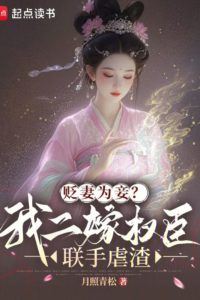
Lin Zhenzhen is a young woman living in the rural village of Tianzhuang during the winter of 1958. Five years prior, she married Shi Huaiming, an educated and ambitious man, in an arranged union. Just two weeks after the wedding, Huaiming was conscripted into the army and vanished without a word, leaving Zhenzhen a widow in all but name. She has spent the last five years living with her mother-in-law, Zhong Minfen, and her brother-in-law’s family, working diligently in the production team and selling bean sprouts to support the household. Despite the hardship and the gossip from villagers who pity or resent her, Zhenzhen remains steadfast, refusing to remarry even when her mother-in-law suggests it, believing Huaiming is still alive.

The status quo shatters when a letter arrives from the army, revealing that Shi Huaiming is not only alive but has risen to the rank of regimental commander. The news electrifies the village and brings immense joy to the Shi family. However, the celebration is tempered by rumors that Huaiming, now a high-ranking officer, may divorce his rural wife to marry a city woman. These rumors are fueled by Hongmei, a gossiping villager, and Shi Huaixia, Zhenzhen’s sister-in-law, who openly despises Zhenzhen and believes she is unworthy of her successful brother. Zhenzhen, though hurt, maintains her composure, continuing her daily routines while secretly fearing the worst.

As the family prepares for the Lunar New Year, Huaiming sends another package containing money, ration coupons, and a bright red scarf specifically for Zhenzhen. This gesture brings Zhenzhen great happiness and temporarily dispels her fears, as the scarf symbolizes his continued affection and recognition of their marriage. The family enjoys a prosperous New Year, a stark contrast to their previous struggles, and Zhenzhen cherishes the scarf, keeping it safe rather than wearing it frequently.

The peace is disrupted when Shi Dafu, Huaiming’s biological father who abandoned the family twenty-five years ago to live with a mistress, learns of his son’s success. He returns to the village, hoping to claim his status as a father and reap the benefits of Huaiming’s wealth. Zhong Minfen, furious at his audacity and past betrayal, chases him away with a rolling pin, vowing never to let him back into the family. Despite this confrontation, the threat of Shi Dafu lingering and the unresolved question of Huaiming’s intentions hang over the household.

Tensions rise within the family when Shi Huaixia attempts to take the red scarf from Zhenzhen’s belongings, claiming it as family property. Zhenzhen firmly refuses, asserting her rights as Huaiming’s wife, which leads to a heated argument. Zhong Minfen intervenes, slapping Huaixia and driving her out, reinforcing her protection of Zhenzhen. Meanwhile, Zhenzhen’s own family encourages her to secure her position, suggesting she visit Huaiming or bear a child to bind him to her, but Zhenzhen remains hesitant, feeling unworthy and uncertain of his true feelings.

The story concludes with Zhenzhen still waiting for Huaiming’s return. While she has found stability and love within her current family unit, the uncertainty of her marital future and the potential interference of her absent husband’s past create an underlying tension. Zhenzhen’s quiet resilience and her refusal to be cast aside define her position as she navigates the changing social landscape and the looming possibility of reunion or rejection.

Latest Release
DateGroupRelease
2026-08-11shanghai fantasy c51
2026-08-11shanghai fantasy c50
2026-08-11shanghai fantasy c49
2026-08-11shanghai fantasy c48
2026-08-11shanghai fantasy c47
2026-08-11shanghai fantasy c46
2026-08-11shanghai fantasy c45
2026-08-11shanghai fantasy c44
2026-08-11shanghai fantasy c43
2026-08-11shanghai fantasy c42
2026-08-11shanghai fantasy c41
2026-08-11shanghai fantasy c40

Community Reviews

Rating(3.6 / 5.0, 24votes)
5 stars
5(21%)
4 stars
5(21%)
3 stars
14(58%)
2 stars
0(0%)
1 stars
0(0%)

Popular reviews

... Read More
Okay, can we just talk about how SHI HUAIMING has completely transformed? Five years apart and he's not just older—he's fundamentally different. The text literally says he now has 'a calm, mature steadiness—someone who had weathered many storms.' That's not just physical aging, that's a whole person reshaped by experience. And Zhenzhen notices it immediately. She thinks to herself that he's 'become someone so good, so outstanding, that she could only look up to him from afar.' Oof. That line hit me hard because it's not just admiration—it's the realization that the gap between them has grown in ways she didn't expect. But here's what I love: despite all this distance and change, when he greets her, he doesn't treat her like a stranger. He asks about Mother. He hands her the letter without making a scene. He drives her to the academy, shows her the apartment, demonstrates how the toilet flushes. Every action says 'you belong here' even when neither of them knows what 'here' actually means for their marriage. And then—the breakfast scene. She's bracing for divorce talk. She's literally built an emotional wall. And he puts a stack of elementary school textbooks on the table. The contrast between her expectation and his actual response is everything. He says 'Since I agreed to marry you, I won't casually divorce you. I understand what it means to take responsibility.' That's not just duty—that's a man who means what he says. But wait—what about Zhenzhen? She's so nervous she can barely speak, hiding behind her bundle, flustered by a seatbelt. Is she growing too, or is she staying small so he can stay big? I keep wondering about that.
... Read More
Can we just take a moment to appreciate Li Shuang as a character? Her dialogue is absolutely phenomenal. She says things like "Oh my, you're blushing! Come on, it's just what happens between husband and wife. We've all been there" and then she's laughing and teasing and completely unbothered. And then later at the store she's like "I think you're the one doing this on purpose" with this smug grin after delivering that devastating line to Awen. Every time she speaks, you can hear her voice—loud, confident, a little mischievous, never filtering herself. And the contrast with Zhenzhen is perfect. Zhenzhen's dialogue is all hesitant: "Is there… something else?" "I think so?" "Got it." She's soft-spoken, polite, always saying "Sister-in-law" and "Third Brother" with this respectful distance. The author has given each character a completely distinct voice and it makes every conversation feel natural and alive. Even Shi Huaiming's dialogue is distinctive—short, practical, never wasting words. "Don't get distracted." "Wait a moment." "It's no problem, but remember the route." He doesn't do fluff and it tells you everything about who he is. I love this writing.
... Read More
The way this chapter moves through spaces is genuinely cinematic. It starts in the village—earth-scented air, a donkey cart, people gathering at the edge of town to watch Zhenzhen leave. Zhong Minfen holding her hand, not letting go until the cart disappears. That image of them standing at the village edge, watching until they can't see her anymore, is so quietly devastating. No dramatic farewells, just presence. Then the train. The train is its own world—a liminal space where Zhenzhen can't sleep, dozes off, wakes at every sound, practices deep breathing, fidgets with her bundle. The window reflection becomes her mirror as she adjusts that red chiffon scarf, over and over, preparing to see him. I love that detail—the train window as a makeshift vanity. She's performing normalcy for someone she's about to meet. And then the city. The military academy. The green jeep. The cafeteria with braised pork and braised fish (which she can barely believe is real food—'Back in the countryside, they could only eat food like this during New Year celebrations'). The apartment with a proper toilet she's never seen, a bed with new quilts, a whole separate room that turns out to be HIS room. Each space is a step further into a world that's simultaneously beautiful and intimidating. The most powerful spatial moment though is probably the classroom scene with He Shuo. Military uniforms, older students, elementary school textbooks. The juxtaposition of a grown man in uniform borrowing children's books to teach his wife reads is one of those quiet worldbuilding details that tells you everything about this world's values—education matters, even basic literacy is something you recover and rebuild. Every location in this chapter feels lived-in and specific. I could picture it all.
... Read More
Okay so I need to talk about this part where Zhenzhen is sitting in the courtyard with Shi Danling reading the letter, and she hears 'you and Zhenzhen can go live with him' and literally her whole face changes. I swear I had to pause and just stare at the page. This woman has been carrying so much weight on her shoulders—being provoked by Shi Huaxia, feeling like an outsider in her own home, wondering if her marriage is even worth holding onto—and then suddenly this letter comes and it's like the ground shifts under her feet. What got me was how she doesn't even react out loud. She just says 'Oh' and keeps crocheting. But the text says her heartbeat grew louder and a soft light filled her eyes. That's it. That's the whole emotional arc of this chapter right there. She's been so used to being the one who waits, who tolerates, who swallows her pride—that the idea that someone actually WANTS her to come, that someone has been planning this for her, is almost too much to process in one sitting. And then the scene with Zhong Minfen afterward? 'Don't you dare let yourself suffer, do you hear me?' I literally gasped. This mother figure isn't just being nice—she's seeing her daughter-in-law as a person, not as a burden or a convenience. She's giving her permission to take up space in her own marriage. That hit me harder than any romantic confession could have. The way Zhenzhen packs those marriage certificates into her bag at the end—right before she leaves—felt like such a quiet but massive statement. She's not running away. She's going TO someone, with her证件 in her pocket like armor. I don't know why but that image stayed with me for hours.
... Read More
Can we talk about Zhong Minfen for a second because this woman is a masterpiece of restraint? She watches Zhenzhen sew in the sunlight—"resembled a daisy blooming in early spring"—and she literally has something on her mind but chooses not to say it. Twice. The first time she starts to speak and then stops. The second time she finally says the words but they come out wrapped in practicality about bean sprouts and winter. This is a mother-in-law who raised three children alone, who knows exactly how bitter widowhood can be, and who is trying to save her daughter-in-law from the same fate. But she can't just say it outright because saying it means confirming Huaiming is dead. So she circles. She uses Chen Qingmei as a proxy. She offers dowries and promises of dignity. She's trying so hard to be generous while also protecting her own grief. And Zhenzhen—"I won't remarry." Three times. Not defiant, not dramatic. Just quiet. The way she says it to her mother-in-law, to Chen Qingmei, to the empty air. When Chen Qingmei asks if life has been hard, Zhenzhen says no. But is that honesty or performance? The family treats her kindly, sure. But kindness doesn't erase five years of waiting. The niece clinging to her arm—"I don't want Auntie to remarry!"—that's the child's instinctive understanding that Zhenzhen is the emotional center of this household. When Zhenzhen disappears, who holds them together? The most devastating moment for me was Zhenzhen's response to Chen Qingmei: "Why can't I live like this, Sister-in-law?" That question contains an entire philosophy. Why does suffering have to be remedied by replacement? Why can't a chosen life be enough?
... Read More
Let me talk about pacing because this author absolutely understands how to stretch tension without making you wait too long for relief. The chapter structure here is a masterclass in controlled escalation. We open with the confrontation between Shi Huaixia and Zhong Minfen—high emotional intensity, immediate conflict. Then the author deliberately slows down: Zhenzhen going about her daily life, helping with radishes, the quiet domestic scenes. This isn't filler; it's breathing room that makes the stakes feel real. You need to care about the ordinary moments before the extraordinary ones hit. Then comes the family visit scene, which is where the pacing really shines. All of Zhenzhen's relatives giving her terrible advice—"cling to him for life," "have more sons to tie him down." It's almost comedic in its absurdity, but it's also heartbreaking because Zhenzhen is being treated like property to be secured rather than a person. The scene ends with her walking home in the cold wind, literally tossing those ideas into the wind. Perfect structural beat. The letter's arrival is the chapter's climax, and the pacing around it is exquisite. First the postman appears, then the kids run, then Secretary Li reads it aloud, then the red scarf is revealed. Each moment builds on the last. And that final line—"Just that single opening word—'Zhenzhen'—and the vivid red scarf had left her beaming for half the day"—is the perfect release after all that tension. The author knows exactly when to tighten the screw and when to let it breathe.
See all reviews

Characters

See all characters

Custom lists

See all custom Lists