The Curse Was Not Broken
+Add to Custom List
Novel Info
  • Author:
  • Status:Ongoing

Summary

... Read More

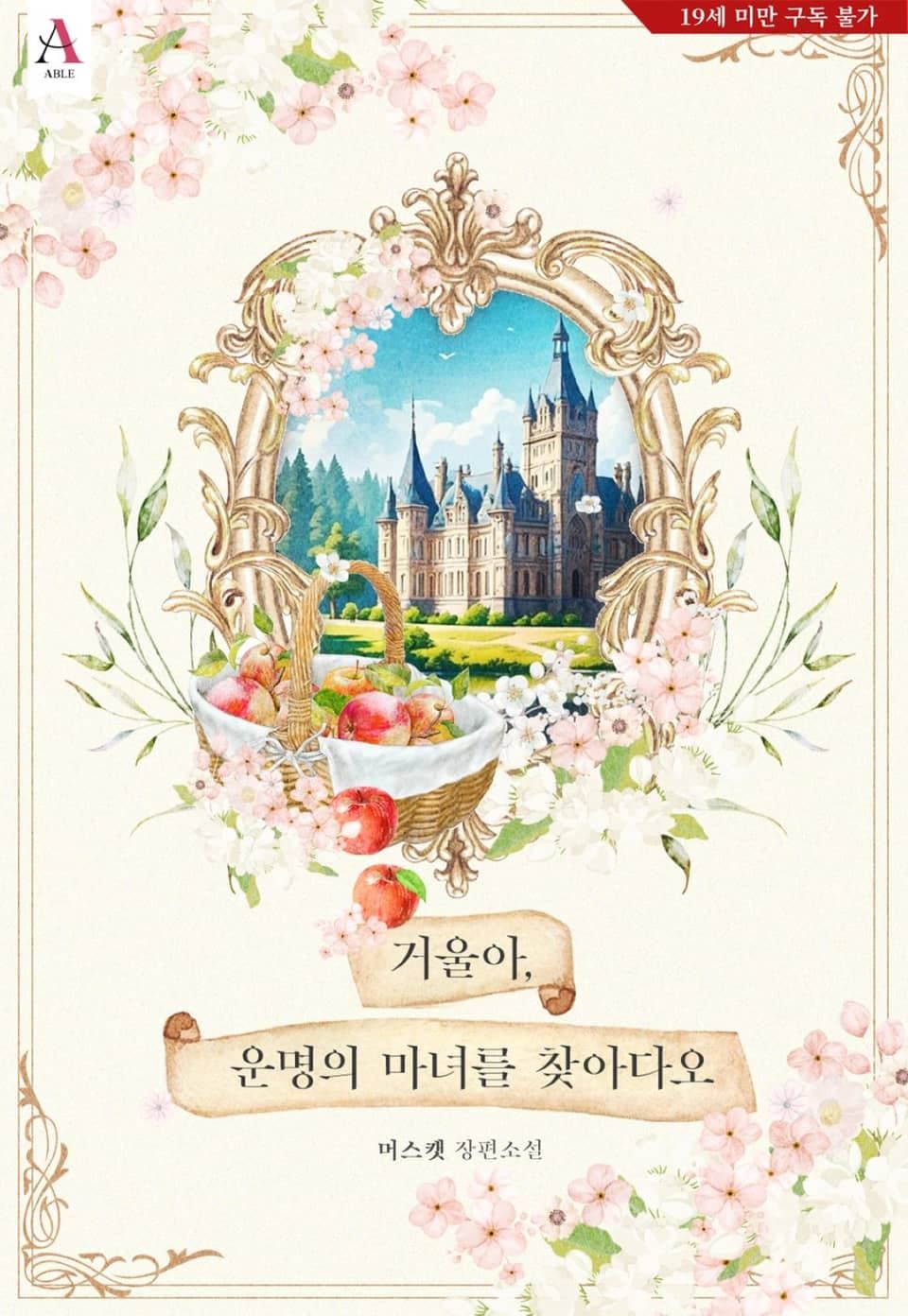
Iela Lorid is the unconventional second daughter of a wealthy merchant, Phillip Lorid. Her personality is sharp, observant, and indifferent to social niceties, setting her apart from her beautiful and compliant older sister, Diana. Phillip Lorid, a commoner who aspires to noble status, has a reputation for greed and shamelessness. When he attempts to steal from the annex of the Lord of Valita’s castle, he is caught with a trivial prize: a single rose. The Lord, who has not appeared in public for over a century and is rumored to be cursed, offers Phillip a deal to avoid prison. In exchange for the stolen rose, Phillip must give his youngest daughter, Iela, in marriage to the Lord.

Phillip eagerly agrees, viewing Iela as a burdensome daughter who is more useful as currency than as a family member. He informs Iela of the arrangement without having met the groom himself. Iela accepts the news with detached amusement, spending her time mocking her father’s desperation and the absurdity of the situation. Before leaving, she bids a somber farewell to Diana, warning her that the Lord is unpredictable and advising her to maintain reverence rather than aggression when dealing with him. Iela departs for the decaying castle in Valita, escorted by Anton Mivela, the Lord’s deputy, who is visibly tense about the bride’s temperament.

Upon arrival, Iela finds the castle in ruins, devoid of staff, and filled with dust and cobwebs. Anton presents a prenuptial agreement that heavily favors the Lord, stripping Iela of any independent rights. Iela, unimpressed by his authority, spills ink on the contract to show her displeasure and refuses to sign until the terms are fair. She demands four maids and proper living conditions before agreeing to the ceremony. Anton reluctantly agrees and returns to fetch her servants from the Lorid household. While waiting, Iela directs her maids to clean the castle, transforming the derelict space into a habitable home.

The vow ceremony takes place in the castle’s dark chapel. The Lord, Valentin Bahar, appears young and strikingly beautiful, resembling the portrait in the hall but with a fragile, porcelain-like quality. He is shy, soft-spoken, and socially awkward, contrasting sharply with the terrifying rumors of his age and nature. Iela, expecting an old man or a monster, is confused by his demeanor. During the ring exchange, she bites his finger to measure its size since he has no ring, a bizarre act that causes him to faint. After reviving him, they engage in a tense conversation where Iela attempts to find flaws in his sanity, only to discover he is lucid but deeply eccentric.

That night, intruders break into the castle, seeking to expose the Lord as a witch or immortal for profit. Iela confronts them, pushing one from a ladder to scare them off. Valentin watches in tears, overwhelmed by her brutality and beauty, believing he has finally found his true love. The narrative then shifts to Valentin’s past, revealing he was born two hundred years ago and cursed to remain youthful. He was imprisoned by his fearful parents, who believed he was possessed, and released only after their deaths. For decades, he lived in isolation until Iela’s arrival stirred something within him.

Iela, meanwhile, plans to secure a quick divorce by exposing the marriage as invalid or by driving Valentin to annul it. She keeps her maids close to control the narrative and prevent leaks. However, Valentin’s intense devotion and strange behavior complicate her plans. He insists on her staying and refers to her as his wife with genuine affection. Iela remains cautious, analyzing his every move, while Valentin struggles to understand modern social cues. The story ends with Iela settling into the castle, her initial goal of escape clashing with the growing complexity of her relationship with her immortal husband.

Latest Release
DateGroupRelease
2026-10-03dusk blossoms c20
2026-10-03dusk blossoms c19
2026-10-03dusk blossoms c18
2026-10-03dusk blossoms c17
2026-10-03dusk blossoms c16
2026-10-03dusk blossoms c15
2026-10-03dusk blossoms c14
2026-10-03dusk blossoms c13
2026-10-03dusk blossoms c12
2026-10-03dusk blossoms c11
2026-10-03dusk blossoms c10
2026-10-03dusk blossoms c9

Community Reviews

Rating(0 / 5.0, 37votes)
5 stars
0(0%)
4 stars
0(0%)
3 stars
0(0%)
2 stars
0(0%)
1 stars
0(0%)

Popular reviews

... Read More
Okay so Iela shows up at Valentin's castle and immediately I'm like—what are we doing here? This whole arrangement is so bizarre. They're married on paper but she's clearly trying to get out of it, and yet she's USING him as leverage against her own problems. Genius and absolutely deranged, honestly. The whole scene with the intruder was peak plot tension. She lied about killing three people who broke into the chapel, Valentin somehow believed her (or played along), and now she's casually referencing it while trying to negotiate terms. And Anton—poor Anton is just standing there witnessing this insane dance. The power dynamics are constantly shifting. Iela thinks she's in control because Valentin can't let go of her hand, but then Valentin drops 'Protect my wife' and suddenly the table flips. What got me was the Peter Carpenter reveal. So there's an outside threat coming, mercenaries specifically, and Anton is basically saying he can't handle it alone. Iela could potentially move to the annex for safety but Valentin literally won't let her go more than a few feet away. The plot is setting up this interesting contradiction—she needs protection that requires her to stay trapped with the very person she wants to divorce. And that ending?? 'If you will permit it, I will attend to you myself.' What does that even mean in context? Iela was complaining about her maids making mistakes because Valentin glares at them, and his response is to personally attend to her? Is this a threat or a offer? The narrative is deliberately leaving it ambiguous and I'm here for it.
... Read More
I need to talk about this ONE moment because it hit me like a truck. You know how Iela is - cold, calculating, never swayed by beauty even though she's used to it from growing up with Diana? Well, Valentin nearly breaks through her defenses with just a glance and a bitten lip. And then she remembers candy. Philip Lorid gave Diana a rare bright blue candy with some pretentious speech about how blue was difficult to achieve artificially and meant to be enjoyed with the eyes rather than the taste. Iela didn't get any candy. Diana shared hers. And Iela crunched through it without ceremony. That flashback wasn't random - it was the author slipping in this quiet, devastating detail about how Iela has ALWAYS been the one left out, the one who doesn't get the special treatment, the one who takes what's offered and destroys it quickly because waiting for affection hurts too much. But here's where it gets painful: Valentin sees her lick her lips and turns away because he thinks she's looking at him that way. Then he whispers 'Thank you for falling for me at first sight' and she genuinely asks if he's lost his mind. She's spent her whole life building walls, treating love as a trap that fools and careless people fall into - and here comes this man who's already fallen so hard he can't even form coherent sentences. She can't understand his delusion but she also can't deny the pull she feels. The most devastating line for me though? When Valentin says 'Even knowing that I will be all right as long as you are here, I am afraid that if I leave the chapel, I will wake from this dream.' He's terrified this is all temporary. She's planning her divorce exit strategy. He's terrified of waking up without her. Both of them protecting themselves in completely opposite ways and somehow that's more romantic than any sweet declaration ever could be.
... Read More
'The man's pale skin shimmered in the light. It was a sight captivating enough that Iela found herself staring without thinking.' I need to talk about how atmospherically rich this setting is. Valita is this remote, harsh territory at the very edge of the kingdom—conquered by the Bahar family when no one else could claim it, now essentially abandoned by the rest of the world. The castle is neglected, the knight order is made of former mercenaries who look nothing alike, and the locals treat Lord Bahar's name like a bad omen. This isn't some gleaming fantasy kingdom; it's a place that exists in the margins, and it perfectly mirrors Valentin himself. The visual of Valentin in that mahogany-lit office is so cinematic. Sunlight streaming through the window, his pale skin glowing, sprawled like a cat in Anton's armchair reaching at the air as if trying to catch light particles. There's something almost supernatural about him—like a beautiful creature that doesn't quite belong in this world. And Iela, sitting at HIS desk reading a letter from Diana, has completely reclaimed the space without even realizing it. The annex description is also fascinating. Former mercenaries turned knights, a order that values flexibility over uniformity, living quarters that are apparently louder than the main castle. It's a world where the traditional structures of knighthood and nobility have been completely subverted by circumstance. The geography itself tells a story—Valita conquered what others couldn't, now sits unused, and the people there survive through practicality rather than ceremony. Every setting detail reinforces the central theme: this is a world where appearances are stripped away and only raw necessity remains.
... Read More
I need to talk about Valentin and Iela because my brain is still recovering from Chapter 54 and I don't think I'll ever be the same. So Valentin does this incredible thing—he makes Anton kneel, destroys him verbally, reminds him that he is NOTHING without him, the castle would survive without Anton but the Mivela family would crumble, and then the SECOND Anton is fully broken, Valentin looks at Iela and his entire presence shifts. The ferocity vanishes. That cold smile softens into something expectant. He's waiting for praise. He literally just humiliated someone's husband in front of his wife and then looks at her like a dog who did a trick. And Iela's response? She trembled inwardly. She thought it was EXCITING. She covered her lips and thought 'this is exciting.' What is WRONG with me, I love this woman. But here's where it gets complicated because Iela is NOT having any of that romantic nonsense. She admits to herself that she was slightly disappointed that Valentin's obsession doesn't contain the same kind of affection Diana has. She wanted to feel wanted, not just desired. And yet here she is, captivated by a man who treats her like a prized possession and a curse-broken talisman all at once. The maids are out here literally crying for her welfare. Mary asks if she's truly all right. Anna says not every nobleman would want to listen to his wife bathing. These women are looking at her like she's walking into a fire and Iela just tips them more gold coins and sends them on errands like everything is fine. The loneliness in this is suffocating. And then she tears apart six pillows. Six. Because she realized Valentin placed her worth at exactly one blue rose. She couldn't even sit on that windowsill without plotting how to shatter the glass. That image of her violently dismantling pillows because she felt commodified—what a perfect expression of rage that can't be directed at anyone because the people who hurt her are all the people she needs.
... Read More
Iela's voice is absolutely phenomenal and I need to talk about it. The way she speaks is so distinctly hers—cool, observant, laced with this dark practicality that somehow never feels forced. When she tells the journalists "Starting today, a female ghost has come to live here too. She has a different agenda from the cursed man, so she has appeared like this to make an example of you"—this is her being theatrical and manipulative and absolutely loving every second of it. The lilting tone she uses while simultaneously committing what might be attempted murder? Iconic. Her internal narration is where the voice really shines though. "Success always comes with a little obstacle. A journalist with a broken arm who cannot write. An obstacle that would serve as the foundation for success." This is the kind of line that makes you laugh out loud because it's so ruthlessly pragmatic. She's not being cruel for cruelty's sake—she's running calculus in real-time about how taking out one intruder actually helps her divorce strategy. Valentin's dialogue is a masterpiece of restrained desperation. Watch how he speaks: fragmented, reactive, always reaching. "Are you two hundred years old?" — no, wait, that's Iela. But Valentin's lines like "I have no intention of…" trailing off mid-sentence, or "I imagined nothing" when he clearly imagined EVERYTHING—this is a man who has spent decades without speaking to anyone and now has someone in front of him and he doesn't know how to use his words. The narration itself has this razor-sharp quality. Lines like "He was exhausted and wanted to escape the deafening noise" and "the arrogance of believing that knowing you are falling in makes it all right" show an authorial voice that's both literary and deeply funny. Not pretentious—just observant in a way that makes you feel smart for catching every layer.
... Read More
The symbolism in this text is so rich I could write an essay. Let me just hit the main ones. The fairy tales. Iela finds children's books about witches being defeated by heroes scattered on the floor, and Valentin hides them ashamedly. These books represent the entire cultural framework that's been used to torment him his whole life—the witch hunts, the demon possession narrative, the desperate need to categorize the unknown as either sacred or evil. The third Mivela literally quotes from these same kinds of books: "Every legend, myth, and book of spells says the same thing. True love will be the answer." The stories that imprisoned Valentin are now being weaponized to try to free him. Ironic? Yes. Hopeful? Also yes. The castle itself is a massive symbol. It's in complete disrepair—cobwebs, spiders, furniture a hundred years out of date. This is a man who stopped living when he was locked away as a child, and everything around him reflects that. Iela commenting on the spiders and Valentin's embarrassment about it is such a small moment but it says everything about how he views himself: damaged, neglected, unworthy of proper care. The curse as fate. Valentin wasn't chosen—the Bahar family produces one heir per generation, and he's it. His entire existence is predetermined: born into isolation, destined to never age, surrounded by servants bound to him by some familial obligation stretching back generations. The Mivela family's son boasting that he's been preparing since before inheriting "the duty of caring for Valentin" shows how even the servants are trapped by this system. And then there's Iela herself—the woman who claims not to believe in curses at all, who calls them fairy tale nonsense, yet walks right into the cursed castle and voluntarily enters the cursed marriage. Is she defying fate or fulfilling it? The text leaves this beautifully ambiguous.
See all reviews

Custom lists

See all custom Lists