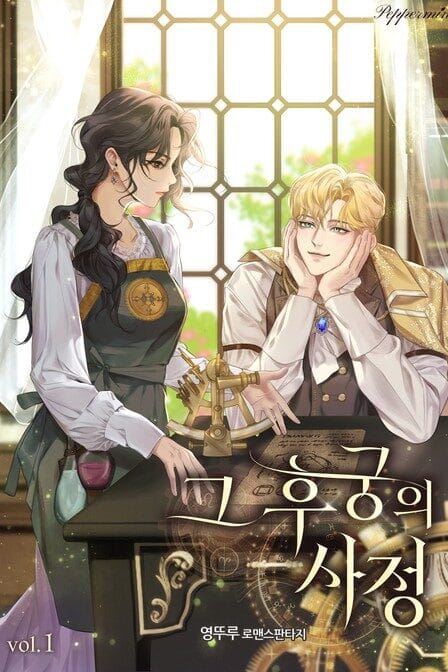
I am still recovering from the ending of this chapter sequence. Let me just say it: the Emperor knew her name.
Think about how the entire setup has been building to this. We get these layered subplots running simultaneously—the banned magazine, Lucia's secret invention work, the whispered rumors about Aristide being a lecher who abolished the mathematicians' guild, the empty throne at every ball for five years—and then on the night of the Imperial Ball, when Lucia escapes upstairs trying to avoid her mother's matchmaking, she finds herself alone with the one person she's been taught to fear most. And he says: "Lucia Bianchi, you're next."
Not "I'll have you brought." Not some grand declaration. Just... her name. Like he's been waiting. Like this was always the plan.
What kills me is the structural irony. The previous chapter had that perfect dramatic parallel: Aristide eating a grape, sitting casually in a balcony overlooking the ballroom, while down below women are being paraded like livestock. He asks "Who do you think I am?" in the bookstore and she answers like a good little citizen—Emperor, of course. But he already knew her from that earlier visit, didn't he? The man who came to the bookstore as a regular customer, asked about her opinions on him, and walked away whistling... was doing reconnaissance. Or maybe it was something else entirely.
The subplot about Ferris is doing heavy lifting too. We learn Lucia's essay was published in that magazine and her father beat her nearly to death. So her secret reading isn't just hobby—it's an act of rebellion that literally cost her health. And now the Emperor, the man everyone says abused women, has singled HER out. The tension between these two threads is exquisite. Is he punishing her for her ideology? Or is something more complicated happening?
Also—can we talk about the imperial knights scene? The way Marisa gets escorted away while Lucia gets to STAY. Who is Marisa to him? The power dynamics in that hallway alone could fill a thesis. The empty throne for five years, his habit of watching from the shadows, never participating in public... and now he publicly claims Lucia as his next mistress. This isn't randomness. This is calculation. But of what kind? I need the next chapter. I literally cannot sleep.