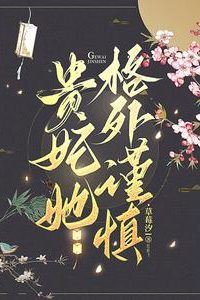
Ning Wanyin is the eldest daughter of the declining Shouan Bo Mansion, a noble family that has lost much of its former glory. Unlike her peers who rely on marriage alliances to secure their futures, Ning Wanyin fears the fate of her elder sister, who died in disgrace after her husband’s political faction fell from power. Determined to control her own destiny, she spends three years meticulously preparing for the imperial concubine selection. Her primary goal is not romantic love but survival and autonomy within the treacherous palace hierarchy. She enters the palace with a rank of Noble Consort, one step below her cousin Tang Miaoling, who holds the title of Concubine of the Sixth Rank. Tang Miaoling, originally arrogant and domineering, undergoes a sudden and drastic personality change upon entering the palace, becoming excessively friendly and submissive toward Ning Wanyin, a behavior that deeply unsettles her cousin.
Inside the palace, the political landscape is dominated by the rivalry between two powerful ducal families: the Xue family, represented by the ambitious Concubine Xue, and the Cen family, represented by Concubine Cen. The current Emperor, Helian Qi, ascended the throne through a compromise between these factions but seeks to consolidate his own power by cultivating a base of loyal officials from humble backgrounds. He deliberately favors Song Meiren, the daughter of a low-ranking but upright official, to challenge the dominance of the ducal clans. However, Song Meiren’s inflexibility and Wen Meiren’s political missteps lead to their demotions, leaving the Emperor in need of a more adaptable ally. Ning Wanyin observes these dynamics with cold calculation, refusing to seek the Emperor’s attention prematurely. She understands that without political backing, favor is a death sentence, and she chooses to wait for the right moment to act.
The turning point arrives when the Emperor, frustrated by the rigidity of his current favorites, randomly selects Ning Wanyin’s jade token. Recognizing the danger of being chosen before the powerful Concubine Xue and Cen, Ning Wanyin prepares for the encounter with extreme caution. She transforms her residence, Lingxue Pavilion, into a space free of hidden threats, planting lotus seeds to symbolize her desire for offspring while ensuring the environment is safe. When the Emperor arrives, she presents herself not as a seductress but as a devoted follower who shares his interests in painting and chess. Her honesty about her mediocre artistic skills and her explicit declaration of loyalty as a useful tool rather than a romantic partner resonate with Helian Qi. He sees in her a willing instrument who understands the political game, unlike the proud and inflexible concubines from the noble families.
Ning Wanyin’s strategy extends beyond winning favor; she actively positions herself as a pawn to destabilize the Empress Dowager’s authority. After being favored, she deliberately skips the mandatory daily greeting to the Empress Dowager, knowing this will provoke a conflict. When the Empress Dowager orders her banishment to the Cold Palace, the Emperor intervenes, issuing a decree that exempts her from this duty. This move publicly undermines the Empress Dowager’s control over the harem and establishes Ning Wanyin as the Emperor’s direct agent. The Emperor rewards her lavishly, ordering the construction of a lotus pond and bestowing precious gifts, further isolating her from the other concubines. Meanwhile, Tang Miaoling’s strange behavior is revealed to stem from a past-life memory; she had been killed by Ning Wanyin in a previous timeline and has been reborn with the knowledge of her fate. Terrified, she attempts to curry favor with Ning Wanyin to avoid the same grim end, creating a complex dynamic where the victim tries to appease the killer.
As the story progresses, Ning Wanyin solidifies her position by maintaining a careful balance between obedience to the Emperor and independence from the noble factions. She refuses to be manipulated by the Empress Dowager or the ducal families, using the Emperor’s protection to shield herself from retaliation. Her relationship with Helian Qi is built on mutual utility rather than passion; he values her political acumen and willingness to take risks, while she relies on his power for survival. The narrative follows her navigation of court intrigue, where every interaction is a calculated move to ensure her longevity in a environment defined by betrayal and violence. Tang Miaoling’s attempts to distance herself from Ning Wanyin are constantly thwarted by their shared residence and the Emperor’s favor, forcing her to remain in the shadow of the woman she once despised. The central conflict revolves around Ning Wanyin’s struggle to maintain her agency in a system designed to strip women of their autonomy, using intelligence and caution as her primary weapons against a backdrop of imperial politics and familial betrayal.
| Date | Group | Release |
|---|---|---|
| 2026-08-11 | shanghai fantasy | c140 |
| 2026-08-11 | shanghai fantasy | c139 |
| 2026-08-11 | shanghai fantasy | c138 |
| 2026-08-11 | shanghai fantasy | c137 |
| 2026-08-11 | shanghai fantasy | c136 |
| 2026-08-11 | shanghai fantasy | c135 |
| 2026-08-11 | shanghai fantasy | c134 |
| 2026-08-11 | shanghai fantasy | c133 |
| 2026-08-11 | shanghai fantasy | c132 |
| 2026-08-11 | shanghai fantasy | c131 |
| 2026-08-11 | shanghai fantasy | c130 |
| 2026-08-11 | shanghai fantasy | c129 |