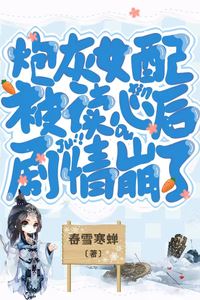
The Cannon Fodder Female Lead’s Script Collapsed After Being Read by a Mind Reader
+Add to Custom List
Genres:
Novel Info

Summary

... Read More

Su Jiu, a twenty-first-century college student, transmigrates into the body of a cannon fodder character in a BL cultivation novel. In the original story, this Su Jiu is the sole female disciple of the cold and aloof Immortal Lord Shen Wangchen. Consumed by an obsessive, unrequited love for her master, she attempts to drug him with a poison called "Three Days of Beauty" to force a sexual encounter. Instead, the poison inadvertently deepens the romantic bond between Shen Wangchen and his three male disciples, serving only as a plot device to advance the original protagonists' relationship before the character's early demise. Upon awakening with her modern memories intact, Su Jiu realizes her precarious position in a story centered on a gay romance. Determined to survive and avoid the fate of a disposable character, she resolves to stay far away from the male leads and focus on her own cultivation.

Her plan is immediately jeopardized on the day of a scheduled reunion between Shen Wangchen and his close friend, Cang Qiansxue. The original Su Jiu had prepared the poisoned wine for this occasion. Racing against time, Su Jiu interrupts the gathering and smashes the cup intended for her master. However, in her haste to prevent Shen Wangchen from drinking the drugged wine, she accidentally ingests the entire jar of Hundred Day Brew laced with the poison herself. The "Three Days of Beauty" begins to take effect, causing intense physical heat and loss of sanity that threatens her life. Her senior brother, Mu Yunqing, who harbors deep, hidden feelings for Shen Wangchen, discovers her condition and rushes her to an icy gorge to suppress the fever. When the poison flares up violently, Su Jiu’s internal monologue reveals her desperate desire to avoid intimacy with the male leads, yet her body’s instincts drive her toward them.

A critical turning point occurs when Shen Wangchen and Cang Qiansxue discover that they can hear Su Jiu’s true thoughts. This ability reveals a stark contrast between her outwardly docile and respectful persona and her chaotic, panicked inner voice. Shen Wangchen learns that his disciple never intended to poison him but was instead trying to save him. Furthermore, he discovers that the poison requires either sexual consummation with a man or neutralization by a powerful cultivator to cure. Refusing to let Su Jiu suffer or seek relief from strangers, Shen Wangchen chooses to detoxify her himself. He takes her to his quarters, where they undergo the necessary physical contact to purge the toxin, an event that leaves both parties shaken and alters their dynamic significantly.

Following the detoxification, the power balance within the sect shifts. Cang Qiansxue, intrigued by Su Jiu’s secrets and the unusual nature of the poison, decides to remain at the sect for further investigation. The revelation that Su Jiu’s thoughts are audible to the powerful cultivators creates a tense atmosphere of suspicion and curiosity. Su Jiu, mortified by the exposure of her innermost fears and desires, attempts to maintain her distance from the men who now hold the power to judge her. However, the shared secret binds them together. Mu Yunqing, torn between his loyalty to his master and his growing concern for his junior sister, finds himself navigating a complex web of emotions. The story moves forward with Su Jiu trying to navigate a world where her survival depends on avoiding the romantic entanglements of the original plot, while the male leads begin to see her as an individual with hidden depths rather than a mere cannon fodder obstacle.

The narrative explores the consequences of Su Jiu’s transmigration on the established relationships between the male characters. Shen Wangchen, previously indifferent to worldly attachments, finds his strict adherence to the Dao challenged by his protective instincts toward Su Jiu. Cang Qiansxue’s playful demeanor masks a sharp intellect that begins to dissect the mysteries surrounding Su Jiu’s origin and the source of the poison. As Su Jiu strives to rewrite her destiny, she must contend with the fact that her actions have already disrupted the original storyline. The poison’s origin remains a mystery, suggesting that external forces may be targeting the sect. Su Jiu’s journey becomes one of survival and self-discovery, as she must outwit the plot’s original trajectory while managing the increasingly complicated relationships with the powerful cultivators who can now hear her every thought.

Latest Release
DateGroupRelease
2026-08-11shanghai fantasy c110
2026-08-11shanghai fantasy c109
2026-08-11shanghai fantasy c108
2026-08-11shanghai fantasy c107
2026-08-11shanghai fantasy c106
2026-08-11shanghai fantasy c105
2026-08-11shanghai fantasy c104
2026-08-11shanghai fantasy c103
2026-08-11shanghai fantasy c102
2026-08-11shanghai fantasy c101
2026-08-11shanghai fantasy c100
2026-08-11shanghai fantasy c99

Community Reviews

Rating(3.6 / 5.0, 45votes)
5 stars
13(29%)
4 stars
11(24%)
3 stars
13(29%)
2 stars
8(18%)
1 stars
0(0%)

Popular reviews

... Read More
I have never read anything quite like Su Jiu's inner voice, and I need to discuss it at length because it is absolutely phenomenal. The author has created a narrative device — the thought-reading ability — that essentially turns the novel into a running commentary track where the characters are forced to listen to the protagonist's unfiltered thoughts while she remains completely unaware. The comedic potential of this is endless, but what makes it work is that Su Jiu's voice is so distinctly, vibrantly HER. Her internal monologue is a chaotic storm of panic, self-deprecation, wild speculation, and sudden shifts in tone. One moment she's [Wuwuwu, I'm guilty, I shouldn't think about it], the next she's [Hmph, you're so clueless about reading people's faces, you deserve to be the last one to sleep with my Master!]. The contrast between her spoken dialogue — soft, gentle, respectful, the perfect junior sister — and her internal thoughts is razor-sharp. When she says to Mu Yunqing, 'I'm fine, thank you, Senior Brother,' she's being the picture of propriety. When she's thinking, [Senior Brother, what kind of question is that?], she's a completely different person. The external dialogue is much more restrained, which makes the inner monologue stand out even more. Shen Wangchen's lines are short, cold, authoritative: 'Grow up!' 'Kneel in front of the hall, recite the Clear Heart Mantra ten times.' Mu Yunqing's dialogue is warm but measured, with moments where his royal upbringing shows through. Cang Qiansxue's speech is casual and slightly sarcastic, fitting his thousand-year-old personality. What's particularly clever is how the author uses the thought-reading to create dramatic irony in the dialogue. When Cang Qiansxue says 'Your senior and junior sister, your relationship is quite good' while looking at Mu Yunqing's neck with 'a hint of meaning,' the reader knows exactly what he's implying, but Su Jiu has no idea. And when Mu Yunqing asks 'When did you have that kind of outrageous thought about Master,' he's reacting to her thoughts, but she thinks he's just asking a normal question. The gap between what's said and what's meant is where all the comedy lives.
... Read More
I need to talk about Su Jiu's internal voice because it is genuinely one of the best things about this book. When she's thinking to herself, it sounds like a real person's brain—rambling, self-correcting, disgusted by her own ideas. The moment where she practices saying 'Master, don't drink, I'm worried about you~' in a pinched voice and then literally types 'yue~' because she's grossed out by herself? That is so authentically human. It's not stylized or pretentious, it's just a girl having a full meltdown in her head. And the contrast between her internal panic and her external compliance is where the real comedy lives. She's thinking 'I might as well drink the whole jar, then I can just say I don't know anything!' while outwardly saying 'Yes, I want to drink' with a forced smile. The dialogue between the three men is also sharply differentiated—Cang Qiansxue is warm and teasing, Shen Wangchen is cold and terse, and Mu Yunqing is caught in between trying to be the responsible senior brother. When Su Jiu finally says 'Senior Brother, help me,' it's delivered in this broken, desperate way that's completely different from her usual voice, and it hits differently because we've heard her so much in her head. The author knows exactly how to make each character sound distinct.
... Read More
Okay so let me just say this plot setup is genuinely clever. You have a protagonist who wakes up mid-novela and immediately realizes she is the cannon fodder character whose only narrative purpose is to poison the master and then die. The original Su Jiu exists for exactly one chapter - she administers the Three Days of Beauty poison, accidentally catalyzes the romantic development between Shen Wangchen and his male disciples, and then promptly exits stage left. Classic cannon fodder energy. But our transmigrator Su Jiu? She is not having it. She spends the entire first chapter in a full panic mode, trying to figure out how to avoid her scripted fate while simultaneously realizing she is surrounded by gay men and there is absolutely nothing she can do about that. The tension around whether she can actually change the plot is real. She literally sprints to Budo Hall on her flying sword to stop the poison from being served, and the scene where she smashes the cup but it floats in mid-air? Chef's kiss. The author sets up this immediate question: can a transmigrator actually rewrite her story, or is the plot too strong? And then the whispering thoughts thing drops - she is projecting her inner monologue directly into everyone's heads without speaking. This is a massive plot deviation from the original story. The original Su Jiu never had this ability. It changes everything. I am genuinely curious whether Cang Qiansxue realizing this is a game-changer for the whole narrative or just another complication.
... Read More
Here's what I think this love potion really represents, and I've been turning it over in my head since I finished this chapter: it's not about romantic love at all. It's about desire as a force that strips away pretense. Every character in this scene is being forced to confront what they actually want versus what they pretend to want. Su Jiu's internal monologue reveals that she's not actually desire-driven in the way the potion suggests — she's terrified of her own vulnerability, of becoming a burden, of hurting the people she cares about. Her repeated insistence on staying away from 'men' and her self-deprecating humor ('consider it being bitten by a dog') are defense mechanisms. The potion exposes her deepest fear: that she's dangerous to the people around her. Mu Yunqing's ability to hear her thoughts is symbolic too — it's the ultimate intimacy, forced upon them both. He hears not just her surface desires but her genuine panic, her self-loathing, her protective instincts. The potion creates a situation where no one can hide, and that's what makes it terrifying rather than romantic. Shen Wangchen's reaction is the most telling: his anger isn't about the potion itself, it's about feeling excluded, about finding out his disciple has secrets even he doesn't know. The master-discipline relationship is being tested, and the potion is just the catalyst. Cang Qiansxue, meanwhile, treats the whole thing as entertainment. His casual mention that 'anyone will do, just not you two' is darkly comic but also revealing — he understands desire as power dynamics, not romance. The love potion, stripped of its romantic framing, becomes a lens through which we see how each character relates to vulnerability, control, and connection.
... Read More
Beneath the comedy and romantic tension, these chapters are quietly exploring some really interesting themes about identity, performance, and the poison of pretending. Su Jiu's entire character arc seems to be built around the tension between who she appears to be and who she actually is. She's described as 'the girls raised in deep boudoirs in the mortal world' — quiet, well-behaved, innocent. But her inner thoughts reveal someone who is chaotic, sharp-tongued, and deeply self-aware. The poison that affects her is almost symbolic here: it strips away her carefully constructed persona and forces her to be genuine, even if that genuineness is just pure panic. The 'Clear Heart Mantra' she's made to recite is another loaded symbol. A clear heart — one free of desire, free of chaos, free of the messy entanglements that Su Jiu is drowning in. The irony is thick: she's being punished for losing control, and the punishment is to practice achieving control. But the reader knows that her 'clear heart' is a myth she's been maintaining for ten years, and the real question is whether she can ever be honest about who she is. The poison itself — administered by someone, not by Su Jiu — represents the external forces that disrupt her carefully maintained facade. She didn't cause this; it happened to her. And yet, she's the one who has to kneel and recite mantras and clean up the aftermath. This speaks to a broader theme about how women in these stories are often punished for situations they didn't create, especially when those situations involve male attention or desire. Su Jiu's repeated declaration that she will 'stay away from men and work hard to cultivate' is both genuinely funny and oddly poignant. It's the reaction of someone who has been hurt by getting too close, who sees the 'battle royale' beginning around her and wants no part of it. The cannon fodder identity she embraces — 'being ostracized, being killed, is the fate of a cannon fodder female lead' — is a form of self-protection through self-deprecation. If you expect the worst, it can't hurt you as much.
... Read More
There is something deeply symbolic about that chess game on the table in the pavilion that I cannot shake. Black and white jade pieces scattered in disarray. Two masters sitting across from each other, one in moon-white, one in deep purple, tea mist between them, neither moving to actually play. This is a chess game that is not being played, and I think it represents everything about this story. The characters are pieces on a board they did not choose to sit at. Su Jiu is a piece that suddenly gained consciousness and realized she is in the wrong story. Shen Wangchen is the recipient, the central figure around whom all the other pieces orbit, and he has no interest in their games. Cang Qiansxue is the observer, the one who sees the board from a different angle because he has been playing for a thousand years. The scattered pieces suggest that the original plot is already disrupted, already in chaos, and the characters are trying to figure out what move comes next. But there is also the wine - the Hundred Day Brew that was supposed to be shared between friends but became a vector for manipulation in the original story. Now it is untouched, saved by Su Jiu's intervention. The unpoured wine is another symbol of interrupted fate. And the gauze curtains, those sea-棠 colored veils that separate the pavilion from the outside world - they represent the thin boundary between what is visible and what is hidden, between the story as written and the story as it actually unfolds. Su Jiu's telepathy breaches that boundary entirely. Her thoughts are visible to everyone now, which means the veil is torn.
See all reviews

Characters

See all characters

Custom lists

See all custom Lists