Summary

... Read More

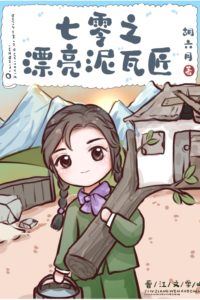
Tao Nanfeng, a seventeen-year-old high school graduate from Jiangcheng, is forced to take her sister Tao You’s place in the 1973 Sent-Down Youth movement due to a broken collarbone. Arriving at the remote Xiufeng Mountain Farm, she and nineteen other educated youth face brutal living conditions in crude thatched huts with no electricity or running water. That first night, Tao Nanfeng experiences a vivid nightmare of a post-apocalyptic zombie outbreak, waking to find a black, tooth-shaped bite mark on her left hand. This mark grants her supernatural strength and heightened senses, a power she discovers when she accidentally shatters a stone and snaps a tree trunk. Despite her delicate appearance, she possesses immense physical capability, which becomes her primary asset in the harsh mountain environment.

The farm’s administration, led by the corrupt Office Director Luo Xuan and the arrogant Infrastructure Chief Huang Xingwu, oppresses the youth. Luo Xuan assigns the female students to the most grueling labor, including road construction and pig farming, while withholding fair work points and basic amenities like cooking pots. Tao Nanfeng and her friend Xiao Aiyun are assigned to the road construction team under Captain Xiang Bei, a scarred, silent veteran with a mysterious military past. Initially dismissed as weak, Tao Nanfeng reveals her strength by breaking a massive desk in front of Director Luo, forcing him to grant her full work points and securing a cooking pot for their settlement. This act establishes her as a formidable figure who refuses to submit to bureaucratic bullying.

As autumn progresses, Tao Nanfeng learns to control her abilities while navigating the complex social dynamics of the farm. She forms a bond with Xiang Bei, who warns her of an impending storm based on his knowledge of the mountains. When the administration ignores his warnings and refuses to repair the dilapidated huts, Tao Nanfeng and class monitor Qiao Yadong organize the youth to reinforce their roofs with pine branches. That night, a violent typhoon strikes, destroying the thatched huts. Xiang Bei leads the evacuation to the farm headquarters, breaking into locked offices to shelter the youth after the corrupt officials refuse to help. Tao Nanfeng single-handedly carries heavy bundles of bedding for her roommates, further cementing her reputation.

The storm leaves the settlement in ruins, but no casualties occur due to the timely evacuation. The educated youth, led by Qiao Yadong, confront the farm director and his staff, demanding accountability and compensation for their lost belongings. The conflict escalates as the youth realize the administration’s negligence was deliberate, highlighting the systemic corruption and disregard for their welfare. Tao Nanfeng’s unique abilities allow her to survive and thrive in an environment that would have broken ordinary people, but she remains cautious about revealing the full extent of her powers. The story sets the stage for ongoing struggles against the oppressive farm leadership, with Tao Nanfeng and Xiang Bei positioned as key figures who challenge the status quo and protect their community.

The narrative explores themes of resilience, authority, and the clash between idealism and corruption in 1970s China. Tao Nanfeng’s journey from a frightened city girl to a confident leader is marked by her acceptance of her supernatural gift and her willingness to use it for the benefit of her peers. The relationship with Xiang Bei develops through shared adversity, as he becomes both a protector and an ally in their fight for justice. The destruction of the huts serves as a turning point, exposing the farm’s administrative failures and uniting the educated youth in their demand for better treatment. As they begin the arduous task of rebuilding, tensions with Director Luo and Chief Huang continue to rise, promising further conflict as the youth assert their rights and dignity.

Novel Items

More
Arcane Treasures
A translucent vivid green jade buckle that was the only keepsake Tao Nanfeng's deceased mother left her. When moonlight touched it in the thatched hut, it pulsed with a soft shimmering glow and pulled Tao Nanfeng into a prophetic dream of a zombie apocalypse. After she woke with a bite mark on her hand, the buckle appeared connected to her sudden awakening of superhuman strength and heightened sensory perception.
Item
A dark red silk scarf that Tao Nanfeng took from a woven chest in the corner of the hut. She wrapped it tightly around the back of her left hand to completely conceal the black tooth mark left by the dream monster bite.
System
The village system where grain was distributed by work points. Mother Zhao wanted to earn work points during spring harvest to exchange for a piglet. Zeng Cheng had been working full ten work points every day since marrying Zhao Qianqian.
Item
An official document that Office Director Luo Xuan threatened to issue to the complaining educated youth. Being repatriated early meant committing a grave political error, leaving a permanent black mark on one's file and ruining their future.
Physical Evidence
A clear bite mark on Yang Qin's cheek left by Wen Quhua when she was drunk. He felt satisfied rather than painful when he touched it. Shen Yan noticed it when Yang Qin visited the department store.
Item
Hand-woven hats that provide shade and look good. Xin Yu was planning to teach Shuo Xing how to weave them. Members of the Mingyuan Tribe were very interested in them.
Latest Release
DateGroupRelease
2026-08-11shanghai fantasy c2
2026-08-11shanghai fantasy c1

Community Reviews

Rating(4.2 / 5.0, 29votes)
5 stars
12(41%)
4 stars
10(34%)
3 stars
7(24%)
2 stars
0(0%)
1 stars
0(0%)

Popular reviews

... Read More
I need to talk about Xiang Bei because this guy is EVERYTHING. First impression: towering figure, long-sleeved shirt buttoned to the collar in brutal heat, jagged scar from ear to mouth, small calm eyes with this 'dozing tiger' energy. The description alone made me sit up. But what really got me is how he interacts with Tao Nanfeng. Deputy Captain Mao is calling her a 'decorative vase' and 'hothouse flower' right in front of her, and Xiang Bei just... steps in. 'Let them stay.' Three words. That's it. No grand speech, no dramatic gesture. He just speaks and the decision is made. And later, when she's starving and sitting apart from the crew eating their lunch, he doesn't make a scene. He just places a lunchbox in front of her and says 'Share this with Educated Youth Xiao.' No pity, no fanfare. Just... care, delivered in a way that doesn't make her feel small. The workers are all like 'Captain, you're terrifying when you smile' because of that scar, but Tao Nanfeng sees something else. And Xiao Aiyun? She's this loud, protective, slightly chaotic friend who immediately becomes Tao Nanfeng's anchor in this new world. Their dynamic is already set—Xiao Aiyun is the fire, Tao Nanfeng is the water, and somehow they work.
... Read More
There's a deeper question running through all of this that I think the author really wants us to sit with: what is a house for? Tao Nanfeng puts it most directly—'Houses are meant for people to live in. They must be built with the long term in mind. Providing shelter from the wind and rain, and keeping warm in the winter—these are the most basic requirements! If a structure can't even do that, how can you call it a house?' This isn't just about construction. It's about dignity. The educated youth are being told to be grateful for whatever they're given, to accept hardship as character-building, to lower their expectations. But Tao Nanfeng is refusing that narrative. She's saying: we deserve decent living conditions, and here's exactly how we're going to get them. The thatched huts themselves are symbolic—they represent the temporary, the inadequate, the dismissive attitude of the officials toward these young people. And the brick-and-tile houses they're planning? They represent self-reliance, dignity, and the refusal to accept 'good enough' when 'good enough' isn't good enough. The recurring motif of winter is also significant—it's not just a seasonal detail, it's a ticking clock. The cold is coming, and the officials don't care whether they survive it. That's the real conflict underneath the plot: human beings vs. a system that treats them as expendable.
... Read More
Okay, I need to talk about the absolute zero words exchanged between Tao Nanfeng and Xiang Bei in that scene where he carries the wok. Like. Zero. He just shows up, carries this massive iron wok on his shoulder, drenched in sweat, towering and silent, and she looks at him with these big eyes and he gives a slight nod. That's it. That's the entire romantic beat and I am NOT OKAY. The author doesn't even try to make it obvious. There's no blushing, no heartbeat descriptions, no internal monologue about how his jawline catches the light. It's just... a nod. A nod that says everything. And Tao Nanfeng's thought—"If I have to show off, I'll use the hand the zombie bit"—is honestly the most romantic thing I've ever read. She's literally choosing to fight with the mark of her trauma because she wants to protect her new found family. That's not a love confession, that's something deeper. And then later, when she overhears Xiang Bei confronting Luo Xuan? She's standing in the corridor, listening to his low commanding voice for the first time in a month. The text says she'd heard him speak fewer than ten times in thirty days. TEN. And yet she notices his voice is different, that it startles her. The author is playing the longest game here and I am HERE FOR IT. Also Xiao Aiyun is my spirit animal and I love her so much for throwing her arm around Tao Nanfeng and cheering. The friendship between these two is genuinely warm and it grounds everything.
... Read More
There's a scene in here that I keep coming back to, and it's not the arguments or the confrontations—it's Tao Nanfeng at the drafting board. Let me paint it for you: Engineer Yang offers his desk, which is a professional drafting table with an adjustable-tilt tabletop, a high-legged stool, grid paper taped down, a T-square and set squares laid out neatly. And Tao Nanfeng—she rolls up her sleeves, hooks the T-square against the edge, slides it smoothly, and draws a crisp horizontal line. The text says her entire demeanor transformed. Her shoulders relaxed, her forearm lifted slightly, her breathing steadied. Her eyes moved in perfect sync with her hand, her focus absolute. And everyone held their breath, afraid the mere sound of their breathing would blow the blueprints away or break her concentration. I got CHILLS reading that. It's such a specific, sensory moment. You can SEE it. The contrast between the drab, gray concrete floor of the office and this sudden burst of professional precision is gorgeous. And the worldbuilding detail about the mountain farm—at 1,500 meters elevation, winter is coming, the thatched huts are drafty and leaky, the road down the mountain collapsed. All of this creates a real sense of place and urgency. This isn't just any setting—it's a harsh, isolated environment where survival depends on ingenuity. The scene where the girls are crowded around the blueprint, heads bunched together like chickens pecking at grain, is also incredibly vivid. It's warm and chaotic and alive.
... Read More
Okay so this whole bet setup is actually really clever. Tao Nanfeng just goes and stakes her future on building a brick house in thirty days, and Huang Xingwu—this Weasel character—is so confident they'll fail that he agrees. But then the real plot twist hits when they actually start digging and find out the ground is half rock. I mean, that's when you know the author's gonna make things difficult for the protagonists. And then Tao Nanfeng reveals her secret strength! Three strikes and this boulder just shatters. The pacing here is perfect—first the bet, then the obstacle, then the reveal. It's like the author's saying 'yeah, I know you think this is gonna be hard, but watch this.' The sabotage scene at the end with the bricks getting destroyed is classic tension-building too. You're left thinking 'what happens now?' which is exactly what keeps you reading. The plot structure here follows this nice arc of setup-complication-reveal-escalation. I especially loved how the author didn't just make Tao Nanfeng strong—she had this whole backstory about the zombie bite that gave her powers. That's a nice touch that makes the strength feel earned rather than just handed to her. The brick-making subplot with Little Bean Hu is also well-woven in. It shows the team working together, which makes the sabotage feel even more personal when it happens. Overall, the plot moves at a great pace and keeps you engaged with both the construction challenge and the interpersonal conflicts.
... Read More
Okay, let me just say this out loud: Tao Nanfeng is the most underrated protagonist energy I've seen in ages. Like, she's not just smart—she's the kind of smart that makes you want to stand up and applaud. The moment she saw that wildflower stem stuck in the mud and immediately pivoted to "let's make straw-brick houses"? That's not just quick thinking, that's someone who actually reads and remembers things. And then she drops the Ding Wei story like it's nothing—just casually connecting Song Dynasty engineering to their mud-brick problem. The way the other youth immediately lose their minds over her? "You're always thinking two steps ahead, Nanfeng!" Yeah, they're not wrong. But what really got me is Huang Xingwu. The man is a walking red flag with a title. The scene where he tries to pull the inspection card out of nowhere? Pure villain energy. And Tao Nanfeng? She doesn't even raise her voice. She just dismantles him with facts: "This is an internal farm construction project—a dilapidated housing renovation. There isn't even a formal project approval process." She literally read the rulebook he's trying to weaponize against them. Meanwhile, Huang Xingwu is over there sweating because she reminds him of Fan Yajun, the girl he couldn't win back in school. Of course the author makes the antagonist's weakness rooted in teenage insecurity. Classic. And I need to talk about Qiao Yadong for a second. The guy goes from "let's take turns on night watch" to swallowing his anger and asking "how do we apply?" He's the responsible one, sure, but sometimes I wonder if he's too willing to play by the rules when the rules are rigged against them. Still, I respect him. He's the glue holding this chaotic group together. The dynamic between Ye Qin and the others is also so natural. She's the one hammering nails and planning room layouts, while Xiao Aiyun is the one physically pushing Tao Nanfeng into the hero chair. Everyone has their role, and nobody's fighting for dominance. That's rare in this genre.
See all reviews

Characters

See all characters

Custom lists

Oops…There is nothing here.