The Beast of the Albard Mansion - Reviews

The Beast of the Albard Mansion
+Add to Custom List
Sort
Add review
... Read More
I need to write about something unexpected here: the dialogue that isn't there. Desi doesn't speak human words once across all seven chapters. He growls, he pants, he whimpers, he stares. And somehow that makes his presence louder than any character who actually talks. The narrative voice is entirely Selenia's first-person perspective, and her voice has this wonderful quality—she's observant, a little naive, but never foolish. She notices things others miss because she's paying attention. The servants and family members, on the other hand, speak in warnings and rules. Their dialogue is functional: don't go near him, don't ask questions, don't get curious. They're a chorus of fear and control. But Selenia's internal monologue is where the real voice lives. She jokes with herself about Desi's surprised expression when he finds bread. She measures her courage in small acts. She narrates her own fear with honesty that's almost confessional. There's one line from her sister that's delivered like philosophy but sounds like cruel pragmatism: 'As you grow older... your heart would harden like steel.' It's the kind of line adults in oppressive systems repeat to keep the system running. And Selenia's refusal to absorb it—that's where the author's voice shines brightest. Not in what anyone says, but in what Selenia chooses not to become.
... Read More
I need everyone to understand what I just experienced because my heart is actually still racing. The way the narrator sees Desi—really SEE him—for the first time in this chapter. We've been hearing about this feral, muzzled, chain-wearing creature who growls and sniffs and scares everyone, and then BOOM, he's got clean skin, bright yellow eyes, an angular nose, and he speaks like a normal person. The description hits different when you realize how much abuse the father must have inflicted to create that initial impression. Those 'old scars' scattered across his body aren't just decorations—they're evidence. But what blew me away is the dynamic between them. When she shoves raw potato into his mouth and he DEVOURS raw meat like it's nothing, growling as he eats? That's not someone recovering from prison. That's someone who has survived things we can barely imagine and is still fighting. And his line 'Why would I die?' followed by admitting he's hungry every day—his stomach rumbling like thunder—that broke me. He doesn't expect to survive. He just expects to keep going. And the narrator—holy. She's risking WHIPPING and potentially becoming a slave (legally!) just to feed this guy. 'I couldn't abandon my friendship like a coward.' That word choice matters. She's not doing this out of pity. She's doing it because she'd rather face punishment than be the kind of person who abandons a friend. Meanwhile Desi, in his small shackled state, immediately thinks of ways to HELP her: 'Then I'll help. Steal the key.' Even powerless, he's already planning their escape together. Hawk is also... something. The lazy stable boy who calls for his mom when scared, who gets abused by the chief attendant without fighting back, yet also the guy who spits on the ground after being beaten and mutters 'The old man still has quite a bit of strength' like he's assessing a opponent. I don't trust this guy. Not in a bad way—in a 'he's playing dead and I need to figure out when he's going to strike' way.
... Read More
Okay, I need to talk about this one scene because it wrecked me. The whole chapter builds to this moment where Cellie sees Desi's scars for the first time — actually sees them — and you can feel the shift in her just completely rearranging itself. She says "Desi, you're precious to me. I will never abandon you." That's it. No big speech, no dramatic music moment. Just these words slipping out like they were always there, waiting. What killed me though is the context. He literally tells her "I was left behind by my siblings" like it's nothing. Like he's describing the weather. Nonchalant about being discarded because he didn't turn into a wolf and doesn't have a tail. And she — she just *hugs him* under the bed while he's half-naked and shivering. No hesitation. And then she goes back to pretending she wouldn't peek at him again 😂 we get it, you already broke your promise twice in three minutes. But here's what really got me: the scene where she catches the servants gossiping about how handsome the "beast" is and immediately flips out defending him. "Because Desi is mine." She doesn't even realize she just said that out loud, does she? She marches over all red-faced like a little angry cat protecting her thing. And then earlier, she's admitting to herself that she just *likes* looking at him — "I couldn't help but look at Desi because I never grew tired of watching him." That's not friendship energy, bestie. That's whole romance novel energy and she's too dense to see it. The whole chapter has this undercurrent of her becoming someone who can't live without him. And it's so sweet and also kind of terrifying because he's literally a werewolf and has trauma from being abandoned and sold and scarred. But the way she promises safety when his entire family couldn't give it to him? That's the stuff.
... Read More
'What nonsense are you teaching?! Did you teach Seli these things?!' That line. THAT LINE. The governess screams it and suddenly the entire ideological war of the story is laid bare in three words. This author understands that dialogue isn't just characters talking—it's characters weaponizing language. Sister's voice is fantastic here. She goes from blushing and stuttering to absolutely demolishing the governess with lines like 'It's not the capital that's debauched—it's your oppressive, outdated education that's wrong!' She's not just confident; she's intellectually armed. And the fact that the governess can only respond with 'shameless' and threats to tell the Countess? That's not a debate, that's a person whose entire worldview is based on control and they're losing. But the real dialogue masterpiece is the Seli-Desi scene. Look at how their voices contrast: Seli: rapid-fire, emotional, demanding. 'I'm asking what this is.' 'Why aren't you talking? Why?' Her dialogue is jagged and real. Desi: broken, minimal, struggling. 'S, Seli...' 'It's really nothing.' 'You are my everything.' 'You know you're like the sun to me.' His sentences are fragments, hesitations, things he has to force out. The dialogue itself performs his disability with speech. The narration also has this incredible dry wit. 'Mother was dressed like an elegant noblewoman... I wore a bright blue dress, bought from a merchant who had com—' and it just trails off mid-sentence like the narrator gave up on describing aristocratic fashion. And 'Father had a good reason to be obsequious' while describing him kicking servants? That's narrative voice doing heavy ironic lifting. The most devastating line though is probably the simplest: 'They're not saying to be careless with your body. But men who care about purity aren't good people.' Sister says it casually, almost offhand, and it carries the weight of the entire thematic argument of the book. One line. No drama. Just truth dropped like a bomb.
... Read More
This is the kind of pacing that keeps you up until 3 AM and then makes you question every life choice that led you to this moment. Let me break it down because the structure here is actually really clever. The batch opens with a quiet, almost domestic scene—Seli checking on Sister, the two of them talking about love and marriage. It's slow, warm, almost lazy in its rhythm. You could almost fall asleep reading it. Then BOOM—the governess argument. The pacing JAMs into high gear for a full page of shouting and ideological warfare. Sister vs. tradition, and she's WINNING. It's electric. After that peak, the author immediately drops you into Seli's internal monologue about her own doomed future. The pace slows again but the emotional temperature rises. She's sitting alone in her room, thinking about arranged marriage, and Desi appears through the window like some feral deity coming home. The intimacy of that entrance—him smelling of grass and earth, her leaping into his arms, the hat falling off—sets up the romantic charge perfectly. Then the red hair. The tension spikes AGAIN. For a moment I genuinely thought—no, I HOPE it was something else, but the moment lands like a betrayal. Seli's anger is real, her tears are real, and Desi's silence is agonizing. When he finally explains, the pacing releases like a pressure valve. All that built-up anxiety dissolves into the most wholesome confession sequence imaginable. And then—the BED SCENE. The author spends paragraphs building toward it. The flushed face, the kneeling, the 'sun' metaphor, the slow approach, the closed eyes, the blanket touching her back. Every single beat is placed with surgical precision to maximize anticipation. And then he tucks her in. The abrupt halt is so deliberately anti-climactic that it loops right back around to being brilliant. It's comedic, it's heartbreaking, it's romantic, and it leaves you absolutely FURIOUS. The suitor arrival at the end resets the pace again—ceremonious, tense, with Father's manic energy providing dark comic relief. Perfect bookend structure.
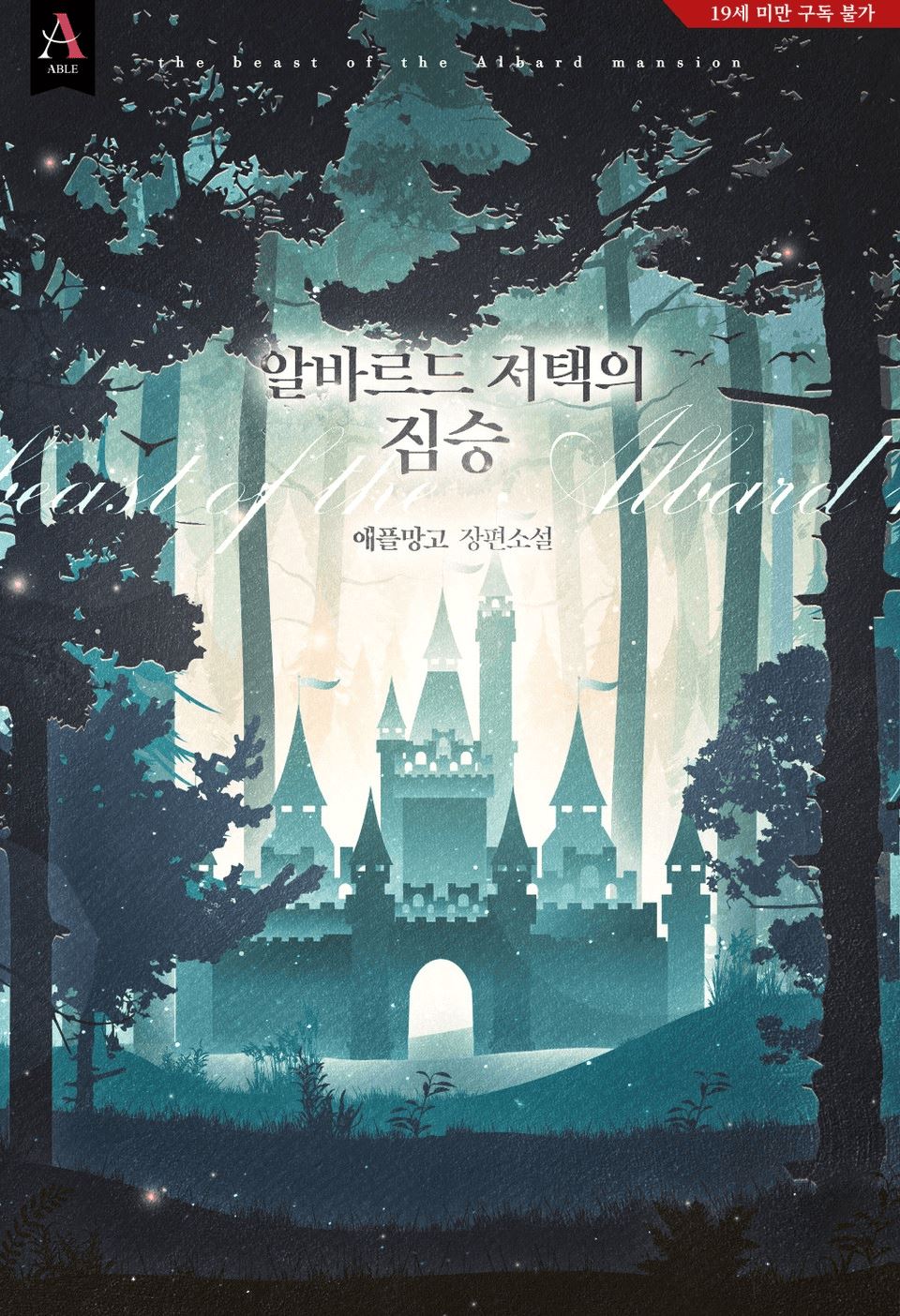
... Read More
This batch is basically a thesis on bodily autonomy disguised as a romance novel, and I am HERE for it. The central symbol is the concept of 'purity' itself—how it's weaponized by institutions (the governess, the parents, society) to control women's bodies, and how Sister actively deconstructs it: 'They see you as an object, not a person. They don't love you for who you are. They care if you're new and untouched. They see you as their possession.' That's not just dialogue, that's the thematic core of the entire novel hammered into a single sentence. But the most powerful symbol is the bed scene and what it represents. Desi tucking Seli in instead of taking what she's offered—it's the physical manifestation of the book's central question: can love exist without possession? Every man in Seli's world treats women as property. Her father arranges marriages like business deals. The suitor arrives in a golden carriage like a gift being delivered. Even the governess treats female sexuality as something to be guarded like contraband. But Desi—the werewolf, the outsider, the creature society would consider monstrous—is the ONLY one who refuses to treat Seli as an object. He guards her autonomy even when it costs him. The red hair is another symbol I can't stop thinking about. It represents suspicion, the fear of betrayal, the assumption that another woman must be involved. But it's just... hair. From a shopkeeper. The anxiety Seli feels isn't really about Desi—it's about her deeper fear that she'll be abandoned, that she'll be traded, that her worth is conditional. 'Was I being pushed aside again?' The word 'again' references Ellie, but it also references the entire system that has always treated her as interchangeable. And Sister's arc is basically the book showing us what happens when a woman stops accepting the script. She went from 'everyone in the world is cunning and bad' to someone who fights a governess and declares 'I don't regret it.' The transformation isn't just personal—it's political. She's rewriting the rules for Seli too, just by existing differently. The final image—Seli under the blanket, Desi under the bed, both of them wanting the same thing but separated by love itself—is the perfect symbolic conclusion. They're close enough to touch but the entire structure of their world keeps pulling them apart. And Seli's last thought—'Was I the only one having strange thoughts?'—isn't about sex. It's about wanting. It's about a girl who was taught her desires were shameful, discovering that someone else wants the exact same thing, and being terrified that maybe she's the only one brave enough to admit it.
... Read More
Plot twist that genuinely surprised me: Desi doesn't actually escape. I mean, we spend all this time building up to the key handover, right? The tension is there, she's hesitating, making him promise not to kill Hawk, and then—chains fall, he stretches, he's FREE—and what does he do? He comes BACK. The narrative structure here is brilliant in its cruelty. Chapters 20-27 set up a classic escape arc and then subverts it completely. Desi gets the key, steps into freedom, runs around the mansion like a wild thing discovering the world... and then returns to his cell every night like a dog. The story makes you believe in a freedom narrative and then quietly demolishes it. Meanwhile, the parallel plot of the livestock deaths and the village murders is ramping up nicely. Ten animals plus one human killed, all with identical claw marks. Father is hunting for a mountain beast while the actual beast is literally in his house, washing himself clean every morning and eating porridge like nothing happened. The dramatic irony is chef's kiss. And Hawk getting blamed and expelled instead of Desi? Perfect. The servant who used to beat Desi now takes the fall while the real killer plays the obedient pet during daylight hours. Meanwhile, Father is literally threatening to kill Desi the very creature he's hunting, completely unaware. The plot threads are tightening like a noose and I cannot look away.
... Read More
Okay can we just talk about Selenia's emotional world for a second because it's so painfully rendered? The part where she compares her fear of descending into the dungeon to lifting the handkerchief off her dead skylark? That hit me like a truck. Both moments are about facing something terrible that might kill you if you look too closely, and choosing to look anyway. There's this scene where she hears Desi's stomach growl and she just... laughs. Quietly. Not mocking him, but this genuine, almost embarrassed-laugh because even a wounded beast has mundane, human moments like hunger. And then she starts smuggling him bread hidden in her undergarments. That image—the small, careful bread-stuffing, the secrecy, the hope on her face imagining his surprised expression—this is so tender it hurts. But what really wrecked me was her empathy mechanism. The text says her heart aches when she sees a butterfly with torn wings or a limping stray dog. This isn't just kindness; it's almost physical, like pain transmission. She doesn't just feel sorry for Desi, she feels his suffering in her own body. And then her sister tries to tell her to harden her heart, that compassion is a liability in this world—that's when I was truly upset. Because Selenia's sensitivity isn't weakness, it's the one thing that makes her different from everyone else in this mansion, and the story itself seems to agree with her. The sister's speech about how the heart turns to steel with age is delivered so matter-of-factly, like it's natural law. But Selenia can't do it. She can't become cold. And I respect that so much.
... Read More
Okay so let me just say this one hit me so hard I had to put the book down for a second. Desi has the KEY. He literally has the key ring in his possession, he can unchain himself whenever he wants, he's stronger now, fully healed, and yet—he CHOOSES to come back. Every single night he returns to that damp dungeon and chains himself up again. Why? Because he misses Seli. "Because I miss you." That line. That absolutely devastating line. He says it like it's the most natural thing in the world, like of course he'd give up freedom for someone who barely visits him anymore. And Seli—oh god, Seli. She avoided the dungeon because she was SCARED of what she saw. She saw him devouring that horse and she ran. She hid under her blanket. But when she finally goes back and sees him crying, covered in whip marks from Father, he's not some terrifying monster. He's just... a lonely creature who thought she was his only friend. The tragedy here is layered like an onion made of barbed wire. Seli gave him freedom as an act of kindness, but Desi interpreted their bond as something worth staying imprisoned for. And she stopped visiting out of fear, which made his loneliness unbearable. The howling at midnight—it wasn't just hunger. It was a scream for help. "Please, Seli, save me." Save me from what? From loneliness? From the pain of waiting? From himself? And the worst part: Seli feels guilty about ALL of it. She fed him raw meat, she gave him the key, she liked him. "A slight flap of a butterfly's wings had become a storm." This friendship turned into something that hurts everyone around it, and she's carrying the weight alone. Ellie can't understand. No one can. That scene where Desi curls up at her feet like a wounded animal and she melts—her fear dissolving because she can't bear to see him cry—that's the kind of moment that wrecks you. It's not romantic love. It's not even fully platonic. It's something feral and desperate and real.
... Read More
I cannot get over how good the dialogue writes itself for Desi. The man says the least amount of words possible and every single one lands. Take this exchange: "It's a bit strange." "Why?" "It's too soft, like you." That's it. That's the entire exchange and it simultaneously tells us he's uncomfortable with comfort, that he's used to the dungeon, AND it's kind of a compliment to her personality. Perfection. And later when she calls him cute and he literally just says "You're the only one who would call me cute"—bro is not wrong, that line carries so much weight. This is a person who has never been called anything affectionate. And she's the first. The narrative voice itself is also doing something really interesting. She's this privileged noble girl who describes herself as previously timid and obedient, but the narration has this giddy, almost manic energy underneath everything. Like when she's talking about hiding under the bedspread checking on him every five seconds, or when she's deliberately sending her maid Ellie on errands so she can feed Desi more meat. There's this sense of delight in her transgression that makes the whole thing feel alive. It's not a somber rebellion—she's having fun with it. The line "I was good at keeping quiet" right after she just pulled off the most audacious act in the mansion is such a perfectly ironic self-aware moment.
... Read More
Okay I need to just get this out first—Desi is literally the most heartbreaking character. Like, you KNOW he's doomed from page one but you can't stop reading anyway. Let me talk about him specifically because his entire arc broke me. When the hunter first whispers to Father that Desi isn't an Osk but a werewolf, and we cut to Desi's reaction—standing there quietly, eyes fixed on both of them, cold and hardened—that scene is EVERYTHING. He hears everything. He understands everything. And he doesn't flinch. That's not a beast. That's a person who's been through hell and is still standing. But then the REAL gut punch hits when Desi explains why he can't leave Seli. The flea-in-a-cup metaphor? "Like fleas kept in a lidded cup that can never jump higher than the cup even when the lid is removed"—I literally gasped out loud. This is a creature who was TAMED not by force but by genuine affection, and that made it so much worse because now his loyalty is his cage. He'd rather die than leave her, and he knows it probably means death. His line "If I can't be with you, I might as well die" isn't dramatic—it's devastating because it's so matter-of-fact. And Seli's realization at the end is equally powerful. She spent her whole life being treated as invisible, learning to put everyone else first, and the fact that she finally chooses DESI—a literal werewolf—over the expectations of everyone around her, is the most character-defining moment. She says it herself: "I always put my desires last. Just as others sidelined me, I sidelined myself." The parallel between her treatment and Desi's treatment is not accidental. They're the same kind of creature to everyone else in this mansion. And yet she chooses to be selfish for the first time in her life. Desi chose his fate willingly; Seli finally lets someone choose THEIR fate for her.
... Read More
So this chapter is basically a masterclass in how to destroy a family in one evening and then pretend nothing happened the next morning. The sister returns after FOUR YEARS and the very first thing she does is defy her father publicly at the dinner table. Not quietly. Not strategically. She SLAMS the table and tells him she's marrying someone he didn't choose. And his reaction? He calls her ungrateful, reminds her he pays for everything, and LOCKS HER IN HER ROOM WITHOUT FOOD OR WATER. Let me be clear — this is not a fictional family drama. This is abuse. The father views his children as assets. The sister's education was an investment. Her body is currency. When she tries to trade herself on her own terms, he punishes her. But here's what's fascinating about the plot structure: the narrator doesn't rebel. She doesn't stand up. She sits at the table and trembles. She goes back to her room and cries into Desi's arms. And yet — and YET — she's already planning her own escape, just not the kind her sister is attempting. The father's announcement that once the sister marries, the narrator will follow is the inciting incident for the second half of the chapter. It's what pushes her to ask Desi about running away. It's what makes her realize that her obedience is a death sentence. The plot is moving in two directions at once: the sister's explosive rebellion and the narrator's quiet internal revolution. One is loud and visible and punished. The other is soft and hidden and growing. And I'm betting everything on the quiet one. Also the Desi plotline is sneaking up on me. He came home cold, he's hiding something, he avoids touch during full moons, he won't tell the narrator what he's doing at night. There's clearly a larger plot happening — some mission, some danger, some truth he can't share — and it's going to collide with the family drama at some point. I have a VERY strong feeling the sister's romantic choice and Desi's secret life are going to intersect in ways that blow this whole family apart. Also, can we talk about how the narrator says she WISHES she'd been rebellious? Like she regrets being good? That's such a devastating character beat disguised as a throwaway thought. The plot isn't just about what happens to them — it's about what they wanted to be before the world told them who to become.

Leave a comment

You must be logged in to leave comments. or
