Summary

... Read More

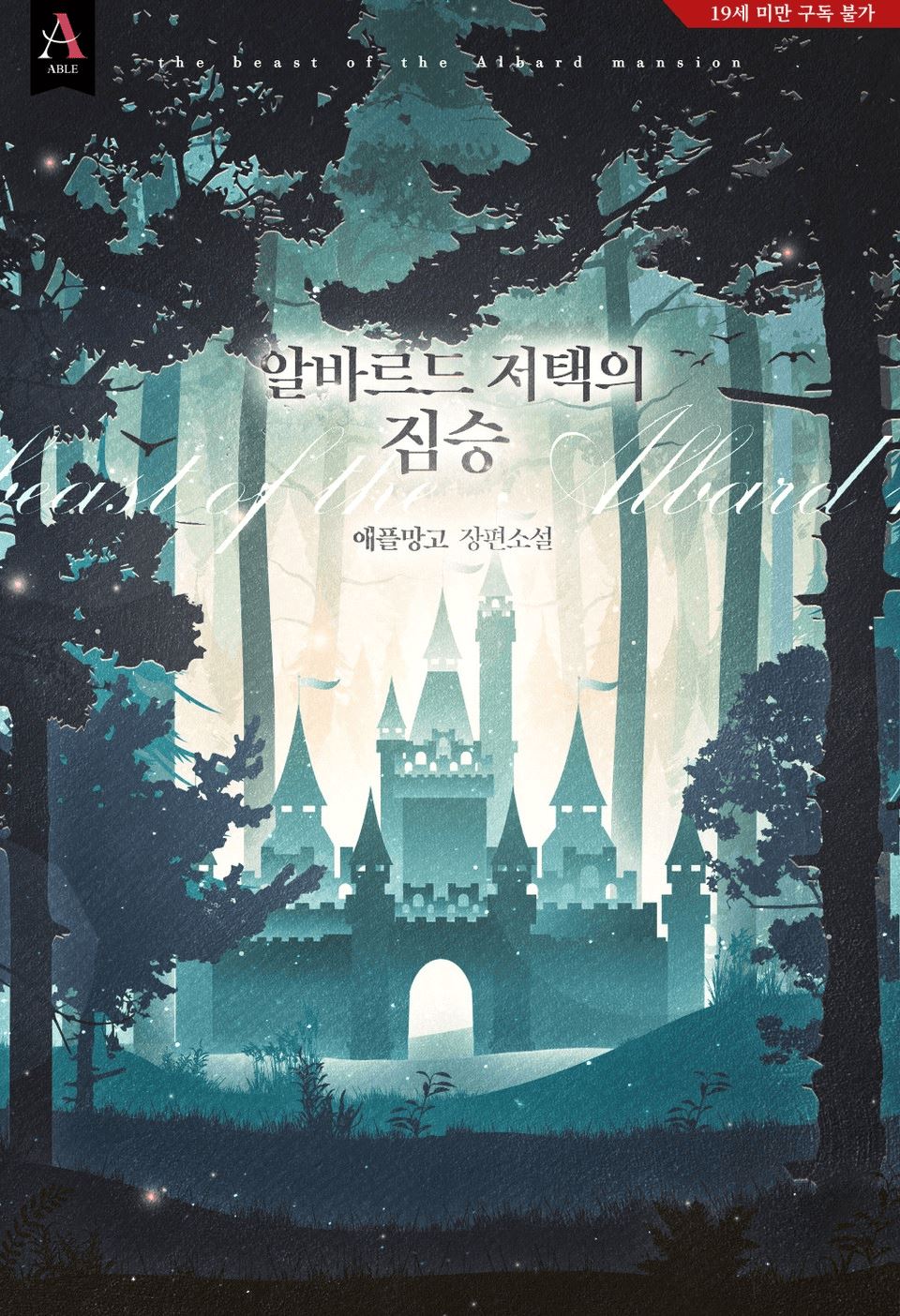
Selenia is a thirteen-year-old noblewoman living in the isolated Albard mansion under the strict and abusive control of her father, Count Albard. Her only family connection is an older sister who attends an academy and has been banished for loving the wrong man, leaving Selenia lonely and without friends. The household is filled with tension due to the Count’s volatile temper and cruelty toward his family and servants. Selenia’s life changes when her father brings home a strange, chained creature named Desi from a slave trader. Desi appears human but possesses animalistic traits, including sharp yellow eyes, pointed ears, and a ferocious growl. He is treated worse than an animal, kept in the dungeon, and regularly beaten by the Count to ensure his obedience.

Driven by curiosity and loneliness, Selenia secretly begins visiting Desi in the dungeon. She brings him food hidden in her clothes, gradually earning his trust. As she feeds him, she notices that Desi heals rapidly and grows stronger with each meal, suggesting he is not entirely human. Despite the warnings of the servants who claim Desi is not a person, Selenia sees him as a friend and begins speaking to him, introducing herself as Seli. Over time, Desi stops growling at her and learns to pretend to be subdued during beatings to shorten the punishment. Their bond deepens, though Selenia remains unaware of the full extent of Desi’s nature.

The turning point arrives when Selenia steals the key to Desi’s chains from a lazy stable boy named Hawk, who had previously abused Desi. She grants Desi temporary freedom, allowing him to leave the dungeon. That night, Desi kills a horse in the stable and is seen eating it raw. Shocked but not repulsed, Selenia returns to her room, only to discover the next day that Desi has not escaped but has returned to the dungeon. He chooses to stay, using his freedom to hunt livestock and a drunkard in the village at night. The killings draw the attention of the community and force the Count to hire a renowned beast hunter to capture the creature responsible.

When the hunter arrives, Selenia learns from her father that a servant was killed in the same manner as the livestock. Terrified that the hunter will discover Desi’s secret and kill him, Selenia rushes to the dungeon to warn him. She confesses her fear and tears, and Desi comforts her, apologizing for his actions. He promises to stop hunting and remain in the dungeon while the hunter is present. However, the hunter brings specially trained dogs with keen senses of smell, planning to track the beast at night. The story ends with the Count realizing he has a dog that might help track the creature, raising the stakes for both Desi and Selenia as the threat of exposure looms closer.

The narrative explores the complex relationship between Selenia and Desi, highlighting themes of loneliness, empathy, and the blurring line between humanity and beastliness. Selenia’s compassion leads her to defy her father and protect Desi, even as his violent instincts threaten those around them. The Count’s arrogance and failure to recognize the danger in his own home serve as a backdrop to the growing tension. As the hunter prepares to deploy his dogs, the story moves toward a climax where Desi’s secret may be exposed, forcing Selenia to confront the consequences of her friendship with a creature who is neither fully human nor entirely animal.

Desi’s internal conflict is evident as he struggles between his predatory instincts and his attachment to Selenia. He values her companionship enough to restrain himself, yet his nature compels him to hunt at night. This duality creates a tragic undertone, as Selenia begins to fear the very friend she sought to save. The mansion, once a place of quiet oppression, becomes a cage of secrets and looming danger. The hunter’s arrival introduces a new external threat, contrasting with the internal emotional turmoil Selenia experiences. Her journey from innocent child to someone aware of darkness and moral ambiguity marks her character development throughout the story.

The setting of the Albard estate, with its cold dungeons and rigid social hierarchies, reinforces the isolation felt by both Selenia and Desi. The Count’s treatment of Desi as property contrasts with Selenia’s recognition of his personhood, albeit flawed. This difference in perspective drives the central conflict, as Selenia must navigate her duty to her family and her loyalty to Desi. The story sets the stage for potential conflict between the hunter, the Count, and Desi, with Selenia caught in the middle. Her protection of Desi may lead to further rebellion against her father’s authority and the societal norms that define worth and humanity.

As the hunter’s dogs are readied for the night’s hunt, the suspense builds toward a confrontation. Desi’s choice to return to the dungeon despite having the means to escape demonstrates his growing attachment to Selenia and his desire to maintain their secret bond. However, the presence of the tracker dogs introduces a new variable that could unravel their fragile peace. The story leaves readers with a sense of impending crisis, as the hidden beast in the dungeon faces exposure and the potential for violence from both external hunters and the unstable environment of the mansion.

Latest Release
DateGroupRelease
2026-09-27citrus aurora c48
2026-09-27citrus aurora c47
2026-09-27citrus aurora c46
2026-09-27citrus aurora c45
2026-09-27citrus aurora c44
2026-09-27citrus aurora c43
2026-09-27citrus aurora c42
2026-09-27citrus aurora c41
2026-09-27citrus aurora c40
2026-09-27citrus aurora c39
2026-09-27citrus aurora c38
2026-09-27citrus aurora c37

Community Reviews

Rating(3.9 / 5.0, 47votes)
5 stars
15(32%)
4 stars
14(30%)
3 stars
16(34%)
2 stars
2(4%)
1 stars
0(0%)

Popular reviews

... Read More
I need to write about something unexpected here: the dialogue that isn't there. Desi doesn't speak human words once across all seven chapters. He growls, he pants, he whimpers, he stares. And somehow that makes his presence louder than any character who actually talks. The narrative voice is entirely Selenia's first-person perspective, and her voice has this wonderful quality—she's observant, a little naive, but never foolish. She notices things others miss because she's paying attention. The servants and family members, on the other hand, speak in warnings and rules. Their dialogue is functional: don't go near him, don't ask questions, don't get curious. They're a chorus of fear and control. But Selenia's internal monologue is where the real voice lives. She jokes with herself about Desi's surprised expression when he finds bread. She measures her courage in small acts. She narrates her own fear with honesty that's almost confessional. There's one line from her sister that's delivered like philosophy but sounds like cruel pragmatism: 'As you grow older... your heart would harden like steel.' It's the kind of line adults in oppressive systems repeat to keep the system running. And Selenia's refusal to absorb it—that's where the author's voice shines brightest. Not in what anyone says, but in what Selenia chooses not to become.
... Read More
I need everyone to understand what I just experienced because my heart is actually still racing. The way the narrator sees Desi—really SEE him—for the first time in this chapter. We've been hearing about this feral, muzzled, chain-wearing creature who growls and sniffs and scares everyone, and then BOOM, he's got clean skin, bright yellow eyes, an angular nose, and he speaks like a normal person. The description hits different when you realize how much abuse the father must have inflicted to create that initial impression. Those 'old scars' scattered across his body aren't just decorations—they're evidence. But what blew me away is the dynamic between them. When she shoves raw potato into his mouth and he DEVOURS raw meat like it's nothing, growling as he eats? That's not someone recovering from prison. That's someone who has survived things we can barely imagine and is still fighting. And his line 'Why would I die?' followed by admitting he's hungry every day—his stomach rumbling like thunder—that broke me. He doesn't expect to survive. He just expects to keep going. And the narrator—holy. She's risking WHIPPING and potentially becoming a slave (legally!) just to feed this guy. 'I couldn't abandon my friendship like a coward.' That word choice matters. She's not doing this out of pity. She's doing it because she'd rather face punishment than be the kind of person who abandons a friend. Meanwhile Desi, in his small shackled state, immediately thinks of ways to HELP her: 'Then I'll help. Steal the key.' Even powerless, he's already planning their escape together. Hawk is also... something. The lazy stable boy who calls for his mom when scared, who gets abused by the chief attendant without fighting back, yet also the guy who spits on the ground after being beaten and mutters 'The old man still has quite a bit of strength' like he's assessing a opponent. I don't trust this guy. Not in a bad way—in a 'he's playing dead and I need to figure out when he's going to strike' way.
... Read More
Okay, I need to talk about this one scene because it wrecked me. The whole chapter builds to this moment where Cellie sees Desi's scars for the first time — actually sees them — and you can feel the shift in her just completely rearranging itself. She says "Desi, you're precious to me. I will never abandon you." That's it. No big speech, no dramatic music moment. Just these words slipping out like they were always there, waiting. What killed me though is the context. He literally tells her "I was left behind by my siblings" like it's nothing. Like he's describing the weather. Nonchalant about being discarded because he didn't turn into a wolf and doesn't have a tail. And she — she just *hugs him* under the bed while he's half-naked and shivering. No hesitation. And then she goes back to pretending she wouldn't peek at him again 😂 we get it, you already broke your promise twice in three minutes. But here's what really got me: the scene where she catches the servants gossiping about how handsome the "beast" is and immediately flips out defending him. "Because Desi is mine." She doesn't even realize she just said that out loud, does she? She marches over all red-faced like a little angry cat protecting her thing. And then earlier, she's admitting to herself that she just *likes* looking at him — "I couldn't help but look at Desi because I never grew tired of watching him." That's not friendship energy, bestie. That's whole romance novel energy and she's too dense to see it. The whole chapter has this undercurrent of her becoming someone who can't live without him. And it's so sweet and also kind of terrifying because he's literally a werewolf and has trauma from being abandoned and sold and scarred. But the way she promises safety when his entire family couldn't give it to him? That's the stuff.
... Read More
'What nonsense are you teaching?! Did you teach Seli these things?!' That line. THAT LINE. The governess screams it and suddenly the entire ideological war of the story is laid bare in three words. This author understands that dialogue isn't just characters talking—it's characters weaponizing language. Sister's voice is fantastic here. She goes from blushing and stuttering to absolutely demolishing the governess with lines like 'It's not the capital that's debauched—it's your oppressive, outdated education that's wrong!' She's not just confident; she's intellectually armed. And the fact that the governess can only respond with 'shameless' and threats to tell the Countess? That's not a debate, that's a person whose entire worldview is based on control and they're losing. But the real dialogue masterpiece is the Seli-Desi scene. Look at how their voices contrast: Seli: rapid-fire, emotional, demanding. 'I'm asking what this is.' 'Why aren't you talking? Why?' Her dialogue is jagged and real. Desi: broken, minimal, struggling. 'S, Seli...' 'It's really nothing.' 'You are my everything.' 'You know you're like the sun to me.' His sentences are fragments, hesitations, things he has to force out. The dialogue itself performs his disability with speech. The narration also has this incredible dry wit. 'Mother was dressed like an elegant noblewoman... I wore a bright blue dress, bought from a merchant who had com—' and it just trails off mid-sentence like the narrator gave up on describing aristocratic fashion. And 'Father had a good reason to be obsequious' while describing him kicking servants? That's narrative voice doing heavy ironic lifting. The most devastating line though is probably the simplest: 'They're not saying to be careless with your body. But men who care about purity aren't good people.' Sister says it casually, almost offhand, and it carries the weight of the entire thematic argument of the book. One line. No drama. Just truth dropped like a bomb.
... Read More
This is the kind of pacing that keeps you up until 3 AM and then makes you question every life choice that led you to this moment. Let me break it down because the structure here is actually really clever. The batch opens with a quiet, almost domestic scene—Seli checking on Sister, the two of them talking about love and marriage. It's slow, warm, almost lazy in its rhythm. You could almost fall asleep reading it. Then BOOM—the governess argument. The pacing JAMs into high gear for a full page of shouting and ideological warfare. Sister vs. tradition, and she's WINNING. It's electric. After that peak, the author immediately drops you into Seli's internal monologue about her own doomed future. The pace slows again but the emotional temperature rises. She's sitting alone in her room, thinking about arranged marriage, and Desi appears through the window like some feral deity coming home. The intimacy of that entrance—him smelling of grass and earth, her leaping into his arms, the hat falling off—sets up the romantic charge perfectly. Then the red hair. The tension spikes AGAIN. For a moment I genuinely thought—no, I HOPE it was something else, but the moment lands like a betrayal. Seli's anger is real, her tears are real, and Desi's silence is agonizing. When he finally explains, the pacing releases like a pressure valve. All that built-up anxiety dissolves into the most wholesome confession sequence imaginable. And then—the BED SCENE. The author spends paragraphs building toward it. The flushed face, the kneeling, the 'sun' metaphor, the slow approach, the closed eyes, the blanket touching her back. Every single beat is placed with surgical precision to maximize anticipation. And then he tucks her in. The abrupt halt is so deliberately anti-climactic that it loops right back around to being brilliant. It's comedic, it's heartbreaking, it's romantic, and it leaves you absolutely FURIOUS. The suitor arrival at the end resets the pace again—ceremonious, tense, with Father's manic energy providing dark comic relief. Perfect bookend structure.
... Read More
This batch is basically a thesis on bodily autonomy disguised as a romance novel, and I am HERE for it. The central symbol is the concept of 'purity' itself—how it's weaponized by institutions (the governess, the parents, society) to control women's bodies, and how Sister actively deconstructs it: 'They see you as an object, not a person. They don't love you for who you are. They care if you're new and untouched. They see you as their possession.' That's not just dialogue, that's the thematic core of the entire novel hammered into a single sentence. But the most powerful symbol is the bed scene and what it represents. Desi tucking Seli in instead of taking what she's offered—it's the physical manifestation of the book's central question: can love exist without possession? Every man in Seli's world treats women as property. Her father arranges marriages like business deals. The suitor arrives in a golden carriage like a gift being delivered. Even the governess treats female sexuality as something to be guarded like contraband. But Desi—the werewolf, the outsider, the creature society would consider monstrous—is the ONLY one who refuses to treat Seli as an object. He guards her autonomy even when it costs him. The red hair is another symbol I can't stop thinking about. It represents suspicion, the fear of betrayal, the assumption that another woman must be involved. But it's just... hair. From a shopkeeper. The anxiety Seli feels isn't really about Desi—it's about her deeper fear that she'll be abandoned, that she'll be traded, that her worth is conditional. 'Was I being pushed aside again?' The word 'again' references Ellie, but it also references the entire system that has always treated her as interchangeable. And Sister's arc is basically the book showing us what happens when a woman stops accepting the script. She went from 'everyone in the world is cunning and bad' to someone who fights a governess and declares 'I don't regret it.' The transformation isn't just personal—it's political. She's rewriting the rules for Seli too, just by existing differently. The final image—Seli under the blanket, Desi under the bed, both of them wanting the same thing but separated by love itself—is the perfect symbolic conclusion. They're close enough to touch but the entire structure of their world keeps pulling them apart. And Seli's last thought—'Was I the only one having strange thoughts?'—isn't about sex. It's about wanting. It's about a girl who was taught her desires were shameful, discovering that someone else wants the exact same thing, and being terrified that maybe she's the only one brave enough to admit it.
See all reviews

Custom lists

See all custom Lists