Summary

... Read More

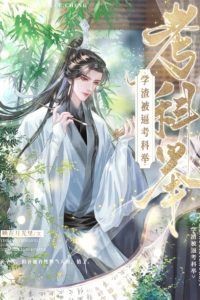
Cheng Zi'an, a modern soul who previously lived as a wealthy slacker, transmigrates into the body of a seven-year-old boy in the Great Qi Dynasty. The new host is the son of Cheng Zhen, a talented but ill-fated Juren who failed to advance to the Jinshi degree due to filial mourning and bad luck. Cheng Zi'an finds himself in a Mengtong class at the prestigious Mingzhou Prefectural School, where he is viewed as a disappointment by his teacher, Mr. Zhou, and his strict father. Despite his adult mind, Cheng Zi'an struggles with the classical curriculum, relying on his prior knowledge of traditional characters and arithmetic to navigate exams that would otherwise defeat him.

The central conflict emerges through the social dynamics of the school. The student body is stratified by family background, with prominent clans like the Xin family holding significant power. Xin Jinian, a spoiled heir from this influential clan, frequently bullies Fang Yin, a poor but exceptionally bright student from a neighboring village. Fang Yin, who was recommended to the school by Cheng Zhen, endures humiliation and physical intimidation from Xin Jinian and his sycophantic followers. Cheng Zi'an witnesses these incidents, initially choosing to remain neutral due to the dangers of opposing a powerful family, but he eventually intervenes by creating a diversion to stop a particularly severe bullying episode.

A key turning point occurs during an exam period. Cheng Zi'an, leveraging his modern understanding of basic arithmetic, achieves perfect scores in mathematics, shocking his peers and teachers. This success draws the ire of Xin Jinian, who accuses Cheng Zi'an of cheating. Cheng Zi'an calmly deflects the accusation, refusing to be drawn into a cycle of self-justification and forcing the teacher to dismiss the baseless claims. Following this, Xin Jinian attempts to frame Cheng Zi'an for his own accidental injury, but Cheng Zhen, the father, handles the situation with political acumen, neutralizing the Xin family's threats by reminding them of the broader social consequences and the school's independence.

The story further develops as Cheng Zi'an navigates the complex relationship with his father. Cheng Zhen is a stern disciplinarian who prioritizes academic rigor and social awareness over affection. He punishes Cheng Zi'an for his mischief but also provides guidance on the harsh realities of the scholar-official world, emphasizing that poverty and lack of background make one vulnerable to exploitation. Cheng Zi'an begins to understand that his father's strictness is a survival mechanism in a society where status determines safety and respect.

As the Dragon Boat Festival approaches, the narrative highlights the economic disparities between students. Fang Yin receives a bolt of cloth from the Xin family, a gesture that is ostensibly charitable but deeply humiliating, reinforcing his subordinate status. Cheng Zi'an observes this with growing discomfort, recognizing the systemic injustice that Fang Yin faces. Meanwhile, Cheng Zi'an's own family prepares for the upcoming Spring Imperial Examination, with Cheng Zhen planning to travel to the capital. The chapter ends with Cheng Zi'an being tasked with agricultural labor, a reminder that despite his family's relative wealth, he must still contribute to their livelihood, grounding his scholarly ambitions in the harsh realities of rural life.

The trajectory of the story points toward Cheng Zi'an's gradual integration into this historical setting. He must balance his desire for a carefree life with the necessity of academic success to protect himself and those around him, like Fang Yin, from the predations of powerful clans. The narrative sets the stage for Cheng Zi'an to use his modern knowledge and adult perspective to navigate the treacherous waters of imperial examination politics and social hierarchy, while forming alliances and confronting the entrenched inequalities of the Great Qi Dynasty.

Novel Items

More
Disciplinary Tool
A ruler made from two blocks of elm wood joined together, polished to a glossy sheen by constant use. It is used by Mr. Zhou to punish students, such as lashing Zhang Qi's palm, causing bright red marks and tears.
Manuals
A classic Chinese text containing common surnames. Chi Yu knows all the characters and offered to have Qin Mu transcribe it for teaching purposes.
Toy
Insects that children catch and tie with thin strings to their legs, shaking them to create a whirring wing sound like a fan. They are a favorite pastime of the Mengtong students but are nearly hunted to extinction.
Holiday
A break announced by Mr. Zhou after the exam, during which most classmates do not need to work in the fields and can enjoy celebrations. However, another exam awaits after the break.
Material
A bolt of fine blue cloth given by Cheng Zhen to Fang Yin's father in exchange for a hen. It is more valuable than the hen but less conspicuous than silk, and Fang Yin's mother has not yet made it into a shirt due to farm work.
Item
The midterm exam papers that Lin Yiran and Pan Jing exchanged after class to look over each other's mistakes and share feedback on their weaknesses.
Latest Release
DateGroupRelease
2026-08-11shanghai fantasy c10
2026-08-11shanghai fantasy c9
2026-08-11shanghai fantasy c8
2026-08-11shanghai fantasy c7
2026-08-11shanghai fantasy c6
2026-08-11shanghai fantasy c5
2026-08-11shanghai fantasy c4
2026-08-11shanghai fantasy c3
2026-08-11shanghai fantasy c2
2026-08-11shanghai fantasy c1

Community Reviews

Rating(4 / 5.0, 13votes)
5 stars
3(23%)
4 stars
7(54%)
3 stars
3(23%)
2 stars
0(0%)
1 stars
0(0%)

Popular reviews

... Read More
Okay so can we talk about Cheng Zi'an and Fang Yin for a second because THIS is the kind of friendship that actually hurts to read about? The scene where Fang Yin comes out wearing those new clothes and Zhang Qi makes that snide comment about his outfit — Fang Yin's face goes pale and he just presses his lips together. And Cheng Zi'an? He smiles and nods. That's it. No big speech, no extra kindness that would make Fang Yin feel even more embarrassed. Just a simple nod and then he pulls Zhang Qi inside before Fang Yin can even respond. "A little kindness was enough; there was no need to add to his embarrassment. They were not on the same path now, and social barriers were not easily crossed." That line hit me like a truck. Cheng Zi'an understands something so painful — that sometimes the kindest thing you can do is NOT make a big deal out of helping someone. Because Fang Yin is proud. He's poor but he's proud, and Cheng Zi'an knows this. The fact that he represents pressure to Fang Yin just by being Cheng Zhen's beneficiary son... it's complicated. They're not equals anymore, not really, and Cheng Zi'an respects that boundary. I keep thinking about how Fang Yin stole a glance at Cheng Zi'an before Zhang Qi mocked him. Like he was checking — is my friend still my friend? And Cheng Zi'an's answer was: yes, but I won't make it weird. This is the kind of subtle, aching friendship that modern novels rarely get right. No dramatic confessions, no grand gestures. Just two boys who understand each other in a world that keeps pulling them apart. And honestly? That's more powerful than any romance subplot could ever be.
... Read More
There's this one line that Cheng Zi'an recalls during the bullying scene and it stuck with me like a burr on my sweater: 'Wealth is no crime, but poverty is.' That sentence is basically the entire thesis of this novel's world compressed into eight words. It's not just a character observation—it's the author telling us, straight up, how this society works. The symbolism of Fang Yin's torn clothing is doing a lot of heavy lifting here. His exposed shoulder isn't just a visual detail; it's a manifestation of his complete vulnerability in a system where your social standing is determined before you even open your mouth. When Xin Jinian rips the sleeve off Fang Yin's shirt, he's not just being a brat—he's performing a ritual of humiliation that reinforces the social hierarchy. The classroom becomes a microcosm of the entire dynasty's power structure. And then there's the recurring motif of 'the hat must be worn straight' from the Disciples' Rules. Xin Jinian weaponizes a line of moral instruction to justify his cruelty, which is just absolutely brutal in the most petty way possible. It's the author showing us how moral language gets co-opted by the powerful to discipline the weak. The same line that's supposed to teach propriety becomes a tool for bullying. That's not accidental writing—that's thematic precision. Cheng Zi'an's internal monologue about his own family's position is equally revealing. He recognizes that even his father Cheng Zhen, despite his talent and reputation, would still be considered 'a small, humble household' no matter what. The imperial examination system promises meritocracy, but the novel keeps reminding us that merit alone doesn't overcome centuries of accumulated social capital. Cheng Zi'an's fear—that he might end up like Fang Yin if his father doesn't succeed—isn't just personal anxiety. It's a systemic critique wrapped in a child's honest terror.
... Read More
I need to talk about the setting of this book because WOW. The author paints this village with such specific, layered detail that I could literally close my eyes and see it. "Through the gaps in the wicker fences, brilliant roses stretched out diagonally, while sharp shards of porcelain embedded in the blue-brick walls glinted coldly in the fading sunlight." Do you understand what this sentence is doing?? The roses are beautiful — warmth, life, the Cheng family's prosperity. The porcelain shards on the walls are... defensive. Anti-theft measures. Cold. This one sentence tells you everything about the Cheng family: they're wealthy enough to have gardens, but they also need to protect that wealth. The duality is chef's kiss. And the walk home! The golden wheat waves, the green rice plants nodding, the frogs croaking at night, the garden with irises and peonies and gardenias. Cheng Zhen picking touch-me-not flowers to dye his wife's nails — this is a whole mood. The domestic warmth of that scene contrasts so sharply with the tension of the father-son conflict. One minute you're reading about a man carefully selecting flowers for his wife, the next he's grabbing a crabapple branch to spank his son. The world feels SO alive, like you're walking through it alongside these characters.
... Read More
I need to talk about how the author builds this classroom scene because it's genuinely impressive worldbuilding disguised as a school setting. The room itself feels so specific and alive—you can practically smell the ink and feel the heat. The detail about the exam lasting 'the time it took for two incense sticks to burn' immediately transports you into this historical moment without any exposition dump. That's the kind of worldbuilding that doesn't feel like worldbuilding at all; it just feels like the world. But what really makes this scene work is the social geography of the classroom. The author maps out the entire power structure through physical positioning and behavior. Fang Yin sits apart, poor and quiet. Xin Jinian commands space with his brute energy, and his followers cluster around him like satellites. The diligent students gravitate toward Fang Yin to compare answers, creating a secondary social network based on academic ambition rather than wealth. Zhang Qi and Cheng Zi'an occupy this liminal space—poor performers who aren't quite at the bottom but aren't protected by talent either. The visual of Fang Yin crouching on the floor, half-naked, trying to hide his poverty, is one of the most cinematic moments in this entire passage. I could see the camera angle clearly: low shot, shallow depth of field, the other students' legs and feet visible in the background as they circle like vultures. The contrast between the bright, noisy celebration that Cheng Zi'an manufactures and Fang Yin's silent, shrinking terror is devastating. And the ending image—Cheng Zhen approaching from afar, 'as refined as a clear breeze and bright moon,' while his son cowers at the dormitory entrance—creates this incredible visual tension. The father represents everything the system rewards: talent, refinement, connections. The son represents everything that system can destroy. The physical distance between them in that final moment says everything the author needs to say.
... Read More
Let me just be honest — the entire middle section of this chapter had me simultaneously crying and laughing. Cheng Zi'an is being dragged home, wondering if he's going to get beaten, and the suspense is REAL. Is he? Isn't he? What did he do wrong?? When Cheng Zhen finally says "Hold out your hand" and Cheng Zi'an starts wailing up at the sky like "No way" — I was losing it. The kid's internal monologue is pure chaos. He's calculating, strategizing, trying to figure out if the beating is about the exam or about something else. And then when he realizes it IS about the exam, his whole attitude shifts. He goes from terrified to defiant to... almost proud? Like, "Fine, you want to beat me? Go ahead. I'm your only heir, starve me if you dare!" But here's the thing that made my chest tighten — the beating itself is described as thunderous sound but not much pain. "The flesh on the buttocks was thick, so the sound was thunderous, but it didn't actually hurt much." This is a father who is performing discipline for the household staff, for his wife, for the family structure — but he's not actually trying to hurt his son. And Cheng Zi'an KNOWS this. That's why he can get away with lying on the floor and howling without tears. That's why he can peek at his father upside down. The stakes were never real physical danger — they were about authority, about face, about the fragile performance of a strict father in a traditional household. And yet — and this is what got me — Cheng Zi'an is still genuinely anxious throughout the whole scene. The reader knows it's not going to be that bad, but the character doesn't. That gap between dramatic irony and genuine fear? That's where the tension lives.
... Read More
There's this one moment — just a passing mention — that encapsulates the entire theme of the novel, and I don't think most readers will even notice it. Cui Suniang notices the edges of Cheng Zi'an's book curling and chides him: "Many poor students rely on copying texts to study. Copying itself is difficult—the brush and ink must be of good quality, and the paper cannot be too poor either, or else after a few flips, the characters will smudge and the paper will tear." Just one sentence. But it opens up this entire world of inequality that the novel is clearly about. The Spring and Autumn Annals alone has over thirty volumes. Each volume costs more than two taels of silver. Annotated versions are "outrageously expensive." For poor students, the biggest expense isn't tuition — the Fuxue provides ink, brushes, paper, and inkstones — it's BOOKS. Education itself is free, but the tools to access it are not. And then there's Fang Yin, who apparently can't even afford books, and Xin Jinian whose book box is woven with auspicious vine patterns and gleams with polish. Same school. Different worlds. The festival gifts become a symbol too — the Xin family sends their steward Xin Da with what is presumably a massive bundle ("Unless his bundle contained gold ingots"), while poor students give "a piece of meat, a basket of eggs" but "the gift could not be omitted." Even the smallest contribution is expected. The system demands participation from everyone, regardless of means. What is the novel really saying about education? That it's supposed to be a great equalizer — "poor scholars seeking to rise above their station" — but the reality is that the playing field was never level to begin with. Fang Yin can excel despite everything, but Cheng Zhen warns that success in the exams is only the beginning. The real dangers come later, in officialdom, where "those without background or wealth can be swept away in an instant." The books, the gifts, the exams — they're all symbols of a system that claims meritocracy but operates on class.
See all reviews

Characters

See all characters

Custom lists

Oops…There is nothing here.