Ten Years Behind Bars for Him: Reborn to Bury My Ex-husband's Family - Reviews

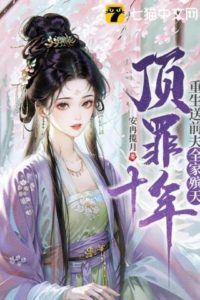
Ten Years Behind Bars for Him: Reborn to Bury My Ex-husband's Family
+Add to Custom List
Sort
Add review
... Read More
I have genuinely never seen a character moment hit this hard. Let me back up. For the entire novel up to this point, Jiang Jinshu has been defined by her devotion to Shen Nanxing—her anxiety when he's late, her tears when he ignores her, her desperate attempts to please his family. But in these chapters, something fundamental shifts. The moment she decides to stop performing obedience is the moment she becomes dangerous. And the author makes this clear through one of the most powerful choices in the entire text: Jiang Jinshu never steps out of her carriage at the estate gate. Think about what that means. Shen Nanxing is lying on a stretcher, bloodied, barely conscious. His mother is panicking. Su Yunyan is weeping dramatically. And Jiang Jinshu—her lawful wife, the woman who would have rushed to his side in any previous chapter—doesn't even deign to open the curtain. She speaks through Caiping lifting the fabric like a queen addressing subjects. "Mother, it's a long story." She explains everything in cold, precise detail, watching Madam Shen's face shift from shock to confusion to something darker. Then she turns to Su Yunyan and delivers the line that redefines their entire relationship: "Sister? What? Not calling me Sister-in-law anymore?" She's mocking her, yes, but she's also exposing the truth—they were never sisters. They were co-conspirators in stealing her husband. And Shen Nanxing? His reaction is telling. He tries to blame her: "Why must you speak with such sarcasm? Isn't today's incident all your fault?" The audacity. The absolute, breathtaking audacity of a man who was just caned into unconsciousness to demand accountability from the woman he wronged. Meanwhile, Madam Shen's response is pure gaslighting: "As the young mistress of Shenjia, you should consider the bigger picture and prioritize taking care of your husband." The woman who raised Shen Nanxing is now asking Jiang Jinshu to swallow her pride for the sake of family harmony. But Jiang Jinshu sees through it. Her final line to her mother-in-law is a knife wrapped in silk: "Now that their unspeakable relationship is out in the open, I'll trouble Concubine Su to take good care of my husband." She's not just rejecting Shen Nanxing—she's reclaiming her position as the head of this household by refusing to play the victim. And when she looks at herself in the mirror and says, "From now on, I want to see if the Shen family, without my subsidies, can continue to live in harmony as one loving family"—that's not revenge. That's liberation. The relationship dynamics have彻底 shifted, and I'm here for it.
... Read More
I need to talk about the stakes in this story because they escalate in the most satisfying way possible. Let me break down exactly why these chapters kept me on the edge of my seat. The external conflict is obvious on the surface: Su Yunyan pushed someone into water, there's a punishment to be handed out, reputations are on the line. But the author immediately layers in personal stakes that make this so much more tense. Jiang Jinshu isn't just a bystander being asked to take the blame—she's the wife. Her marriage is already fragile, her position in the Shen household is precarious, and her past-life trauma is literally driving her every decision. When Shen Nanxing says 'Jiang Jinshu, this is all your fault,' the stakes aren't just about a beating—they're about whether she'll be destroyed all over again. The moment Su Yunyan reveals her pregnancy, the stakes explode. It's no longer about fifty strokes of the rod. It's about two lives, about illegitimacy, about a scandal that could destroy three families. And here's what makes it so tense: Jiang Jinshu knows something the other characters don't. She knows this is adultery between siblings (even if adopted), she knows the child's legitimacy is questionable, and she knows that exposing this publicly would be devastating. But she also knows that staying silent means repeating her past-life mistake. Every choice she makes is a high-wire act. The physical stakes are real too. Fifty strokes for a pregnant woman isn't just uncomfortable—it's potentially fatal. Su Yunyan's own words confirm this: 'If you strike me today, it will be two lives lost.' The author doesn't shy away from the brutality of the punishment system. This isn't a story where consequences are mild and manageable. What I find most impressive is how the author maintains tension through information asymmetry. We (the readers) know Jiang Jinshu has been reborn. We know she's playing a long game. But the other characters don't. This creates this delicious dramatic irony where we're watching Jiang Jinshu navigate a minefield while everyone else thinks she's just a wronged wife. When she offers for Shen Nanxing to take the punishment instead, the tension comes from wondering: will this backfire? Will someone see through her act? The answer, of course, is that it might—because the story isn't over. The internal conflict is equally well-rendered. Jiang Jinshu's moment of 'feeling a surge of satisfaction in her heart, yet on the surface, she maintained an expression of acting for their own good' is a perfect snapshot of her psychological state. She's torn between revenge and self-preservation, between exposing the truth and playing the long game. Her tears are real (she's genuinely hurt) and performative (she's strategically crying). This duality makes her one of the most complex protagonists I've encountered in this genre. The suspense is maintained through a series of mini-climaxes: the slap, the Princess's arrival, the pregnancy reveal, the pulse examination, Jiang Jinshu's counter-offer. Each one raises the stakes a little higher, and just when you think it can't get worse—plot twist. The author understands that tension isn't about one big climax; it's about stacking pressure until the reader can barely breathe. My only concern is that the stakes feel almost too high too quickly. The jump from 'pushed into water' to 'incestuous pregnancy scandal' is steep. But honestly, the emotional logic holds up, and I was too invested to care about the pacing of escalation.
... Read More
The dialogue in these chapters is absolutely vicious and I mean that in the best way possible. Shen Nanyue's voice is so distinct—you can hear her entitlement in every sentence. "Do you have any regard for Shenjia at all?" "Yunyan is gentle-natured and now carries a child. Contributing to the Shen family's lineage is a great achievement." This is someone who genuinely believes her own propaganda, who thinks she's the victim while orchestrating everything. And Jiang Jinshu's responses? Ice cold. "Isn't Su Yunyan taking care of him by his side?" Just three words, completely deflecting the accusation while subtly pointing out the absurdity of the situation. Then later: "If I'm going to hit you, I'll hit you. Must I wait for an auspicious day?" THAT line made me laugh out loud. The wit, the timing, the absolute disregard for tradition—it's perfect. And the hairpin line: "Since you intend to drive me out of Shenjia, then I'll take these things back." So simple, so devastating. The author gives each character a voice that's instantly recognizable. Shen Nanyue sounds like every entitled person you've ever dealt with, and Jiang Jinshu sounds like the friend who finally snaps and says everything you've been thinking. The servant dialogue is good too—Caiping's quick loyalty shift, the other maids echoing her. It all feels natural, not exposition-heavy. Every line advances character or plot. Nothing is wasted.
... Read More
Okay so let me just say—Jiang Jinshu is absolutely NOT having it anymore. Like, we've been watching this woman sit there calmly drinking tea while Shen Nanyue comes in with her whole entourage throwing accusations, and you can literally see the moment she decides enough is enough. The way she flips the script is chef's kiss. She doesn't just defend herself, she goes on OFFENSE. "Why not return everything you've taken from me?" — that line hit different because it's not just a throwaway insult, it's a factual statement. All these years she's been funding this family with her dowry and they treat her like garbage. And then the slap? The DOUBLE SLAP? I literally screamed at my phone. But what really got me was the power dynamic shift with her servants. She doesn't just win the fight, she buys loyalty. "For every one you injure, I will reward ten taels of silver." Ten taels when a maid makes ONE tael a month?! That's not just smart, that's brilliant. She just turned a room full of people who might've been neutral into her personal army. And the ending where she hands over the account books and keys to Madam Shen? That's not backing down, that's declaring war. She's taking the financial reins away from them. I need to know what happens next because this woman is playing 4D chess while everyone else is still learning checkers.
... Read More
Okay so let me just say—this chapter structure is absolutely genius. The author doesn't just give us a revenge fantasy, they layer it so carefully that every time I thought I knew where things were going, BAM, another twist. Let me walk through why this works so well. First off, the setup: Su Yunyan pushes the Young Master into the water, Jiang Jinshu saves him with her medical skills, and everything seems like it's heading toward the typical 'good wife gets wronged' storyline. But then—enter Princess Yuanzhao. And here's where it gets interesting. Jiang Jinshu's internal monologue reveals she's been here before. This isn't her first life. In her previous life, she took the blame for Su Yunyan out of some misguided sense of loyalty, and it destroyed her. Now? She's armed with foreknowledge and she's playing a completely different game. The moment that made me literally gasp out loud was when Su Yunyan drops the pregnancy bomb. 'Stop! I'm pregnant!' And then—Jiang Jinshu's reaction is not what anyone expects. She doesn't break down. She doesn't collapse. She literally starts calculating. 'This can't be. How is this possible? You are siblings.' And then she pivots so hard it's dizzying. Instead of being the victim, she becomes the one controlling the narrative. The plot mechanism here is what I'd call 'strategic vulnerability.' Jiang Jinshu pretends to be heartbroken, pretends to accept her fate, but every word she speaks is a weapon. When she says 'Perhaps, let my husband take the punishment for Su Yunyan,' that's not surrender—that's a trap. She's forcing Shen Nanxing into a corner where he either takes the beating (which would expose his relationship with his sister-in-law more publicly) or refuses (which makes him look guilty). Either way, Su Yunyan loses. And the pacing! The author doesn't rush any of these reveals. Each piece of information comes at exactly the right moment—first the slap, then the Princess arrives, then the pregnancy reveal, then Jiang Jinshu's counter-offer. It's like watching a chess game where the protagonist has already seen three moves ahead. The only thing I'd say is that the transition between chapters feels slightly abrupt at times. Chapter 3 ends with the Princess arriving and Chapter 4 immediately moves to the main hall. A little more breathing room between scenes would help, but honestly, the momentum is so strong I didn't mind waiting. What I love most is that the plot doesn't rely on coincidence. Every twist comes from character decisions—Jiang Jinshu's knowledge, Su Yunyan's panic, Shen Nanxing's shamelessness. The author trusts the reader to connect the dots, and that respect for the audience is rare. This is how you write a rebirth novel without making it feel formulaic.
... Read More
The pacing here is absolutely perfect. It starts slow—Jiang Jinshu sitting, tea in hand, letting Shen Nanyue do all the talking. You can feel the tension building as Shen Nanyue gets more and more unhinged with each demand. Then the first slap hits and BOOM, the pace accelerates. Second slap, hairpin yanked, clothes stripped, servants fighting—it's a relentless cascade of escalation that never lets up. What I love is how the author controls the rhythm. After the chaos of the fight, there's this moment where Jiang Jinshu just calmly sits back down and says "Caiping, give everyone a reward." That pause is so deliberate. It's the eye of the storm, and it makes everything that follows feel even more calculated. Then the servants' loyalty pledge, the distribution of silver, the instruction to rest—and THEN the final line about handing over the account books. That's the real punch. The author doesn't end on the fight, ends on the strategic move. It's like the physical confrontation was just the opening act and the real war is about to begin. The transition from emotional outburst to cold calculation is what makes this chapter so satisfying. And the cliffhanger energy is real—Madam Shen is going to lose her mind when she gets those books, and we're all just sitting here waiting for the next explosion.
... Read More
Okay so let me just say this outright: Jiang Jinshu's transformation is the single best plot pivot this novel has pulled off, and I need everyone to understand why. The entire arc up to this point has been building toward her snapping, and the author delivers it in a way that's both satisfying and deeply unsettling. Remember how earlier she was always the anxious, pleading wife? The one begging for scraps of attention? And now—bam—she's the one holding all the cards, calmly orchestrating Shen Nanxing's public humiliation while never even stepping out of her carriage. That's not just a character shift; that's a structural masterstroke. The author uses the caning scene as the climax of Act 2, and honestly, the way the tension builds is impeccable. First Zhou Shiyu drops the bomb about Shen Nanxing wanting his lawful wife to take punishment for a concubine. Then the noblewomen start piling on—one after another, each adding a new layer of social pressure. The author doesn't rush this; they let the chorus of condemnation grow naturally, like a storm gathering. And then Shen Nanxing finally breaks. "I, Shen Nanxing, am willing to accept punishment on behalf of Yunyan." The words taste like ash, and you can feel it. The plot then immediately pivots to the aftermath—the carriage scene at the estate gate, where Jiang Jinshu delivers her most devastating lines without ever showing her face. She never steps out. She never has to. The power dynamic has彻底 flipped. But here's what keeps me up at night: the author hints that this is only the beginning. "Shenjia. This is only the beginning. The real show is yet to come." That line at the end of the caning scene? Chilling. It signals that Jiang Jinshu isn't just seeking justice—she's waging war. And the Shen family has no idea what's coming. The plot structure here is tight, but I'm curious about where it goes next. Will Su Yunyan's pregnancy become a weapon against Jiang Jinshu, or will it be the very thing that destroys her?
... Read More
Let me just say this upfront: the stakes in these chapters are absolutely sky-high, and the author knows exactly how to keep you on the edge of your seat. But here's what's fascinating—the conflict isn't just external. It's not just about whether Shen Nanxing will survive the caning or whether Su Yunyan's pregnancy will cause complications. The real conflict is internal, and it's happening inside Jiang Jinshu's head. For most of the novel, her internal conflict was: how do I make him love me? Now it's: how do I destroy them without destroying myself? That's a completely different kind of stakes. The external conflict is equally intense. Shen Nanxing is facing physical punishment—fifty strokes that could leave him bedridden for half a month. But the social stakes are even higher. The entire nobility of Huangcheng is watching. If the Shen family can't handle their own household, what does that say about their ability to govern? Princess Yuanzhao puts it bluntly: "If Shenjia cannot handle this matter properly, I fear it will tarnish the family's reputation." And Lady Yongning threatens the nuclear option: "Let us hope Su Yunyan can still protect her child while in prison." The threat of imprisonment for a pregnant woman isn't just dramatic—it's a genuine escalation that raises the stakes to life-or-death. But what really keeps me up at night is the suspense around Jiang Jinshu's true intentions. The author drops this line right after the caning: "Shen Nanxing, this is only the beginning. The real show is yet to come." In this lifetime, I will make your Shenjia fall into eternal ruin. That's not the words of a woman seeking justice. That's the words of someone planning systematic destruction. And the most terrifying part? Shen Nanxing has no idea what's coming. He's lying on a stretcher, bleeding, thinking he's survived the worst of it. Meanwhile, Jiang Jinshu is calmly removing her hair ornaments and telling her maid to prepare a bath. The contrast between his physical suffering and her emotional composure is the source of all the tension. Will Su Yunyan try to use her pregnancy as a shield? Will Madam Shen finally see through her son's excuses? And most importantly—what does Jiang Jinshu's revenge look like when it's fully unleashed? The author has built a pressure cooker, and I have a feeling the explosion is going to be catastrophic.
... Read More
Shen Nanyue is the WORST mother figure and I need everyone to understand how manipulative she's being here. On the surface she's coming in all righteous, talking about how Jiang Jinshu doesn't care for her husband, how Su Yunyan is carrying the Shen family's eldest grandson, all this pressure about lineage and duty. But read between the lines and it's pure control. She's using the pregnancy and the baby as a weapon against Jiang Jinshu. "If Yunyan doesn't become an equal wife, the child in her belly will be born a commoner." That's not concern for the family, that's emotional blackmail. And the audacity to show up in Jiang Jinshu's own courtyard demanding she accept a concubine as an EQUAL wife? Like, what universe does Shen Nanyue live in where that's reasonable? What broke my heart a little though was Caiyue standing there with clenched fists, watching her mistress get talked to like that. You can feel the tension in the room—the servants are terrified, the atmosphere is suffocating, and Jiang Jinshu is sitting there alone against an entire household that's been ganging up on her. But then she stands up and the energy completely flips. There's something almost cathartic about watching a woman who's been treated like furniture for years finally stand up and say NO. Not just no, but with interest. The tears Shen Nanyue cries at the end when she's stripped—there's a twisted justice in that. She came in treating Jiang Jinshu like nothing, and left having lost every ounce of dignity she walked in with.
... Read More
I need to talk about how cinematic this whole scene is because the author really knows how to paint a picture. It starts with Jiang Jinshu calmly drinking tea while Shen Nanyue storms in with her maids and older servants in tow—this visual contrast of stillness versus chaos immediately tells you who's really in control. Then the setting of Yayun Ju becomes this battlefield. The way the courtyard fills up, the standoff between the two groups of servants, the teapot and cups being hurled—every beat has this vivid visual quality. And then the stripping scene. Shen Nanyue left in only her undergarments, hair disheveled after the hairpin is yanked out, shrieking in rage. That image is so powerful and humiliating, and it's the ultimate reversal of power. You can just see it. The detail about the fabric and hairpin coming from Jiang Jinshu's dowry is such a nice touch too—it grounds the scene in the material reality of this world, where wealth and possessions are weapons. And the reward scene at the end, with Caiping fetching silver and the maids lining up to collect it, creates this almost transactional atmosphere that really emphasizes how money runs everything in this household. The whole sequence feels like a well-choreographed scene from a period drama. Every detail serves the story.
... Read More
There's something haunting about how this story uses water as both a literal and symbolic force, and I've been thinking about it ever since I finished these chapters. The entire inciting incident revolves around water—Su Yunyan pushing the Young Master into it, Jiang Jinshu pulling him out, the threat of drowning. But water in this story isn't just a setting detail. It's a metaphor for the currents that sweep women along whether they want to be swept or not. Su Yunyan uses water as a weapon (pushing someone in), but she's also vulnerable to it (pregnant, physically weaker, at the mercy of those who control the narrative). Jiang Jinshu, meanwhile, uses her medical knowledge to pull someone out of the water—she's the rescuer, the one who understands how to navigate these dangerous currents. Then there's the blood theme, which is even more visceral. The revelation that Su Yunyan is pregnant with Shen Nanxing's child—her adopted brother's child—creates this horrifying image of corrupted lineage. The 'Shenjia's first grandson' isn't just a political asset; it's a symbol of everything that's rotten at the center of this family. Blood relations are supposed to be pure, supposed to carry honor, and here they're literally incestuous. The author doesn't spell this out with heavy-handed moralizing—instead, they let the scandal speak for itself through the reactions of the other characters. The fifty strokes of the rod is another symbol that operates on multiple levels. On the surface, it's a punishment. But it's also a public performance—a spectacle where women's bodies become sites of political negotiation. Su Yunyan's pregnant body is both her shield and her vulnerability. Jiang Jinshu's offer—that Shen Nanxing take the punishment instead—is a brilliant subversion: she turns the punishment from a female body into a male body, forcing the man who caused this mess to physically suffer for it. It's about accountability, about who gets to bear the consequences. The Princess Yuanzhao's presence is deeply symbolic too. She's a woman in power in a world where most powerful women are defined by their relationships to men (wives, mothers, concubines). She arrives not as a participant in the scandal but as an arbiter. Her title—Princess, not just 'some noblewoman'—gives her the authority to transcend the petty politics of the inner chambers. When she says 'I never expected you to possess such medical skills. It seems you have inherited your mother's virtues,' she's acknowledging a lineage of women who survive through competence rather than beauty or charm. The recurring motif of 'taking the blame' is probably the most thematically rich element. In Jiang Jinshu's past life, she took the blame. This time, she refuses. But her refusal isn't simple defiance—it's strategic redefinition. She doesn't just say 'no,' she offers an alternative that exposes the truth. The theme here is about how women in restrictive societies have to be clever rather than loud, how justice isn't always about speaking truth to power but about redirecting power's gaze. What strikes me most is how the story doesn't offer easy moral resolutions. Shen Nanxing isn't punished in the traditional sense—he's just forced into an awkward position. Su Yunyan gets what she deserves but through scandal rather than justice. Jiang Jinshu wins this round but the war is clearly far from over. The story seems to be saying that in a world this corrupt, 'winning' looks different than it does in fairy tales.
... Read More
I need to talk about the dialogue in these chapters because honestly? It's fire. Like, I've read so many web novels where every character sounds the same, but here the voices are distinct enough that I could tell who was speaking just by reading a line without the attribution. Let me start with Jiang Jinshu because her voice is absolutely immaculate. When she says to Shen Nanxing: 'Shen Nanxing, even the walls of Huangcheng aren't as thick as your face. Su Yunyan committed a grave mistake, and you want me to take the blame for her.' That line? Chef's kiss. It's sharp, it's witty, it's got rhythm to it. And then she follows up with: 'Even if you can't be a good husband, at least try to be a decent human being?' That's not just dialogue—that's a personality. You can hear her exasperation, her disappointment, and her steel all in one sentence. Compare that to Su Yunyan's voice, and the contrast is night and day. Su Yunyan's dialogue is all panic and manipulation: 'Brother, what should I do? Fifty strokes of the rod will kill me.' 'The child…' She trails off, lets people fill in the blanks. Her voice is designed to make others feel responsible for her. And when she finally drops the pregnancy reveal, it's delivered with this desperate, almost theatrical quality: 'Jiang Jinshu, did you hear that? I am two months pregnant. You cannot have me beaten, or Mother will never forgive you when we return.' She's trying to weaponize maternal sympathy, and it's kind of pathetic how hard she's trying. Shen Nanxing's voice is the most interesting in a 'villain' sort of way. He never once sounds self-aware. Even when he's being exposed as the worst human being in the room, his dialogue is full of justification: 'Yunyan is merely a weak woman. How could she possibly endure fifty strokes of the rod?' He genuinely believes his own narrative. That's excellent character writing—making the antagonist convincing to himself. The Princess Yuanzhao's dialogue is sparse but weighted. Every line she speaks carries authority: 'This princess originally felt unwell today, which is why I did not attend.' She doesn't need to raise her voice. Her status does the work for her. And Zhou Shiyu—oh, Zhou Shiyu. His single intervention is perfectly crafted: 'General Shen, is your attitude that whoever feigns weakness is in the right?' One question, and he shifts the entire moral framework of the scene. The author uses him as a narrative chorus, someone who articulates what the reader is already thinking. The narrative voice itself is third-person limited, mostly anchored to Jiang Jinshu's perspective, which means we get her internal reactions alongside the external dialogue. This creates this wonderful dramatic irony where we know she's playing a role even when other characters think she's genuinely heartbroken. The author doesn't over-explain it either—they trust us to pick up on the gap between what Jiang Jinshu says and what she feels. If I had one critique, it's that some of the dialogue in the crowd scenes (the murmuring ladies, the onlookers) feels a bit generic. But that's a minor note in an otherwise excellent dialogue ecosystem.

Leave a comment

You must be logged in to leave comments. or