Sweet Reward (BL) - Reviews

Sweet Reward (BL)
+Add to Custom List
Sort
Add review
... Read More
"Thank you for your effort." "You did well with the massage." Two sentences. That's ALL Lu Yao gives Yu Le after that incredibly intimate moment where they were literally holding hands, skin against skin, and Yu Le's mind was elsewhere. And yet — those two sentences carry so much weight because of everything that happened BEFORE them. Lu Yao is this fascinating study in restraint. He feels things deeply — you can see it in how he watches Yu Le, how he accepts the thimble with that ambiguous smile, how he grips Yu Le's hand firmly before releasing it. But his verbal output is minimal. He communicates through actions: offering the umbrella to block the sun, leading Yu Le on the walk, the brief physical contact during the massage. Meanwhile, Yu Le is ALL over the place internally. He's constantly reading into Lu Yao's actions, imagining scenarios (the alligator/bird metaphor was both hilarious and painfully romantic), getting flustered easily. But here's the thing — he keeps showing up anyway. He offers the massage. He walks with Lu Yao. He keeps trying to bridge the distance between them, even when his awkwardness gets the better of him. The watch scene is perfect character work. Yu Le wants to exchange it but doesn't want to seem ungrateful, so he offers the thimble instead. Lu Yao could've just said no — he could've kept the watch and been done with it. Instead he accepts the trade and later uses it as an excuse to have physical contact. These are two people who care deeply but speak different languages. One speaks in grand gestures and words; the other speaks in touches and silence.
... Read More
Okay so first of all, can we talk about how the author just drops a goose into this scene like it's the most natural thing in the world? Like, one minute you're watching this tender, almost reverent scene between Lu Yao and Yu Le — Lu Yao is basically internalizing how pure and untouched Yu Le is — and the next you're reading about a man being chased by a hostile waterfowl across a courtyard. The whiplash is incredible. But here's what's actually clever about this plot-wise: the goose isn't just comic relief. It serves as a literal barrier that forces Yu Le to run TO Lu Yao instead of away from danger. It creates a physical moment where Yu Le needs rescue, and Lu Yao steps up as protector without even hesitating. 'Lu Yao! Help!' — that's the line that matters. Yu Le doesn't think, he just calls out. And then there's Xiao Ya entering right after this chaos settles. She's barely on screen and already she's establishing herself as someone who knows exactly how to position herself — demure around Lu Yao, completely missing Yu Le sitting right there in the hallway. The author is setting up some kind of love triangle or at least a rival dynamic, and doing it with this casual 'oh hey, someone showed up' energy that makes it feel organic rather than forced. The watermelon detail is also doing double duty — it's domestic, it's routine, it's the kind of small shared life moment that makes you realize these two are settling into something that looks suspiciously like cohabitation.
... Read More
One of the things I appreciate most about this author is how each character has a distinct vocal identity. You could read a dialogue-only excerpt and tell who's speaking without any attribution. Let me walk through what makes this work. Lu Yao's voice is clipped, practical, occasionally dry—especially when he's trying to maintain control. 'I'm just fulfilling my mission.' 'Don't lament over things that can't be undone.' These aren't just lines; they're a personality. Even when he's flustered (and he gets flustered plenty in this batch), his speech patterns don't change drastically. He becomes quieter, more restrained, but the fundamental tone remains—measured, slightly formal, deliberately choosing his words. The '…' moments are doing heavy lifting here. When he says nothing, it says everything about his discomfort and his care. Yu Le's interior voice is a completely different creature. Where Lu Yao is controlled, Yu Le is porous—he feels everything, processes it internally, and shows it through his physical reactions ('bit his lip,' 'arms tensed,' 'forced a polite smile'). His dialogue is sparse, almost minimal, which actually makes it more powerful. When he finally speaks up, it's measured and careful. The contrast between his internal panic and external composure is hilarious and heartbreaking. Xiao Wu is the comic relief with genuine warmth. His dialogue is fast, associative, slightly chaotic—jumping from practical concerns to emotional revelations to gossip in the same breath. 'I found them accidentally while borrowing socks' is such a Xiao Wu line. It's specific, mundane, and somehow perfectly revealing. And his final pep talk to Lu Yao before driving off? 'I can see Xiao Yu likes you too. He's really into you. Good luck!' That's the kind of accidentally profound friendship dialogue that makes you love a side character. The parents' voices are distinctly different too. Mrs. Lu's enthusiasm is warm but boundary-crossing, her sentences trailing off into exclamations. Mr. Lu is all concise commands and protective gestures. Even their body language in dialogue—Mrs. Lu reaching out, Mr. Lu stepping in—adds layers to their spoken words.
... Read More
This chapter begins mid-action—no exposition dumps, no infodumps about the military world. We drop into a charged moment (“Are we still on a date?”) and ride the momentum. The pacing is deceptively casual, like a conversation overheard through a thin wall. But every beat serves dual purposes: advancing plot while deepening character. The structure is essentially a funnel. Start narrow (two people, one awkward question), widen to include the group (four strangers becoming temporary family), then focus again on individual pain (Lao Mao's breakup). By the time Zuo Feng launches into Lu Yao's glory days, we're already emotionally exhausted from Lao Mao's silence. The comedic relief lands harder because we've just felt grief. Transitions are seamless. Phone vibration → new location → recognition → introductions → menu ordering → alcohol discussion → breakup reveal → nostalgic bragging. Each pivot feels organic, driven by dialogue or action rather than chapter breaks. The author trusts readers to keep up. Tension builds through omission. We don't get Lao Mao's ex's name, her face, her reason for leaving. We don't get Lu Yao's full military history, just highlights. We don't get Yu Le's inner monologue, only his observable reactions. This forces readers to participate—to fill gaps, to project, to worry. That's active reading, not passive consumption. The chapter ends on a note of suspended animation. Birthday cheers continue. Comrades praise Lu Yao. He deflects modestly. Yu Le observes. Nothing is resolved, but everything has shifted. That's masterful pacing: making you turn the page not because something exploded, but because something cracked open.
... Read More
There's a quiet thematic current running through this sequence that I want to unpack because it's doing real emotional work. The Samoyed isn't just a cute dog—it's a symbol of something Yu Le wants but can't fully claim yet. He's fascinated by the dog, wants to pet it, talks about getting one himself, but the whole interaction is built on miscommunication and incomplete information. He can enjoy the surface-level sweetness without having to engage with the complicated reality. It mirrors his relationship with Lu Yao itself: joyful, tender, but operating in a space where certain truths remain unsaid to the outside world. The heat of Wucheng works similarly as a symbolic pressure cooker. Forty-one degrees isn't just weather—that's environmental symbolism for the social heat Yu Le is about to face. His mother's matchmaking pressure, his own hesitations about coming out, the professional demands of Old Song's studio—everything converges in this literal and metaphorical swelter. The cold water bottle pressed against his face at the office building is a small but significant image: Yu Le desperately seeking relief from a system that's pressing down on him from every direction. And then there's Lu Xingxing, who represents a different kind of visibility. She sees Yu Le instantly, doesn't hide her attraction, texts her brother about it openly. She exists in a social world where desire doesn't need to be coded or concealed. Her presence asks the uncomfortable question: why does Yu Le have to navigate so much more complicated territory just to live honestly?
... Read More
This is the kind of chapter that makes me love reading slowly. There's no race, no crisis, no external conflict pushing things forward — and yet it's completely gripping because the internal momentum is so strong. The structure moves like a tide: intimate scene → domestic interlude (the cat pregnancy talk) → Lu Yao leaves briefly → Yu Le tries to kill his nap habit → fails spectacularly → phone call interruption → cliffhanger. Each beat transitions naturally into the next without any jarring cuts. The author trusts the reader to stay engaged through atmosphere and character chemistry alone, which is a confident pacing choice. What really works is how the tension builds and releases. The first scene has INTENSE romantic/sexual tension that peaks and then... deflates into cat pregnancy discussion. That tonal whiplash is intentional and it's brilliant because it mirrors real life — passion doesn't exist in a vacuum, it gets interrupted by laundry and vet appointments and family obligations. Then the evening scene rebuilds that tension more gently, more playfully, and the phone call both deflates it AGAIN and adds comedic heat simultaneously. And the final line? Unfinished, mid-thought, about a cat? Perfect. It's a soft landing that also hooks you forward. The pacing here says: we don't need explosions. We need this.
... Read More
This is the part of the story where everything feels peaceful on the surface but I can't shake the sense that the author is quietly building toward something. Not because there's overt conflict—there isn't really any—but because the underlying tensions are so palpable. Consider what Yu Le is navigating: he's physically distant from Lu Yao, surrounded by family who clearly love him but also see him as someone to manage and critique, trying to maintain a relationship that operates mostly through screens and voice calls. The stakes here are emotional survival. How long can this distance last? How much of himself does he need to preserve while being pulled in so many directions? When his aunt asks him to talk to rebellious Jia Jia, it's a small request but it represents the larger pattern—Yu Le is expected to hold everything together, to be the good one, the well-behaved cousin, the reliable one. And Lu Yao? He's up at the inn, supposedly handling accumulated emails, supposedly being professional. But we see glimpses of him stopping mid-work just to look at Yu Le on screen. The distance isn't physical alone—it's about how much each of them is willing to sacrifice for whatever they're working toward together. The credit system they've established for Lu Yao's services is basically a metaphor for their entire relationship: nothing is settled, nothing is complete, both are invested and both are waiting. What keeps me engaged isn't dramatic external conflict—it's the quiet suspense of wondering when these two threads will finally snap together. The family dinner scene is the perfect example:表面上 it's warm and funny, but underneath there's this ache of Yu Le wanting Lu Yao present, wanting to share this ordinary moment, and the impossibility of that. That's the real tension here. Not will they or won't they, but how much can they bear before something gives? I'm invested because the stakes feel genuinely high even when nothing dramatic is happening. That's skillful storytelling right there.
... Read More
The inn is more than a location here—it's a pressure cooker. A place where four people have retreated, where conversations happen in bedrooms with plaster walls scratched by nervous fingers, where radio static fills the silence between unspoken things. The opening scene operates on multiple sensory levels. We have the visual of Yu Le's gaze darting around the room, the tactile sensation of plaster flaking under his scratching fingers, the auditory backdrop of a radio playing something we never hear. The author builds atmosphere through what's absent as much as what's present—the silence between Lu Yao's questions, the pause before each "Ah," the space where words should be but aren't. Then the world outside intrudes. Uncle An's voice rises from downstairs: "Little Lu! Little Lu! There's a landslide at the sand flat!" The announcement shatters the fragile barrier of nervous anticipation like a stone through glass. Rain has stopped. Mountains are still. But the earth has moved anyway, and suddenly intimate confessions feel trivial against the scale of disaster. The rescue sequence transforms the inn from romantic setting to operational base. Lu Yao moves through familiar spaces with new purpose—checking rooms, noting absences, calculating risks. The third floor originally held four people; now only three remain. Zhou Fei is missing, and the reader feels the same knot of dread that Yu Le experiences. Guan Zheng stays in his room post-fight. Wang Wenyan theorizes about unfinished surveys. Each detail grounds us in this world's logic. Dawn brings a different visual palette. Yu Le waiting by the door in white pajamas, hair disheveled, eyes clean and gentle—the description reads like a painting. The softness of his sleepwear contrasts with the roughness of the mountain environment, creating a visual tension that mirrors the emotional one. Lu Yao's appearance matters here too. Damp hair from a shower, exhaustion visible but suppressed, the physical evidence of a night spent rescuing strangers. When he wraps Yu Le in a firm hug, the warmth of that gesture against the cool mountain air creates a sensory memory that lingers. The breakfast scene operates on domestic realism—congee with side dishes, meat-filled buns, steam rising from bowls. Yu Le absentmindedly stirring congee while his mind replays Lu Yao's confession creates a juxtaposition between the mundane and the extraordinary, showing how life continues even when your internal world has shifted permanently. What strikes me is how the environment reflects internal states. The landslide isn't just plot device—it's external chaos mirroring Yu Le's internal turbulence. Rain stopping but danger remaining suggests that relief is often temporary, that uncertainty follows certainty. The inn becomes a liminal space where personal drama and communal crisis intersect. Even Su Hui's departure carries environmental weight. Her car being borrowed by her father signals transition, movement, the end of an era. The agreement to have a meal together in Xuan City creates a future anchor—a promise that relationships persist beyond physical proximity. The world-building here doesn't rely on exposition. It works through sensory detail, spatial awareness, and the way characters move through and respond to their environment. Every setting change marks an emotional beat. Every weather shift parallels an internal revelation.
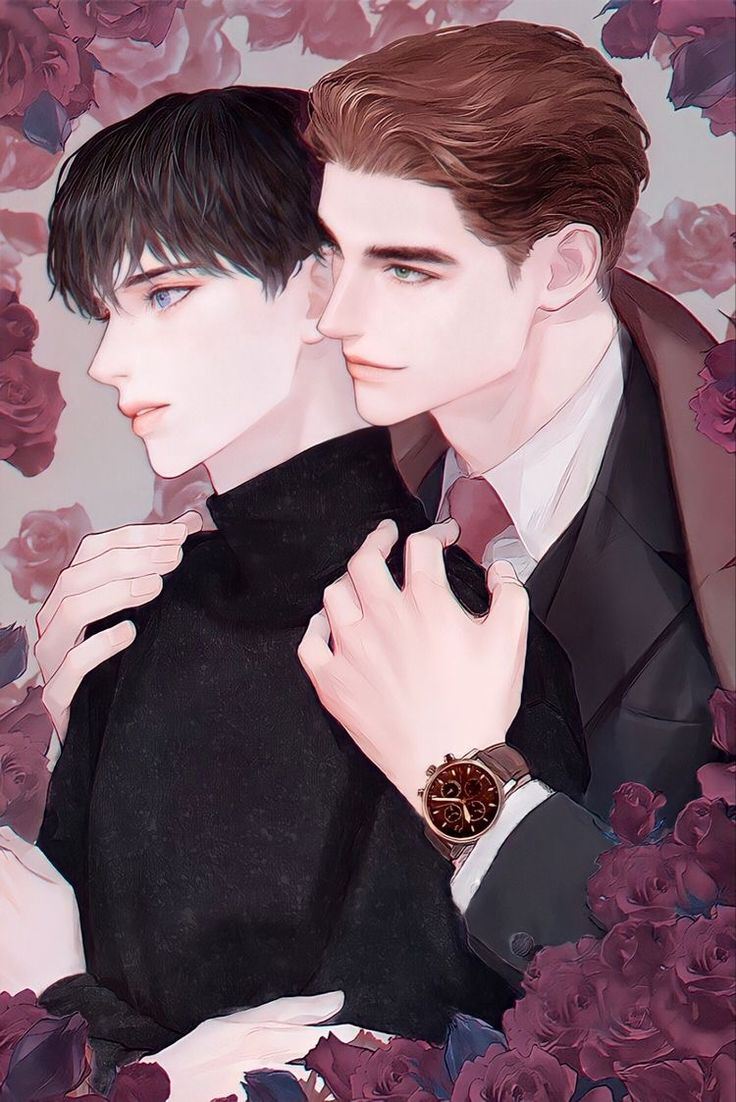
... Read More
I need to talk about how the author handles the forum posts because honestly this is some next-level dialogue work. These aren't stilted 'hello friend how are you' kind of messages - these are actual teenagers on a message board, complete with shorthand, emoji tears, gossip, and people arguing with each other mid-thread. The progression from 'that Lu guy' to 'Brother Lu' across the posts is such a subtle character arc told entirely through other people's words. And then Wen Yuan's voice? Immediate. 'Don't be fooled. That cup isn't one of ours; it's his personal prop for picking up pretty boys, and it has a mechanism!' That line alone establishes him as the chaotic friend who knows too much and can't keep secrets. And his joke about Du Shuang being 'still so showy' after all these years - you can hear the warmth underneath the insult. The forum users themselves are so distinct even without names. Someone immediately defends Lu Yao ('shut up and stop looking for trouble, idiot') and someone else is just there to report the drama. Meanwhile Lu Yao speaks maybe three lines in this entire section and each one is perfectly characterized - practical, brief, dry. He asks what Yu Le wants to drink, orders, makes a joke about Teacher Jia getting hit with a paper airplane folded from a self-criticism essay. The author doesn't need flowery narration to make these characters feel real. The voices DO the work.
... Read More
The dialogue in this passage is SO distinct per character that I can literally read a line and know who said it without seeing the name tag. Wen Yuan is the hype man, the gossip engine, the one who says things like "Man, you must have some thick skin" and "your partner is truly a talent!" He's got this fast, punchy energy — short sentences, lots of reactions, zero filter. When he's excited he fires off multiple lines in a row. When he's skeptical he does that thumb-and-forefinger distance gesture. His voice is basically the reader's voice — reacting to everything, pointing out what's obviously happening. Lu Yao? Bro talks in complete sentences but says the absolute minimum. "He's alright." "Otherwise?" "Probably." Every line is three to five words and somehow carries the weight of a novel. The fact that his most emotionally revealing moment is a whispered "Can't even imagine. I'm not lucky enough right now" after apparently just secured some dude's attention in front of a room — that's a character who expresses himself through what he withholds. It's hilarious and heartbreaking simultaneously. Yu Le's dialogue is the loosest, most naturalistic. Short bursts, questions, non-sequiturs that make total sense when you're tipsy. "Is this drink strong?" "Maybe I didn't drink enough?" The way he pivots from addressing Cheng Xiwu to asking about wine mid-conversation is Peak Drunk Behavior and I respect it. And Cheng Xiwu — we only hear him through a phone screen and he STILL has a fully formed voice. That gentle "Why do you always say that?" with the sigh — you can HEAR the tenderness and the exhaustion in the same breath. The man is trapped between being politely concerned and being deeply affected, and his dialogue reflects exactly that tug-of-war. The author's narrative voice is also worth mentioning — it's observant without being intrusive, witty without trying too hard. Lines like "In a small town where separation often meant never seeing each other again, people's courage often increased uncontrollably" are the kind of things I highlight and never come back to because they're too good to touch.
... Read More
The structural pivot in this batch is absolutely vicious and I love it. We go from an intimate, almost sacred moment—two hearts beating in sync, emotions flowing through every pore—to a chaotic, loud confrontation within the span of a single chapter break. That's not just a tonal shift; that's a masterclass in pacing manipulation. The author puts us in this soft, vulnerable headspace with Lu Yao and Yu Le, makes us feel safe, and then YANKS us into a mundane but explosive conflict over a landslide. And somehow, the landslide sequence is even more gripping than the romantic beat. Why? Because the pacing here is relentless. Zhou Fei storms in, demands explanations, gets dismantled piece by piece. No breathing room. No soft landing. Just wave after wave of tension. The author controls the rhythm like a drummer—fast, aggressive, punctuated by moments of devastating quiet (Lu Yao's 'I mean it' line). And Wang Wenyan's interjections? Perfect timing. She's the comic relief that actually escalates the conflict instead of defusing it. 'He said you'd likely be trapped in the mountains'—and the reader is caught between laughing and cringing. The structure builds to that final punishment—Zhou Fei's silence—which is both comedic and genuinely menacing. And then the chapter ends with Yu Le calling him an idiot. Not even a full sentence. Just that. Leaves you hanging. The pacing here is surgical.
... Read More
Let me just say this chapter moves like a held breath. It opens small—a cat, a conversation about cuteness, nail clippers—and each subsequent scene adds one more layer of pressure without ever raising its voice. Act one is the nail clipping scene. Light, funny, intimate. We establish the Lu Yao-Yu Le dynamic through physical comedy (the koi fish metaphor is unmatched) and quick dialogue. The author knows exactly when to pause—for instance, letting Yu Le's internal observation about his own unusual definition of cute sit alone before moving on. Act two is Guang Zheng's entrance, and suddenly the pacing shifts. The water bottles, the fabric cutting, the accidental confession-adjacent stammering about girlfriends—it's slower, more deliberate, the sentences get slightly longer as Yu Le and Guang Zheng orbit each other. The interruption by Lu Yao's knock feels almost merciful, a pressure valve releasing built-up romantic tension that hasn't even been named yet. Act three is theLu Yao-Guang Zheng silent showdown through fabric-holding. This is where the chapter earns its keep. The author stretches out a mundane action—holding cloth for cutting—into something that carries the weight of a confrontation. Every silence between Lu Yao's questions and Yu Le's evasions is doing narrative labor. Act four is the exit ramp. Zhao Xiaosong's lychee delivery, the dog's enthusiasm, the kids' voices upstairs—suddenly everything lightens, and the chapter ends not with a bang but with the sound of footsteps ascending. The author refuses to land the plane, choosing instead to let the reader float in that aftermath space where everything has shifted but nothing has been resolved. That's confident pacing. That's trusting the reader to sit with discomfort.

Leave a comment

You must be logged in to leave comments. or
