Surviving In An Adult-Rated Romance Game - Reviews

Surviving In An Adult-Rated Romance Game
+Add to Custom List
Sort
Add review
... Read More
Okay so here's the thing that genuinely freaked me out about this part—the logout error. Like, Seona's been stuck in the game for a WEEK. A full seven days. And the battery? Dead. The capsule ran out way before that. She's not playing a game anymore, is she? That revelation hit me like a truck. One second she's happily grinding affection points and checking hidden ending conditions, the next she's realizing time has passed in-game while the real world has moved on without her. And then the plot does this amazing thing where the room—her save zone, her safe space—stops being safe. NPCs don't visit player rooms. That's basic game design. But Balteo shows up at her door like he has every right to be there, casually opening her wardrobe to find a dress that was NEVER there before. The rules are breaking down around her and she barely has time to process it before the next quest pops up. The main quest appearing after she locked herself in her room for days? That's the author basically saying 'you want to hide? Too bad, the story moves whether you participate or not.' And her solution is to just… accept it and play along because at least completing the hidden ending might be her only way out. Desperate times, man. I love how the author builds this tension slowly. First it's just 'hmm the logout button isn't working, probably a bug,' then it becomes 'time has passed and my battery should be dead,' and by the end you're sitting there like... what IS this anymore? Also—the dress in the wardrobe. Who put it there? That wasn't her item. Something or someone is manipulating her inventory. That detail alone has me SO curious about what's coming next.
... Read More
Shiron is one of those characters who looks fragile but is actually the most dangerous person in the room. His entire design is built around contrast — silver hair, slender build, innocent smile, then suddenly dark magic and possessive obsession. What makes him fascinating is that he's genuinely sympathetic. He's the forgotten first prince, neglected by parents who shifted their affection to a healthier sibling, isolated in a palace room with no power, no influence, no one who cares about him. When Seona approaches him in the garden and treats him with kindness, something in him breaks open. But that broken thing doesn't heal into trust — it heals into possession. The flashback reveals the core of his psychology: when he finds out she's been with other characters, he's not angry about betrayal, he's angry about sharing. He says things like "I want to kill them all just thinking about it" and "you're going to have to eat nothing but my cock for the rest of your life." This isn't a villain monologue — it's the desperate plea of someone who's never had anything that belonged to them exclusively. What's even more disturbing is that Seona almost accepts it. When she learns she can't log out, her immediate reaction isn't horror — it's relief. She tells herself there's no one waiting for her in the real world anyway. The online harassment messages she receives about her father's crimes reinforce this. She's so damaged that captivity feels like mercy. That's the relationship dynamic the author has built: two broken people clinging to each other in a gilded cage.
... Read More
"That's vulgar. Are you going around like that again today?" —said with such casual contempt, I want to live inside this sentence. Balteo is the best writer's gift in this whole mess. He's not just ‘angry knight,' he's sarcastic, observant, and weirdly perceptive. When he corners Seona later, asking why she's ‘acting so demure today,' it's not just flirtation—it's confusion masked as mockery. And Seona's internal voice? Pure chaotic energy. She'll be internally screaming about HPO, about quest mechanics, about how she didn't mean to fall on his lap, while outwardly stammering apologies. The dialogue snarks off each other so naturally. Raiden's lines are short, clipped, almost bored. Balteo's are sharp, loaded with double meanings. Seona's thoughts are a torrent of modern-gamer panic. You can hear every character's voice distinctively, and the banter feels earned, not forced. Even the system notifications have personality—cold, robotic, utterly unhinged.
... Read More
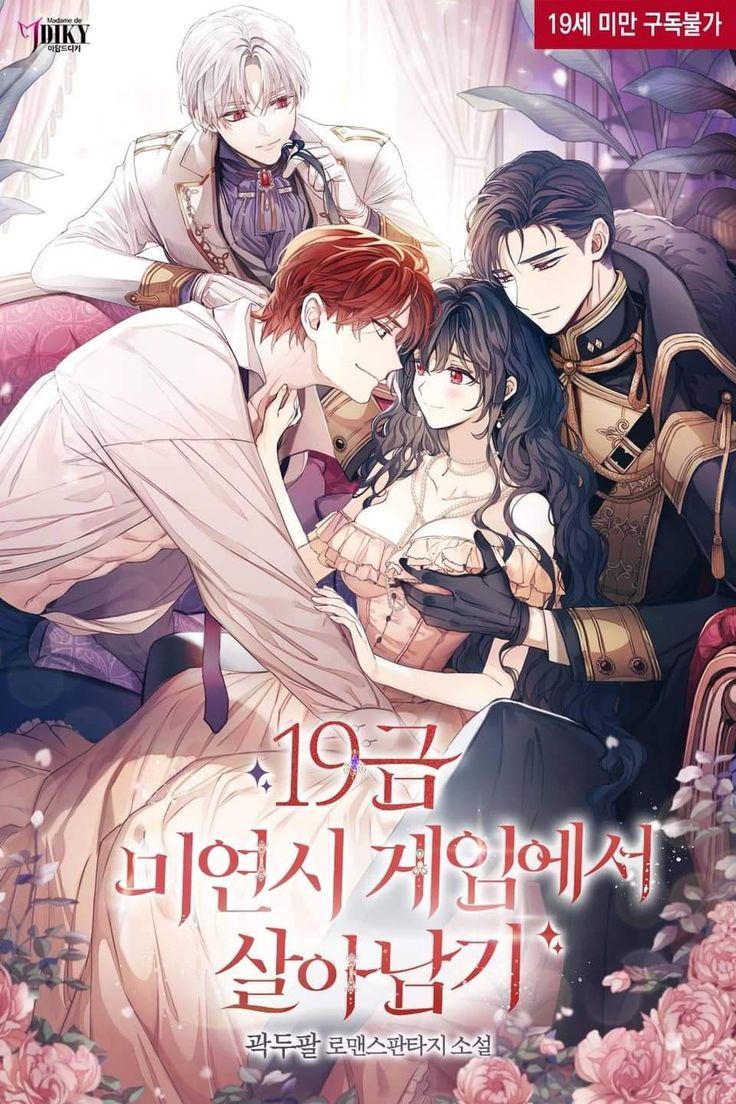
There's a line in this batch that quietly carries the weight of the entire novel's philosophical question: 'If that place wasn't reality, the battery would have run out a long time ago.' This is Seona thinking about the VR capsule, about whether she's still in a game or actually living in another world. It's the kind of existential anchor that the story builds toward without ever screaming about it. The battery metaphor is doing double duty here—it represents both the technological limitation of the VR system AND the metaphorical battery of Seona's attachment to her original reality. Every day she stays, her connection to 'reality' drains a little more, even though the machine itself never powers down. Then you get the 100% body synchronization notification, and it hits different after that opening thought. The system announces: 'All endings have been confirmed, Kim Seona's body synchronization is complete.' Complete. Not partial. Not ongoing. She is now fully, irrevocably synced with this body in this world. There's no going back—not because the battery died, but because SHE died to her old self and something else took its place. The warning that follows is brutal in its simplicity: 'No resurrection upon death. Be careful of dying.' This isn't a game mechanic anymore. This is a death sentence dressed as a caution. The theme here is clear—Seona has crossed a threshold from player to participant, from observer to embodied subject. Every pleasure, every pain, every choice now has permanent consequences. The 'no resurrection' line echoes the bad ending she remembered from the game, but inverted—in the bad ending, Shiron died because Seona couldn't save him. Now, SHE could die, and there's no save point. The stakes have fundamentally shifted. The hidden ending name '' is also worth sitting with. Three pillars holding up a structure—Balteo, Shiron, and Raiden as the three forces that have shaped her path. Or perhaps the three parts of herself she's integrating: the desire for freedom (Shiron), the desire for protection and passion (Balteo), and the desire for stability and belonging (Raiden). The fact that achieving this ending triggers full synchronization suggests that accepting all three aspects of herself is what completes her transformation. And then there's the ending image of Seona burying her face in Shiron's chest after the threesome. Resignation? Comfort? Both? The text leaves it ambiguous, which is exactly right. She's accepted this life, but acceptance doesn't mean happiness—it means she's stopped fighting the current.
... Read More
The dialogue in this section works on multiple levels, and I need to highlight how the author uses speech to reveal character psychology. Shiron's way of speaking is deliberately inconsistent — he switches between childlike intimacy ("Sister, I missed you") and menacing clarity ("The body you'll return to doesn't exist in that world anymore"). This isn't a character who's hiding his true nature; it's a character who reveals it gradually, letting you see the monster behind the gentle smile. When Shiron says "Don't worry. Now you can live happily with me here forever," the word "happily" hangs in the air like a threat. The author has trained the reader to feel unsettled by Shiron's sweetness, and this line confirms that nothing he says should be taken at face value. Seona's dialogue is more fragmented — she stammers, she questions herself, she deflects. When Balteo corners her in the garden, her responses are evasive. The contrast between how she speaks to Shiron (vulnerable, honest) versus how she speaks to Balteo (guarded, evasive) tells us everything about her relationship with each man. The error messages are also dialogue in a sense: [Error! Logout is currently impossible due to server instability.] repeated four times. These aren't mechanical interjections — they're Shiron's voice speaking through the system. The technology itself has been weaponized against her.
... Read More
Let's talk about atmosphere because the author really understands how to build a world that feels uncomfortably alive. We open with this gorgeous establishing description: “An ornate European mansion. Chandeliers and decorations filled with glittering gold and jewelry.” It immediately establishes the opulent, aristocratic setting that's classic for romance games—grand estates, crystal chandeliers, servants everywhere. But then the details get sharper and more specific. The gardeners have “darkened skin and robust arm muscles” from “toil[ing] under the sun for a long time.” These aren't generic background characters; they have physical histories written on their bodies. The sensory details keep accumulating. The chill of the garden air against barely-covered skin. The rustle of ornamental plants in the secluded corner. The squelching sounds that seem to echo too loudly in the outdoor space. The grass crunching under approaching footsteps that makes Seona's entire body freeze. And the mansion itself feels populated—maids and gardeners “going about their business,” casting furtive glances at the half-dressed protagonist. What's chilling is that these NPCs were supposedly non-interactable before, but now they're looking at her with these blatant, hungry gazes that feel almost predatory. The world hasn't just changed visually—the social dynamics within it have shifted too. The most impressive detail: the lighting. “The light emanating from [the gift box] seemed to be a bit excessive.” Even the game's visual effects feel off, hinting that something is fundamentally wrong with this instance. The world is beautiful but wrong, like a photograph that's slightly too sharp, slightly too saturated. That discomfort lingers throughout the entire passage.
... Read More
I need to talk about Raiden. Like, genuinely. He catches Seona half-naked, fooling around with gardeners who are basically trying to assault her, and his reaction is… nothing. A dry look, a scan of her body like he's inspecting merchandise, and then ‘I think it's time for you to go as well, my lady.' Oh, and by the way, his affection gauge just jumped up. Up! From what?! I've played this game's route before—Raiden is the ice queen of target characters, the one who requires perfect etiquette and zero stumbles. Yet here he is, watching Seona's most humiliating moment and thinking, ‘Huh. Cute.' Is he actually amused? Is this some hidden soft spot? Or is the game glitching so hard it's rewriting his entire personality? Meanwhile, Balteo goes from furious to ‘curious' after Seona repeatedly gropes him. Curious! As in, he's not even mad anymore, just weirdly interested. These two men are reacting to Seona's chaos in completely different ways, and neither makes sense in a traditional romance plot. That's what makes it addictive.
... Read More
Okay, let's talk about the worldbuilding because there's actually a surprising amount of texture here. The opening scene with Seona waking up in Raiden's bedroom is a masterclass in environmental storytelling. You immediately know something is off—the chandelier doesn't match the one from the player's room, the décor is ornate but "morbid," the wallpaper is navy blue and gold. These aren't just decorative details; they're clues that this space exists outside the normal logic of the game world. The fact that Raiden's bedroom has always been forbidden, that he chased the player away repeatedly regardless of time of day, immediately creates this sense of mystery. What was he hiding? And the payoff—those drawers full of restraints and tools—delivers on that mystery while simultaneously subverting any romantic expectations you might have had. It's both shocking and strangely appropriate for a character who clearly operates by his own rules. The knight training ground scene is another standout. The contrast between the formal military setting—knights in formation, the ceremony of it—and the complete degradation that unfolds there is jarring in exactly the way it should be. The author uses the environment effectively: the rank and file of soldiers becomes an audience, their reactions (the gasps, the comments about her body) add a layer of humiliation that makes the scene hit harder. And the palace banquet! Gold everywhere, blinding opulence, the sheer scale of it all. This is where the worldbuilding pays off most clearly—you feel the difference between the Bahilok mansion (grand but provincial) and the actual royal palace (something transcendent). The visual contrast reinforces Seona's position as an outsider, someone who doesn't belong in these spaces but has somehow been thrust into them.
... Read More
The stakes in this section escalate beautifully from social awkwardness to existential threat. It starts with Seona navigating a royal banquet, dealing with Balteo's suspicion while wearing an uncomfortable device. These are low-stakes conflicts — social navigation, physical discomfort. But within minutes, the stakes transform completely. When Shiron reveals he's used dark magic to trap her, the conflict becomes external (her freedom vs. his possession) and internal (her desire to escape vs. her acceptance of no alternatives). The author raises the question: what happens when the prison is also the only safe place you know? If leaving means returning to a world that hates you, is staying captivity or salvation? The online harassment messages Seona receives add another layer of stakes. Her real-world identity is under attack — people are doxxing her, sending death threats, mocking her father's victims. The author makes it clear that returning to reality isn't freedom; it's walking back into a burning building. Then Balteo appears. The stakes shift again — now there are three players on the board, and two of them clearly want Seona. The confrontation that's about to happen between Balteo and Shiron raises the external conflict to a new level. Who will win? Who will take her? Can she escape both? The section ends on a question mark, and I'm desperate to know what happens next.
... Read More
The pacing here is absolutely ruthless and I have so much respect for it. Chapter 1-2 operate at this brisk, almost comedic tempo. Seona logs in, gets the ridiculous outfit, realizes she can't log out, decides to play through anyway. The tone is light—she's excited about the hidden ending, amused by Balteo's grumpiness, mildly embarrassed but mostly riding the thrill of the situation. The sentences are shorter, the internal monologue is snappy and witty. This is basically a rom-com setup and the reader settles in comfortably. Then the garden scene hits and the tempo shifts dramatically. The prose gets denser, more visceral. Sentences lengthen and pile upon each other, mirroring Seona's escalating loss of control. The mechanical descriptions of game UI (“You are currently unable to equip the item”) give way to sustained, unbroken sensory overload. The pacing mirrors her psychological state—what starts as playful experimentation spirals into something breathless and panicked. The cliffhanger landing is perfect. After pages of mounting intensity, the author drops a single, brutal image: grass crunching, someone approaching, and Seona closing her eyes “with a sense of impending disaster.” The final line—“The game, which had been flawlessly implemented to the point where she couldn't distinguish it from reality, was about to turn sinister for the first time”—acts as both a period and a warning. Everything was fine until it wasn't. And now the reader is left desperately wanting chapter 3. This kind of tonal whiplash is risky. Done poorly it would feel jarring or exploitative. Done well, as it is here, it transforms a simple premise into something genuinely gripping.
... Read More
The central symbol of this section is the underground prison room that Shiron has prepared for Seona. It's described as being filled with tangled chains, a hard stone bed, and cobwebs — the aesthetic of someone who has been isolated for years, hoarding affection like treasure. But it's also a literal cage, and the parallel to Seona's real-world situation is devastating. Seona is trapped in two worlds: the game and reality. In reality, her identity has been ruined by her father's crimes. People send her messages calling her a b*tch, hoping she gets r*aed. She's socially dead before she's physically dead. The game world, despite its dangers, becomes the only space where she feels wanted. Shiron's prison room mirrors her real existence — she's already confined, she's just pretending it's freedom. The fake phallic device she wears during the banquet scene is another symbol worth noting. It's a constant physical reminder that her body is being manipulated, that she's performing femininity for survival. She describes it twitching against her vaginal walls as she walks, trying to discreetly move through the garden. This object represents the commodification of her body — both in the game and in the world she's trying to escape. The silver hair and delicate appearance of Shiron himself could symbolize how purity and beauty can mask rot. He's the "golden prince" abandoned by the family, but he's also the one holding the chains.
... Read More
Let me just lay this out: Seona is engaged to NEITHER man yet, but BOTH of them treat her as if she already is. And Shiron — a deposed prince with dark magic in his arsenal — is now LIVING in their house, training under the man who just tortures him daily. The stakes have never been higher and nobody seems to realize how fragile this whole arrangement is. What's terrifying me most is the power imbalance. Shiron HAS the imperial letter. In theory, he should be safe. But Raiden literally said "I doubt the emperor would approve" and then... it didn't matter. Shiron went through with it anyway. Why? Because he was desperate. And desperation makes people reckless. The Balteo situation is even worse. He's the Marquis — a titled noble WITH military authority — and he's tormenting a royal prince under the guise of "training." If anyone actually investigated this, Raiden would lose face, the Grand Duchy would look bad, and Shiron would be sent right back to the palace. But Balteo does it anyway, with a smile, because he knows Seona watches and encourages Shiron to endure it. And Seona — she's stuck in the middle of all of this, with a mysterious system that's slowly replacing her humanity. "Synchronization of the Body 71% in progress." What happens at 100%? Does she lose herself? Does she become part of this world permanently? The existential stakes are mounting alongside the political ones.

Leave a comment

You must be logged in to leave comments. or
