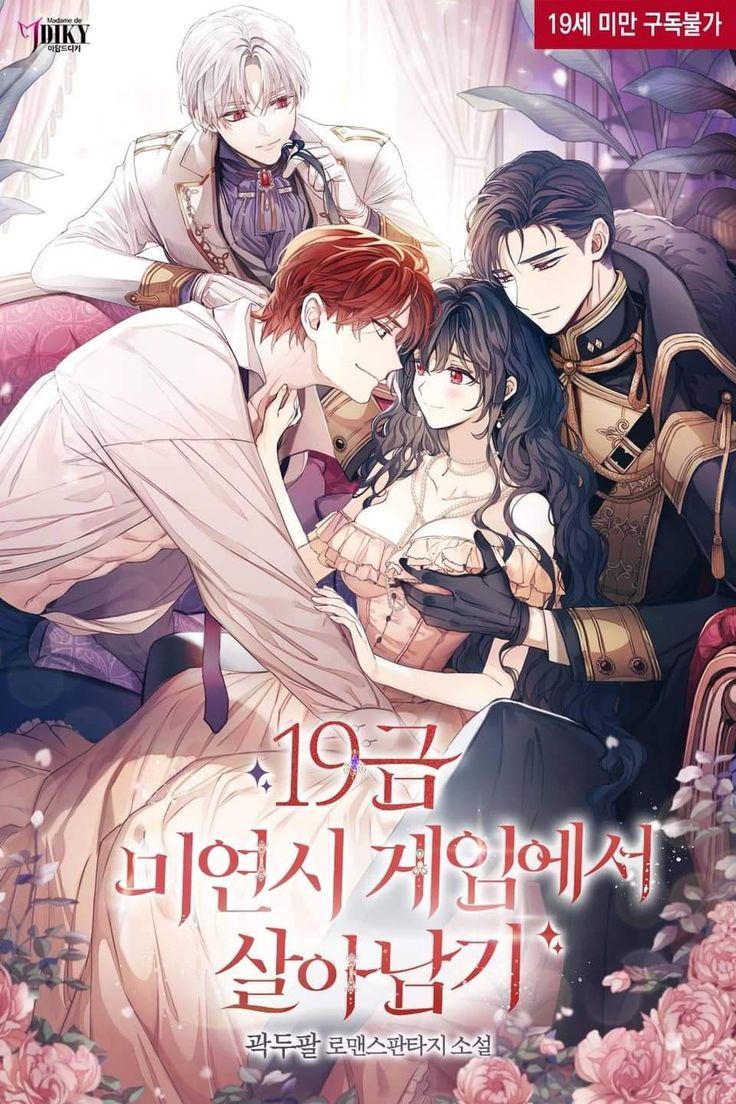
Surviving In An Adult-Rated Romance Game
+Add to Custom List
Genres:
Novel Info

Summary

... Read More
Kim Seona, a dedicated player of the adult-oriented virtual reality romance game "The Queen's Gambit," logs into the game with high expectations. The game is known for its capitalist structure, where powerful items are typically locked behind expensive microtransactions. Seona, who holds VIP status and has custom-designed her character with expensive cosmetic upgrades, participates in a daily free loot draw. To her astonishment, she receives an SS-class legendary item: "Queen Arcana's Underwear." This revealing lingerie set grants significant stat bonuses and, crucially, unlocks a hidden ending path by allowing sexual interactions with non-target NPCs. Before she can react, a system error prevents her from logging out, citing server instability. Rather than abandon the opportunity, Seona decides to proceed with the game on Extreme difficulty, the only mode that supports the hidden ending, hoping to complete the objective before the developers might fix the error and reclaim the item.Upon starting the new game, Seona finds herself in the ornate mansion of Grand Duke Raiden von Bahilok. Her first encounter is with Balteo Hector, the Marquis and captain of the knights, who reacts with visible disgust to her transparent attire. Despite his harsh words, Seona adheres to her strategy, touching him to replenish her HP gauge as the game mechanics require. However, the game’s behavior begins to deviate from her extensive prior knowledge. When she attempts to equip normal clothing, the system blocks her, forcing her to remain in the underwear. While wandering the gardens, she is cornered by gardeners who assault her. The intensity of the physical sensations in the VR capsule is unexpectedly realistic, shocking Seona. Just as she is about to be overwhelmed, Raiden appears. Contrary to his established personality as a rigid noble who values honor, he does not punish the gardeners or scold Seona. Instead, his affection for her increases, indicating a fundamental shift in the game's narrative logic.Seona soon discovers that the game is enforcing a series of bizarre daily quests. One quest requires her to touch Balteo’s genitals, with the success reward being an increase in Raiden’s affection and the failure penalty damaging Balteo’s relationship. Another quest forces her to masturbate in Raiden’s office using his personal belongings. These quests operate on a twisted logic that contradicts the standard game攻略. Seona completes them under duress, noting that Raiden’s character has become strangely permissive and voyeuristic. During one such incident in the office, Raiden and Balteo both witness her act. Rather than being outraged, Raiden joins in, inserting multiple pens into her while commanding Balteo to participate. The encounter escalates into a threesome, satisfying the hidden ending conditions for both characters.After completing the main scenario, Seona attempts to log out again, but the error persists. She realizes the game console’s battery should have died days ago, yet she remains trapped in the virtual world. Panic sets in as she questions the nature of her existence. Her isolation is broken when Balteo enters her private room, a space that should not be accessible to NPCs. He offers to take her shopping for a royal banquet dress. In a pivotal moment, Balteo produces a worn, frayed dress from her wardrobe—an item Seona never owned—and forces her to wear it, allowing her to finally change out of the indestructible underwear. At the salon, the environment behaves like a real marketplace rather than a cash shop. Balteo confesses his feelings, mistaking her forced sexual exploits for professional dedication. The story concludes with Seona trapped in this altered reality, navigating a distorted version of the game where the lines between player and character, and virtual and real, have dangerously blurred.

Latest Release
DateGroupRelease
2026-09-27citrus aurora c17
2026-09-27citrus aurora c16
2026-09-27citrus aurora c15
2026-09-27citrus aurora c14
2026-09-27citrus aurora c13
2026-09-27citrus aurora c12
2026-09-27citrus aurora c11
2026-09-27citrus aurora c10
2026-09-27citrus aurora c9
2026-09-27citrus aurora c8
2026-09-27citrus aurora c7
2026-09-27citrus aurora c6

Community Reviews

Rating(3.9 / 5.0, 39votes)
5 stars
14(36%)
4 stars
9(23%)
3 stars
15(38%)
2 stars
1(3%)
1 stars
0(0%)

Popular reviews

... Read More
Okay so here's the thing that genuinely freaked me out about this part—the logout error. Like, Seona's been stuck in the game for a WEEK. A full seven days. And the battery? Dead. The capsule ran out way before that. She's not playing a game anymore, is she? That revelation hit me like a truck. One second she's happily grinding affection points and checking hidden ending conditions, the next she's realizing time has passed in-game while the real world has moved on without her. And then the plot does this amazing thing where the room—her save zone, her safe space—stops being safe. NPCs don't visit player rooms. That's basic game design. But Balteo shows up at her door like he has every right to be there, casually opening her wardrobe to find a dress that was NEVER there before. The rules are breaking down around her and she barely has time to process it before the next quest pops up. The main quest appearing after she locked herself in her room for days? That's the author basically saying 'you want to hide? Too bad, the story moves whether you participate or not.' And her solution is to just… accept it and play along because at least completing the hidden ending might be her only way out. Desperate times, man. I love how the author builds this tension slowly. First it's just 'hmm the logout button isn't working, probably a bug,' then it becomes 'time has passed and my battery should be dead,' and by the end you're sitting there like... what IS this anymore? Also—the dress in the wardrobe. Who put it there? That wasn't her item. Something or someone is manipulating her inventory. That detail alone has me SO curious about what's coming next.
... Read More
Shiron is one of those characters who looks fragile but is actually the most dangerous person in the room. His entire design is built around contrast — silver hair, slender build, innocent smile, then suddenly dark magic and possessive obsession. What makes him fascinating is that he's genuinely sympathetic. He's the forgotten first prince, neglected by parents who shifted their affection to a healthier sibling, isolated in a palace room with no power, no influence, no one who cares about him. When Seona approaches him in the garden and treats him with kindness, something in him breaks open. But that broken thing doesn't heal into trust — it heals into possession. The flashback reveals the core of his psychology: when he finds out she's been with other characters, he's not angry about betrayal, he's angry about sharing. He says things like "I want to kill them all just thinking about it" and "you're going to have to eat nothing but my cock for the rest of your life." This isn't a villain monologue — it's the desperate plea of someone who's never had anything that belonged to them exclusively. What's even more disturbing is that Seona almost accepts it. When she learns she can't log out, her immediate reaction isn't horror — it's relief. She tells herself there's no one waiting for her in the real world anyway. The online harassment messages she receives about her father's crimes reinforce this. She's so damaged that captivity feels like mercy. That's the relationship dynamic the author has built: two broken people clinging to each other in a gilded cage.
... Read More
"That's vulgar. Are you going around like that again today?" —said with such casual contempt, I want to live inside this sentence. Balteo is the best writer's gift in this whole mess. He's not just ‘angry knight,' he's sarcastic, observant, and weirdly perceptive. When he corners Seona later, asking why she's ‘acting so demure today,' it's not just flirtation—it's confusion masked as mockery. And Seona's internal voice? Pure chaotic energy. She'll be internally screaming about HPO, about quest mechanics, about how she didn't mean to fall on his lap, while outwardly stammering apologies. The dialogue snarks off each other so naturally. Raiden's lines are short, clipped, almost bored. Balteo's are sharp, loaded with double meanings. Seona's thoughts are a torrent of modern-gamer panic. You can hear every character's voice distinctively, and the banter feels earned, not forced. Even the system notifications have personality—cold, robotic, utterly unhinged.
... Read More
There's a line in this batch that quietly carries the weight of the entire novel's philosophical question: 'If that place wasn't reality, the battery would have run out a long time ago.' This is Seona thinking about the VR capsule, about whether she's still in a game or actually living in another world. It's the kind of existential anchor that the story builds toward without ever screaming about it. The battery metaphor is doing double duty here—it represents both the technological limitation of the VR system AND the metaphorical battery of Seona's attachment to her original reality. Every day she stays, her connection to 'reality' drains a little more, even though the machine itself never powers down. Then you get the 100% body synchronization notification, and it hits different after that opening thought. The system announces: 'All endings have been confirmed, Kim Seona's body synchronization is complete.' Complete. Not partial. Not ongoing. She is now fully, irrevocably synced with this body in this world. There's no going back—not because the battery died, but because SHE died to her old self and something else took its place. The warning that follows is brutal in its simplicity: 'No resurrection upon death. Be careful of dying.' This isn't a game mechanic anymore. This is a death sentence dressed as a caution. The theme here is clear—Seona has crossed a threshold from player to participant, from observer to embodied subject. Every pleasure, every pain, every choice now has permanent consequences. The 'no resurrection' line echoes the bad ending she remembered from the game, but inverted—in the bad ending, Shiron died because Seona couldn't save him. Now, SHE could die, and there's no save point. The stakes have fundamentally shifted. The hidden ending name '' is also worth sitting with. Three pillars holding up a structure—Balteo, Shiron, and Raiden as the three forces that have shaped her path. Or perhaps the three parts of herself she's integrating: the desire for freedom (Shiron), the desire for protection and passion (Balteo), and the desire for stability and belonging (Raiden). The fact that achieving this ending triggers full synchronization suggests that accepting all three aspects of herself is what completes her transformation. And then there's the ending image of Seona burying her face in Shiron's chest after the threesome. Resignation? Comfort? Both? The text leaves it ambiguous, which is exactly right. She's accepted this life, but acceptance doesn't mean happiness—it means she's stopped fighting the current.
... Read More
The dialogue in this section works on multiple levels, and I need to highlight how the author uses speech to reveal character psychology. Shiron's way of speaking is deliberately inconsistent — he switches between childlike intimacy ("Sister, I missed you") and menacing clarity ("The body you'll return to doesn't exist in that world anymore"). This isn't a character who's hiding his true nature; it's a character who reveals it gradually, letting you see the monster behind the gentle smile. When Shiron says "Don't worry. Now you can live happily with me here forever," the word "happily" hangs in the air like a threat. The author has trained the reader to feel unsettled by Shiron's sweetness, and this line confirms that nothing he says should be taken at face value. Seona's dialogue is more fragmented — she stammers, she questions herself, she deflects. When Balteo corners her in the garden, her responses are evasive. The contrast between how she speaks to Shiron (vulnerable, honest) versus how she speaks to Balteo (guarded, evasive) tells us everything about her relationship with each man. The error messages are also dialogue in a sense: [Error! Logout is currently impossible due to server instability.] repeated four times. These aren't mechanical interjections — they're Shiron's voice speaking through the system. The technology itself has been weaponized against her.
... Read More
Let's talk about atmosphere because the author really understands how to build a world that feels uncomfortably alive. We open with this gorgeous establishing description: “An ornate European mansion. Chandeliers and decorations filled with glittering gold and jewelry.” It immediately establishes the opulent, aristocratic setting that's classic for romance games—grand estates, crystal chandeliers, servants everywhere. But then the details get sharper and more specific. The gardeners have “darkened skin and robust arm muscles” from “toil[ing] under the sun for a long time.” These aren't generic background characters; they have physical histories written on their bodies. The sensory details keep accumulating. The chill of the garden air against barely-covered skin. The rustle of ornamental plants in the secluded corner. The squelching sounds that seem to echo too loudly in the outdoor space. The grass crunching under approaching footsteps that makes Seona's entire body freeze. And the mansion itself feels populated—maids and gardeners “going about their business,” casting furtive glances at the half-dressed protagonist. What's chilling is that these NPCs were supposedly non-interactable before, but now they're looking at her with these blatant, hungry gazes that feel almost predatory. The world hasn't just changed visually—the social dynamics within it have shifted too. The most impressive detail: the lighting. “The light emanating from [the gift box] seemed to be a bit excessive.” Even the game's visual effects feel off, hinting that something is fundamentally wrong with this instance. The world is beautiful but wrong, like a photograph that's slightly too sharp, slightly too saturated. That discomfort lingers throughout the entire passage.
See all reviews

Custom lists

See all custom Lists