Suffocating Obsession - Reviews

Suffocating Obsession
+Add to Custom List
Sort
Add review
... Read More
Let me just say this upfront: the pacing in these chapters is a rollercoaster and I am here for it. The author knows exactly when to accelerate and when to hit the brakes. You've got this opening where Hyena is trapped in this awkward rent situation, her mind racing, stress building—and then BAM, Gunwoo's voice cuts through and suddenly everything shifts. The ramen scene? Perfect pacing. Short lines. Back and forth. Tension simmering. No description needed, just dialogue doing the heavy lifting. Then the author intentionally slows us down with the childhood flashback—five years old, the fairy tale, the bird delivering a prince. It's a breath of fresh air after the kitchen tension, and it recontextualizes everything we just read. We understand why this hurts so much because we've seen it start from zero. But here's where I have a small gripe: the transition from the flashback back to the present felt slightly jarring. One moment she's five years old grabbing his hand, the next she's eating soggy ramen at her desk and her coworker is asking about paperwork. It works narratively—I get that the author is showing us how memory intrudes on daily life—but structurally it was a bit of a whiplash moment. That said, the phone call with Jeong and then the call with her mom at the end? Those were smooth, natural bridges that kept the momentum going. I finished these chapters in one sitting and I have no regrets.
... Read More
Okay so I have to talk about this camping scene because my heart was literally pounding. Hyena tells Gunwoo she has a boyfriend just to get out of awkward interactions at home, then uses that same excuse to escape the family gathering, and of course — plot twist — the guy she lied about shows up IN PERSON. Not just that, he was supposedly at a golf appointment but clearly ditched it to come here. The whole setup felt like a trap being set layer by layer. And then the best part: she's sitting alone on a bench thinking she escaped, and Gunwoo appears with coffee. The moment he asks about the fake boyfriend, I knew she was done for. She literally chokes on coffee trying to maintain the lie. And his response? 'You're really bad at lying, now and then.' I almost laughed out loud. Then he drops the line that completely undid me: 'I told you not to lie... Maybe not to other people, but never to me. Because I might lose it.' That single line changed the entire dynamic. This wasn't just a dominance thing anymore — it was genuine vulnerability wrapped in threat. The narrative keeps circling back to this theme of truth versus performance, and it builds this slow-burn tension that makes every scene feel charged. Also, the callback to their shared living situation and how their commute times don't overlap is such a small detail but it reveals so much about how carefully both of them are managing their avoidance.
... Read More
Okay so this whole section started with me immediately on edge because of the phone call with Hyena's mom. The author set up this delicious dramatic irony where we KNOW Hyena is lying about staying out late and working late, but her mom doesn't suspect anything — until she drops the bombshell that Gunwoo came home early. Boom. My heart dropped. And then Hyena's reaction — 'Home? Not a hotel?' — I almost screamed at the page because of course her mom would wonder why she barely saw Gunwoo's face if they had dinner together. But what really made this chapter click for me was the plot turn where Hyena was about to move out. She'd made this big decision to cut off her feelings before they bloomed again, right? And then Gunwoo basically dismantles her entire reasoning with practical logistics. 'Looking for a place, packing, moving, adapting.' He wasn't even being romantic about it — he was just laying out facts. And yet, somehow, those facts were the exact weapons needed to keep her there. The biggest twist though? The rules he sets down. No men in the house. Including her boyfriend. I literally gasped. And when Hyena asks the reverse — what about you, oppa? — Gunwoo says 'This house will be a space for only the two of us.' That's not sibling energy. That's not 'little sister' energy. That is something else entirely and I need to sit down. Then the drinking incident reveal — he knew. He knew she got drunk and touched things she shouldn't have touched. And he didn't confront her about it directly until now, at the end of this chapter. That warning at the end? 'I absolutely won't let it slide' — chills. Absolute chills. The author left us on this note where both characters are walking into unknown territory and neither of them seems fully aware of what they're walking into.
... Read More
"I can take it now, right?" This line. This SINGLE line. I've read this passage five times already and it still destroys me. Do Gunwoo—the guy who walks into every room like he owns it, the guy who never hesitates, never falters—standing there drunk and broken, asking Yoon Hyena for PERMISSION to cross a line. Not demanding. Not manipulating. Actually ASKING. Like he's been waiting his entire life to be given permission to want something. And Hyena's response? "Yeah. Do whatever you want, oppa. It's okay." She's not naive—she KNOWS what this means. She knows they're step-siblings, she knows the complications, she knows all of it. But she also knows this man has been carrying the weight of an abusive father his entire life, and tonight, for the first time, those shackles are gone. And she wants to give him something—anything—before she loses him entirely. But here's what I can't stop thinking about: Gunwoo's relationship with Hyena has ALWAYS been this weird asymmetrical thing. He's taught her everything—reading, writing, even drinking. "I taught you everything." Those words hit different now, don't they? Because it's not just about literal skills. He's been present in every single milestone of her life. So when he says "should I teach you this too, right?"—it reframes their entire history. All those years of closeness, of him watching over her, of their natural intimacy... it all builds to THIS moment where the dynamic finally shifts. Hyena nodding when her reason was screaming at her to push him away—"something she'd hoped and hoped for, she couldn't refuse anymore"—that's not weakness. That's her finally allowing herself to WANT something for once instead of always being the caretaker.
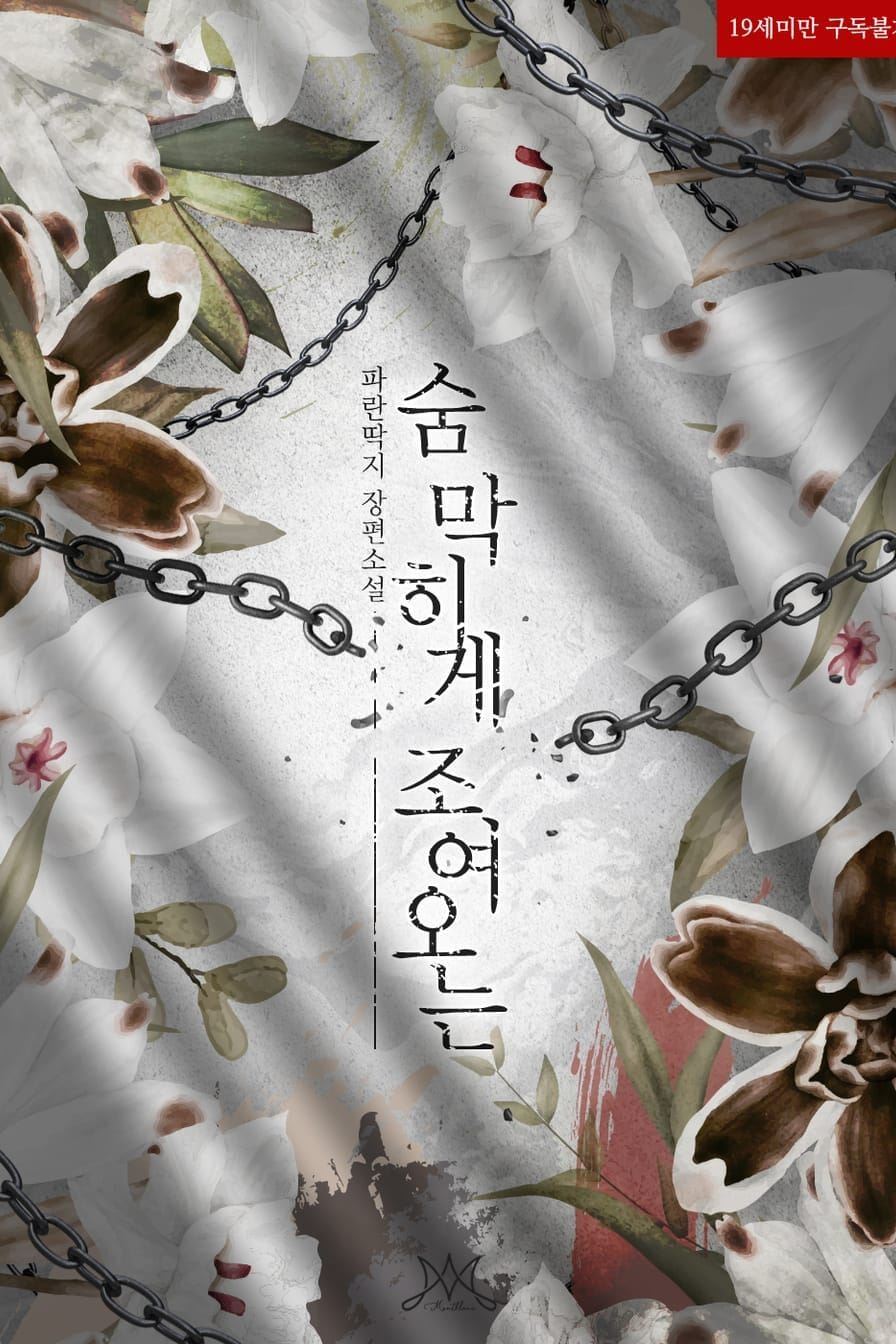
... Read More
Okay so this whole arc with Gunwoo's biological father dying is actually the emotional core of everything. Let me just say it—the way the author structures this is genius. We get little breadcrumbs scattered throughout earlier chapters (those phone calls, the dark expressions) and then suddenly BOOM, Hyena overhears Eunju and Sangjin talking and the whole thing comes crashing down at once. What really got me is the timeline. The campfire scene, Gunwoo gets a call, leaves abruptly—that's chapter 60 or so. Then Hyena is sitting there, staring at the flames, completely lost in thought. The author makes us feel her anxiety build slowly, then she rushes home, gets in the taxi, can't reach him, and her mind goes straight to that flashback of high school Gunwoo losing it. That flashback! I literally gasped. The fist he swung, the emotionless face—"the first moment she'd ever thought Gunwoo was scary." And then the reveal that it was because of THIS man, his own biological father asking for money, causing scenes at the police station. The structure here is tight. The author doesn't dump exposition—they let us discover things alongside Hyena. When she opens the door and sees the shoes thrown messily (contrast with his usual neatness), when she finds him sprawled on the sofa, when he says "it's all over" with that smile that looked like crying—I felt my chest tighten. Every beat lands exactly where it should.
... Read More
The pacing in this chapter is genuinely masterful and I need to talk about how the author moves from domestic comedy to something far more intense without any jarring transitions. It starts with a phone call. Light, casual, almost comedic — Hyena complaining about romance novels to her mom, making fun of workplace bosses, teasing about Gunwoo's looks. This is the setup phase, and it's deceptively relaxed. But underneath all that surface-level banter, the author is planting seeds: the question about staying out late, the mention that Gunwoo came home early, the casual reminder that Hyena has a boyfriend. Then we transition to the house — back to domesticity, but heavier now. The dinner scene plays out almost like a scene from a drama, with Gunwoo cooking and setting the table while Hyena internally panics about her own feelings. The author controls the tension here by making every small action feel loaded. When he asks about the boyfriend, his face 'somehow turned cold.' Two words. That's all it takes to shift the temperature of the entire scene. And then — the rules. This is where the pacing accelerates. Each rule Gunwoo states feels like a beat in a drum solo, and by the third rule, the reader is breathless. 'No men other than me are allowed in this house.' The repetition of 'other than me' is deliberate and devastating. The drinking incident reveal at the end is the perfect climax. The author doesn't spell it out — we only get fragments: 'You get so drunk you can't even recognize who someone is, you touch things you absolutely shouldn't touch.' The vagueness is intentional. It forces the reader to sit with Hyena's horror and Gunwoo's controlled fury simultaneously. Ending on 'Like she was fleeing' — this is the exact right note. The chapter doesn't resolve; it propels. I wanted to immediately open the next one.
... Read More
The erotic dream sequence is brutal because it's SO real. Gunwoo's voice, his touch, the way he talks dirty—“Even shoving my c*ckhead in here”—and then she wakes up and has to face him at breakfast. Self-loathing floods through her immediately. She swore she'd never have such explicit dreams about him, which means her subconscious is doing exactly what she's been fighting. And here's what kills me: she CAN'T stop. She tries to leave her room, rehearses what to say, tells herself “I need to act normal,” but then hallucinates him naked again at the office. Her coworker Heejin even notices—“like you had some incredibly steamy night yesterday.” And when Hyena denies it with such force, you feel it. The shame is suffocating. But there's also this desperate hunger beneath it all. When Gunwoo feeds her pancake after pancake and says those loaded things, part of her wants to keep eating, keep listening, keep pretending. That's the tragedy—she's been wanting this entire time and now that she's dreaming it, her heart breaks instead of feeling satisfied.
... Read More
Okay so let's talk about what just happened because I am STILL RECOVERING from these chapters. The company dinner arc was basically the perfect pressure cooker setup and then BOOM everything exploded. Hyena gets goaded into the bet, drinks way too much, stumbles around drunk, and then—plot twist—Gunwoo just appears out of nowhere like some kind of black-clad guardian angel. Or more accurately, a creepy-cute guy in a mask and cap who catches her before she faceplants. The way Joohwan is just standing there watching all of this? Chef's kiss. The dramatic irony is absolutely delicious because we KNOW what Joohwan doesn't realize yet. And then the next morning scene? The dream sequence transition was BRILLIANT. I did a double-take. One minute she's having this wildly inappropriate dream, the next her eyes fly open and—wait, she's actually awake in his bed? The escalation from "why am I touching him" to "he won't let me leave" to "we're basically family so this is fine" is peak romance plot structure. And the lie she tells Joohwan in the elevator about being cousins instead of fessing up? That's not just a white lie, that's a PLOT BOMB waiting to detonate. The author really knows how to stack complications on top of each other like a house of cards.
... Read More
Can we talk about Gunwoo touching Hyena's hair? One moment he's all business—resign for you? No, I'll keep work and personal life clearly separate—and the next his large hand is mussing her fine hair and she's still feeling it later. That's such a Gunwoo move. Cold on the outside, soft in the most inconvenient way possible. Like his body remembers how to be gentle even when his mouth is busy building walls. And then there's Hyena. She swallowed the line 'You make me feel like I'm someone special to you' and said something else entirely. Of course she did. This woman has been carrying secrets since before this whole living-together arrangement started. She told Deputy Manager Park that Gunwoo was her cousin because she couldn't say he was the son of her mom's friend who she's been secretly spending nights with. The lie came out so naturally it made my heart ache. But what really got me was the phone call at the end. When she remembers November 3rd—that day he collapsed after the assault case involving his biological father—Hyena's memory goes sharp as glass. She remembers the exact date. She remembers calling 119 and crying until the test results came back. And now, hearing Aunt Eunju's worried voice, she's immediately pulling on clothes, still wet from the shower, rushing to check on him again. Ten years later and she still can't unsee that image of him collapsed in his room bleeding. Their relationship is this bizarre dance where they keep almost confessing something real and then deflecting into practicality. Gunwoo pretends the hair touch was nothing. Hyena pretends the cousin story was nothing. Meanwhile the rest of the office is gossiping about how little they actually converse and whether mutual dislike equals romance potential. The employees might be right. Those two are orbiting each other like gravity-bound planets and neither will admit it.
... Read More
Here's the thing nobody talks about enough: the biological father is DEAD now. And that should be a relief. It's objectively the best outcome for Gunwoo. So WHY does this chapter feel so tense, so heavy, so charged? Because the external conflict is resolved but the INTERNAL conflict is just beginning. Gunwoo survived an abuser. He built a life. He became strong. But now that the source of his trauma is gone, what's left? Who is he without the enemy he spent his whole life running from? The stakes shift from physical survival to existential survival. Hyena understands this instinctively—which is why she doesn't try to comfort him with empty words. She doesn't say "it's going to be okay." She says "it's okay" in the most complicated way possible, offering herself as something to hold onto while he figures out what freedom actually feels like. And the suspense throughout this chapter isn't about WILL something bad happen—it's about WILL HE BE ABLE TO HANDLE NOT HAVING ANYTHING BAD HAPPEN? The police station scene flashes back to us: the fist, the emotionless face, the desperation. That version of Gunwoo survived. But the version we see here, sprawled on the sofa, smiling like he's crying—that's a different kind of survival. One where the wound finally opens because there's no one left to fight. "Nothing bad should happen." Hyena's prayer. But what if the scariest thing of all is exactly that—nothing bad happening, and him not knowing what to do with a life where he doesn't have to fight anymore?
... Read More
What I love about this chapter is how Gunwoo's dialogue is almost entirely stripped of subtext, which makes every word hit harder. Look at his lines: "Wash up and come out. I'll set the table." "Just clean your own room. Don't make more work by making a mess." "Then there's absolutely no problem. Just live here. With me." "First, always knock when entering each other's rooms." "Second, as of this moment, no men other than me are allowed in this house." There's no hedging. No softening. No 'maybe we should consider.' He states things as facts, as commands, as decisions already made. And that's what makes him feel so dangerous — not because he's aggressive, but because he's absolutely certain of everything he says. Compare this to Hyena's internal monologue, which is a storm of qualifiers and self-doubt: "It might just be a polite thing to say." "I should leave." "Are you worried about your boyfriend?" "If oppa does all the cooking and cleaning, I won't have anything to do." Her voice is constantly second-guessing itself. Gunwoo's voice never does. This contrast defines their entire dynamic — she's narrating her life in questions; he's narrating it in declarations. The mother's voice through the phone is also wonderfully distinct. She's warm, slightly pushy, uses humor ('You grew up like real siblings, seeing everything you should and shouldn't see'), and carries that parental guilt disguised as concern ('there are so many crimes targeting women living alone'). And the line that got me the most: "People don't change easily." Came out of nowhere, right before the whole cohabitation decision. It's the most Gunwoo line possible — clinically stated, emotionally devastating, and completely unreadable. What does that mean? Is he talking about himself? About her? About them?
... Read More
"Your ramen's getting soggy." That's it. That's the line. After everything—after the boyfriend lie, after the trembling hand, after the charged silence in that kitchen—Gunwoo just... comments on the noodles. And I cannot stop thinking about it. The dialogue in this book is not flashy. Nobody's giving speeches. Nobody's being overly poetic. But that's exactly why it hits so hard. Every line is stripped down to what it needs to be, and the subtext does ALL the work. Look at how Gunwoo speaks versus how Hyena speaks. Gunwoo's lines are short. Controlled. "I heard. You've been paying rent faithfully." "What kind of person is he?" "Your ramen's getting soggy." Each one sounds casual, almost indifferent, but underneath every single one is a current of something else. He's testing the water. He's measuring her. He's pretending he doesn't care while clearly caring way too much. Hyena, on the other hand, is all defensive deflection. "Mind your own business." "I really do have a boyfriend." She's performing confidence while her hands shake. And then there's the mom, who comes in completely different—warm, pushy, playful, the voice of normalcy in a situation that has stopped being normal. The contrast between their communication styles tells us everything we need to know about who these people are and what they're afraid of. This author writes dialogue the way real people talk when they're trying not to say what they actually mean.

Leave a comment

You must be logged in to leave comments. or
