Sorry, My Beloved Is The Motherland - Reviews

Sorry, My Beloved Is The Motherland
+Add to Custom List
Sort
Add review
... Read More
The supply and marketing cooperative description is one of those passages that just... stops time. Cement floors swept clean. Slogans hanging on walls. The smell of soy sauce and white sugar mixing into something weirdly atmospheric. Children pressing their noses against the glass counter, tracking which White Rabbit candy packages have been bought and which toy cars have moved. You can SEE this. Not just see it, you can feel the 1970s China pressing against your skin. The narrator doesn't just describe—it animates. Those kids aren't props. They have memory. They know the inventory. When a toy car shifts position, a whole childhood narrative shifts with it. That's worldbuilding that breathes. And then there's the contrast with Tula Gaqi itself—the livestock station, the yurts, the winter herding with less snow cover and water sources nearby. The grassland isn't a backdrop; it's a character that determines what the people do and when. Even Ning Fu's backpack system is described with such tactile specificity—the sudden lightness of the sweet potatoes, the invisible command she gives in her mind. The author treats the supernatural element with the same grounded attention as the soy sauce smell. It doesn't break the world; it deepens it. One detail that got me: the minibus “roared and spewed black smoke,” and the scenery began to recede. That ending image—smoke, motion, distance closing in—is pure cinematic. You're watching the frame pull away from Ning Fu as she sits with her two bars of soap and that unresolved itch. The world feels lived-in because even the in-between spaces—the bus stop, the post office queue, the walk back to the station—carry texture. Nothing is sketched in haste.
... Read More
Okay so can we just talk about the soap scene for a second because I am NOT okay. Ning Fu—the legendary top-tier female supporting character who has navigated a thousand alternate worlds without flinching—stands in front of three bars of soap and has an existential crisis. THREE TYPES. She can't choose. The author writes: “Choosing the white rose meant forsaking the cinnabar mole; choosing the red rose meant missing out on the white moonlight.” I literally threw my phone on the bed. This woman quotes classical Chinese literary metaphors for HAND SOAP and I am deceased. But here's the thing—it's not just funny, it's revealing. Her indecisiveness, her collecting habit, it's exposed here like an open wound. She's someone who wants EVERYTHING and can't bear to leave anything behind. Which connects to something much bigger. She wrote to her parents saying she's staying. She could've gone home. Instead she chose the grasslands, chose to study, chose to become someone this place couldn't spit out. That's the real emotional arc underneath all the comedy. And the dried beef gift? Sweet, awkward, unspoken acceptance. A young herdsman sneaking her a handful of meat like it's a secret love letter but also just genuinely wanting her to have good food. I love it. Also the parent scene—her mother crying with laughter, her father pretending not to care while literally not turning a page of his newspaper for an uncomfortably long time. “That silly child...” The father, hardened military man, reduced to folding a letter twice and claiming she's “better than before.” Better than what, exactly? Before she ran off to Inner Mongolia? Yeah. He misspells “before” as “mad” in his head but won't admit it out loud. These two lines of dialogue carry more weight than most novels' entire first act.
... Read More
So this whole arc started with a bet—Du Qingquan vs. Ning Fu over chemistry questions—and it ends with him bowing to apologize like his life depended on it. The structure here is clever because it loops back: he comes to her for help, she proves herself, he admits defeat, and then she borrows Gao Han's books *for* Gao Han's sake. That's three narrative threads tied together in one scene. But the real plot twist? It's not the bet itself—it's Ning Fu's decision to stay. She could go back to Beijing. Her father's connections could pull her out tomorrow. But she chooses the exam, chooses the grasslands. That's the hinge moment of the whole arc. Everything before this was her testing the waters, proving herself, building social capital. Now she's planted her flag. The letter to her parents is basically a quiet revolution. And the scene where she writes “life is only once” and quotes Qu Qiubai? Chef's kiss. It's not dramatic—she's not yelling it from a rooftop—but it hits harder because it's so calm. Also love the subplot with the dried beef. A herdsman giving it to her secretly? That's background texture that still moves the social dynamic forward. She's being accepted. One chapter ago she was the outsider; now kids are wrestling over who gets to give her snacks.
... Read More
The atmosphere in this section is absolutely immaculate. Let me start with that opening image — huddling for warmth in a livestock station during a Chinese winter, and that '38th parallel' metaphor. The author uses it twice, right? First as an actual boundary between their quilts, and then as this invisible line that keeps getting crossed. Genius. And the sensory details! Xu Cuicui can SMELL the jasmine on Ning Fu in the dark. That's such a specific, intimate detail — this city girl carrying the scent of flowers to some frozen grassland outpost, and Xu Cuicui noticing it half-asleep. It's romantic without being romantic. It's just... human. Then there's the lecture room scene. You've got these rough herders — people who've spent their whole lives with animals, barely literate, who 'usually wanted to stay far away from books' — now sitting through evening classes like they're starving for knowledge. The image of the team leader sitting in the front row is so perfect. And the neighboring production team losing lambs to the cold while these people are fighting to learn disinfection techniques... it grounds the whole thing in real stakes. This isn't just vibe; it's survival. The yurt itself — that 'relatively bright light,' the stove burning fiercely making Xu Cuicui's face feel hot and swollen — it's all so tactile. I could feel the cold seeping through the walls and then the warmth hitting me. The author makes you FEEL the temperature shifts along with the characters.
... Read More
Okay so I have to talk about this scene where Ning Fu walks into the male dorm and absolutely DESTROYS Gao Han without raising her voice once. Read it again. I read it FIVE times. She just casually mentions she finished copying Volume 2 and asks him to return Volume 1 because she's going to the livestock station tomorrow. Not because she's heartbroken. Not because she's upset. Because it's INCONVENIENT to have the set split up. The guy who literally orchestrated her transfer is the one looking like his face is turning colors. "From a liver color to a darker, almost blackened liver color" — I literally screamed at my screen. And then she finishes with "thank you for recommending me to the livestock station" as she walks out. What a ruthless, beautiful moment. The whole setup of Gao Han feeling smug and proud of his scheme, only to realize he's become the village joke, is chef's kiss plot writing. But here's what really got me — the author sets up this whole premise that Ning Fu was obsessed with Gao Han, the persistent girl who wouldn't take no for an answer, and then flips it so cleanly that Gao Han can't even process it. He spent the whole night agonizing while she was out DIGGING POTATOES like absolutely nothing happened. The parallel between her earning system points for hard work versus his internal collapse is not subtle but honestly? I love it when the author doesn't bother being subtle about the themes.
... Read More
I need to talk about this one moment. Just one moment. Because it wrecked me. Ning Fu is squatting in the field, digging potatoes, sweat in her eyes, and she looks up. The sunset is behind her and the narration describes her like this— "She looks so young, innocent and beautiful in the halo of the sunset, when she lifts up her face, her appearance is breathtaking." And this male agricultural youth—who literally just arrived and doesn't know her reputation—sees her and instead of seeing the gossip-about town obsessive, he sees something completely different. He sees a girl with a delicate nose, a natural smile, pitch-black bright eyes, and corners slightly wet and red from sweat-tears. And she says calmly, politely, that she can handle it herself. "Making nobody not believe that she can do those things." I'm not okay. This is the kind of moment where a character sees her for who she actually is, and it hits different because we KNOW Ning Fu is a legendary agent on the inside. She's calculating points. She's thinking about the system. She's not having a romantic moment at all. But the NARRATION treats it like poetry. And then— "Ning Fu threw another potato into the basket. She knows that just now, in a moment of lifting her face, had already charmed a supporting male character in this world. Haaa. She, this could also be considered an old occupational disease." The WHIPLASH. One second we're in a golden-hour romantic novel, the next second she's internal-sighing about her的职业病 and going back to digging potatoes. She's so jaded. She's seen this movie before. She knows exactly what just happened and she doesn't even have the energy to be flattered. This is actually kind of sad when you think about it. The original host died at twenty-nine giving birth to her fifth child, alone on the grassland, nobody remembering her real name because the character was too complicated. Ning Fu inherited that body, that reputation, that entire tragic trajectory—and she's treating it like a side quest while somewhere in the back of her mind, something still remembers what it felt like to be that girl who followed a boy all the way to Inner Mongolia. I don't know yet if there's going to be a romance here or if the whole point is that there WON'T be one. But that one glance from the male agricultural youth? That was the story telling us it still cares about love, even while Ning Fu is trying very hard not to.
... Read More
This chapter is a masterclass in how to build narrative momentum without a single explosion. Ning Fu's decision to study through the night — “if you don't die from studying, then study to death” — immediately establishes her as someone who understands the stakes. But what really hooked me was the plot structure: the author alternates between Ning Fu's intense preparation and the slow unraveling of tensions among the other characters. The subplot with Gao Han and Liang Huixue is quietly devastating. They “reconciled” by rewriting their memories, convincing themselves they're in love while ignoring the physical evidence of his suffering. When Old Zhuo'erqin serves them both dismissively but bows to Ning Fu with an egg, the plot shifts from a quiet exam drama into something sharper. The author doesn't resolve anything here — no exams are taken, no relationships are settled — but every scene propels us forward. The final image of Liang Huixue “spying and then imitating” Ning Fu is a brilliant plot device: it shows rivalry without dialogue, without confrontation. It's the kind of subplot that pays off later, and I found myself flipping ahead just to see what would happen.
... Read More
“He wasn't worthy of Ning Fu!” No, wait, that's what everyone else thought. Gao Han thought something way worse: that she didn't even come to see him. Just walked right past him. The author gives us this entire internal monologue in one paragraph and it's devastating in the best way. He came out when the bet started, hoped she'd look for him, watched from a distance, felt disappointed and relieved at the same time. That contradiction is so human. Then Du Qingquan looks at him with that bookworm disdain—“why would you reject someone this good?”—and Gao Han loses it. Sprints out like his shoes are on fire. Meanwhile Ning Fu has no idea any of this happened. She's already onto the next thing, discovering her backpack can make sweet potatoes float, planning to buy all the soap in the store. The asymmetry here is everything. She's living forward; he's stuck in the rearview mirror. And Xu Cuicui? Oh man. She's trying SO hard to be the strict teacher figure, but every time she opens her mouth, Ning Fu just smiles and drags her along by the arm. The ankle-spraining memory haunts her like a ghost. She can't even scold properly anymore. It's this slow, almost painful shift in power dynamics that happens without either of them really noticing. By the end, Xu Cuicui's accusation—“Why don't you read books?”—isn't a complaint, it's the closest thing to “I don't want to lose you” that she'll ever say. And Ning Fu's reply, “Now is the time to receive education from the poor and lower-middle peasants,” is both a joke and a genuine pivot. She's already three steps ahead. How does she do that? How is she never rattled?
... Read More
The dialogue in this is doing so much work and I want to specifically talk about how each character sounds completely distinct. Ning Fu's voice is her greatest instrument. She speaks in three-word answers when she wants to. "I comply." "Thank you, but it's not necessary." "I am willing." There's a flatness to her speech that reads as either genuine simplicity or calculated efficiency—and the beauty is we can't quite tell which. When she's performing, her dialogue becomes almost TOO proper: "The world is vast, with great potential for achievements. If I am needed in the most difficult place, I am willing to go to the most difficult place." That's not how a十九七十年代 educated youth actually talks. That's propaganda language. And she deploys it like a weapon, and the secretary laps it up because it's exactly what he wanted to hear. Gao Han's voice is even more interesting. He's described as the most proud and ambitious among the male educated youths, and his dialogue reflects that. "I have a clear conscience. What could there be to settle accounts for?" Cold, dismissive, already positioning himself as the victim of her harassment. And then his internal monologue—oh god, his internal monologue. "(This line could be written into a poem for Huixue; she would surely be deeply moved.)" He's narrating his own life like it's a romance novel and he's the male lead. The self-awareness is so unconscious it's terrifying. The supporting characters have distinct voices too. The gossiping educated youth who rushes in: "Gao Han, something is wrong, Ning Fu is looking for you to settle scores!" The exaggerated drama of it. And then his friend pulling him away: "Let's go, let's go! This is the very girl who sticks to Gao Han... you don't be foolish, stay a bit away from her!" The省略的 words doing so much work—the unspoken insults are louder than anything he could have said. And the narrator's voice itself is this wonderful omniscient presence that can shift from deadpan comedy to genuine lyricism in a single sentence. "Like an old thousand-layer pancake." That metaphor for her forgotten name—that's the narrator showing us its own personality.
... Read More
The stakes in this chapter are deceptively quiet. On the surface, it's about a test. But underneath, it's about survival, identity, and who gets to leave. Ning Fu's internal conflict — that her system boosts will expire, that she might face a “decline of talent” — mirrors the external pressure of the exam itself. What if she studied herself through these ten days only to fall apart when it counts? That's a terrifying thought, and the author lets it linger without naming it directly. Meanwhile, Gao Han and Liang Huixue face a different kind of stakes: can they escape the grasslands together, or will the distance between them widen once they're back in the city? Old Zhuo'erqin's conflict with them isn't personal — it's generational, class-based, territorial. He sees their desire to leave as ingratitude. And Ning Fu? Her stakes are highest precisely because she's the only one who understands them fully. She knows the system is temporary. She knows knowledge is permanent. She knows that passing this exam might be the difference between staying forever or flying away. The chapter never shouts about danger, but by the end, I was holding my breath — not for the exam results, but for what happens to these people when the door finally opens.
... Read More
The pacing in this section hits differently each time you turn the page, and I love that about it. It starts INTIMATE. Two girls, one bed, darkness, breath, the smell of jasmine. This is close POV, almost claustrophobic. The prose slows down — you're reading about twenty minutes of real-time action (pushing Ning Fu, rearranging the quilt, waiting five minutes, then twenty more minutes of staring at her face). It's lazy, sleepy pacing. Perfect for a winter night scene. Then it SNAPS to motion. Morning. 'Hurry up, we need to have a positive attitude towards labor!' And suddenly we're outside, walking, herding sheep, learning what the job actually involves. The prose picks up speed — shorter sentences, more action verbs. Xu Cuicui explaining precautions 'along the way' feels brisk, efficient. Enter Chena on horseback. A new character, a new energy. The letter, the request, the debate — it's the first real external conflict introduced. Ning Fu could refuse. Xu Cuicui actively tries to stop her. The tension here is sharp and purposeful. Then the lecture sequence operates like a montage. Three nights, summarized but each getting a beat: small crowd → growing crowd → full house with the team leader. The author trusts us to fill in the gaps. No dragging. And then — the ankle scene. The slow crawl back, the stumble, the reveal. It comes right after the triumph of the lectures working, which makes it hit harder emotionally. She was SO CLOSE to just blending in, and the universe said nope. The section ends with Ning Fu leaving before dawn. A quiet exit after the loud chaos of the previous night. It's a perfect structural bookend — we started in a shared bed in darkness and end with a solitary departure in pre-dawn grey.
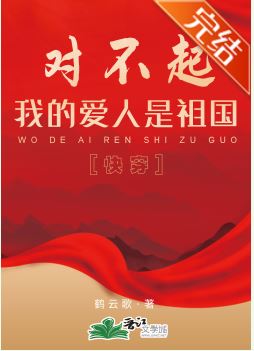
... Read More
Let me just unpack the genius of the Xu Cuicui subplot for a second. Because this is masterclass-level writing. She publicly declares, I quote, 'I would NEVER attend those so-called lectures,' and then what does the narrator tell us? 'Xu Cuicui's attitude remained icy over these days.' Ice. Icy. Repeating it like a mantra. And then — BAM — she's found stumbling back in the dark with a twisted ankle, and Cui Guofu, bless his chaotic talkative soul, casually produces HER NOTEBOOK like it's evidence in a court case. Think about the structure here. Chapter by chapter, we get: - Day 1: Ning Fu gives first lecture, small crowd - Day 2: Attendance grows - Day 3: Even the team leader shows up - Night 3: Xu Cuicui 'sneaks back' and twists her ankle The author never shows us Xu Cuicui at the lecture. We only find out through the aftermath. That's called showing rather than telling, and it works beautifully. Every time Ning Fu comes back to the yurt, Xu Cuicui launches into 'highly repetitive verbal attacks' — which reads less like genuine hostility and more like performance. She's performing disdain while actually absorbing everything. The comedy writes itself. And then the bigger plot thread — the livestock station receiving word to bring Ning Fu back for another lecture because neighboring teams are dying for this knowledge. The causality chain is tight: Ning Fu's class → word spreads → neighboring team loses lambs → they hear about the livestock station's knowledgeable girl → secretary pulls Ning Fu back → morning departure before dawn. Everything connects. No loose ends.

Leave a comment

You must be logged in to leave comments. or
