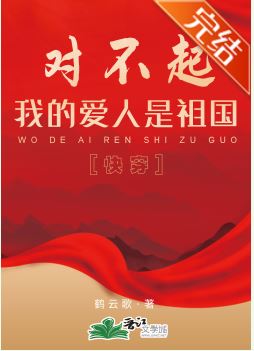
Sorry, My Beloved Is The Motherland
+Add to Custom List
Novel Info

Summary

... Read More

Ning Fu is an elite agent in the Quick Transmigration Bureau’s Female Supporting Role Division, renowned for her invincible track record in romance-focused worlds where she systematically dismantled antagonists and won over male leads. However, due to a system malfunction, she is assigned to an "Innocent Heart" mission in a late-1970s Inner Mongolian setting, requiring her to promote patriotism rather than engage in romantic entanglements. Points are earned through labor and service to the state, forcing the legendary strategist to abandon her usual tactics and spend her days digging potatoes in the harsh grassland environment.

She transmigrates into the body of a cannon fodder female supporting character who originally obsessed over a male educated youth named Gao Han. In the original narrative, this girl ruined her life by chasing Gao Han, only to be manipulated into giving up her spot to return to the city, ultimately marrying a fool and dying in childbirth. Ning Fu immediately discards this destiny. When Gao Han, now involved with the story’s female lead Liang Huixue, schemes to have Ning Fu transferred to the difficult livestock station to remove her from his vicinity, she accepts the transfer with enthusiasm, viewing the hardship as a high-yield opportunity for mission points.

At the livestock station, Ning Fu faces immediate hostility from Xu Cuicui, a local herder assigned to supervise her. Despite the cold reception, Ning Fu applies her professional skills to integration, using patience and strategic kindness to gradually soften Xu Cuicui’s attitude. The turning point arrives during a difficult lamb birth when Ning Fu performs a medical procedure to save the ewe and its offspring, earning the respect of the local herdsmen and acquiring the "Animal Affinity" title from her system.

Recognizing the station’s need for improved agricultural techniques, Ning Fu organizes evening lectures on animal husbandry and livestock care. Her knowledge, sourced from the system’s marketplace, proves invaluable to the community, transforming her reputation from a disgraced romantic pursuer to a respected educator. Simultaneously, she pursues academic excellence to prepare for the reinstated college entrance examination. She challenges Du Qingquan, a aloof top student hoarding textbooks, to a betting contest on chemistry problems. Ning Fu dominates the academic exchange, proving her intellectual prowess and winning access to advanced study materials while earning Du Qingquan’s reluctant admiration.

Her transformation deeply unsettles Gao Han, who had grown accustomed to her devotion. Witnessing her success and independence triggers a belated regret, but Ning Fu remains entirely focused on her patriotic duties and educational goals, completely indifferent to his attention. She continues to accumulate points through hard labor, teaching, and academic achievement, steadily reshaping the community around her while building a new path for herself that diverges entirely from the tragic fate of the original character.

As winter sets in, Ning Fu balances her responsibilities as a livestock station worker, a teacher, and a dedicated student. She navigates the complex social dynamics of the educated youth and local herdsmen with ease, using her charm and intelligence to foster cooperation and learning. The narrative follows her determination to master her new environment, leveraging every opportunity to serve the country and advance her own future, proving that her legendary capabilities translate effectively beyond the realm of romance into tangible contributions to society.

Latest Release
DateGroupRelease
2026-10-01hiraeth translations c49
2026-10-01hiraeth translations c48
2026-10-01hiraeth translations c47
2026-10-01hiraeth translations c46
2026-10-01hiraeth translations c45
2026-10-01hiraeth translations c44
2026-10-01hiraeth translations c43
2026-10-01hiraeth translations c42
2026-10-01hiraeth translations c41
2026-10-01hiraeth translations c40
2026-10-01hiraeth translations c39
2026-10-01hiraeth translations c38

Community Reviews

Rating(0 / 5.0, 41votes)
5 stars
0(0%)
4 stars
0(0%)
3 stars
0(0%)
2 stars
0(0%)
1 stars
0(0%)

Popular reviews

... Read More
This author understands atmosphere the way some people understand their own grocery lists. Let me give you one example — the moment when Ning Fu and Xu Cuicui fall into that water bubble. The description of the swamps as 'like a treacherous maw ready to devour anyone at any moment' — I actually felt my stomach drop. And then the aftermath: 'dry grass roots scratching their faces,' the icy wind forming a shell around Xu Cuicui's soaked clothes. These are the tiny, brutal details that make a setting feel real instead of picturesque. But the scene that absolutely GETS ME is the horseback ride. 'The sun had already set, leaving only the leaden clouds on the horizon, their edges tinged with the last golden-red rays of the sunset. Everyone watched her standing in the wind, her clothes fluttering.' I saw this. I literally saw this like a wide cinematic shot. And then — 'Riding a horse across the winter grasslands truly felt like the wind cutting like a knife, but Ning Fu found it exhilarating.' This is the moment she becomes something more than a transmigration protagonist playing dress-up. She's actually ALIVE in this world. The livestock station itself is painted with such warmth too — the kang covered with thick quilts, brick tea steaming in cups, the doorway curtain flapping as the storm member bursts in. It's not just a backdrop; it's a home these rough people built together. The cold is constant, but the human warmth inside the yurts makes every degree of it feel earned.
... Read More
There's a moment in Chapter 1 that I've been turning over in my head since I finished reading. The original host's name was written with the character 馥 (fù), meaning intense fragrance. But because it was too complicated, everyone just wrote it as 富 (fù), meaning wealth/fortune—which sounds the same but means something completely different. And the narrator says: "No one remembered her name on the vast grassland. Like an old thousand-layer pancake." That image is devastating. A thousand-layer pancake—something with so many layers, so much effort put into it—and it becomes just something old, something eaten, something forgotten. The original Ning Fu had layers. She had dreams of ballet. She had a sincere (if misguided) love. She had a tragedy that lasted decades. And all of it was flattened into a single character everyone could write: 富. Wealth. Or nothing at all, since nobody bothered to remember. Ning Fu the agent has inherited this flattened name, this flattened reputation, this flattened life trajectory. But she's doing something radical with it—she's refusing to play the role the name was written as. The system assigned to her is called the Innocent Heart system, a red heart towards the motherland, and the joke is that it's completely useless for her old purposes. Flirtatious glances thrown to a blind person. But then she realizes something: the system isn't broken. It's just asking a different question. And she answers it with everything she has. The potatoes. The digging. The livestock unit. Each one is a symbol of grounding herself—not just literally rooting in the grassland, but taking root in a life that has nothing to do with romance plots. The system demands patriotism and she gives it something real. She gives it labor. She gives it competence. And the deeper irony: the original host died alone, unnamed, at twenty-nine. Ning Fu is living, working, thriving, and she doesn't even need anyone to remember her name to do it. The motherland doesn't care what character you wrote your name with. It only cares what you dig out of the ground.
... Read More
There's so much happening beneath the surface of this text that most readers probably glide right past. Let me point out a few things. The '38th parallel' isn't just a joke about personal space. It's a boundary line — between city and countryside, between knowledge and ignorance, between two people who keep trying to stay apart and keep failing. Every time Xu Cuicui redraws that line (pushing Ning Fu back, refusing the lectures, declaring she won't attend), it gets crossed again. The quilt, which starts as a weapon of war over who gets warmth, becomes something Ning Fu fixes for the other person. Symbolism 101 but executed naturally. Then there's the theme of KNOWLEDGE. Set in December 1977 — two months after the restoration of the gaokao, a decade of disrupted education behind them — the whole chapter is saturated with this idea that knowledge is power, literally. The herders who 'could barely recognize a few characters' are now desperate to learn. The team leader sits in the front row. Knowledge has become the most valuable commodity on the grassland, more precious than feed reserves or warm quilts. Ning Fu's system gives her access to CNKI, to modern agricultural science, and she shares it freely. The '40 points' she earns aren't just game mechanics — they represent real transformation. Each point is a lamb that survives, a technique that spreads, a life that gets easier. And Xu Cuicui's notebook? That's the most powerful symbol in the whole section. A city-bred educated youth teaching herders, while a herder secretly taking notes from the very person she pretends to despise. The role reversal is complete. The notebook represents her willingness to CROSS the parallel, to admit she doesn't know everything, to be vulnerable. And the fact that she used drawings for characters she couldn't write? That humility — that's what makes her arc land. The jasmine scent. Cold. Warmth. Knowledge. Notebooks. All of it pointing to one truth: the world is changing, and these women are changing with it.
... Read More
Okay so the opening image of this whole section just hit me like a truck. Remember when they dragged out that old blackboard, the one that had been used for literacy classes over a decade ago? They cleaned it carefully, set it up with specially procured chalk. I literally stopped scrolling for a second because it was so… specific. Like, the author didn't just say 'they held a class.' They made me feel the dust on that board, the way an entire community shows up because something as ordinary as a blackboard suddenly matters again. That courtyard goes from empty to buzzing in one scene. And then there's the detail about sweet potatoes — the secretary stuffing them into Ning Fu's bag as a 'lecture fee.' It's such a humble, textured kind of gratitude. You can tell this world runs on small exchanges and real consequences, not grand gestures. The whole station feels like it has its own breathing rhythm, like it's alive. And then Gao Han standing outside the gate, eavesdropping without anyone knowing, adding this whole shadow layer to the scene. The warmth of the courtyard versus the coldness of his isolation? Chef's kiss.
... Read More
I need to process what just happened with Gao Han because my heart is literally racing. This kid goes from being the oblivious classmate who might be using Du Qingquan for tutoring to standing in front of a MAJOR GENERAL sweating through his confession like he just swallowed a grenade. "I, I am Ning Fu's boyfriend." The way the text describes his "heated mind" cooling down once he's already committed—there's no going back now. He basically just handed the most intimidating man in the room the ammunition to destroy him, and he did it anyway. But what wrecked me was the parallel breakdown scene. Liang Huixue sobs into the hallway, bumps into Gao Han, and then delivers THE line: "You don't like me at all! But she will never like you either!" And Gao Han just... freezes. Struck by lightning. Can barely breathe. The text says the only sound left was her sobbing. That silence after such a brutal truth bomb is SO heavy. She's wrong about the second part (I mean, come on, we've SEEN how Ning Fu treats him), but the first part? Yeah. She sees it. He doesn't even realize he's been performing affection for an audience of one. And then Ning Fu and her father's scene—so tender and so painful at the same time. His thought: "As long as she can live well, he would turn a blind eye." Her thought: if she proves herself loyal to the country, maybe he'll support her ambitions. They're both trying to protect each other and completely missing. I'm not okay.
... Read More
The dialogue in this passage is absolutely lethal and I'm here for it. Let's start with Ning Fu, because her voice is basically a scalpel. "No, you won't." Four words to shut down Liang Huixue's entire act of asking to stay and read nearby. And then the masterpiece: "Really? Thank you for liking me. Don't cry. Don't worry. Keep working hard, and good luck!" She follows it up with a motivational gesture described as "sunny and full of positive energy"—which the narration wryly notes should properly be called "revolutionary optimism." The narrator's interjections throughout are gold: "Let those who are jealous of you know that you don't care at all. Because you are sincere and open." Ning Fu doesn't just win the interaction; she reframes it so completely that Liang Huixue's manipulation becomes invisible and absurd. Gao Han's dialogue is a different beast entirely—stammering, self-interrupting, panicking. "I, I am Ning Fu's boyfriend." Then the stream of consciousness tumbles out: "She, she also likes me a lot! We used to sing about the stars and the moon together..." and then abruptly cutting himself off because he realizes he just confessed his girl loves him back to her FATHER. The narrator even narrates his internal realization: "Gao Han realized he shouldn't have said that." His voice captures that specific brand of teenage male panic perfectly. And Ning Boyuan? Everything is blunt commands. "Eat, you're too thin." "Is this the one you like?" No embellishment, no softening. His dialogue is so sparse it becomes almost comical in its directness, which makes the one moment where he almost reaches out and touches his daughter's hair hit like a freight train.
See all reviews

Custom lists

See all custom Lists