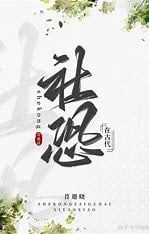
Social Anxiety in Ancient Times
+Add to Custom List
Novel Info

Summary

... Read More

Li Mu, a modern woman with severe social anxiety disorder, transmigrates into the body of the fifth daughter of the Li family in the fictional Yong Dynasty. The original owner, also named Li Mu, died of illness at sixteen, leaving no memories. To survive in this new environment and explain her lack of knowledge about her surroundings, Li Mu pretends to be a foolish mute, a disguise that protects her from social interaction while allowing her to observe and plan. She quickly realizes she has entered the world of a novel called "Drunken Phoenix," where the Li family is destined for execution due to her father Li Wendao’s involvement in a failed assassination attempt against King Yan. With only months remaining before the family’s downfall, Li Mu resolves to alter fate by preventing her father from joining the conspiracy.

Her survival strategy hinges on gathering intelligence. Li Mu secretly eavesdrops on her father’s meetings and eventually discovers a hidden letter within a poetry collection sent by Lord Wen, the Minister of Rites. The letter reveals an invitation to participate in the assassination plot. Before she can fully assess the danger, Li Wendao returns unexpectedly, forcing Li Mu to flee through a window. She successfully escapes with the letter, unaware that her actions have been observed by Feixing, a maid secretly working for King Yan. The letter is delivered to King Yan’s residence, where his brother Gu Chi and niece Lin Qiwu review the information. Lin Qiwu, who bears a phoenix-shaped birthmark, is tasked with testing whether Li Mu is truly foolish or merely pretending.

At Mingtai Temple, Lin Qiwu encounters Li Mu and the female protagonist, Li Yunxi. Despite her social anxiety, Li Mu manages a brief interaction with Lin Qiwu, offering a comment about preferring family presence over divine intervention when sick. This remark subtly influences Grand Princess Zhaoming, Lin Qiwu’s aunt and King Yan’s mother, who is already burdened by guilt over her son’s poisoning. The Grand Princess decides to return home early, disrupting King Yan’s plans. Meanwhile, Li Mu continues her cautious existence, exchanging letters with Lin Qiwu and crafting gifts to maintain a low profile. She avoids social gatherings, finding solace in exercise and quiet study, while secretly monitoring her father’s activities to prevent the assassination plot from progressing.

The narrative shifts focus to the intricate political landscape of the Yong Dynasty, where power is contested between King Yan, who controls the military, the foolish emperor, and rival factions led by the Prime Minister and Prince Qi. King Yan, though appearing gentle and sickly, is a cunning ruler who has consolidated power through ruthless means. His relationship with his mother is strained by her disapproval of his methods, yet he secretly cares for her well-being. Li Mu’s actions inadvertently affect this dynamic, as her theft of the letter forces King Yan to reassess the Li family’s loyalty and intentions. The story explores themes of survival, identity, and the impact of individual choices on historical outcomes, as Li Mu navigates a dangerous world while managing her internal struggles with anxiety and fear.

As the plot unfolds, Li Mu’s relationship with Lin Qiwu deepens through correspondence, with the young princess seeking friendship and understanding. Li Mu, in turn, finds a rare ally in Lin Qiwu, who sees beyond her supposed foolishness. The presence of the female antagonist, Lin Qiwu, introduces potential complications, as her loyalty to her aunt and cousin may conflict with Li Mu’s goals. Meanwhile, Li Yunxi, the novel’s original protagonist, remains unaware of the larger political forces at play, focusing instead on childhood friendships and family dynamics. The convergence of these characters sets the stage for future conflicts, as Li Mu’s efforts to save her family intersect with the broader power struggles of the dynasty.

The story continues to develop through Li Mu’s careful navigation of court politics and family expectations. Her disguise as a fool allows her to gather information and influence events from the shadows, while her modern perspective provides unique insights into the dangers of the era. The assassination plot against King Yan remains a central threat, with Li Mu working to expose and dismantle the conspiracy before it leads to the Li family’s destruction. As tensions rise and alliances shift, Li Mu must balance her desire for safety with the moral imperative to prevent tragedy, ultimately shaping her own destiny and the fate of those around her.

Latest Release
DateGroupRelease
2026-08-11shanghai fantasy c9
2026-08-11shanghai fantasy c8
2026-08-11shanghai fantasy c7
2026-08-11shanghai fantasy c6
2026-08-11shanghai fantasy c5
2026-08-11shanghai fantasy c4
2026-08-11shanghai fantasy c3
2026-08-11shanghai fantasy c2
2026-08-11shanghai fantasy c1

Community Reviews

Rating(3.7 / 5.0, 39votes)
5 stars
12(31%)
4 stars
9(23%)
3 stars
13(33%)
2 stars
5(13%)
1 stars
0(0%)

Popular reviews

... Read More
Okay, so I need to talk about Li Mu because this girl is NOT a fool and I am HERE for it. The whole setup where Lin Qiwu gets sent to test whether she's pretending is already juicy, but then the real plot twist hits when Li Mu steals that letter from Li Wendao's study. Let me just say—she's not trying to save herself, she's trying to save her ENTIRE FAMILY from execution. That's a whole different level of stakes. And the Grand Princess Zhaoming subplot? Chef's kiss. Her son Lin Que has been secretly orchestrating her return from the temple by having his steward "accidentally" report about the wine, and the way she pieces it together—"you rascal!"—this is such a satisfying moment. She's been praying in a temple while her son is literally dying from poison she caused, and he's been playing 4D chess to get her back without her knowing. The dramatic irony is killing me. But the thing that really got me is how Li Mu handles the letter. She doesn't just hand it to the old madam and hope for the best. She knows the Li family is still in danger even if her father doesn't respond. She needs him to ABANDON the assassination plot entirely. That's not a fool's plan—that's a strategist's plan. And the scene where she refuses to change clothes, curling up like a scared animal, only to finally reveal the letter to the old madam? I literally gasped. The tension in that moment was unreal.
... Read More
This letter is the funniest thing I have ever read and I need to discuss it at length. Li Mu, after five days of agonizing over how to communicate her revolutionary agricultural knowledge, sends: 'Potatoes are delicious. Can you give me some?' Lin Que's reaction: '... Oh, the little fool replied because of the potatoes Lin Qiwu brought, so he was the one who got the benefit for free.' THIS MAN. He's so deadpan. The internal monologue is perfectly dry and self-aware. Then the second letter: 'Sour and Spicy Shredded Potatoes.' No polite preamble, just several potato recipes with taste descriptions, ending with a note that she had the kitchen develop them to avoid spoiling potatoes. Anyone else would think the Li family's Fifth Miss is truly foolish. Who sends recipes to a ten-year-old princess? But Lin Que reads it and gets hungry because he hasn't eaten. 'Send someone to the West Garden to get some potatoes… Tsk, I don't know if there are any left.' The dialogue throughout this section is so natural and character-revealing. Li Mu's internal voice—'I'm a fool, I'm a fool, I'm a fool. Some absurd behaviors and requests are normal, really normal'—is both hilarious and heartbreaking. She's performing foolishness while being the smartest person in the room. And Lin Que's voice is consistently understated but perceptive. He doesn't need to say much; his actions and brief remarks carry so much weight. The author's narrative voice also has this wonderful modern sensibility—comparing letter-writing anxiety to social media chat anxiety, the meta-commentary about cursing 'the heartless author.' It bridges the ancient setting with contemporary sensibility without feeling forced.
... Read More
Can we just talk about how Li Mu is literally doing warm-up exercises while mentally preparing to open a letter from a princess? The stakes here are SO low on the surface but somehow the tension is through the roof. She's a transmigrator pretending to be foolish, caught between the Jinyiwei spy Feixing who's been feeding info to King Yan, and now a princess who wants to be her friend. And the old madam has this whole prophecy hanging over her head—when she comes of age, even if the whole family faces disaster, she will turn misfortune into fortune. But what if she doesn't live to come of age? That's the old madam's real fear. Meanwhile Li Mu is over here stressed about whether a white rabbit doll is an appropriate gift for someone who asked about a white horse. The contrast between life-or-death political intrigue and social anxiety is honestly hilarious and brilliant. Every time I think the scene is about danger, it pivots to something embarrassingly mundane. And yet somehow both feel equally high-stakes because Li Mu genuinely doesn't know which world she's in at any given moment.
... Read More
Let me just say this: the potato is the most important object in this entire novel and I am not willing to discuss alternatives. King Yan sends potatoes from his West Garden to an Assistant Minister of War. The emperor finds out and his entire paranoia spiral is triggered by a VEGETABLE. 'King Yan specifically sent someone to deliver potatoes from the West Garden to a mere assistant minister? Why?' Meanwhile the emperor is hosting plum-tasting banquets and trying to poison his own brother through strategic marriage. The symbolism writes itself. Lin Que operates in the real world—potatoes that feed people, solving financial crises by looting corrupt relatives, actual governance. The emperor operates in a gilded cage of suspicion and fruit-tasting parties. The contrast between the practical (potatoes, Jinyiwei spies, assassination plots) and the performative (plum banquets, edicts, court ritual) is the whole theme of this story. And the pinwheel! Li Mu's pinwheel—colorful, spinning, fragile—gets blown into the woods right before she encounters death. It's such a perfect symbol for her situation: something bright and childish that has no business being in a world of assassins and blood. She picks it up and holds it while standing next to corpses. The image stays with me.
... Read More
Okay so this entire sequence had me gripping my phone like my life depended on it. Li Mu drops her pinwheel, goes to pick it up, and BAM—corpse city. Like, literally her third mishap of the day and she's already stumbling into a murder scene. I was genuinely holding my breath the whole time she was standing there frozen with that sprained ankle, watching blood drip off a sword. The tension is unreal. But then the stakes shift SO fast. First it's 'will she survive this encounter with the blood-soaked killer?' Then it's 'oh wait, maybe the black-clad people are the bad guys?' Then it's 'holy shit, he's asking her for water like they're having a normal conversation??' The way the author builds this—Li Mu's internal monologue going from terror to social-anxiety-mode to 'why do we look like accomplices' is chef's kiss. And then it CUTS to the palace and the emperor losing his absolute mind. Six years on the throne and he's smashing furniture because King Yan won't come to a plum banquet. The stakes here are different—political survival, poison plots through marriage, a whole layer of court intrigue that feels just as deadly as the sword fight in the woods. Two parallel tension tracks and both are running at full speed. I couldn't put it down.
... Read More
I need to talk about this exchange because it is PERFECTION: "May I borrow some water to wash my hands?" "Far, no." "Then can I borrow a handkerchief?" "I don't have a handkerchief." Li Mu's internal scream of 'DAMN WHY DO WE LOOK LIKE WE'RE IN CAHOOTS' after saying 'Far, no' had me wheezing. This is the most natural, painfully accurate portrayal of social anxiety I've ever read in a novel. Her refusal criteria—'not whether the other person would be unhappy, but whether she was willing'—is such a specific, real psychological detail. And Lin Que's voice throughout is just... he's terrifying and hilarious. Telling a monk 'I went there to kill my maternal uncle and looted his mansion's gold and silver, solving the court's financial crisis. I found this method quite effective, so I killed a few more uncles' in the same tone someone uses to discuss New Year visits. The casualness is chilling and the dialogue makes it land perfectly. Eunuch Duan's manipulation of the emperor is also brilliantly written dialogue-wise. Turning 'Where did you go?' into 'Why were you so late?' and then smoothly pivoting to the potato delivery scandal—his voice is so distinct from everyone else. Each character truly speaks differently.
See all reviews

Characters

See all characters

Custom lists

See all custom Lists