So, I Can See Affection Levels Now? - Reviews

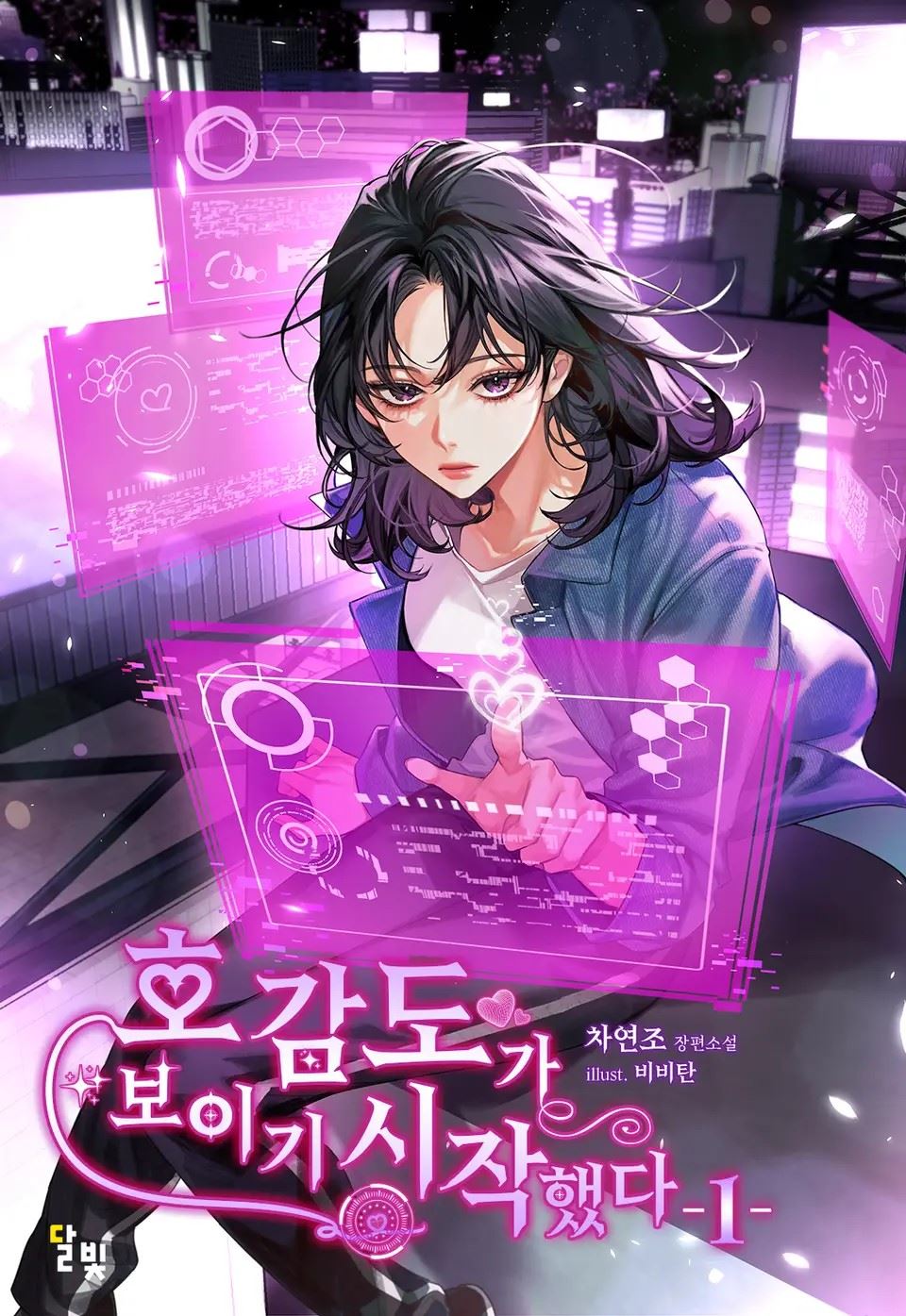
So, I Can See Affection Levels Now?
+Add to Custom List
Sort
Add review
... Read More
The emerald-lit cavern. I need to just sit with that image for a second. After everything—the crushing darkness underwater, the claustrophobic stone sphere, the physical exhaustion of struggling through debris—the narrative opens into this vast space lit by glowing stones, a lakeshore, and this massive tree growing from the center like some kind of ancient cathedral. It's a tonal shift that's almost spiritual in how differently it makes you feel. But the worldbuilding layers keep coming. The stones that "churn strangely from within" and the protagonist's instinctive certainty that they must never touch those. The system telling us the tree feeds on dead fairies. The fruit large enough for an adult to curl up inside, with human figures visible through a hazy shell. This isn't just a cool visual—it's a complete ecosystem with its own logic, its own dangers, its own twisted beauty. What I appreciate most is how the environment tells you things without exposition dumps. You don't need a paragraph explaining why the path is dangerous—you feel it through the protagonist's nearly-tripping, their body crying out with fatigue, the uneven ground. The jellyfish poking the protagonist's cheek to direct attention is such a small detail but it makes the whole underwater world feel inhabited and alive. The contrast between Seo Rana's controlled, almost clinical interaction with the environment—shrinking rings, precision carving—and the protagonist's trial-and-error discovery through the Bunker skill creates this nice visual dichotomy. One is technology-like mastery, the other is instinctual symbiosis. Both work, both feel earned.
... Read More
The Silent Touch countdown. Nine. Eight. Seven. The author fragments the numbers across lines like heartbeats and I swear my actual breathing slowed down reading it. This is pacing as physical experience, not just storytelling technique. "Please maintain contact with the target for at least 10 seconds or more." And then—skill proficiency insufficient. Downgraded to A-rank. And the real tension wasn't whether she'd hold on for ten seconds, it was whether the skill would even work at all. The author strips away the safety net mid-countdown and suddenly every remaining number carries more weight. Six. Five. Four. If this fails now, they're both exposed and she knows they were threatening her. But here's where the pacing gets really clever: instead of resolving that tension immediately, the author pivots. Seo Rana doesn't attack back. She explains. She shows off her own ring-shrinking technique. She tests the protagonist. The countdown climax deflates into something quieter, more interpersonal, and that release makes the subsequent action feel fresher rather than repetitive. Then the Bunker tutorial. Three quick steps—draw a circle, grab the sphere, beware of vibration—and suddenly they're swallowed whole. No drag, no padding. The skill acquisition and its immediate application are woven together so tightly you can't tell where one ends and the other begins. The final image—root wrapped around the arm, protagonist pinned, fruits thrashing with silent screams—lands like a door slamming shut. The chapter doesn't fade out, it cuts off mid-suffocation. "Even as the root writhed and thrashed, I did not le" and then nothing. Absolutely brutal.
... Read More
Okay can we talk about how this whole scene was basically a ticking time bomb and I was literally holding my breath through it all? The author just dumps us into countdown territory—six, five, four—and I am not exaggerating when I say I forgot to breathe. It is that good. The setup is classic desperation mechanics: protagonist is dangling, skills are being downgraded in real time, and there is this visible timer of roots snapping one by one. But what I found genuinely clever was the payoff. Silent Touch activates at the last possible second, blue light, roots dissolving into this almost poetic blue rain, and then—immediate consequence. They fall. Not a graceful landing. Just gravity doing its thing. And then Seo Rana catches them. Which should be the relief beat, right? But the author undercuts it immediately with the fruit dropping and the dark pulp splattering everywhere. It is gross and visceral and it reminds you that yes, someone almost died up there. The survivors crying in the background, the mom moment—that whole cascade of aftermath hits because you were too busy being tense during the countdown to process it until it was over. Is it a little convenient that the skill unlocked exactly when needed? Sure. But the cost—passing out, falling helplessly, barely conscious—that keeps it from feeling like a cheap deus ex machina. The story paid its due. Or... did it? Am I overthinking the timing of that skill activation?
... Read More
Let's talk about stakes because this passage is doing something really smart with tension. On the surface level, the stakes are obvious: survive the dungeon. A C-rank whale monster is hunting them, they have limited resources, and our protagonist just discovered he has no offensive capabilities. That's genuinely scary. The author makes you feel the danger through physical details—the mechanical whirring, the blood around the whale's mouth, the way Baek Youngha's body reacts before his mind catches up (goosebumps, alarm signals, pure animal fear). But the deeper conflict is internal, and it's where the real tension lives. Baek Youngha has spent ten years being irrelevant. No dungeon encounters, no awakenings, no place in this new world. And now he's suddenly S-rank with skills that sound like they belong in a completely different genre. The conflict isn't just "will he survive"—it's "who is he now, and can he actually use this power?" That's why the Affection Measurement skill is such a brilliant source of tension. It's not just a gimmick—it's a narrative device that creates a fundamental mismatch between his power set and his situation. He has the tools to understand people's feelings but no way to fight a literal whale. The story is essentially asking: what do you do when the universe gives you exactly what you need, but you don't yet know what you need it for? And then the resolution comes in the most satisfying way possible. He doesn't win through clever planning or brute strength—he wins by instinct. By grabbing the whale's mouth when everything else failed. The skill activates not through mastery but through sheer desperation. That's a statement about the character right there: his power isn't in his knowledge or his preparation. It's in his willingness to throw himself into danger when there's no other option. The stakes keep climbing too. By the end, we know he has three skills, a title, and a whale-level power. But we also know the dungeon is still dangerous, the girl is still vulnerable, and he has no idea how any of this works. That's not a cliffhanger—it's an invitation.
... Read More
I need to sit down. I actually need to sit down because this moment between Seo Rana and the protagonist has been building for chapters and chapters and I did NOT see it hitting this hard. "M...Mom……" — that single word from the protagonist absolutely destroyed me. They are half-conscious, falling through the air, and their brain grabs onto the only safe thing it knows. And Seo Rana? She catches them. Not just physically. She catches them and brushes their bangs aside with her forehead and smiles like she just found something she had been searching for her entire life. The narration says she could have helped but didn't, and stood by. But watching from below, eyes shining like she found what she was looking for—what does that mean for their relationship? Did she let them struggle because she was waiting to see if they could make it? Or because she couldn't intervene? And either way, that smile afterward feels like relief mixed with something deeper, something that isn't just about saving a life. The protagonist's internal thought "Wasn't this X'd up?" is such a perfect deflection. They feel vulnerable, they feel exposed, they want to process what just happened emotionally and instead they internally swear and try to brush it off. And then they just... let go. Defenseless. Trusting Seo Rana to catch them even as consciousness fades. I am not okay. That forehead touch. That smile. The way the narrator describes her eyes. This is not just rescue, this is something else entirely forming between them and I am here for it.
... Read More
"Dungeons are such mysterious spaces, after all. Unexpected things happen all over the place." Honestly, this line sums up the whole twist-and-turn nature of the plot perfectly. I love how the author set us up with what felt like a clear escape route—the black oval, the dramatic "You have cleared Tunnel (C)" message—and then just yanked the rug out from under us. We thought Youngha was the star contributor because she shoved the girl into the portal first, right? Wrong. The system quietly awarded the top spot to someone else (Baek Youngha? Wait, that's her… actually, the contribution calculation seems to have a surprise in store for later). That fake-out exit is a brilliant microcosm of the whole story: nothing is as straightforward as it appears. The plot doesn't rely on cheap shocks; it rewards attention. It's a tight, cause-and-effect chain: the dungeon event triggers the ranking surge, which triggers the media storm, which immediately brings the Association and the dangerous top hunter into play. Every consequence feels earned, not arbitrary. And that cliffhanger of Youngha heading back to a life of silence and a dead phone? It's a masterclass in maintaining tension by abruptly shifting scales—from global, life-or-death dungeon survival to intimate, personal overwhelm.
... Read More
There's something deeply symbolic about the entire dungeon sequence being underwater. Youngha is drowning literally and metaphorically — drowning in public opinion, drowning in expectations, drowning in the gap between who she is and who the world thinks an S-rank Hunter should be. 'I'm nothing but an ordinary civilian with nothing to strip away.' That line though — it's the thesis of her entire existence in this story. The Affection Level system itself is such a rich metaphor. She can see exactly how much people dislike or tolerate her, and it becomes this constant background radiation of measurement. Every interaction is quantified. And yet — the most meaningful moments between her and Rana happen when the numbers don't match the reality. -100 Affection but Rana is walking beside her through dark water, lacing fingers through hers, giving her life-saving items. The system says hate. The body says something else entirely. And that jellyfish at the end — 'supplies oxygen' — trapped in a collapsed hole, reaching out with a tentacle. Isn't that Youngha? Reaching out, trying to connect, trying to find her place in this world where everyone either worships or hates her. The parallel is so obvious it ached.
... Read More
"Correction. My Affection Level is -3,500." I literally laughed out loud at this. Because it's so true to the dynamic they've built. Seo Rana tested the protagonist, used them, and the reaction isn't some dramatic betrayal scene—it's a number ticking deeper into the red. And yet. And yet. She still pulls them behind her, warns them not to get swept away, gives them practical advice about walking with their core engaged like some infuriating personal trainer who secretly cares. The jellyfish moment cracked me open though. This creature that nobody else notices or cares about—Seo Rana is cold professionalism, the protagonist is stressed survival mode—and somehow the jellyfish connects with Baek Youngha. Affection Level 5. "Who would have thought I'd live to see the day a jellyfish liked me." The way they describe wanting to take it home and live with it? That's a character who's been so surrounded by power struggles and threats that a simple moment of being chosen by a small creature hits different. And then there's the physical closeness of carrying that survivor, being crushed under Seo Rana's weight when the sphere pops, the awkward thank-you exchange that immediately turns into a joke about buying a meal. These are tiny moments but they build this weird, reluctant found-family energy that I am HERE FOR. The affection levels say -3,500 but the behavior says something completely contradictory.
... Read More
Okay so let me just say—this opening is genuinely clever. You've got a guy who's been completely left behind by the whole Hunter system for ten years, right? Missed every single dungeon incident, never awakened, grinding through life as a delayed graduate with zero prospects. And then BAM, he falls into a dungeon literally because his foot got stuck in a sewer. Not some epic hero's journey, not a fateful encounter—he trips into destiny. But here's where the plot really starts to sing: the system hands him what looks like completely garbage skills. Affection View? Affection Measurement? These sound like dating sim mechanics, not dungeon survival tools. I honestly laughed out loud reading that. What kind of S-rank gets romance-novel powers? And then the twist within the twist. He picks up Lifeform Detection as an A-rank from surviving an encounter, and then when he complains about the skill name "Touch-and-Die" being too on-the-nose, the SYSTEM HIMSELF renames it to "Silent Touch." Like, the system is literally styling for him. That's not just OP—that's the narrative telling us this protagonist is special in ways we can't even see yet. The structure also does something really smart by having him discover these skills organically rather than having them dumped on him all at once. First the useless-sounding ones, then the detection skill, then the combat skill. Each discovery raises the stakes and deepens the mystery simultaneously. The whale scene where he instinctively grabs its mouth and kills it without knowing HOW—that's a genuinely satisfying payoff after all that setup. And can we talk about the pacing of that reveal? The system saying "Beginning tutorial. Capture the detected lifeform" right as the whale appears? That's the kind of timing that makes you slam your phone down and immediately start the next chapter.
... Read More
Okay can we just talk about what happened in that dungeon for a second. She sees Seo Rana unconscious in the water and immediately panics, right? No hesitation, no figuring out her affinity score first — just pure instinct. She pries open Rana's mouth and forces air into her, and then... then Rana's eyes open and instead of being grateful she tries to FORCE HER TONGUE INTO YOUR MOUTH?? I cannot with this woman. And Youngha's reaction, clamping her lips shut, being absolutely furious while also sharing the last of her oxygen — that's the most tense romantic beat I've read all year. But here's what actually wrecked me. After all that, after everything, Rana just casually tosses her a Red Coral Marble worth "about as much as a house" and acts like it's nothing. And Youngha's internal monologue is just 'she won't come back later with a bill, will she?' Meanwhile her Affection Level goes from -200 back to -100 like that dramatic near-death-intimate-mouth-to-mouth moment was just a minor fluctuation. THE DENIAL IS REAL. They both pretend nothing happened and I am SUFFERING.
... Read More
I have to talk about the dialogue in this because it's doing something really special, and I think the star of the show might actually be the System itself. Baek Youngha's voice is perfect. He's got this dry, self-deprecating narration that immediately makes you like him. Lines like "Even when my foot got stuck in a sewer on the way to first period, or when a perfectly fine umbrella flipped inside out in the wind, or when all my new clothes got soaked, I'd never been this flustered"—this is the voice of someone who has accepted that life is ridiculous and is just trying to get through it. The humor is there but it's grounded, not forced. And the system dialogue! It's genuinely funny. Not in a jokey way, but in a deadpan bureaucratic way that's so much sharper. Watch this exchange: He gets the skill named "Touch-and-Die Skill (S)." He mutters: "they could have at least dressed it up a little." Ding! The name of Touch-and-Die Skill (S) has been changed. [ Touch‑and‑Die Skill (S) >>> Silent Touch (S) ] I lost it. The system is literally roasting him for having poor taste in naming conventions. It's giving him a better skill but also absolutely exposing that he complained about branding. This is the kind of writing that makes you want to quote it in group chats. The high schooler's dialogue is also doing important work—her casual energy contrasts perfectly with his internal panic, and the author uses their banter to establish their dynamic without any exposition. When she says "Unnie, then can you go bam! bam! in this dungeon?" and he gives a genuinely uncertain answer, you feel the gap between her perception of this as an adventure and his perception of it as a survival situation. Every voice in this passage has a distinct rhythm. Even the narrator has one.
... Read More
Let me just take a moment to appreciate what the author did with pacing here because this is genuinely masterful story construction. Chapter 1-2: We get the worldbuilding, the protagonist's mundane life, the inciting incident (falling into a dungeon). By the end of chapter 2, we already know he's S-rank. Most novels would take twelve chapters to reach this revelation. This one does it in two and then immediately pivots. Chapter 3: The encounter. The whale appears. The Safe Zone sequence. The flight. This is where the pacing truly earns its keep—the author doesn't linger on exposition or worldbuilding when the story is already moving. We learn about dungeons through Baek Youngha's panic, not through an info-dump. And then the skill acquisition sequence—Lifeform Detection drops from the Near-Death Experience™, then Touch-and-Die drops from his complaint. Each beat comes right when the reader needs it. The story never stalls because every scene serves dual purposes: advancing the plot AND developing the character. The section breaks (*** transitions) are also doing heavy lifting here. They compress time intelligently—"hours of running" becomes one paragraph, and then we're suddenly in a hidden space catching our breath. No filler, no padding. The climax of the passage (grabbing the whale's mouth) is placed perfectly at the structural peak. Everything builds to that moment—the fear, the desperation, the accidental discovery of his power—and then the aftermath (glowing orbs, system confirmations) gives just enough breathing room before launching into whatever comes next. If this is the first seven chapters, I have serious concerns about how the middle act will handle itself. Because right now? The engine is running at full throttle.

Leave a comment

You must be logged in to leave comments. or
