So Embarrassing! My Rugged Husband Kissed Me to Tears the Moment I Woke Up - Reviews

So Embarrassing! My Rugged Husband Kissed Me to Tears the Moment I Woke Up
+Add to Custom List
Sort
Add review
... Read More
I cannot stop laughing at this scene. Widow Ma, who has been straight-up malicious from the beginning—flaunting her bowl of contaminated water in front of Sheng Erlang, spreading gossip, clearly harboring feelings for Sheng Huaian—gets absolutely HUMILIATED by the universe in the most poetic way possible. Sheng Huaian just said, in front of everyone, that Song Jiaojiao is his wife and her ideas are valuable. Widow Ma is standing there, seething with jealousy, thinking about how she'll never rest until Song Jiaojiao is destroyed. And then—BAM. The warm breeze carries his warning words, she gets distracted, trips face-first into the dirt, and loses complete control of her sphincter. Right there. In front of everyone. The author writes: 'Now she had no face left to show anyone!' And I literally screamed laughing. But what's brilliant about the dialogue throughout this chapter is how each character has a distinct voice. Mrs. Fang is sharp-tongued and defensive, jumping to her daughter-in-law's defense with zero hesitation. Old Qian explodes when her son is criticized. Sheng Sanlang, despite being covered in dust and nearly beaten by villagers, still has enough presence of mind to adapt and play the polite brother-in-law. And Song Jiaojiao—her internal monologue is always slightly detached, slightly panicked, like someone who knows she's playing a role and the mask might slip at any moment. The line 'A tiger, even when sick, remains the king of the mountains' is pure narrator commentary, and it perfectly captures Sheng Huaian's aura even when he's weak from illness.
... Read More
The cholera-stricken village scene is one of the most visceral descriptions I've read in this genre. You know that moment when they crest the ridge and the stench hits them before they even see it? The author doesn't just say 'it smelled bad'—you can literally feel your own throat closing up. And then the visual: rotting corpses, human and animal alike, scattered through a village that should be alive with activity. It's horrifying because it's so matter-of-fact. No dramatic music, no overwrought description, just the brutal reality of what happens when disease meets displacement. But what really makes this world feel alive is the contrast. Right before they encounter that death village, the Sheng family is cooking pheasant soup, adding sweet potatoes, the broth turning milky white, the entire camp smelling like New Year celebration. One moment it's warmth and community, the next it's a graveyard. That juxtaposition isn't accidental—it's the author reminding you that in this world, life and death are separated by nothing more than luck and clean water. The mountain spring water scene is another standout. Third Brother drinking it and literally crying about how delicious it is—because they haven't tasted clean water since the drought began. That single detail tells you everything about the world without a single exposition paragraph. The author trusts the reader to understand that 'this water is amazing' means 'we have been drinking poison for months.' That's worldbuilding through sensation, not information.
... Read More
This section from chapters 20-27 is a masterclass in tension escalation. Let me break down why it works so well. The chapter opens with Song Jiaojiao's internal panic—she's not a real doctor, she told a lie about knowing cholera, and now someone actually drank contaminated water. That's immediate stakes. Then she tries to mitigate by having Third Brother spread the word, but he gets nearly beaten up. The warning goes unheeded. The reader is screaming 'RUN TO THE STORE BEFORE IT'S TOO LATE' energy. Then the pheasant soup scene—warm, cozy, family bonding. For a moment you think, okay, maybe they'll be okay. Maybe the drought is ending. And then Sheng Erlang vomits. And then everyone vomits. The pivot from warmth to horror is so sudden it feels like a slap. What I appreciate is that the author doesn't rush the aftermath. We get the family's panic, the villagers' blame game, Mrs. Fang's fiery defense, the desperate demands that Song Jiaojiao 'cure everyone.' Then Sheng Huaian steps up—not with magic, but with practical knowledge passed through Song Jiaojiao's system. Purslane. Salt water. Separation of patients. It's grounded, realistic, and satisfying. The wolf pack following them at the end? Perfect cliffhanger. They escaped one threat only to realize they're being hunted. And then they find the cholera graveyard. The pacing here is relentless—each scene raises the stakes, each resolution introduces a new problem. I read this in one sitting and my heart rate never dropped below 'mild panic.'
... Read More
Okay, I need to talk about this one scene because it genuinely wrecked me. Old Qian, the mother, dreaming about her eldest son waking up and smelling chicken soup—she pinches her own thigh to make sure it's real, and then she's sobbing into her bowl. Not because she's sad, but because after years of drought and suffering, something good actually happened. And Sheng Huaian telling her to eat, that his eyes were reddened... I literally had to pause the book. That family bond, the way they all sacrifice portions for each other without being asked, the mother who would rather starve than eat first—it's so raw and real. And Song Jiaojiao watching all this, this woman who came in as an outsider, a forced marriage, a mutual divorce that was supposed to keep everyone distant... and yet she's the one hunting, the one finding clean water, the one risking everything for people who don't even trust her. The emotional complexity here is insane. She's trapped in this marriage, wants out, but can't leave because survival depends on staying. And Sheng Huaian—he knows she's hiding something, he's suspicious, but he also sees her saving his family. That tension between distrust and gratitude, between wanting to divorce and needing her by his side... it's not romantic in the traditional sense, but it's so much more interesting. The CP energy isn't fireworks, it's this slow-burn, grudging respect that somehow feels more intimate than any love confession.
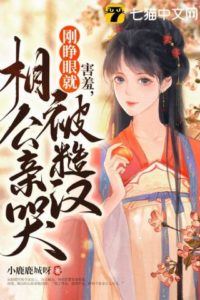
... Read More
Let me just say this: Sheng Huaian smashing that forty-to-fifty-jin stone with his bare hand is one of the most satisfying power moves in recent web novel history. But it's not just about showing off—he's making a point. The villagers are turning on Song Jiaojiao, blaming her for knowing about the contaminated water and not stopping them, demanding she kowtow and apologize. And here's the thing: she actually DID warn them. She sent Third Brother door-to-door. She told them to boil water. And still, when cholera hits, the first instinct is to find someone to blame. The stakes here are layered in the best way. On the surface, it's life and death—cholera in a pre-modern setting with no real medicine is a death sentence. But the deeper conflict is about human nature under pressure. When resources are scarce, do you cooperate or do you turn on each other? The villagers chose the latter, and Sheng Huaian's response—cold, absolute, terrifying—shows what happens when kindness meets ingratitude. What I love is that Song Jiaojiao doesn't want this confrontation. She's sitting there, watching, wondering how HE will handle it. She knows he has a strong sense of justice but also knows that being too soft gets you killed in situations like this. And when he does what he does—smashes the stone, claims her idea as his wife's, threatens anyone who spreads more gossip—he's protecting her without her having to lift a finger. The unspoken communication between them in that moment? Chef's kiss.

Leave a comment

You must be logged in to leave comments. or
