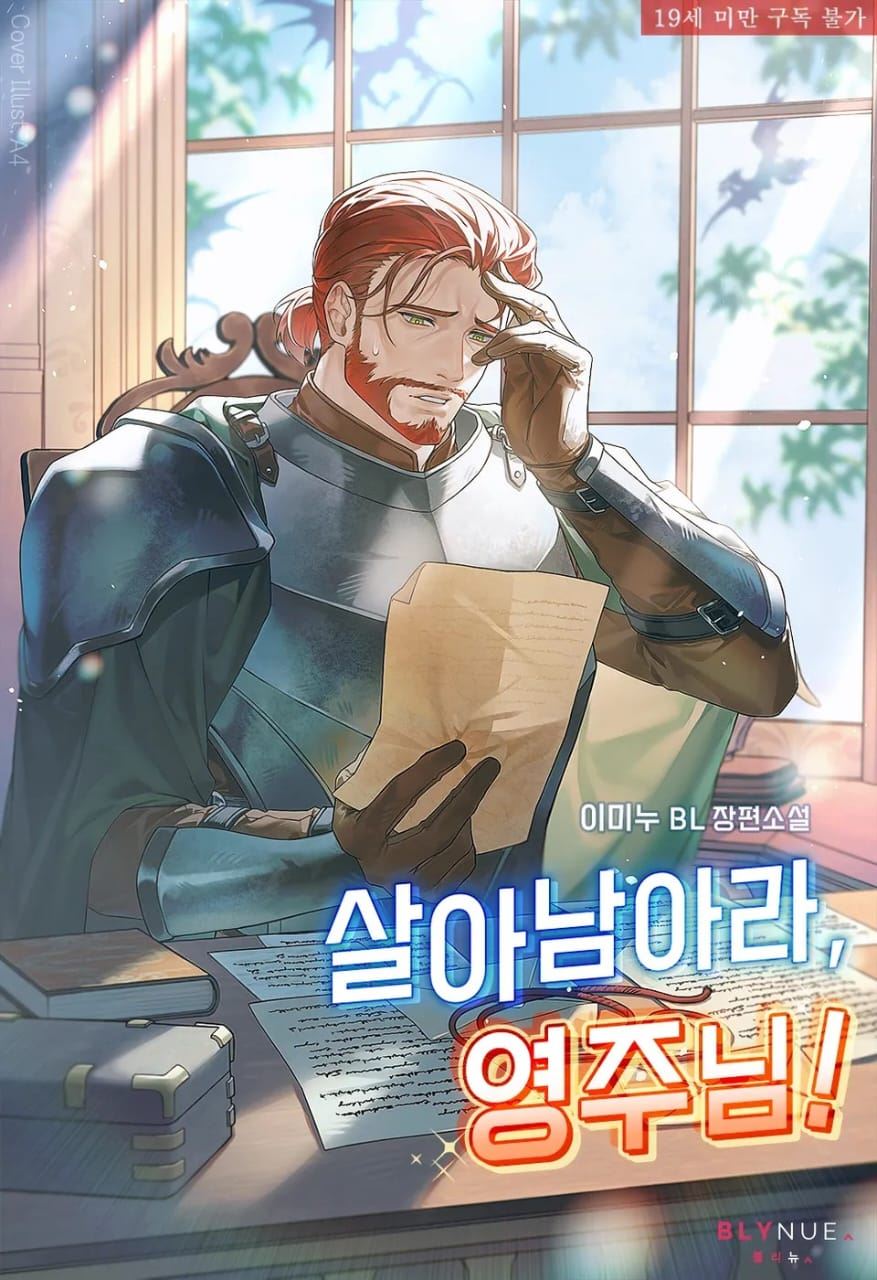
Survive, My Lord!
+Add to Custom List
Novel Info
  • Author:
  • Status:Ongoing

Summary

... Read More

Sir Reynald Middleton, a forty-seven-year-old commoner-born knight, served as the Commander of the Royal Knights in the Kingdom of Carbonel. Having risen from a hunter’s son to the kingdom’s greatest warrior through exceptional skill and the patronage of the current king, Reynald grew weary of political intrigue and military command. After slaying a catastrophic red dragon that had plagued the northern regions, he requested retirement, citing injuries sustained in battle, and asked to be granted a fiefdom where he could live in quiet seclusion. The king, Reynald’s childhood friend, agreed but orchestrated a betrayal by assigning him the northernmost territory atop Mount Lien. This domain, long abandoned due to rampant monster activity, was not a reward but a punishment designed to force Reynald to return to service if he failed to survive or govern it.

Upon arriving at his new fiefdom, Reynald discovered a desolate wasteland swarming with wyverns. The fortress he inherited was structurally sound but lacked any active population, as the original residents had fled decades ago. While riding toward the castle, he was ambushed by a flock of wyverns. Despite being outnumbered, Reynald utilized his archery skills to blind and disable several beasts, drawing the attention of a local security patrol. The patrol, composed of rough but capable youths led by a loud young man named Volant, initially mistook Reynald for a reckless intruder and cursed him. However, recognizing his combat prowess, they joined forces with him to drive off the monsters. Reynald then forcibly brought the patrol members to the castle, asserting his authority as the new lord.

Inside the castle, Reynald encountered Heide, a steward in his mid-thirties who managed the domain in the absence of a lord. Heide revealed that approximately two hundred people, including natives and fugitives from other territories, had taken refuge within the fortress walls to escape the dangers of the outside world. These residents treated the concept of a lord with skepticism and laughter, having lived without governance for over twenty years. Despite Reynald’s initial intention to stay only one night before returning to the capital to confront the king, a massive wyvern attack that night forced him to defend the castle walls alongside the villagers. His leadership and combat expertise turned the tide of the battle, saving the residents from potential annihilation and earning their tentative respect.

The following morning, Reynald assessed the dire condition of his domain. The residents were impoverished, suffering from food shortages and a lack of medicinal herbs. During a herb-gathering expedition with the young guards, Reynald learned that the villagers were dangerously ignorant of basic magical botany. They had been attempting to use mandrake, a potent and valuable magical ingredient, as a simple topical salve, wasting its true potential. Reynald taught them the correct method of processing the herb using monster blood, shocking the youths with knowledge they had never encountered. He also discovered that they had never seen a magician, assuming such figures existed only in the capital, highlighting the extreme isolation of the territory.

Reynald met Alex, a young but intimidating guardsman with severe facial scars who resided in the castle infirmary. Alex was hostile and distrustful of Reynald, questioning why the lord bothered with questions if he planned to leave soon. Through Volant, Reynald learned that Alex had arrived at the village ten years prior as a terrified nine-year-old orphan and had since become a skilled hunter despite his abrasive demeanor. As Reynald spent more time in the fief, his resolve to leave began to shift. The combination of the villagers' dependence on him, the strategic importance of securing the domain, and his pride prevented him from abandoning the place. He decided to remain temporarily to stabilize the region, intending to return to the capital only after he had sufficiently strengthened his position, thereby denying the king the satisfaction of seeing him flee.

Latest Release
DateGroupRelease
2026-10-03puffberry c28
2026-10-03puffberry c27
2026-10-03puffberry c26
2026-10-03puffberry c25
2026-10-03puffberry c24
2026-10-03puffberry c23
2026-10-03puffberry c22
2026-10-03puffberry c21
2026-10-03puffberry c20
2026-10-03puffberry c19
2026-10-03puffberry c18
2026-10-03puffberry c17

Community Reviews

Rating(0 / 5.0, 30votes)
5 stars
0(0%)
4 stars
0(0%)
3 stars
0(0%)
2 stars
0(0%)
1 stars
0(0%)

Popular reviews

... Read More
I need to just sit with this scene for a second. Reynald looks down at the ratman village from a hill and the author describes it like—hundreds of mud-and-straw houses, sturdy construction, thatched roofs, even a wooden fence around the outskirts. And Reynald's internal monologue is basically: you could almost believe this was a HUMAN village. ALMOST. Then comes the kicker—the overwhelming stench of rat droppings. THAT'S when reality hits. This is masterful worldbuilding because it subverts every expectation. You read the description and your brain fills in the blanks with a cozy medieval human settlement. The author lets you feel comfortable for exactly three sentences before yanking the rug out. And the implications? Chef's kiss. Two thousand ratmen farming efficiently while two hundred humans starve. The ratmen are BETTER agriculturalists than the actual people living on this land. The humans have to SNEAK IN and steal grain from creatures that clearly know how to run a proper food supply system. It's absurd. It's darkly hilarious. It's also a devastating commentary on who deserves land and who gets displaced. And the ecological detail throughout these chapters is incredible—the ratmen and swine fighting over territory, the swine ruining BOTH human AND ratman fields in summer, the lycanthropes growing strong on the full moon, the mandrakes thriving ON Monster miasma so you can't eliminate the monsters without killing your potion supply. This world has LOGIC. It's not just 'monsters bad humans good.' It's a fragile balance where every species occupies a niche, and the humans are basically freeloaders surviving on the margins. The wyvern blood brewing scene in the basement with bubbling foam and mysterious sounds—that's the kind of atmospheric detail that makes me feel like I'm actually standing there holding a barrel.
... Read More
The stakes in this story are so visceral because they're never abstract. Reynald isn't trying to save the kingdom—he's trying to keep twenty kids from starving. That's it. And yet the tension is relentless because we know what happens if they fail. The Ratmen and Lycanthropes fighting each other creates this incredible dramatic irony—we're rooting for monsters to destroy each other so the humans can escape with their grain. When the Lycanthropes smash through the wall, Reynald's reaction isn't fear, it's confusion followed by immediate flight response. "Right… we need to run." No dramatic speech, just survival instinct kicking in. And later, when Heide explains that men in this village die at 40, Reynald doesn't have an existential crisis about it—he just notes it as fact. "Perhaps the fathers or grandfathers of these youths had already succumbed to such misfortunes." This isn't some high fantasy where armies clash for honor; it's a desperate struggle against environment and monsters. The conflict isn't between good and evil—it's between life and death, and Reynald is betting his population's future on basic sword training. That's a hell of a gamble.
... Read More
The dialogue in this batch is genuinely funny in a way that feels earned, not forced. Let me just point out how each character's voice is completely distinguishable: Lyndon delivers world-shattering information with the energy of a kid sharing weekend plans. "To be honest, they farm way better than we do!" he says about the ratmen like he's commenting on the weather. That's not just comic relief—that's a kid who has normalized absolute madness because it's all he's ever known. Volant is my personal favorite voice here. His line about someone who can't escape during the raid—"If someone can't escape? Uh, well… they'll figure something out, I guess?"—with a smile. This is a person who discusses mortal danger with the same emotional register as discussing lunch. And Heide? He's the exhausted straight man holding everything together, constantly reacting to Reynald's blunt assessments with bitter smiles and resigned head-lowering. Reynald's dialogue is sharp and economical. "What else am I supposed to call a mess, if not a mess?" when Heide suggests he's being too blunt about the domain being a disaster. The man has zero filter and zero interest in softening truths. Meanwhile his internal monologue runs circles around practical calculations while his outward manner stays disarmingly gentle. That gap between thought and speech is where his character lives. And the translator's note at the end—"The Ratmen are better at agriculture than the actual humans. Like?? Not even the NPC villagers in Harvest Moon got disrespected like this"—this meta humor perfectly captures the reader experience. The author knows how absurd the premise is and invites you to laugh WITH them rather than taking it entirely straight.
... Read More
I need to talk about Reynald and the king because this betrayal cuts deep and it's so well done. They were childhood friends, comrades-in-arms, lived through everything together—and the king basically tricked him into a lifetime of slavery with one letter. The line 'My apologies, Reynald. But you're still too full of life to be retiring just yet, aren't you?' read like ice water down my spine. This wasn't some unknown tyrant making a political move. This was someone who knew Reynald's tells, knew he was faking his illness, knew exactly how to manipulate him into a corner where he couldn't refuse. And Reynald calling the king a 'son of a bitch' immediately upon arriving? That's not just anger, that's grief. He's mourning a friendship that clearly meant something to him. The fact that he still carried loyalty to this man after everything they went through together makes the betrayal hurt so much more. Then there's the dynamic with those young patrolmen. First they're yelling at him like he's an idiot for walking around unprotected, then they're laughing when he says he's the new lord, then one little punk asks if he's 'feeling okay in the head' and Reynald's fist connects before we even get the explanation. It's chaotic, it's raw, it's exactly how a 47-year-old ex-combat veteran who just got royally screwed would react. But I have a feeling these guys are going to become important. They showed up fast despite the danger, they fought alongside him without asking who he was first, and even though they mock him now, there's something genuine underneath all that attitude. You can see the seeds of a relationship forming even in this hostile first meeting.
... Read More
"There's no specific person in charge. When someone gets injured, whoever has free hands takes care of the cleaning and dressing their wounds. Dirty places cause infections, after all." That line right there. That one sentence from Heide completely opens up this entire world for me. This isn't just a fantasy village with a monster problem—it's a community that has learned to survive through sheer improvisation and mutual aid, with ZERO institutional support. The fact that they understand basic hygiene but can't source medicinal herbs tells me so much about how this society functions. They've adapted. They're resourceful. And they're one bad winter away from collapse. The manor garden where residents are dismantling wyvern carcasses—this is such a vivid image. Normal people, doing normal labor, processing death into survival. The meat and hides will literally keep them alive through winter. It's grotesque and beautiful at the same time. And the infirmary? Barely more than a clean room with some beds and herbs. "Even in more prosperous towns, you often find infirmaries neglected"—Heide's comment about this being the best they can do hits different because we realize how bad it must be elsewhere in this world. The anti-monster shields that everyone thought were potato storage is a detail I love. It's exactly the kind of slow decay that happens when a place has been abandoned by its leadership for decades. Knowledge gaps. Facilities unused. People making do. The world feels real because the neglect feels specific and earned, not just generic fantasy poverty.
... Read More
I have to geek out about the dialogue because it's genuinely one of the strongest elements here. The young patrol leader—whoever that is, the shaggy-haired one with the pitch-black eyes—has an absolutely unforgettable voice. His opening yell: "Fuckin' hell, what kinda dumb bastard goes wandering around on a day like this?! You got pus for brains or somethin'? You out here to donate yourself as winter rations for the damn wyverns?!" This is not generic fantasy dialogue. This is a specific person with a specific attitude talking. You can hear his voice, you can see his face, you know exactly what kind of kid grew up in this monster-infested wasteland and learned to survive by being loud and aggressive. And the best part? When he calms down and actually talks to Reynald, he's not a different person. He's still rough around the edges, still calls him 'old man,' but there's respect underneath it all. That's real character voice. Reynald's internal monologue is equally distinct. The way he thinks about the king—with that mix of fury, betrayal, and exhausted resignation—feels like a man who's lived too many years and seen too much. His frustration about being called old is petty and human and funny, and it comes across perfectly in narration. The king's letter is another highlight. 'My apologies, Reynald. But you're still too full of life to be retiring just yet, aren't you?' reads like something a manipulative friend would actually write. It's polite on the surface but completely venomous underneath. That contrast between formal language and cruel intent is masterful. Even the minor characters—the boy peeking through the castle gate in chapter 3—get quick but effective dialogue moments. Nothing feels generic or like it was written by committee. Every character sounds like themselves.
See all reviews

Custom lists

See all custom Lists