Singer - Reviews

Singer
+Add to Custom List
Sort
Add review
... Read More
Let's talk about Ding Jiangyu for a second because THIS man. The scene where Jian Jie realizes he's being overshadowed? Chef's kiss. I actually felt bad for him. He walked in probably proud—newcomer who can sing AND write—and then this established legend just absolutely DESTROYS him in the studio. Not maliciously, just by being incredibly good. And you know what? Jian Jie handles it with such grace. He doesn't get defensive or bitter. He thanks the guy sincerely. And Ding Jiangyu? The way he responds—'you are special and excellent'—this is not generic praise. The man is reading him correctly. What hits me is that this scene establishes a mentorship dynamic that could be SO important later. There's also this really interesting contrast with Yuan Chao, who immediately comes across as sketchy. One adult figure sees Jian Jie's potential and wants to nurture it; another sees an opportunity to exploit him. The dynamic between Yuan Chao and Sun Qianqian is also fascinating—Yuan Chao uses his cousin as bait essentially. He brought her there under the pretense of a fan meeting but the way he locks the door, tells Jian Jie not to let anyone see them, then pretends to leave while eavesdropping... something is definitely off. I'm not saying he's up to something terrible necessarily but the energy is WONG. Meanwhile Tong Liangliang is mentioned in passing—they recorded together—which means there's a friendship thread here too. The relationship web in this novel keeps expanding and I'm here for it.
... Read More
There's something really satisfying about how this chapter shifts environments. We start in the cramped, tense atmosphere of the recording room where Long Zichen is essentially yelling at newborn artists who can't carry a tune, then we transition to this bright Wednesday afternoon drive out to the outskirts of the city. The contrast is chef's kiss. I kept picturing the visual of Long Zichen behind the wheel—still slightly wound up from work, complaining about his colleagues, but clearly trying to make this moment relaxed for Jian Jie. He even prepared juice in the cup holder like some kind of overly prepared host. And then the reveal: 'Anping Children's Welfare Institute.' I love that Long Zichen dangles 'a place full of fairy tales' as a tease and Jian Jie immediately assumes it's a children's playground and gets embarrassed. The misdirection is gentle but effective. The orphanage itself feels lived-in. The yard is empty because the kids are in class, the security guard warmly greets Long Zichen like he comes here often, and the director's office door is unlocked so they just walk in. These small details make the place feel normal and safe rather than dramatic or tragic—which of course makes Long Zichen's secret mission to show Jian Jie this place even more meaningful. The sunshine, the empty playground, the casual familiarity—all of it paints a picture of somewhere that feels like home to him, even if he never tells us why directly.
... Read More
Let's talk about stakes because this chapter is quietly building some serious tension underneath all the breakfast and Karaoke. On the surface, nothing bad is happening. Jian Jie just signed a contract. He's starting training. He's got a supportive guardian and a caring producer. It's basically the good guy wins scenario, right? But look closer. Li Xiaoqi keeps repeating himself about how worried he is. 'There are countless young, beautiful, talented, and hardworking individuals. Why should Xiaojie be left behind?' This isn't just pride—it's genuine fear. The entertainment industry eats people. It creates stars and then discards them. And Li Xiaoqi knows his kid is too simple, too introverted, too naive for this world. Every time he says 'Jian Jie is a simple child,' he's really saying 'I'm afraid he won't survive this.' Long Zichen's backstory adds another layer. He tried to debut in 2018. Four years ago. He formed a group, it didn't work, he's been stuck in producer mode ever since. Now he's putting all his hopes on Jian Jie. What if Jian Jie fails? What if he becomes popular and then crashes? What if Long Zichen's whole identity—as the guy who made it happen—crumbles with him? The text says 'Long Zichen had pinned his greatest hope on Jian Jie.' That's heavy. That's a lot of pressure to put on a kid who just wanted to sing. And then there's the industry itself. Long Zichen warns Jian Jie: 'There were many cunning individuals in the entertainment industry, and Jian Jie, being naive, might be an easy target.' This isn't a vague threat—it's a specific prediction. The story is telling us that bad things are coming, that people will try to take advantage of Jian Jie, and that Long Zichen is trying to shield him but can't protect him from everything. The Karaoke scene is interesting here too. Jian Jie leaves early at nine o'clock. Why? Because he knows he can't handle the full night. He's not a party person. He's not built for this lifestyle yet. And that's a conflict in itself—the gap between who Jian Jie is and who he needs to become to survive in this industry. I also noticed something in Long Zichen's dialogue when he explains the work ahead: 'Jian Jie listened attentively, realizing that being a singer involved much more than just having a good voice. There were many other responsibilities to fulfill.' This is the moment the stakes become real. Jian Jie is starting to understand that this isn't just about talent—it's about endurance, about politics, about survival. The chapter ends on this quiet note of realization, which is perfect because it's not dramatic—it's internal. The conflict isn't external yet, but it's building. And we know it's coming.
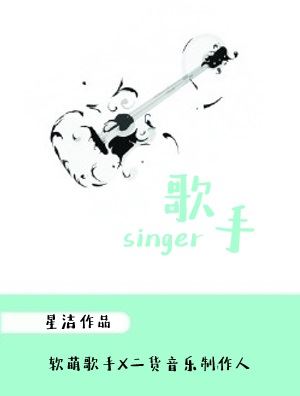
... Read More
'Stop bullying the kid! Hurry up and gather those guys to welcome our guests and prepare the contract while you're at it.' Long Zichen's voice in this chapter is so distinct. He's got this protective, almost parental energy but filtered through genuine warmth. He's the kind of person who scolds you for being too polite when you should just relax. Notice how he immediately deflects Yuan Chao's roughness? 'I'm a sensitive kid, and scaring people away will cost you!' That's not just dialogue—that's CHARACTER. He's already thinking about the business consequences of his own friend's behavior. Yuan Chao is a completely different creature in text. 'My goodness, my brother here is something. Besides hotels and KTVs, nobody calls me Mr.'—this guy talks like he's performing even when he's just standing in a lobby. He winks. He laughs loudly. He grabs people's shoulders. His dialogue is physical; you can SEE him moving while he speaks. And Jian Jie—oh man, Jian Jie's silence between lines is almost louder than his actual words. 'I wasn't scared. Mr. Long and your friends have a great sense of humor. I believe working with you will be a lot of fun.' Polite. Measured. Careful. You can read BETWEEN the lines and see someone trying desperately to make a good impression while being thoroughly overwhelmed. The contrast between these three voices—Long Zichen's earnest protectiveness, Yuan Chao's boisterous teasing, Jian Jie's careful politeness—creates this tiny ecosystem of social dynamics that feels impossibly real for a text-based medium.
... Read More
On the surface this story seems almost conflict-free. A well-off college student, a caring older brother, a decent part-time job at a warm bar— it reads like the opening of something gentle. But I think the author is setting up something much more layered than it appears. The stakes are not about survival or danger in the traditional sense. They are about emotional vulnerability. Jian Jie's conflict is internal. He has built a life that functions perfectly on paper but feels increasingly fragile underneath. His brother is leaving for Hong Kong, which means the safety net is physically removing itself. The part-time job he secretly loves could become complicated the moment he steps into a role that demands more than just playing piano. Vincent's desperation about the missing band is a small crisis, but it signals something larger— the structures Jian Jie has relied on are not as stable as he thought. Every relationship in this story carries risk. Jian Bin fears his brother is hiding things. Li Xiaoqi has become a substitute family member. Vincent needs Jian Jie's voice when no one else can fill the void. These are not thriller-level stakes, but they are deeply human ones. The question the author is asking feels urgent even without dramatic action: what happens when the people you depend on can no longer be there? What happens when you have to perform courage you do not feel? I am hooked because the danger here is real, just translated into emotional language rather than physical threat.
... Read More
Okay can we just take a moment to appreciate how perfectly Shui Xiaoren functions as both comic relief AND genuine emotional anchor in this chapter? The way he insists on 'protecting' Jian Jie from bars—completely missing that Jian Jie literally works there—is peak best friend energy. He's absurd, loud, slightly clueless about social norms, but his heart is in the right place. And then there's the shift when Long Zichen appears—Shui Xiaoren immediately goes into protective mode again, asking 'which company do you belong to?' and challenging that guy's credibility. That's not jealousy or insecurity; that's loyalty. He doesn't trust this stranger, and he's not going to let Jian Jie get swept up in some flashy offer without asking the hard questions. But what really got me is Jian Jie's response. When Shui Xiaoren asks what he'll say to the scout, Jian Jie doesn't brush it off with a joke. He actually says: 'I've considered becoming a singer, but both my brother and Xiao Qi want me to finish college first.' This is a moment of real vulnerability—he's admitting he has his own dreams, not just performing to please others. And he mentions his brother AND Xiao Qi as the people whose opinions matter. It tells you everything about who Jian Jie is: someone who carries other people's expectations carefully, even when they conflict with what he wants. Their dynamic is so natural. Shui Xiaoren pushes, Jian Jie deflects with humor, but underneath there's this unshakeable trust. When Long Zichen calls him 'Xiaojie' and Shui Xiaoren feels uneasy, he still holds back. Why? Because he respects Jian Jie's autonomy even when he disagrees. That's mature friendship right there.
... Read More
Honestly, this whole chapter reads like a beautifully wrapped present where you already know there's a gift inside but you're dying to know what it is. The plot here isn't driving forward with explosions or betrayals—it's simmering. And I love that. Long Zichen arranges this hot spring trip under the guise of leisure, but we're in on the secret: it's a pitch. He's using Jian Jie as bait to get close to Ye Jing for an endorsement deal. Yet, the real twist isn't the business maneuver—it's watching Long Zichen lose control of his own motives. He starts out calculating, but the moment he sees Jian Jie undress? Poof. The strategist is gone, replaced by a guy who can't stop staring. That shift is the plot's heartbeat here. It's not about whether the endorsement goes through; it's about whether Long Zichen can keep his cool while playing four-dimensional chess with his own desires. The Yuan Chao subplot adds comic relief but also raises the stakes—his relationship with Ye Jing is fragile, rooted in public perception rather than depth. When he jokes about Long Zichen 'snatching' his girlfriend, it's almost poetic irony, because the real threat isn't romantic or commercial, it's emotional. And it's brewing right next to the hot spring water. This chapter teaches me that the most compelling plot twists aren't always loud—they're quiet, internal, and happening right under everyone's nose.
... Read More
This chapter opens with the aftermath of a crisis and slowly lets the reader breathe. That's actually really smart pacing. If we'd started with the signal jammer confrontation, it would've been too much. Instead, we enter when Jian Jie and Li Xiaoqi are already making plans, already strategizing. The tension is there but it's in the background. Then Long Zichen arrives and the energy completely shifts. The text notes: "Although just a day had passed, seeing Long Zichen again felt like a world apart." That sentence does a ton of work. One day of separation felt enormous. That's how the story conveys emotional distance without needing a full flashback or scene break. From there the chapter moves through three distinct beats: the private conversation between Jian Jie and Long Zichen, the omniscient narration about Brother Jian's softening, and finally the recording room scene that closes things out on a hopeful note. The last line cuts off mid-thought — "And at this time, Long Zichen could finally no l" — which is a bit frustrating but also kind of effective. It's a reminder that this story operates in serialized installments, and the pacing respects that format. We're not getting a neat bow; we're getting a moment suspended in time. What I appreciate most is that the author doesn't rush the reconciliation. Brother Jian is thawing, but it's happening in the narration rather than in a dramatic confrontation. The story trusts us to understand that change doesn't always need spectacle.
... Read More
Can we just take a moment to appreciate the sheer absurdity of a two-story apartment building without balcony railings? "Filling with sorrow and anger, he couldn't help but think he rented that place specifically for the small balcony. Realizing Xiaojie had probably flown to the other side of the ocean by now, his regret deepened for not seeing him off." The humor here is actually doing a lot of heavy lifting. Long Zichen's internal monologue goes from "I might be cursed" to blaming the landlord to threatening legal action over lost wages. It's funny, yes, but it's also deeply sad when you pause to think about it. The hospital scene with his mom is wonderfully grounded. She's worried, furious, immediately jumping to the worst conclusion—heartbreak suicide attempt—because apparently that's the rumor mill already spinning. The contrast between Guan Fen's dramatic assumptions and Long Zichen's genuine clumsiness creates this warm domestic atmosphere even in a sterile hospital room. Meanwhile, Jian Jie is in some American hotel room, exhausted from a long flight, surrounded by assistants and makeup artists and all this corporate machinery, feeling this hollow worry in his chest. The juxtaposition of his glamorous entourage against his emotional vulnerability is striking. Two spaces, one worry, zero communication.
... Read More
Here's the thing that keeps me up at night: Long Zichen is currently hiding a hospitalization from the person most affected by it. Jian Jie is in the United States preparing for what sounds like a major award ceremony. He's traveling with a full entourage, dealing with logistics, managing expectations—and meanwhile the one person he was supposed to leave with is in a hospital bed with a broken leg and arm, actively conspiring with his mom and assistant to keep it secret. The stakes are compounding. Every day this secret stays hidden, the fallout gets bigger. What if Jian Jie finds out on his own? What if the injury affects Long Zichen's ability to support him professionally? What if Jian Jie feels betrayed that his own boyfriend lied to him? And yet the internal conflict is even more interesting. Long Zichen genuinely believes he's protecting Jian Jie. He's not malicious—he's afraid. Afraid of worrying him, afraid of being a burden, afraid that knowing about this accident will distract from Jian Jie's moment. The suspense isn't in whether Jian Jie will find out. It's in how devastating that revelation will be, and whether their relationship can survive the weight of well-intentioned lies.
... Read More
I need to talk about Long Zichen because this chapter completely recontextualizes everything. On the surface he's the loud, dramatic manager type—yelling in meetings, making grand gestures, pretending to be some ruthless capitalist. But then you get moments like him cleaning the guest room while humming, or stealing glances at Jian Jie in his pajamas and feeling 'melancholy,' and suddenly this character becomes so much more complicated. That word 'melancholy' hit me hard. It's not desire exactly, it's not quite jealousy either. It's something layered—maybe longing, maybe resignation, maybe the ache of loving someone you can't fully have. And then the dream sequence at the end! Jian Jie remembering his childhood home, his parents playing piano together, those chubby little hands on the keys while his parents smiled. It's such a vulnerable, private moment that reveals what he's actually fighting for—not fame, not money, but that original joy of music with the people he loves. The contrast between Long Zichen's performative intensity and Jian Jie's quiet softness is what makes their dynamic so electric. They're opposites in every way, and yet Jian Jie explicitly notes that he never thought he'd become such good friends with someone like Long Zichen. That's the whole thesis of their relationship right there. The most devastating line though has to be: 'He didn't know that Long Zichen had been staring longingly at his door for a while before reluctantly heading back to the guest room.' Reluctantly. Like he didn't even want to leave Jian Jie's side, but knew he had to. Unsent love in its most restrained form.
... Read More
There's something deeply symbolic about the entire voice-care motif running through this chapter, and I can't stop thinking about it. The restaurant specializes in dishes for the voice. Long Zichen makes honey lotus root juice specifically for Jian Jie's vocal health. They're preparing for a talk show where Jian Jie's voice and presence will be scrutinized. And underneath all of this is the question of what it costs to be heard—in every sense of the word. Long Zichen's silent sacrifice mirrors this perfectly. He's choosing to keep his feelings voiceless so that Jian Jie's voice—his career, his reputation—remains untarnished. He's literally silencing himself for Jian Jie's success. The line about worrying that 'Jian Jie's reputation being tarnished due to a same-sex scandal' makes this theme brutally clear. In this world, some truths are career-ending, so the most loving thing becomes invisibility. Then there's the clothing purchase subplot as commentary on visibility in the entertainment industry. Jian Jie doesn't want to dress too flashy because 'people might make fun of us,' but Long Zichen wants to dress him well because 'the public can be quite judgmental.' Both are trying to protect Jian Jie's image, but from different angles—one from humility, one from ambition. Jiang Xinya stepping in to borrow high-end clothes is almost poetic: the family providing the armor for the public battlefield. It's all about what you wear, what you say, and what you keep hidden.

Leave a comment

You must be logged in to leave comments. or
