Summary

... Read More

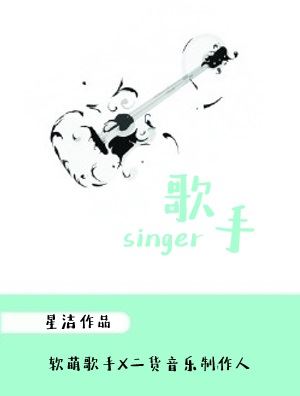
Jian Jie is a nineteen-year-old architecture student at Hengde University, one of China’s top institutions. Orphaned at a young age, he was raised by his elder brother, Jian Bin, who is eleven years older and serves as a corporate executive. Jian Bin acts as both father and mother figure, providing Jian Jie with a comfortable life funded by their parents’ inheritance. Despite his secure financial situation, Jian Jie seeks independence and a sense of purpose through music. He possesses natural talent in piano, cello, and guitar, and has been studying singing under the guidance of his friend, Li Xiaoqi, a performance manager. Jian Jie works part-time as a pianist and occasional singer at a bar called Freezing Point, where he gains a small but devoted following among the patrons.

The central conflict arises from Jian Jie’s desire to pursue a professional singing career, which clashes with his brother’s protective nature. Jian Bin views the entertainment industry as chaotic and morally questionable, fearing that his younger brother will be exploited or corrupted. He insists that Jian Jie focus on his studies and architecture career after graduation. Li Xiaoqi, however, recognizes Jian Jie’s exceptional vocal potential and actively encourages him to become a professional singer. This creates a tension between Jian Jie’s personal ambition and his familial obligations. The situation becomes more complex when Long Zichen, an eccentric and disheveled music producer, spots Jian Jie practicing in a public park. Long Zichen is convinced that Jian Jie is a hidden gem and relentlessly pursues him, offering mentorship and opportunities that Jian Bin would never approve.

A key turning point occurs when the band scheduled to perform at the bar cancels last minute. Vincent, the bar owner, begs Jian Jie to fill in. Jian Jie agrees, performing with a guitar and singing to an appreciative audience. His performance catches the attention of Wen Sen, another bar owner, and ultimately leads to Li Xiaoqi discussing the possibility of a professional career with him. Shortly after, Long Zichen reappears at the bar, this time dressed professionally, and formally offers Jian Jie a contract with his new company, Xinghuo Music. Long Zichen is the music director, while the company’s backer is Yuan Chao, the young heir to a wealthy family business empire. Long Zichen’s persistence and genuine passion for music eventually wear down Jian Jie’s initial resistance, leading him to visit the company with Li Xiaoqi and his childhood friend, Shui Xiaoren.

During the visit to Xinghuo Music, Jian Jie meets the management team, including the boisterous Yuan Chao and the professional managers Chai Xuyang and Tang Xiaohui. Long Zichen presents a contract that Li Xiaoqi reviews and finds surprisingly favorable, with high royalty rates and flexible terms. Jian Bin, although still wary, agrees to let Jian Jie sign after Li Xiaoqi vouches for the company’s legitimacy and Long Zichen’s professionalism. Jian Jie also reveals that he is a songwriter, having submitted two original tracks, "Restart" and "Paradise," to Leiting Records previously. Long Zichen is thrilled by this revelation, seeing Jian Jie not just as a performer but as a singer-songwriter with significant commercial potential. He vows to help Jian Jie reclaim the copyright to these songs for his own label.

The story moves forward with Jian Jie officially signing with Xinghuo Music and beginning his training. Long Zichen takes on a protective and mentoring role, picking Jian Jie up for morning exercises and guiding him through the basics of the music industry. Their relationship develops a close bond, with Long Zichen treating Jian Jie with a mix of professional enthusiasm and personal care. Jian Jie navigates the dual pressures of his university studies and his burgeoning music career, all while managing his brother’s cautious oversight. The narrative establishes the foundation for Jian Jie’s journey in the entertainment industry, highlighting the challenges of maintaining personal integrity and artistic passion within a commercial landscape. Long Zichen’s unconventional methods and Jian Jie’s quiet determination set the stage for future conflicts and successes as they prepare to launch Jian Jie’s career.

Latest Release
DateGroupRelease
2026-09-26knoxt c61
2026-09-26knoxt c60
2026-09-26knoxt c59
2026-09-26knoxt c58
2026-09-26knoxt c57
2026-09-26knoxt c56
2026-09-26knoxt c55
2026-09-26knoxt c54
2026-09-26knoxt c53
2026-09-26knoxt c52
2026-09-26knoxt c51
2026-09-26knoxt c50

Community Reviews

Rating(4 / 5.0, 205votes)
5 stars
67(33%)
4 stars
69(34%)
3 stars
68(33%)
2 stars
1(0%)
1 stars
0(0%)

Popular reviews

... Read More
Okay can we just talk about how suspicious this whole dynamic is now? Like on the surface it reads as wholesome mentorship energy, right? Long Zichen buys this ridiculously expensive guitar for Jian Jie, insists on cooking dinner with him, practicing chords together—classic supportive older figure vibes. But then you get to the scene where Yuan Chao and Long Zichen are literally *watching* Jian Jie and Tong Liangliang from a third-floor window like they're observing lab rats. And Long Zichen's internal monologue is basically 'that kid got my little Jiejie with milk tea, blacklist him immediately.' That's not a supportive mentor. That's someone who sees Jian Jie as *theirs*. The possessiveness is off the charts. He gets genuinely pleased when Tong Liangliang brings him the song, sure—but notice he doesn't thank the kid, doesn't praise the friendship. His immediate thought is 'I could've made that deal too.' The competition instinct. Jian Jie has no idea any of this is happening though, does he? He just thinks his director is a cool guy who likes food and guitar. Classic dramatic irony setup that has me deeply uneasy.
... Read More
I've been sitting with this chapter for a while now and I keep coming back to one feeling: tenderness. Not the dramatic, cinematic kind. The quiet, everyday kind that shows up in small gestures. Long Zichen brewing tea. Long Zichen pulling albums from his shelf like they're treasures he's been saving for the right person. Long Zichen saying "you're quite serious, kid" with actual warmth in his voice. And Jian Jie—nineteen, wide-eyed, holding onto those albums like they might disappear. His thank you is formal, proper, but there's something underneath it that isn't just politeness. It's the thrill of being seen. Of someone looking at you and saying, without saying it outright, that you matter. That you're worth the effort. "Why are you so concerned about a kid like me?" Jian Jie asks, and Long Zichen laughs it off, but the question hangs there. Isn't that exactly the question, isn't it? Why DOES he care so much? Is it just the talent? Or is there something about Jian Jie—his sincerity, his lack of calculation, the way he takes everything seriously—that reminds Long Zichen of why he got into this business in the first place? The emotional architecture of this chapter is built on asymmetry. Long Zichen is giving—advice, tea, albums, protection from his colleagues' teasing. Jian Jie is receiving, grateful but also slightly displaced, still figuring out where he stands. But I get the sense this won't stay imbalanced for long. There's a moment, just a glimpse, when Jian Jie seems to understand something about Long Zichen that goes beyond mentor and protégé. The age gap thing he brings up—it's not just awkwardness. It's the beginning of him seeing Long Zichen as a person, not just a boss. "But if it's to be Xiaojie's assistant, then I might consider it. After all, my eagerness for talent and affection allows me to sacrifice my heart." Long Zichen says this as a joke. Everyone laughs. But jokes are honest in ways that straight statements aren't. And that line—"sacrifice my heart"—that's the chapter's emotional core disguised as banter.
... Read More
Okay so this whole "hunger sales" scheme Long Zichen pitched is actually kind of genius if you think about it from a marketing angle, but also wildly tone-deaf to how the industry actually works. The whole concept—creating artificial scarcity, limiting appearances, forcing fans to invest through album purchases instead of free variety show exposure—is textbook high-end brand positioning. But here's the thing that made me chuckle: nobody in that conference room bought it. Tang Xiaohui literally called him out and threatened to have Yongqiang handle things directly. And Long Zichen folded immediately, which is such a realistic detail. People who throw out bold strategies in meetings are often just testing the waters, not actually expecting to win. The structural pivot from the business debate to the quiet domestic scene of them watching the show together was so well done though. The narrative slows down right after the conflict resolves, letting the reader breathe before hitting us with the reveal that Jian Jie's star rating literally crashed the company website. That pacing choice is masterful—tension, release, then a second wave of tension (will the popularity hold?). Also, the subtle subplot about Jian Jie needing Ding Jiangyu's name to even get on that show is interesting foreshadowing. It suggests his talent alone isn't enough in this world, and that's a theme that's probably going to come up again. The story feels coherent and grounded, no cheap twists, just realistic industry dynamics playing out.
... Read More
"The costs were substantial, with fees reaching tens of thousands of yuan per song." This detail keeps coming up and it paints this whole picture of Cedar Records throwing money at Jian Jie's album like it's nothing. The recording studio scenes feel almost claustrophobic in how much pressure is being poured into one young artist. Long Zichen dragging Jian Jie to sessions whenever possible, bringing in foreign sound mixers who demand over 100,000 yuan appearance fees - this is a world where talent gets gorged and polished until it shines, and Mr. Yuan is literally on the verge of tears watching the budget spiral. There's something almost cinematic about these studio scenes - the best musicians on strings, orchestras swelling for certain tracks, Long Zichen personally rearranging accompaniments in his spare time. It creates this atmosphere of obsession and devotion that goes beyond normal producer-energy. You can feel the walls closing in around Jian Jie a little, surrounded by all this investment and expectation. Then you cut to the marketing machine - Lei Ting's network planning department manufacturing organic-looking forum posts, students at the school feeding the buzz, netizens piecing together the MV storyline about forbidden teacher-student romance. The entertainment industry worldbuilding here is sharp. It's not just glitz and glamour, it's calculated manipulation at every level. The company executives making Swift decisions before Long Zichen even proposes them shows how fast this machine moves. "After enduring a prolonged period of financial blows, Mr. Yuan was on the verge of tears." This one line perfectly captures the behind-the-scenes reality that contrasts with the glossy public image. The world feels lived-in because we see both the sparkling surface and the people crying over spreadsheets underneath.
... Read More
This chapter moves at a deliberate pace — no action sequences, no cliffhangers, just conversation and character interaction. On paper that sounds like it could drag, but the author has engineered it so that every exchange reveals something new about the characters or the situation. Nothing is wasted. The structure essentially follows a three-act mini arc: discovery (the songs), negotiation (Li Xiaoqi and the contract), and intimacy (the cooking invitation and the family conversation). Each section escalates the emotional closeness between Jian Jie and Long Zichen naturally. We go from professional admiration to business partnership to personal trust, and the transitions feel earned rather than rushed. What I appreciate most is how the author controls the tempo through information reveals. We learn about Jian Jie's songwriting gradually — first Long Zichen hums along, then gets excited, then names specific tracks. We learn about the Thunder Records situation through casual dialogue. We learn about the parents through an accidental question. The author never info-dumps; everything comes out organically through character interaction. The chapter ends on a light, almost comedic note with the supermarket scene, which provides a nice release after the heavier family conversation. It's a classic breath-exhale pacing move — give the reader a moment to relax before whatever comes next. And honestly, that mundane domesticity at the end is what makes me want to read the next chapter. What happens when they're alone in a kitchen together? The anticipation is doing a lot of heavy lifting here.
... Read More
"Come on, give me a chance to act older!" That line opened the whole chapter and I immediately knew the dialogue was going to be fun. The author has this gift for making characters sound like actual humans instead of mouthpieces for plot exposition. Every voice is distinct — Long Zichen's fast, pushy, almost childlike in his enthusiasm, while Jian Jie's more measured, polite, slightly reserved. You can tell them apart even without tags. Long Zichen's dialogue especially pops. He goes from business mode to playful in a single breath: "Since you're thanking me so sincerely, how about treating me to a meal?" And then immediately after, the narrator tells us he's basically broke and just found a way to mooch a dinner off the kid. That comedic timing between dialogue and narration is brilliant. The author lets us in on the joke while the characters play it straight. Even the Li Xiaoqi exchange feels natural. Li Xiaoqi comes in all regretful about Leiting passing on Jian Jie, and Long Zichen doesn't even need to be aggressive — he just lays out the facts about Ding Jiangyu's contract situation and lets the other guy connect the dots. The subtext does the heavy lifting there. No villain monologue, no over-explaining. My only minor gripe: sometimes the dialogue tags lean a little heavy on the adverbs. But honestly, for a web novel, the conversational rhythm is top-tier. It reads like overhearing people talk, not reading a script.
See all reviews

Custom lists

See all custom Lists