Seventies Women’s Director
Novel Info

Summary

... Read More
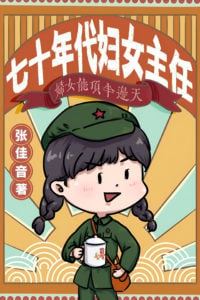
Zhao Ke is a woman who has transmigrated into the body of an eighteen-year-old factory worker in 1974 Shuangshan Commune, Shuangshan Bearing Branch Factory. She retains memories of her past life, where she worked herself to death, and has resolved to live a low-key, relaxed life in her current existence. However, her plans are disrupted when she experiences a vivid dream about a novel set in her home village, Zhao Village. The story features educated youths as the main characters, with her elder sister, Zhao Mian, destined to marry a man named Li Dasheng, only to suffer a tragic fate involving abuse, financial exploitation by her natal family, and eventual death in childbirth. Her younger brother, Zhao Feng, is portrayed as a spoiled antagonist who causes ruin for everyone around him. Upon waking, Zhao Ke discovers that real-life events mirror the novel, confirming she has transmigrated into the book's world. The central conflict arises when Zhao Ke learns that her elder sister is set to meet Li Dasheng for a potential marriage arrangement. Determined to alter the tragic fate of her beloved sister, Zhao Ke investigates Li Dasheng and discovers he is arrogant, lazy, and abusive. She successfully sabotages the match by revealing his true character to her mother, Yu Xiulan, who promptly rejects the proposal. With the immediate threat neutralized, Zhao Ke devises a more significant plan to secure her family's future. She proposes transferring her valuable factory job to Zhao Mian, allowing her sister to gain financial independence and social status, thereby breaking the cycle of dependency that led to the original tragedy. Despite initial resistance from her parents, who fear sacrificing Zhao Ke's future, Zhao Ke persuades them by highlighting Zhao Mian's hidden academic potential and her own willingness to wait for future opportunities, such as the reinstatement of the college entrance examination. As Zhao Ke navigates her new reality, she encounters other characters from the novel, including the female lead, Zhuang Lan, and the male lead, Fu Hang, who are newly arrived educated youths. She also deals with Zhao Yunyun, a childhood friend and novel antagonist who harbors romantic ambitions for Fu Hang. Zhao Ke manages these relationships with calculated detachment, aiming to protect her family while avoiding entanglement with the novel's original plotlines. She discovers that her sister had secretly passed the high school entrance exam but gave up her education to support the family, a sacrifice Zhao Ke is determined to rectify. The story follows Zhao Ke's efforts to dismantle the toxic family dynamics, empower her sister, and steer her siblings away from the destructive paths outlined in the original narrative, all while maintaining her desired peaceful existence in the rural setting of 1970s China.

Latest Release
DateGroupRelease
2026-08-11shanghai fantasy c72
2026-08-11shanghai fantasy c71
2026-08-11shanghai fantasy c70
2026-08-11shanghai fantasy c69
2026-08-11shanghai fantasy c68
2026-08-11shanghai fantasy c67
2026-08-11shanghai fantasy c66
2026-08-11shanghai fantasy c65
2026-08-11shanghai fantasy c64
2026-08-11shanghai fantasy c63
2026-08-11shanghai fantasy c62
2026-08-11shanghai fantasy c61

Community Reviews

Rating(3.9 / 5.0, 15votes)
5 stars
4(27%)
4 stars
6(40%)
3 stars
4(27%)
2 stars
1(7%)
1 stars
0(0%)

Popular reviews

... Read More
Okay so this chapter had me literally gasping out loud at the end. Let me just say—Zhao Ke chasing Chen San'er through the village with a fire poker at midnight is one of the funniest scenes I've read in ages. But it's not just comedy gold, it's actually doing a lot of plot work. She's not just being a brat; she's actively protecting Zhuang Lan by keeping her brother Zhao Feng distracted. The whole "borrow the lesson plan" scheme where she diverts him to go mushroom picking instead of sneaking to watch Zhuang Lan teach—she's playing 4D chess here while everyone else thinks they're playing checkers. And then the Fu Hang reveal at the end? I literally threw the book across the room. She swings a fire poker at a shadowy figure and it's not Chen San'er—it's Fu Hang. The novel itself even has a translator's note questioning whether he's the male lead. That's not subtle foreshadowing, that's basically the author screaming at me. Also, the meta-layer about Chen San'er's fate in the original novel—sentenced to death for harassing an educated youth—adds this whole layer of dramatic irony because Zhao Ke knows what's coming. She's walking around with plot knowledge and I am OBSESSED with how she's going to use it.
... Read More
I keep thinking about that chicken. The Niu family forces it on Zhao Ke, and she's just standing there holding a flapping, feather-shedding chicken while also trying not to drop the eggs, and the Zhao family comes home to this ridiculous scene. On the surface it's just a funny moment, but it represents so much more. That chicken is gratitude made physical—it's messy and awkward and impossible to refuse. Zhao Ke can't hold onto it, she can't catch up to the Niu family, and eventually her brother just laughs at her. It's this perfect symbol of how good deeds in a small village create obligations that are impossible to shake off. And then there's Hu Hezhi's staged injury. The bruises he shows his family are partly real but mostly performative. He's using his body as a symbol—proof of his victimhood, evidence of Zhao Ke's villainy. Meanwhile, Zhao Ke's body is the opposite symbol: her fist pressing against the choking boy's stomach, her arms shoving Hu Hezhi aside, her hands holding both chicken and eggs. Her body acts; his body performs. The willow tree where Zhao Feng and Zhuang Lan talk is another one I can't stop thinking about. It's a place of concealment, yes, but also of revelation. Behind it, prejudices dissolve and something real begins. Trees in this novel seem to mark moments of truth—places where people shed their armor and just... are. That's the deeper current running through all of this: the tension between what we perform and what we actually feel.
... Read More
I need to talk about the dialogue in these chapters because the author has this incredible sense of comedic timing that comes through almost entirely in how characters speak to each other. The best moment has to be this exchange between Zhao Ke and Zhao Yunyun about supporting Fu Zhiqing: "What will you use to support him? Your family's corn cakes for every meal, or your six work points from wasting time every day?" Zhao Yunyun: "It's just one more mouth to feed, and besides, my family doesn't only eat corn cakes every meal…" Zhao Ke: "Oh, yes, there are corn cakes mixed with white flour." Zhao Yunyun choked off. That is SO good. Zhao Ke doesn't even raise her voice. She just states facts with this devastating casualness and Zhao Yunyun has no defense. The author lets Zhao Ke's dialogue do all the work—no narration needed, no dramatic pauses described, just the brutal economy of truth delivered like a weather report. And then there's Zhao Ke's conversation with Xiao Wen about marriage and opportunity. She's giving this whole speech about how "it's better to have something than to rely on others" and Xiao Wen is just sitting there eating, and I love that the dialogue feels completely natural, like something you'd actually hear between two coworkers at a factory canteen. It's not preachy because it's embedded in a casual lunch conversation. The narrative voice itself is also worth mentioning—it's restrained, almost dry, which makes the moments of humor hit harder. The author doesn't tell you when something is funny; they just present the dialogue and let you laugh. And when the tone shifts to something more serious, like Master Yu's conversation with Zhao Ke, the same restraint makes it feel even more weighty. "You're already an adult, you should understand that only the things you hold in your own hands can become your security." — I keep coming back to this line. It's simple, direct, and it carries the entire thematic weight of the story.
... Read More
I need to talk about how this whole batch moves. It starts SO slow and sweet with Zhao Feng and Zhuang Lan—this awkward, tender moment where he shows off his muscles and then bolts like a scared rabbit. I was literally smiling at my phone. Then it cuts to Zhao Ke eating leftover fish soup and thinking about braised pork, which is this perfect little slice-of-life beat that grounds us before everything explodes. And then—BAM—the choking scene. The pacing here is masterful. The author gives us this quiet moment of Zhao Ke and Zhao Yunyun playing hopscotch, completely at ease, and then suddenly a boy is choking, the classroom is in chaos, and Zhao Ke is shoving Hu Hezhi aside. One second you're relaxed, the next you're holding your breath. The transition from play to emergency is so sudden it mirrors what actually happens in real life. Then the aftermath—the Niu family arriving with gifts, the Zhao family eating casually, Zhao Feng laughing exaggeratedly—and just when you think the tension has resolved, Zhao Er Nai kicks the door open and everything goes to hell. The escalation is relentless. Each scene builds on the last like dominoes falling. By the time Zhao Er Nai is cursing and Zhao Feng is trying to charge, I was completely hooked. This author knows exactly how to keep you turning pages.
... Read More
Okay so I just finished reading these chapters and I need to talk about how the plot is structured because the author is playing a really interesting game here. On the surface you have this cute little subplot about Zhao Yunyun crushing on Fu Zhiqing—the educated youth who looks like a young bamboo shoot thrust into barren land. That's a beautiful line, by the way. But then you zoom out and realize that's basically the B-plot, the comedic relief while the real story is Zhao Ke quietly dismantling her life and rebuilding it elsewhere. The plot twist that hit me was when Master Yu confronts Zhao Ke. I thought for a second that Zhao Ke was going to get caught in a lie or something, but no—she just calmly explains everything, spins her sister into this brilliant, ambitious character, and Master Yu basically falls for it. The scene where Master Yu puts braised pork in Zhao Ke's lunch box while subtly interrogating her? Chef's kiss. That's not just dialogue, that's a whole power dynamic shifting in real time. And then the village politics subplot drops in with Zhao Xinshan pacing around smoking cigarettes like a man whose entire world is being quietly rearranged around him. The Zhao family is unified, the Yu family holds real power behind the scenes, and Zhao Ke is moving pieces on a board that her own family doesn't even realize she's controlling. The author never lets the plot become boring because there's always another layer—a transfer certificate, a grain account, a hidden ambition. "Zhao Yunyun was someone with aspirations!" — and that line about her aspirations is honestly the funniest because her aspirations are so delusional compared to Zhao Ke's. Zhao Yunyun wants to support a pretty face; Zhao Ke wants to relocate an entire family's economic future. The contrast is delicious.
... Read More
Zhao Feng's dialogue in the willow tree scene is absolutely precious. He's all stammering and awkward, rolling up his sleeves and slapping his muscles like 'I've got strength and can do anything'—and then he just runs away. You can hear his voice cracking, you can hear the panic and excitement in his words. It's so natural, so genuinely awkward the way a young man actually sounds when he's flustered. But Hu Hezhi—oh my god, Hu Hezhi's voice is a whole different level. The way he tells his story to the villagers: 'A student was choking. As I was walking down the aisle, Zhao Ke rushed in and bumped into me. But fortunately, the child is fine.' He's performing, every word calculated. And then at home, he does the same act for his family, lifting his shirt to show bruises, sighing dramatically about being useless. His dialogue shifts depending on his audience—it's manipulative but so realistically human. Zhao Er Nai's dialogue is equally distinct. 'I'll keep causing trouble at your house every day if you don't pay me!' She doesn't hold back, she doesn't care about decorum. And the neighbors chiming in—'Second Aunt, she's just a young girl'—they have this collective voice, this village chorus that comments on everything. The author gives each character a completely different rhythm and texture to their speech. No two voices sound the same.
See all reviews

Characters

See all characters

Custom lists

See all custom Lists