Secretly Like You for Many Years
+Add to Custom List
Genres:
Novel Info
  • Author:
  • 阿藏
  • Status:Ongoing

Summary

... Read More

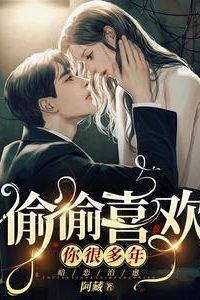
Jiang You is an eighteen-year-old jewelry design student with a complicated family background. Her mother, a busy surgeon, raised her alone after leaving an unknown father. Jiang You grew up close to her best friend, Wen Nian, and the two share a deep bond. Wen Nian is the granddaughter of the wealthy Fu family, making Jiang You familiar with the elite circle. She has harbored secret feelings for Fu Jin, Wen Nian’s uncle, for years. Fu Jin is a twenty-six-year-old cold and powerful business heir who returned to China a year ago. Despite their close proximity, they had grown distant, with Jiang You only watching from afar as he dated briefly the previous year.

The story begins on June 9th, immediately after Wen Nian’s college entrance exams. Driven by alcohol and courage, Wen Nian attempts to confess her two-year secret crush to Su Rui, a man connected to the Fu family. The confession is rejected harshly, with Su Rui dismissing her as too young. Devastated, Wen Nian returns to their private room at the Sheng Tang Clubhouse in a daze. Jiang You, furious on her friend’s behalf, storms into the adjacent room to confront the man she believes is Su Rui. She delivers a passionate scolding, unaware that the tall man in the black suit is actually Fu Jin. When she realizes her mistake, she is terrified, but Fu Jin remains calm and merely drives her and Wen Nian home.

During the car ride, the dynamic between Jiang You and Fu Jin shifts. Jiang You, initially timid, displays unexpected boldness, teasing Fu Jin about his relationship status and calling him old-fashioned. Fu Jin, usually aloof, shows faint traces of amusement and protectiveness. He learns that Jiang You is starting her internship soon and is participating in a design competition. The interaction reveals a growing, unspoken tension between them. Later, when Jiang You’s mother goes on a ten-day business trip, she stays at the Fu family mansion. She attempts to win over Fu Jin’s parents by cooking, enduring a nightmare about her absent father and half-sister, which highlights her deep-seated insecurities. Despite a clumsy first breakfast, her kindness and warmth gradually endear her to Fu Jin’s mother, Ruan Guixia, who treats Jiang You like a beloved granddaughter.

Meanwhile, Wen Nian, encouraged by Jiang You, seeks closure with Su Rui. With Jiang You providing real-time tactical advice via earpiece, Wen Nian confronts Su Rui, reclaiming her dignity and ending her unrequited obsession. Liberated, Wen Nian takes Jiang You to the Sheng Tang nightclub to celebrate. Jiang You, inexperienced with alcohol, becomes intoxicated quickly. While Wen Nian dances, Jiang You is approached by Tang Yu, the club owner, and later harassed by Bai Hao, a reckless young man from a rival family. Bai Hao attempts to assault her in a private area.

Fu Jin, alerted by Tang Yu about a beautiful girl in danger at the club, arrives just in time to intervene. He brutally disables Bai Hao and rescues Jiang You, carrying her out of the venue. Back at his luxury apartment, Fu Jin tends to her, masking his jealousy and fear with sternness. He promises not to tell her mother, and Jiang You, grateful, offers him elaborate blessings. The incident marks a turning point, as Fu Jin’s protective instincts become undeniable. He begins to investigate Bai Hao’s criminal history, revealing a pattern of violence and assault. As Jiang You recovers, the barrier between her and Fu Jin weakens, setting the stage for a complex romance fraught with family expectations and past traumas.

The narrative explores the contrast between Jiang You’s warm, resilient nature and Fu Jin’s cold, controlled exterior. Her presence disrupts his orderly life, triggering emotions he has long suppressed. The story also delves into the wealthy circles of Beicheng, highlighting the power dynamics between the Fu, Bai, and Tang families. Jiang You’s journey from a shy admirer to a confident young woman is paralleled by her growing influence over Fu Jin’s emotional world. The unresolved tension between them suggests that their relationship will evolve beyond the traditional uncle-niece dynamic, challenging the social norms and family histories that have kept them apart.

Latest Release
DateGroupRelease
2026-08-11shanghai fantasy c28
2026-08-11shanghai fantasy c27
2026-08-11shanghai fantasy c26
2026-08-11shanghai fantasy c25
2026-08-11shanghai fantasy c24
2026-08-11shanghai fantasy c23
2026-08-11shanghai fantasy c22
2026-08-11shanghai fantasy c21
2026-08-11shanghai fantasy c20
2026-08-11shanghai fantasy c19
2026-08-11shanghai fantasy c18
2026-08-11shanghai fantasy c17

Community Reviews

Rating(3.6 / 5.0, 35votes)
5 stars
8(23%)
4 stars
8(23%)
3 stars
15(43%)
2 stars
4(11%)
1 stars
0(0%)

Popular reviews

... Read More
Let me just sit with this for a second because the stakes in this story are so quietly devastating. Jiang You's external conflict is obvious: she wants to get into the best jewelry company for her internship. Night, owned by the Bai family. That's the career goal. But her INTERNAL conflict? That's the real story. She's a girl who was born out of wedlock, whose father abandoned her and her mother, who has a half-sister who looks at her with contempt. She doesn't know if she's worthy of being loved without conditions. Every time she tries to connect with someone—making breakfast for the Fu parents, wanting to sleep next to Fu Jin because she's scared alone—she's terrified it will end badly. And it always does. The dream sequence is the key to understanding her stakes. She makes this elaborate breakfast, full of love and effort, and the Fu parents don't even eat it. They leave. And in her dream, her father and half-sister do the exact same thing—they look at the food, say it looks bad, and leave. She chases their car for three blocks crying. Three blocks. That's how deep this wound goes. But here's what makes the conflict so tense: Fu Jin knows. I don't think the text says it explicitly, but he KNOWS. He's seen her mother's busy life, he's seen her grow up alone, he's seen her be 'sensible and well-behaved' because she had to be. And when she says 'Uncle Fu, I'm scared alone,' that's not a child asking to sleep with an uncle. That's a young woman admitting she's terrified of being by herself. And Fu Jin? His conflict is even more dangerous. He's been in love with her since she was three years old—he carried her and her mother through a thunderstorm, he's watched her grow up, he's come back from abroad just to be near her. But he's also 'Uncle Fu.' He has this role, this reputation, this family. The text says his face darkened when she asked to sleep with him and he refused immediately. But then he escapes 'in haste' like he's running from something. What is he running from? Himself? The fact that he's a grown man who wants this girl and can't have her? The fact that if he lets himself want her, everything changes? The stakes are: if she stays at his house for ten days, something will break. Either she'll fall harder and he'll have to keep rejecting her, or he'll break first and cross a line neither of them can uncross. And Xu Chaoyang is standing right there, across the hall, watching, waiting, ready to step in if Fu Jin doesn't move fast enough. I am NOT okay with this.
... Read More
There's something really interesting about the clothing and body imagery in this section. Jiang You is wearing Fu Jin's oversized pajamas with no pants underneath — a visual metaphor for her position in relation to him, isn't it? She's wrapped up in his world, covered by his presence, but fundamentally exposed and unprotected. The damp hair, the flushed face, the bruised toe — all these details of a body in transition, caught between childhood and adulthood. And then the underwear scene. Her finding her own clothes hung to dry, his hands having touched something so intimate and private, it's almost too much. But what really struck me is the contrast between Fu Jin's world and Qi Ye's world. The Fu residence is all modern luxury and assistants who bow and retreat. Qi Ye's home is an old alley house with a cement floor, a fan, no air conditioning. Yet there's something equally warm about it. The story seems to be asking: what does home actually mean? Is it the grand house where someone washes your underwear for you, or is it the old courtyard where a friend washes a watermelon at an outdoor faucet? Both are forms of care, just different kinds.
... Read More
Okay so let me just say this about Jiang You — the girl is playing 4D chess while everyone else thinks she's just a cute little sister. The scene where she throws herself into Ruan Guixia's arms and acts all sweet and grateful? Chilling. And then the narration drops this: "Others saw her as a little sister, but she wanted to be their daughter-in-law." That line hit me like a truck. She's literally cooking for the family, making pickled cucumbers, staying up early — all to win them over. Meanwhile Fu Jin is just sitting there eating carrot cake like a man who has no idea his future is being meticulously engineered around him. And Mrs. Fu! Oh my god, Ruan Guixia is such a fascinating character. A woman in her sixties who insists on being called "Xianjie" and puts 18 candles on her birthday cake. She's been spoiled by her husband for decades and it shows — she's dramatic, affectionate, slightly ridiculous, but genuinely warm. The fact that she adores Jiang You so much that she wants to swap granddaughters? That's both hilarious and kind of tragic because Jiang You knows exactly how much power that affection gives her. Then there's the Fu Qihai and Ruan Guixia relationship itself — the villa built over ten years as a wedding gift, the old servants who remember when the master barely ate. This couple is the blueprint Jiang You is studying. She has zero doubt that Fu Jin will be loyal because "like father, like son" — but also zero doubt that Ruan Guixia would break his legs if he ever cheated. Smart girl. She's playing the long game and she knows exactly which buttons to push.
... Read More
There's so much going on beneath the surface in these chapters and I want to talk about the symbolism because it's subtle but deliberate. The carrot cake is interesting — Jiang You bakes it, Fu Jin eats it and says it's delicious, and this small moment of domestic intimacy happens between them while his mother is performing elsewhere in the room. The cake is golden brown with crisp edges, soft and moist inside. It's an act of care that goes almost unnoticed. Fu Jin's barely audible chuckle after breakfast — is that genuine amusement? Does he sense something? The text doesn't say, and that's the point. Then there's the villa itself as a symbol. Ten years of construction, built from the names of the parents, a testament to enduring love. Jiang You studies this relationship like a textbook. She believes in it — "like father, like son" — but the reader might wonder: is she projecting? Fu Jin is clearly different from his father. Aloof, distant, emotionally unavailable. The villa represents the ideal; Fu Jin represents the reality. Wen Nian's outfit choice is another symbol worth noting. She goes for "pure desire" — youthful but alluring, innocent but provocative. It's a costume, just like Jiang You's persona as the sweet little sister. Both girls are performing versions of themselves to get what they want. The mirror becomes a recurring image — Wen Nian checking her reflection, Jiang You observing her friend. Who are they when no one's watching?
... Read More
The pacing in these chapters is honestly masterful and I need to unpack why. It starts slow — a breakfast scene that could have been tedious but isn't, because the author fills every moment with character revelation. The fish maw soup, the carrot cake, the cucumbers, the mother-son dynamic, the father watching everything with a smile. An hour-long breakfast that flies by because nothing is wasted. Then — boom — Fu Qihai and Ruan Guixia leave and Jiang You collapses on her bed. That moment of relief is so well-timed. After the performance of being the perfect guest, we get to see her actually exhausted. It's a breath, a pause, and then Wen Nian calls and the whole energy shifts. The transition to Wen Nian's storyline is where I think the author really earns their keep. We go from the Fu family's refined world to a bedroom that looks like a crime scene, and suddenly the pace is faster, more chaotic, more comedic. The dialogue snaps. Jiang You's deadpan humor — "Did you kill someone at home? Planning to destroy the evidence?" — keeps things moving. And then the Su Rui backstory drops. Two years of history compressed into a few paragraphs: the actor, the father's sabotage, Su Rui's intervention, the birthday, the girlfriend. It's dense but it works because each beat raises the emotional stakes. By the time Wen Nian knocks on that restaurant door, I'm already invested in what happens next. The chapter ends on that knock and I was absolutely ready to turn the page.
... Read More
I need to talk about the pacing in these chapters because the author is doing something really clever and I want to dissect it. Chapter 4 starts with a car ride conversation—low stakes, just two people talking about internships and jewelry companies. It's calm. Peaceful even. Then suddenly they arrive at her apartment and Xu Chaoyang opens his door. BOOM. The energy shifts instantly. The text goes from casual conversation to this charged, silent standoff between two men who both want the same thing but will never admit it. And then Jiang You just stands there confused, like she's watching a tennis match and doesn't know who's serving. The transition from her apartment to the Fu mansion is where the pacing really picks up. She falls asleep in the car, wakes up to a moonlit garden, and suddenly she's in this massive estate that feels like another world. The author describes the cloudstone chandeliers, the begonia-patterned windows, the diamond-shaped shadows moving with their footsteps. It's almost dreamlike. And then—she bumps into his back. Physical contact. The first real touch between them in this sequence. And he catches her. Of course he catches her. But the real pacing masterstroke is the bedroom scene. She's sleepy, clingy, and accidentally says the line that changes everything: 'Can I sleep with you tonight?' And Fu Jin's response—'No!'—is so immediate, so sharp, that you can feel him holding back something much bigger. The text says his face darkened and his eyes had 'two fiery sparks hidden in the depths.' That's not rejection. That's restraint. And the pacing here is perfect because it slows down to almost a stop—we feel every second of that tension—before he escapes like a man running from his own fire. Then Chapter 5 starts with a DREAM. Not a normal morning. A nightmare about her father and half-sister leaving her. She wakes up drenched in sweat, then immediately does this weird calisthenics routine while chanting 'Fairy, get away from me quickly!' Which is hilarious and heartbreaking at the same time. She's literally exorcising her demons before breakfast. And then she's fine. She's smiling. She's making breakfast. The pacing from trauma to normalcy in one paragraph is wild. The breakfast scene itself is structured like a mini-tragedy: she wakes up excited, makes everything, serves it, and then gets rejected by the very people she's trying to impress. The dream mirrors the reality—her father leaving in the dream, the Fu parents leaving at the table. Two abandonments in one chapter. And then Fu Jin's smile saves her again. The structure is: hope → disaster → rescue → hope again. It's a cycle and she's trapped in it.
See all reviews

Characters

See all characters

Custom lists

See all custom Lists