Summary

... Read More

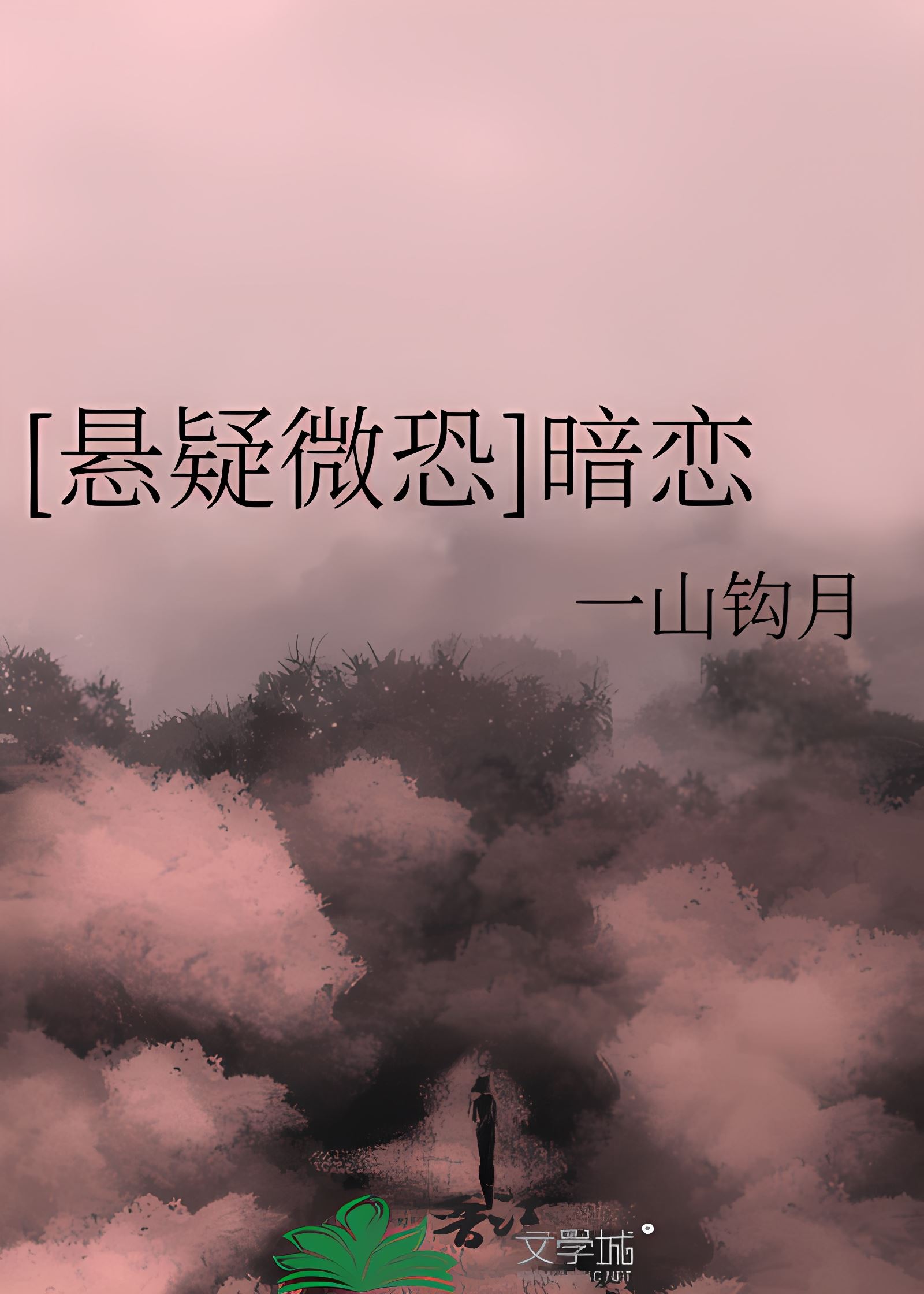
An Ruxin is an unremarkable office worker who has led an average life since high school, defined by mediocrity and a lingering, secret crush on the popular and radiant Bai Miaoqing. Years after graduation, their paths cross unexpectedly when An Ruxin encounters a haggard, disheveled Bai Miaoqing struggling to carry groceries. The woman before her is a stark contrast to the confident student An Ruxin once admired, living in squalor and appearing deeply traumatized. Despite her hesitation, An Ruxin walks Bai Miaoqing home, where she discovers a chaotic apartment and a mysterious, stylish woman named Chen Anran who possesses a key to Bai Miaoqing’s door. This encounter shatters An Ruxin’s peace, leading to a terrifying incident where Bai Miaoqing screams in terror, claiming that Chen Anran is a ghost who died fifteen years ago.

Bai Miaoqing begs An Ruxin for help, insisting that Chen Anran’s spirit is haunting her and trying to steal her life. She recounts a story from their middle school days involving a local legend about a love-struck ghost at an abandoned reservoir. According to Bai Miaoqing, she and Chen Anran visited the reservoir before their entrance exams, where a ghost pushed Chen Anran into the water, causing her death. Bai Miaoqing claims that since then, Chen Anran has possessed her, forcing her to relive her trauma and ruining her life. Overcome by a desire to revive the idealized version of Bai Miaoqing from her past and perhaps win her affection, An Ruxin swears to believe every word Bai Miaoqing says and promises to help her exorcise the spirit. This moment of apparent reciprocation from Bai Miaoqing—confessing that she also liked An Ruxin—fuels An Ruxin’s devotion, blinding her to the inconsistencies in the story.

However, suspicion begins to take root when An Ruxin investigates Chen Anran’s past. She discovers that the ghost story was fabricated by a classmate as a prank, and there is no evidence of a supernatural entity in the official records. More disturbingly, while visiting Chen Anran’s home, An Ruxin finds her diary and a home video showing Chen Anran’s playful, vibrant personality. As she watches the footage, An Ruxin notices that Chen Anran’s mannerisms and gestures are eerily identical to those of the Bai Miaoqing she remembered from high school. The realization strikes her with force: the radiant, perfect girl she had worshipped throughout her youth was not Bai Miaoqing, but Chen Anran. The “ghost” haunting Bai Miaoqing is not a supernatural entity, but a manifestation of her own guilt and envy for the life Chen Anran once had.

The narrative reveals the dark truth behind the high school years. Bai Miaoqing, coming from a dysfunctional home and feeling inferior to her perfect neighbor, developed a parasitic obsession with Chen Anran. She mimicked Chen Anran’s appearance and behavior to escape her own misery. When An Ruxin confessed her love, Bai Miaoqing initially rejected her to protect her facade, but later claimed possession to explain away her failures. The pivotal event was not a murder by a ghost, but a tragic accident or suicide at the reservoir driven by Bai Miaoqing’s psychological break. In her delusion, she believed that by becoming Chen Anran, she could finally be loved. The current Bai Miaoqing is a broken shell, trapped in a cycle of self-sabotage, while An Ruxin finds herself entangled in a web of lies, unable to distinguish between the ghost story and the harsh reality of her own unrequited obsession.

As An Ruxin confronts Bai Miaoqing with her findings, the psychological horror deepens. The boundary between the living and the dead, or rather between Bai Miaoqing and the memory of Chen Anran, becomes blurred. An Ruxin is forced to question whether her love is for the real Bai Miaoqing or the ghostly ideal she constructed in her mind. The story moves toward a confrontation where the truth about Chen Anran’s death must be uncovered, revealing that the tragedy was caused by human jealousy and psychological manipulation rather than supernatural forces. An Ruxin’s journey transforms from a simple act of helping an old classmate into a descent into the psyche of two women bound by a shared, destructive past.

The climax approaches as An Ruxin pieces together the final details from Chen Anran’s diary. The entries reveal that Chen Anran was aware of Bai Miaoqing’s obsession and was deeply hurt by it. The “haunting” is revealed to be Bai Miaoqing’s fractured mind projecting her guilt onto the memory of her deceased friend. An Ruxin realizes that by believing Bai Miaoqing, she has enabled a dangerous delusion that prevents any healing. The story concludes with An Ruxin facing the painful choice between continuing to support the illusion that keeps Bai Miaoqing stable or forcing her to confront the reality that Chen Anran is truly gone, and that the “ghost” was never external, but a reflection of Bai Miaoqing’s own self-loathing and envy.

Latest Release
DateGroupRelease
2026-10-03marinetl c19
2026-10-03marinetl c18
2026-10-03marinetl c17
2026-10-03marinetl c16
2026-10-03marinetl c15
2026-10-03marinetl c14
2026-10-03marinetl c13
2026-10-03marinetl c12
2026-10-03marinetl c11
2026-10-03marinetl c10
2026-10-03marinetl c9
2026-10-03marinetl c8

Community Reviews

Rating(0 / 5.0, 37votes)
5 stars
0(0%)
4 stars
0(0%)
3 stars
0(0%)
2 stars
0(0%)
1 stars
0(0%)

Popular reviews

... Read More
The pacing in this section is absolutely ruthless and I love it. You start with Aunt Chen's tender, heartbreaking monologue about her missing daughter — warm, nostalgic, painfully slow. Then An Ruxin enters the bedroom and the prose becomes almost reverent, lingering on each object like a camera pan. The diary, the notes, the camera — each discovery comes at a measured pace that lets you soak it in. Then the video plays and for a moment it's just sweet, fluffy, everyday girlhood. And then — BAM. The realization hits. The pacing flips from slow-burn discovery to sudden violent clarity. An Ruxin stumbles, falls, wakes up from her hallucination, drives to the hotel, and immediately confronts Bai Miaoqing. The transition from the dreamlike reservoir sequence directly into that confrontation is masterful — there's no breathing room, no soft landing. She goes from floating peacefully beside Chen Anran's body underwater to shouting at Bai Miaoqing in the same breath. The chapter structure here mirrors An Ruxin's psychological descent: calm surface, growing unease, the plunge, then the furious surface-level aftermath. And it ends mid-sentence basically, with Bai Miaoqing defending herself with 'I felt it — I really felt it!' which is such a perfect cliffhanger that leaves you gasping.
... Read More
I need to just sit with this for a second. The way An Ruxin's feelings for Bai Miaoqing are woven through every single moment of this chapter is so quietly devastating. "Maybe that was the best outcome. The most reasonable one." An Ruxin literally tells herself she just wanted Bai Miaoqing to live a good life, because she used to have a crush on her. As if that makes it pure. As if it doesn't complicate everything infinitely more. And then the dream sequence. Oh god. An Ruxin dreaming about high school — writing Bai's name in her notebook margins, scribbling it out, watching her back without being seen. It's not even romantic in a traditional sense. It's something lonelier. More desperate. "By looking long enough, she could imprint that back view into her eyes, into her heart, turn it into an eternal idol." That line absolutely wrecked me. She's been carrying this for over a decade, idealizing someone who is now physically trembling and unrecognizable from who she was. But the really painful part is how An Ruxin refuses to see the truth. When she finds those defaced photos, her immediate instinct is to protect Bai: "The girl I liked would never make such malicious scribbles." She literally uses her nostalgia as a shield against what her brain is telling her. "That was Bai Miaoqing's past! Her essence won't change." Meanwhile Bai is burning that group photo in a motel trash bin, crying about Chen Anran, envying her. And An Ruxin has no idea any of this is happening. She's just tired and trying to be there for her friend, never suspecting that the person she's been romantically Fixated on for years might be the most dangerous person in this entire story.
... Read More
The dialogue in these chapters operates on so many levels simultaneously that I'm genuinely astonished. Let me start with one line that has been living in my head on repeat: “Let her see my despair… I deserved all this.” Bai Miaoqing says this to An Ruxin after she's just learned that her best friend died loving her, and that she herself killed her. And the horror of it isn't just in the content — it's in the delivery. She's practically BEGGING Chen Anran's ghost to kill her. She WANTS the punishment. That's not dialogue, that's a confession of moral bankruptcy, and it's devastating. Then An Ruxin responds with this terrifying calmness. Her dialogue is always measured, always precise. Even when she's describing increasingly violent murder methods, she sounds like she's discussing the weather. That contrast between CONTENT and TONE is where the author's voice really shines. An Ruxin doesn't shout. She doesn't tremble. She says “I'd kill you” with the same flat professionalism she uses when she says “Probably just old and worn out” about the broken railing. And THAT inconsistency — the gap between how she speaks and what she means — is what makes her so frighteningly compelling. Bai Miaoqing's voice, meanwhile, has completely shattered by the end. What starts as coherent reasoning devolves into fragmentary whispers: “I love you so much… It's over, Ruxin, it's all over… I beg you, please, just once before it ends, kiss me.” The repetition, the ellipses, the way sentences collapse into each other — this is a character who has lost all narrative control. She's not telling her own story anymore. She's being told by the truth, and she can't stop it.
... Read More
This chapter sequence is a masterclass in controlled demolition. The author doesn't just reveal information — they orchestrate Bai Miaoqing's psychological collapse with surgical precision, and I was absolutely mesmerized by the architecture of it all. It starts with An Ruxin methodically laying out deductions. One by one, the pieces click into place for both Bai Miaoqing and the reader. “Chen Anran had a crush on Bai Miaoqing. That explained everything.” This is the calm before the storm — logical, almost clinical. Then the tempo accelerates as Bai Miaoqing tries to process each revelation. She asks questions, An Ruxin answers. The back-and-forth creates a rhythm that pulls you forward. But here's where it gets brilliant: once the truth about Chen Anran's crush is fully laid bare, the narrative doesn't stop. It pivots. Bai Miaoqing's breakdown isn't a single moment — it's a cascade. She laughs. She stumbles. The railing breaks. She falls. And An Ruxin catches her. Every beat compounds the dread. The pacing during Bai Miaoqing's monologue — “Every single word is right. Every line is so convincing… This isn't real.” — it loops and spirals like her actual thoughts, and that circular quality makes you feel her disintegration from the inside. Then the author does something I've never seen work this well: after Bai Miaoqing reaches absolute rock bottom, asking for one last kiss, An Ruxin doesn't comfort her. She escalates. The conversation about whether Chen Anran wants to kill Bai Miaoqing could have been the emotional climax. But instead of resolving anything, it becomes the springboard for the SHARPEST twist of the entire book. And that final line—cutting off mid-sentence—is the kind of cliffhanger that makes you immediately open the next chapter without a second thought.
... Read More
The stakes in this story operate on three levels and they keep escalating. Level one: the immediate stakes of the interrogation. Miaoqing is being questioned about her best friend's death and every answer she gives makes her look more guilty. The police already have her diary — if they discover the timeline discrepancy, she's looking at murder charges. That's why she lied initially. But then Ruxin corners her with logic: 'If you truly saw a ghost, why were you afraid of being suspected of murder? A normal cop would assume you were traumatized.' That single question dismantles the entire ghost defense. Level two: the mystery of what actually happened at the reservoir. Was it suicide? Accident? Murder? The ghost? Each possibility carries different moral weight. And level three — the deepest level — is the conflict inside Miaoqing herself. She wanted a wish to come true. Her wish came true. But the cost was Anran's life. So the real question haunting this whole story isn't 'who killed Chen Anran?' It's 'did Miaoqing kill her, or did her wish kill her?' And honestly, I don't think those are mutually exclusive answers anymore.
... Read More
I keep coming back to this idea that everyone in this story is trapped by love — and not the romantic, cinematic kind. It's the ugly, suffocating, reality-warping kind. Chen Anran's love for Bai Miaoqing is the most tragic because it's the most PURE. A fifteen-year-old girl writing secret messages in a diary, planning a delicate confession via diagonal cipher, wearing a beautiful white dress to the reservoir just to look her best for the person she likes — this isn't obsession. This is tenderness. And the worst part? She never forced anything. She planned to walk away if Bai Miaoqing didn't feel the same. “If you didn't like her, she wouldn't have revealed any of this.” That is genuinely heartbreaking. But then Bai Miaoqing's love for An Ruxin — and here's where it gets uncomfortably complicated — she admits it herself: “The ‘average' An Ruxin was just right—she didn't trigger envy or fear, but was enough to foster a romantic longing.” So her love for An Ruxin is built on ANRUXIN NOT BEING CHEN ANRAN. She loves someone WHO ISN'T the person she actually loved. That's not romance, that's a coping mechanism dressed up as devotion. And An Ruxin?? Who is she in love with? We don't know yet, but the author has planted enough breadcrumbs. An Ruxin “quietly looked at the girl in front of her” while processing Bai Miaoqing's breakdown. She went to Chen Anran's parents to get the diary. She has been watching, calculating, waiting. Her final line cuts off because she's “clearly troubled” — and that emotion, rare as it is from her, makes me think her love might be the most dangerous of all. Three people. Three distorted forms of love. And Chen Anran is dead in all of it.
See all reviews

Custom lists

See all custom Lists