Scumbag Husband Deceived Me into Marriage to Support His Whole Family; Reborn to Marry a Research Giant - Reviews

Scumbag Husband Deceived Me into Marriage to Support His Whole Family; Reborn to Marry a Research Giant
+Add to Custom List
Sort
Add review
... Read More
I need to talk about Su Yiwei's emotional journey because WOW. The fact that she spent thirty-five years in her past life being manipulated, watching her sister hide in the shadows envying her, only to realize that Jiang Wentao was never truly hers—it's devastating. There's this one line that really got to me: 'She had been foolish enough not to notice their illicit affair, especially since Su Yirou had already been married into the Huo family for three years.' THREE YEARS. And she never knew. The betrayal isn't just romantic, it's familial. Her own sister, the one she presumably cared about, was living a double life right under her nose. But what really broke my heart was Su Yiwei's internal monologue about her past life marriage: 'She had to abandon all dignity, clinging to Jiang Wentao like soft cattails clinging to a rock, satisfying all his masculine pride.' That image of herself as a weak, subservient wife in the previous life versus the cold, calculating woman she is now—it's such a powerful emotional arc. And then there's this moment where Jiang Wentao looks at Su Yiwei and feels 'an inexplicable pang of pain.' Is that guilt? Is that genuine emotion? Or is he just performing? I'm not sure and that uncertainty is killing me. The emotional complexity here is what makes this story so compelling—it's not just about revenge, it's about two people who shared a lifetime together and now have to navigate this completely different dynamic.
... Read More
Okay so let me just say this upfront: Jiang Wentao is hands down one of the most disgusting human beings I have ever encountered in a novel, and I read A LOT. The man is a walking red flag with a PhD in manipulation. But here's the thing that actually scared me—this isn't just a simple "scumbag cheats on good wife" story. The relationship triangle between Su Yiwei, Su Yirou, and Jiang Wentao is so twisted it made my stomach turn. In their past life, Su Yiwei gave thirty-eight years of her life to a man who never loved her. Thirty-eight years! She raised his child, supported him through poverty, and treated him like he was made of gold. And what was the payoff? He had a vasectomy so she'd adopt his son with Su Yirou, then kept Su Yirou as a mistress because divorcing Su Yiwei meant splitting his assets. The audacity is so extreme it loops back around to almost impressive. But Su Yirou? Oh my god. She's not just a villain, she's a VILLAIN with delusions of grandeur. She genuinely believed that swapping marriages was the right thing to do, that she was superior to Su Yiwei in every way. And yet—here's the twist that got me—when she was a widow and begged Jiang Wentao for help, he took her in as his mistress. She spent years in misery, beaten by the Huo family, despised by her own father, and still she came back for more. That's not just ambition, that's obsession bordering on psychosis. And Su Yiwei? She's the most interesting one to me. In this rebirth, she's not reacting with panic or tears. She's calculating. She lowers her head, hides her hatred, and plays along. The moment she realizes both of them are reborn and she keeps it secret? That's a character who just became dangerous. I want to see what she does next. The question that's been haunting me: can Su Yiwei actually win this, or is she walking into another trap? Because Jiang Wentao has future memories too, and Su Yirou knows how Su Yiwei died last time. They're not starting from zero.
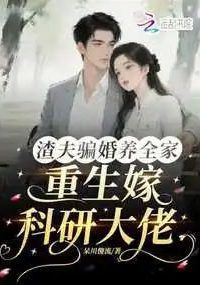
... Read More
Okay so this chapter is basically the moment everything flips. Su Yiwei finally drops the bomb about Su Yirou not being the real daughter, and she does it in the most calculated way possible. She doesn't just expose her—she makes Su Yirou expose herself first, then plays the innocent victim while watching the whole family turn on her. That line where she says 'Second Brother, don't be impulsive' while flashing Su Yirou a provocative smile? Chilling. She's playing 4D chess while everyone else is playing checkers. And the best part—Su Yiwei doesn't even go for the kill shot. She explicitly thinks about playing cat and mouse because she knows her dad will find a way out for them. This is a woman who learned from her past life and is applying every lesson strategically. The plot structure here is brilliant because the author doesn't just give us a reveal—we get the aftermath, the family's reactions, and Su Yirou's internal screaming all in one scene. It's layered.
... Read More
This story is really about identity and the weight of second chances. The central theme of rebirth isn't just a plot device—it's exploring what happens when someone gets to see their life with full awareness and has to decide who to be. Su Yiwei's transformation from the naive girl who accepted everything to the woman who now calculates every move is the thematic core. There's this recurring motif of performance throughout the chapter: everyone is acting. Su Yirou performs fragility, Jiang Wentao performs concern, the parents perform family harmony. The storm outside mirrors the emotional turbulence inside—the 'downpour came without warning, streaks of lightning seemingly intent on splitting the sky in two' is such a classic but effective symbolic moment. But what really struck me is the theme of truth versus survival. Su Yiwei can't reveal that she's reborn because 'she stood no chance against the two of them.' Her knowledge is both her greatest weapon and her greatest vulnerability. The hospital mistake that separated the sisters is another layer— fate itself was the original manipulator, and now the characters are trying to rewrite what destiny gave them. The question the story keeps asking is: when you know how the story ends, do you follow the script or tear it up? And can you even tell who else has seen the ending? That's the deeper meaning beneath all the family drama and romantic tension.
... Read More
Here's what keeps me up at night thinking about this story: Su Yiwei thought she had the advantage of being reborn, but she was WRONG. Both of her enemies are reborn too, and they think THEY have the upper hand. Jiang Wentao knelt on both knees before his father in Chapter 3, pleading to marry Su Yirou, and inwardly he's thinking about how his past-life regrets will now be corrected. He's operating with full knowledge of how things went wrong before, and he's convinced he can control the outcome. He even thinks Su Yiwei will be fine with being the "hidden one" this time because she was "resilient by nature." The sheer arrogance of that man is almost admirable in its stupidity. Su Yirou, meanwhile, opened her eyes to find Jiang Wentao delivering betrothal gifts and immediately tearfully begged him to marry her. She thinks she's securing her destiny as the wife of China's richest man. She has no idea that Su Yiwei is also reborn and is watching her every move. This is no longer a story about a wronged wife getting revenge. This is a three-way game of chess where all three players think they're the only one who remembers the future. The stakes are impossibly high because if Su Yiwei reveals that she knows what's coming, they'll know she's reborn too—and then the whole delicate web of deception collapses. The tension is absolutely suffocating in the best way. Every conversation between these three characters is layered with double meanings. When Jiang Wentao says "I will treat you well for the rest of my life," we know he's lying. When Su Yirou pleads with teary eyes, we know she's scheming. And when Su Yiwei lowers her head and speaks in a "pitiful, choked voice," we know she's plotting murder. I need to know what happens next. I need to know if Su Yiwei can outsmart two people who also have future memories. Because if she can't, she's walking back into the same torture chamber from her first life—and this time, there's no fruit knife to save her.
... Read More
I need a minute. Just a minute to process what I just read because my heart is actually hurting for this woman. "He would constantly remind her to rest and drink more water. Even when she couldn't bear children, the entire Jiang family never looked down on her." This one line destroyed me. Thirty-eight years of what sounded like genuine care, and it was all a performance. Every cup of water, every reminder to rest—it was the meticulous maintenance of a con artist who needed his wife to stay compliant while he sired a child with her sister behind her back. The worst part isn't even the betrayal itself. It's the vasectomy reveal. That detail hit me like a physical blow. She was taking medicine every single day, hoping to give him an heir, and he'd already made sure she couldn't. The image of her swallowing those pills with hope in her heart, while he was out living a double life with her own sister—my hands were literally shaking while I read that. And then there's Su Yirou's side of things, which somehow makes it even more tragic. She also got burned. She married Huo Jingsheng because she wanted him, and he never even looked at her. She became a widow, was called a jinx, beaten by her in-laws, and rejected by her own father. She clung to Jiang Wentao because he was the only warmth she had left, and he used that too. Both women were used. Both women were discarded. Both women died on the same day, month, and year—which Jiang Wentao interpreted as destiny, but honestly reads more like karmic justice to me. What gives me hope is Su Yiwei's reaction in this new life. She didn't break. She didn't collapse into tears. She clenched her fists until her fingertips turned white and decided to play the long game. There's something so powerful about a woman who has been utterly destroyed and still chooses to fight instead of surrender.
... Read More
'Unfortunately, her cheeks were swollen and red from Su Yiwei's slaps. Far from looking pitiful, it was painful to even glance at her.' I love how the author uses physical description to do double duty here. Su Yirou is putting on this delicate, watery-eyed performance for Father Su, trying to look like the wronged sister, but her face literally can't hide the truth. The slap marks are like a subtitle to everything she's saying—everyone at that table can see her lying, even if they don't know why. And the setting itself—the family dinner, the formal seating arrangement with Father Su at the head, Su Yirou sitting beside him like she belongs there—this domestic space becomes this arena where power is constantly being negotiated. The author doesn't need elaborate descriptions of the room. The tension between the characters IS the atmosphere. You can feel the suffocating politeness, the forced smiles, the way Lu Yunxiang keeps signaling with her eyes. It's a scene that feels like a pressure cooker with the lid slightly off.
... Read More
'Su Yirou, why do you look like you resent the whole world? Let me tell you something: don't take what isn't yours; don't hold an umbrella that doesn't belong to you.' This line hit me like a truck. Because underneath all the revenge plotting and identity drama, the real wound here is so simple and human. Su Yirou suffered in the countryside too—years of it—and nobody acknowledges that. Su Haohan literally says 'you've enjoyed twenty years of comfort' as if her childhood pain never happened. The stakes here aren't just about who gets to be the real daughter. It's about who gets to be seen, who gets to have their suffering count. And Su Yiwei? She weaponizes that invisibility. She knows exactly which buttons to press because she's lived both sides of this family's favoritism. The tension in this scene is suffocating in the best way—every line of dialogue is a knife, and Su Yirou is the one getting cut every time. I was genuinely holding my breath.
... Read More
The dialogue in this section is genuinely impressive. Let me just quote this exchange because it's perfect: 'Sister, can't you understand human speech either? Which eye of yours sees me angry?' Su Yiwei's voice is so distinct here—sharp, impatient, and laced with this dark humor that comes from someone who has lived forty-plus years and seen through every trick in the book. Compare that to Su Yirou's dialogue: 'Sister, why are you taking the blame again? Did I just say I absolutely must marry Jiang Wentao?' The contrast is night and day. Su Yirou speaks in this soft, pitiful way that's clearly calculated, while Su Yiwei's words are direct and cutting. And Jiang Wentao's dialogue is equally revealing—he keeps saying 'Yiwei, I only have your best interests at heart' but the subtext is completely different. The author does a great job making each character's voice recognizable just from their dialogue patterns. Su Yirou uses words like 'pitifully,' 'gloomily,' and her sentences often end with self-deprecating questions. Su Yiwei uses rhetorical questions and sarcasm as weapons. Even the parents have distinct voices—Father Su is calculating and evasive ('Brother Jiang, my wife and I have always treated Yirou as our own daughter') while Mother Su is more direct and manipulative in a different way. The narrative voice itself is also worth noting—it dips into Su Yiwei's internal thoughts seamlessly, giving us access to her true feelings while the external dialogue tells a completely different story. That gap between what characters say and what they think is where the real brilliance lives.
... Read More
The opening chapter of this book is something I will not forget. I mean, I've read plenty of revenge reincarnation stories, but the way this one opens—straight into the torture chamber, no warm-up, no gentle introduction—just drops you into a scene so viscerally horrifying that you can't look away. "Blood-red tears seeped from Su Yiwei's eyes. In her fury, the veins on her forehead bulged, and her eyes nearly burst from their sockets." That line. That single line. I had to pause the reading and just stare at my screen for a full minute. The image of a woman so enraged and so broken that her tears turn to blood—it's almost too much. And Su Yirou describing it all with that "sinister smile" and "twisted excitement" while casually mentioning things like "beaten to death by other mental patients" and "vasectomy" like she's discussing the weather? The contrast between Su Yirou's elegant, wealthy appearance and the absolute monster underneath is chilling. She squats down, grabs Su Yiwei by the neck, and delivers her monologue with the giddy enthusiasm of someone sharing gossip at a tea party. The fact that she's been waiting "over thirty years" for this moment of revenge says everything about how patient and calculating she is. Then the scene pivots so sharply. Su Yiwei grabs a fruit knife. One stab to Su Yirou's throat, one stab to Jiang Wentao's chest, and she dies from exhaustion. No dramatic last words, no heroic speech—just a woman who had nothing left to lose taking them with her. The simplicity of it is what makes it so powerful. And then—bam—she's back in 1986, staring at a boxy color television and a calendar that reads March 12. The juxtaposition between the blood-soaked hospital room and that mundane living room scene is masterful. It grounds the supernatural element in something painfully ordinary, which makes the whole thing feel eerily real.
... Read More
'Don't take what isn't yours; don't hold an umbrella that doesn't belong to you.' This metaphor is everything. An umbrella—that's such a domestic, everyday object, but it carries so much weight here. It's about protection, about shelter, about who gets to stay dry while others get rained on. Su Yirou has been holding an umbrella that was never hers for twenty years, and now Su Yiwei is gently, almost kindly explaining that the moment the wind picks up, it'll slip right out of her hands. The whole novel seems built on this question of belonging and authenticity. Who is the real daughter? Who deserves love? But the deeper theme is about the hollowness of stolen things. Su Yirou's entire identity is built on a foundation that isn't hers, and the author keeps showing us how fragile that is. Every time Su Yirou tries to assert herself, the ground shifts. The imagery of the family dinner—sitting around a table, sharing food, performing warmth—while underneath it all is this rot of deception. Beautiful and terrible.
... Read More
Okay so this whole setup is wild. Su Yiwei gets reborn and suddenly realizes her entire past life was a manipulation—her sister Su Yirou and Jiang Wentao were secretly involved, and she was the fool who got played for thirty-five years. But here's the thing that really got me: Jiang Wentao ALSO seems to have memories from the past life. And Su Yirou too? The text literally says Su Yirou is thinking 'Could it be that Jiang Wentao also had memories from their past life?' And then she has her own theory about the 'butterfly effect.' So we've got THREE people who might be reborn, and they're all playing a game of chicken trying to figure out who knows what. That's some serious narrative tension right there. The plot structure here is brilliant because the author doesn't just give us a simple revenge story—she layers it with this mystery of who else is reborn and what exactly each person remembers. The engagement scene where everyone is sitting there thinking their own thoughts while outwardly performing is peak dramatic irony. Father Jiang even has a moment where he actually looks at Su Yiwei properly and realizes she's not the 'illiterate village girl' everyone painted her as. That's a plot pivot right there—he's starting to see her as a real threat instead of a pawn. And then the Huo family just coldly says they'll send betrothal gifts tomorrow like nothing happened? The pacing here is tight, every chapter ends on a note that makes you want to keep going.

Leave a comment

You must be logged in to leave comments. or
