After being read, the real young master became my wife - Reviews

After being read, the real young master became my wife
+Add to Custom List
Sort
Add review
... Read More
That equipment room scene with the mouse—holy shit, I laughed so hard. But seriously, it's the most revealing moment in this entire batch. Tian Zihao, who we've seen as kind of a goofball, ends up responsible for feeding Dafu the cat. When that fat mouse appears, his reaction is pure comedy gold. But watch Chi Yi: he doesn't just protect Shen Ge emotionally, he physically steps in front of him, kicks the mouse, and then quietly takes responsibility for the ruined cat food. Meanwhile Shen Ge is holding Chi Yi's arm the whole time—not because he's scared of mice, the text literally says he's not afraid of small mice, but because this one was too fat. That's such a specific, honest detail. It shows Shen Ge has boundaries about what grosses him out, and he's comfortable enough with Chi Yi to show it. Then there's the hot water situation. Tian Zihao says he has Chi Yi getting water for him, and Shen Ge gets all flustered. Chi Yi just... agrees. He doesn't deny it. The internal monologue where he's thinking about how Tian Zihao is careless with hot water is peak Chi Yi—practical, caring, but also slightly exasperated. And Shen Ge's reaction of blushing and silently telling him to stop nodding? That's the kind of moment that makes you go 'oh they're definitely into each other.' The whole friend group dynamic is so natural here. Lu Zhiyu complaining that Tian Zihao looks like a thief, the student council member Song Han who's quietly supportive (she paid for cat food too), everyone has their role. And Chi Yi's father—man, the scene where he's trying to make money and his wife has to basically coach him on emotional intelligence? 'The wrinkles in your brain have been ironed flat' is such a brutal but funny line. He's trying so hard to help Shen Ge's family after what happened, but he's terrible at it. His wife is the real strategist here, figuring out how to give them a store without making it feel like charity. That's the kind of parental love that's quiet and practical, not dramatic.
... Read More
Okay I need to talk about Chi's father because HOLY. The man walks in and absolutely DESTROYS the head teacher with pure financial power. 'I donated a building to you, and you let others pile dead rats on my son's desk!' — I literally screamed at my phone. And then the follow-up: 'I will donate another building to you, and you will give me ten times as many dead rats!' This man is not playing around. He's out here treating school bullying like a business negotiation where money solves everything, and honestly? It's kind of brilliant. But the real gem is the arm-slap moment. Father Chi slaps Chi Yi's arm for 'only knowing how to swallow your anger' and then Shen Ge has to awkwardly explain that Chi Yi DID fight back — he just returned the dead rats onto Wei Zexiao's school uniform. Father Chi's silence after that explanation? Priceless. You can almost hear the gears turning. And Shen Ge! The boy is so earnest about tutoring Chi Yi, pulling out his precious mini notebook like it's a treasure. When Chi Yi teases him about it being a 'gift' and Shen Ge gets all flustered trying to grab it back — this is the kind of detail that makes their relationship feel SO real. It's not dramatic or forced, it's just two kids being awkward and caring in their own ways.
... Read More
The author dropped this one detail and I immediately pictured the whole scene: 'Did you renovate this? It looks very good.' / 'My father donated it.' ...pause... 'Your father donated it.' Chi Yi's internal scream — 'This is such a cliché. If he continues like this, he will have to go to the supermarket entrance and spend five dollars to buy a rocking car to ride himself!' — but the external world they've built feels so grounded. The rooftop isn't just a backdrop; it's a character in itself. A place where the protagonist can breathe, where the social hierarchy of the school temporarily doesn't matter. And then there's the office scene with Father Chi. The image of him slamming the table, the head teacher's bitter smile resisting the temptation to push the bank card back, the absurdity of discussing 'ten times as many dead rats' like it's a catering order — this world operates on its own logic where wealth is both armor and weapon. The school is described as 'Yinghua' and the car is a 'Kalai' (clearly a stand-in for something luxury), and the author's little meta-joke about copyright warnings made me laugh out loud. The dead mouse at Wei Zexiao's feet at the end, being picked up by the younger brother with a piece of paper like some grotesque ceremonial object — that's the kind of visual that sticks with you.
... Read More
Dafu the cat is everywhere in this batch, and I think he's more than just a cute pet. He's the thing that brings the friend group together, the secret they're all protecting. The cat food gets ruined by a mouse, and Chi Yi offers to buy new food with his rarely-used pocket money. But the group refuses to let him pay alone—they split the bill, saying they'll pay him back with New Year's money. Dafu becomes this symbol of collective care, something worth protecting together. Then there's the store. Chi's mother wants to buy a shop for Shen Ge's parents, but she has to coach her husband on how to do it without making it feel like charity. 'Can't you take it and then tear up the IOU quietly, and then find an excuse to return it to them later?' That's such a specific kind of love—the kind that preserves dignity while offering help. The store represents stability, a future, a guarantee. 'Having a store of their own is more or less a guarantee'—that line about the children needing money for school in the future. It's practical help wrapped in emotional intelligence. The sports meet is another layer. Chi Yi signing up for the 5,000-meter race, Shen Ge for the relay. After September, the weather gets colder, the college entrance exam approaches. This is their last sports meet in high school. There's something bittersweet about that—these boys are running toward an end, toward separation, toward different universities. The physical training becomes a metaphor for everything they're preparing for: endurance, teamwork, pushing through discomfort. And Chi Yi's internal thought—'It's better not to let him run 5,000 kilometers'—shows how protective he is, how he's already calculating risks for Shen Ge's safety. The themes here are all about care, about how people show they love each other through practical actions rather than words. The father who can't figure out emotional intelligence, the mother who does, the friend group sharing cat food costs, the boys sharing hot water duties. It's all about the weight of caring for someone.
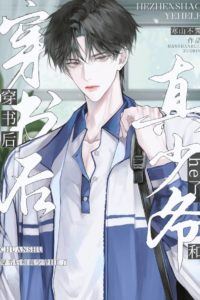
... Read More
'Love cannot withstand comparison. The tighter Chi Yi held on, the less love he received.' This line absolutely wrecked me. It's the thematic core of this entire chapter, and it's delivered so quietly—almost like an afterthought—but it's carrying so much weight. Let me talk about the symbolism here because it's everywhere. The nickname 'Youyou'—which apparently means 'spicy' (as in the little parrot doll Chi Yi is holding)—this is such a rich symbol. Shen Ge is embarrassed to share it because Chi Yi had lewd thoughts, yes, but it's also about vulnerability. A nickname is something intimate, something only your family calls you. And here Chi Yi is, the person who's been living as Shen Ge's friend, about to learn this secret part of him. The plush cockatiel in his hand becomes this weird bridge between innocence and something more complicated. Then there's the food symbolism. The braised pork with bamboo shoots—'the dish they all like very much'—is Mother Shen's best. She made it specifically for Chi Yi, trying to welcome him, trying to make him feel at home. But Chi Yi knows he's a guest in a story that isn't his. The food is love, but it's also a reminder of everything he can't have. And the plants on the balcony—Clivia, growing well despite the small space. The Shen family is struggling, running a night market stall, but they're still nurturing life. They're still trying. Meanwhile, Chi Yi is trapped in a narrative he can't change, holding onto a family that will never truly choose him the way the Shens choose Shen Ge. The contrast between the two households isn't just about wealth—it's about who shows up, who worries, who waits.
... Read More
Okay, I have to talk about this one scene because it just hit me right in the feels. When Chi Yi walks into the Shen family home, the author doesn't just describe a house—they describe a LIVING, breathing space. The kitchen sounds alone are enough to make you smell the food. I'm talking about the 'loud voice of Shen's mother' shouting from the kitchen, the 'lively sound of spatulas' coming from behind the door, and then the braised pork with dried bamboo shoots being brought out like it's the main event of the century. And the house itself! 'A few steps from the living room led to the balcony, where several pots of green plants were placed on the ground.' That detail about the Clivia plant is so specific and grounding. Chi Yi 'had never grown flowers before, but knew that one of the pots was a Clivia, which looked to be growing well.' This is the kind of detail that makes you feel like you're actually sitting on that sofa, picking up a plush cockatiel from the corner, watching this family interact around a dinner table. What I love most is how the author uses the domestic setting to tell us everything we need to know about this family without a single exposition dump. The oil spots on Mother Shen's hands. The way she tugs at her apron nervously. The newly bought slippers placed in front of Chi Yi. The soju bottle appearing on the table. Every object, every sound, every gesture builds this world where these people are poor but warm, where love is expressed through food and concern rather than grand gestures. It's cinematic in the best way—like the camera is panning across the room, catching small details that add up to something whole.
... Read More
Let me be real with you — dead rats on a desk is the most powerful symbol in this entire chapter and I need people to understand this. On the surface, it's a bullying prank. But think about what it represents: waste, decay, something dead being used as a weapon against someone who just wants to study in peace. Chi Yi's response — returning the dead rats to Wei Zexiao's uniform — is almost poetic justice. The bully's own poison becomes his punishment. And then Father Chi escalates it to an absurd degree ('ten times as many dead rats'), turning the symbolism into a dark comedy about how wealth can weaponize even the most grotesque things. But the deeper symbol is the notebook. Shen Ge's little formula notebook, copied late at night by desk lamp, his eyesight deteriorating, his parents having to intervene. This tiny object represents everything Chi Yi has lost and everything he's trying to protect — the innocence of studying for its own sake, the purity of effort without ulterior motives. When Chi Yi teases him about it being a 'gift,' he's really touching something sacred. And the rooftop itself — renovated, safe, a bubble of peace in a corrupt system — is the ultimate symbol of what these characters are fighting for: just a place to exist without being destroyed by the world around them.
... Read More
The stakes in this chapter are deceptively simple on the surface but absolutely devastating underneath. On one level, it's about a kid transferring schools and his biological parents worrying. But the REAL conflict is Chi Yi's impossible position—he KNOWS what happens at Yinghua, he KNOWS the original plot, and he's sitting there eating braised pork while his new family looks at him with hopeful eyes. 'Is he going to say it?' This internal question is where the tension lives. If Chi Yi tells them the truth about Yinghua, the novel world might collapse. If he stays silent, he's letting these wonderful people believe a lie. The author makes us feel every second of that silence—'Chi Yi's silence made Shen's father and mother feel anxious.' Their eyes are full of concern, and he's the only one who knows the truth. What makes this conflict so personal is that Shen Ge is trying to protect everyone else. He wants to ask Chi's parents for help so his family can live less hard. 'Compared with this, my self-esteem and nobleness are nothing.' He's willing to swallow his pride for his family, and Chi Yi can't even do that because he's trapped by the plot. And then there's the ending—Shen Ge suddenly wanting to leave after just talking about staying overnight. Why? Because he heard Chi Yi's thoughts: 'They all love Shen Ge very much.' He's picking up on the tension, the guilt, the unspoken pain. The conflict isn't just between characters—it's between what Chi Yi knows and what he can say, between love and duty, between changing fate and preserving it.
... Read More
Father Wei slapping Wei Zexiao is the moment this chapter detonates. Think about the setup: Wei Zexiao has been established as 'disgusting and annoying like chewing gum spit on the ground' — not a dangerous villain, just a persistent nuisance. Chi Yi has been trying to avoid conflict, to 'fish peacefully until the college entrance examination is over.' He sends the photo to his father with a cold, minimal message. He's playing defense. Then Father Chi arrives and the entire power dynamic flips. This isn't just about a bully getting in trouble — it's about two fathers from different worlds colliding. Father Chi has money and influence; Father Wei has... well, he has the ability to slap his son and then immediately pivot to 'let's treat everyone to dinner at Zhenweixuan.' The transactional nature of both men's parenting is chilling. But the real stakes reveal themselves in that final line. 'I heard that the new transfer student Shen Ge is the biological son of the Chi family.' If this is true, then everything changes. The bullying wasn't random — it was targeted. The protagonist's protection wasn't accidental. And Chi Yi's entire strategy of staying low-key just became impossible because his brother is now part of the family he's trying to navigate. The tension going into the next chapter is absolutely electric.
... Read More
This chapter is a masterclass in pacing, and I need to unpack why it works so well. It starts LIGHT—like, really light. Pang Feinan being called out for watching too much TV, Tian Zihao pinching his belly fat, the whole class wailing about why rich people can't be their friend too. It's casual, it's funny, it's the kind of scene that makes you smile while reading. Then—bam—the tone shifts. Shen Ge mentions the transfer, and suddenly we're in heavier territory. The car ride with Chi Yi where Shen Ge opens up about his family situation? That's where the pacing starts to deepen. And then the nickname moment—Chi Yi asking about it, Shen Ge turning red, the whole awkward dodge—this is brilliant micro-pacing. The author lets the humor breathe for a second before dropping the 'Youyou' bomb. But here's what really impressed me: the dinner scene. It starts warm and family-oriented, then Shen's father asks about Yinghua school, and Chi Yi's internal panic about the original plot hits. The author uses that silence—'Chi Yi's silence made Shen's father and mother feel anxious'—as a pacing pivot. Everything slows down. The braised pork suddenly doesn't smell fragrant anymore. And then Chi Yi blurts out 'I'll take care of him at school,' which is both a relief and a heartbreaking admission of what he knows will happen. The chapter ends on this quiet, almost devastating note with Shen Ge quickly finishing his meal and saying 'Let's go back'—when he was just talking about staying overnight earlier. That reversal! The pacing goes from warm family dinner to cold car ride in two sentences. The author doesn't over-explain; they just let the structure do the work.
... Read More
This batch moves in this really interesting rhythm. It starts with this quiet, almost cinematic moment—Chi Yi watching Shen Ge sleep, blocking the sunlight—and then immediately pivots to chaos with the mouse incident. That contrast is deliberate. The author lets you breathe for a few paragraphs, establishes the tenderness, then drops you into four screaming people in an equipment room. It's like the emotional equivalent of a rollercoaster drop right after a gentle climb. The transition from the mouse scene to the hot water consequence is smooth but efficient. We don't linger on Tian Zihao's punishment—we just see it happening over the next week. Then we cut to evening self-study, which is described as different from first and second year, and immediately we're at the dinner table. The pacing here is domestic and warm, a relief after the chaos. The father trying to give money, the mother shutting him down gently, the boys just eating noodles. It's a palate cleanser. Then the next morning, morning reading class, Chi Yi dozing behind his textbook, and suddenly the sports committee member is recruiting people for the sports meet. The 5,000-meter race reveal is timed perfectly for comedy—Shen Ge's silence, the fat squad leader's complaint, Pang Feinan looking like Dafu the cat. And then the chapter ends on this slightly unresolved note: the sports committee member asking if signing up will affect their studies, Shen Ge looking at Chi Yi with concern. It's a good cliffhanger because it raises the stakes without being dramatic. The college entrance exam is looming, and now they've added physical training to the mix. The pacing throughout this batch feels like a deep breath followed by a sprint, then a walk, then another breath. It never rushes, never drags.
... Read More
The image of Chi Yi watching Shen Ge sleep during lunch break is one of those moments that just stops time. The afternoon sun is shining brightly, Shen Ge is curled up in his wide school uniform sleeves with half his face exposed, and his eyelash shadows are trembling like butterfly wings. Chi Yi carefully moves books from the windowsill to block the light. The text doesn't say 'he did it because he loved him'—it just shows him doing it. And then Shen Ge's even breathing sounds in Chi Yi's ears, and Chi Yi falls asleep following that rhythm. That's it. That's the whole scene. No grand declarations, just two boys sharing a classroom nap, one shielding the other from sunlight. The equipment room is another great setting choice. It's on the shady side, normally no light unless the lights are turned on, used by teachers to store shot puts. It's an liminal space—neither fully classroom nor fully outside, a place where the friend group can sneak away and do something secret together (feeding a cat). The loose cabinet door, the fat mouse hugging the cat food bag, the four screams—that whole sequence plays out in this dim, dusty room that feels like it exists outside normal school time. Then there's the dinner scene. Chi's mother making noodles in chicken soup, specifically skimming off the oil because Shen Ge shouldn't eat anything greasy at night. She pushes a plate of spicy dried radish toward him even though she doesn't know why he suddenly likes it—she just remembers he used to. Father Chi reading the Linhai Morning Post at night instead of in the morning, the newspaper date fresh, his mood evident on his face. The family dynamics around that table are so specific and lived-in. The mother covering the father's head with a newspaper, the nanny Zhang, the careful portions designed to fill them without making their stomachs uncomfortable. This isn't a generic Chinese family scene—it's particular, with details that show this family has been thinking about these boys' needs for years.

Leave a comment

You must be logged in to leave comments. or
