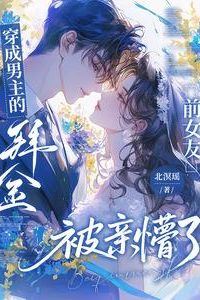
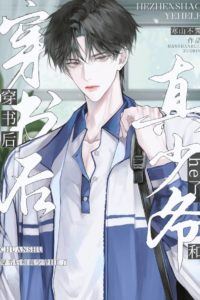
After being read, the real young master became my wife
Novel Info

Summary

... Read More
Chi Yi, a college-bound student from the modern world, finds himself transmigrated into a novel as Chi Yi, the cannon fodder fake young master in a story about swapped identities. In the original narrative, this character is destined to antagonize the true young master, Shen Ge, through bullying and sabotage, ultimately leading to a vegetative state after a drag racing accident. Armed with knowledge of the plot, Chi Yi resolves to avoid the protagonist and survive his senior year of high school with minimal interference. However, his plans are immediately disrupted when Shen Ge arrives at the Chi family home. Shen Ge, raised by working-class parents after his father lost his job, agrees to return to his biological family to help alleviate their financial struggles. He expects hostility from his new brother but is met with an unexpected reaction; Chi Yi, upon seeing Shen Ge, internally comments on his cuteness and later reveals through his inner monologue that Shen Ge resembles his future boyfriend. This telepathic link allows Shen Ge to hear Chi Yi's thoughts, creating a confusing but pivotal connection between the two.

The core conflict arises from the tension between Chi Yi's desire to stay invisible and the inevitable plot points that threaten to pull him back into the original storyline. When the Chi parents decide to transfer Shen Ge to their prestigious but toxic school, Yinghua, Chi Yi initially objects, knowing the environment will harm the protagonist. Despite his protests, the transfer proceeds. At Yinghua, Shen Ge faces immediate isolation and bullying from students like Wei Zexiao, who had previously tormented Chi Yi. Instead of retreating, Chi Yi confronts Wei Zexiao directly, reversing the power dynamic by humiliating the bully and protecting Shen Ge. This act of defiance marks a significant deviation from the original plot, as Chi Yi chooses to shield the protagonist rather than harm him.

As the story progresses, the relationship between the two young men evolves. Shen Ge, noticing Chi Yi's poor academic performance despite a decent foundation, offers to tutor him. Chi Yi, initially resistant due to fear of altering the timeline further, eventually accepts. Their time together on the school rooftop, away from the hostile classroom environment, fosters a genuine bond. Shen Ge's kindness and Chi Yi's protective nature create a dynamic that contrasts sharply with the antagonistic relationship depicted in the novel. Meanwhile, Gu Hongguang, the original male lead who typically swoops in to rescue Shen Ge, finds himself sidelined by Chi Yi's interference. Gu Hongguang's attempts to connect with Shen Ge are rebuffed, further disrupting the established narrative flow.

The narrative reaches a turning point when Wei Zexiao escalates his bullying by placing dead rats on the desks of both Chi Yi and Shen Ge. Chi Yi responds by physically retaliating and documenting the incident, sending evidence to his father. The Chi patriarch's furious intervention at the school forces Wei Zexiao's family to apologize, effectively neutralizing the immediate threat. This event solidifies Chi Yi's role as Shen Ge's protector and deepens their connection. Shen Ge begins to understand that Chi Yi is different from the cruel character described in rumors, while Chi Yi struggles with his growing affection and the strange telepathic link that reveals his own subconscious desires.

The story moves toward a resolution where the original tragic ending is averted. Chi Yi's conscious choice to support Shen Ge rather than oppose him changes the trajectory of their lives. The academic tutoring sessions and shared moments of vulnerability replace the hostility of the original plot. By the end of the provided chapters, the two are navigating their senior year together, with Chi Yi committed to ensuring Shen Ge's success and safety. The telepathic connection remains a unique element, forcing both characters to confront their true feelings and the reality that they are no longer bound by the novel's predetermined fate. The narrative shifts from a story of rivalry to one of mutual support and emerging romance, setting the stage for a future where the cannon fodder and the protagonist forge their own path.

Latest Release
DateGroupRelease
2026-08-11shanghai fantasy c70
2026-08-11shanghai fantasy c69
2026-08-11shanghai fantasy c68
2026-08-11shanghai fantasy c67
2026-08-11shanghai fantasy c66
2026-08-11shanghai fantasy c65
2026-08-11shanghai fantasy c64
2026-08-11shanghai fantasy c63
2026-08-11shanghai fantasy c62
2026-08-11shanghai fantasy c61
2026-08-11shanghai fantasy c60
2026-08-11shanghai fantasy c59

Community Reviews

Rating(4.2 / 5.0, 13votes)
5 stars
6(46%)
4 stars
3(23%)
3 stars
4(31%)
2 stars
0(0%)
1 stars
0(0%)

Popular reviews

... Read More
That equipment room scene with the mouse—holy shit, I laughed so hard. But seriously, it's the most revealing moment in this entire batch. Tian Zihao, who we've seen as kind of a goofball, ends up responsible for feeding Dafu the cat. When that fat mouse appears, his reaction is pure comedy gold. But watch Chi Yi: he doesn't just protect Shen Ge emotionally, he physically steps in front of him, kicks the mouse, and then quietly takes responsibility for the ruined cat food. Meanwhile Shen Ge is holding Chi Yi's arm the whole time—not because he's scared of mice, the text literally says he's not afraid of small mice, but because this one was too fat. That's such a specific, honest detail. It shows Shen Ge has boundaries about what grosses him out, and he's comfortable enough with Chi Yi to show it. Then there's the hot water situation. Tian Zihao says he has Chi Yi getting water for him, and Shen Ge gets all flustered. Chi Yi just... agrees. He doesn't deny it. The internal monologue where he's thinking about how Tian Zihao is careless with hot water is peak Chi Yi—practical, caring, but also slightly exasperated. And Shen Ge's reaction of blushing and silently telling him to stop nodding? That's the kind of moment that makes you go 'oh they're definitely into each other.' The whole friend group dynamic is so natural here. Lu Zhiyu complaining that Tian Zihao looks like a thief, the student council member Song Han who's quietly supportive (she paid for cat food too), everyone has their role. And Chi Yi's father—man, the scene where he's trying to make money and his wife has to basically coach him on emotional intelligence? 'The wrinkles in your brain have been ironed flat' is such a brutal but funny line. He's trying so hard to help Shen Ge's family after what happened, but he's terrible at it. His wife is the real strategist here, figuring out how to give them a store without making it feel like charity. That's the kind of parental love that's quiet and practical, not dramatic.
... Read More
Okay I need to talk about Chi's father because HOLY. The man walks in and absolutely DESTROYS the head teacher with pure financial power. 'I donated a building to you, and you let others pile dead rats on my son's desk!' — I literally screamed at my phone. And then the follow-up: 'I will donate another building to you, and you will give me ten times as many dead rats!' This man is not playing around. He's out here treating school bullying like a business negotiation where money solves everything, and honestly? It's kind of brilliant. But the real gem is the arm-slap moment. Father Chi slaps Chi Yi's arm for 'only knowing how to swallow your anger' and then Shen Ge has to awkwardly explain that Chi Yi DID fight back — he just returned the dead rats onto Wei Zexiao's school uniform. Father Chi's silence after that explanation? Priceless. You can almost hear the gears turning. And Shen Ge! The boy is so earnest about tutoring Chi Yi, pulling out his precious mini notebook like it's a treasure. When Chi Yi teases him about it being a 'gift' and Shen Ge gets all flustered trying to grab it back — this is the kind of detail that makes their relationship feel SO real. It's not dramatic or forced, it's just two kids being awkward and caring in their own ways.
... Read More
The author dropped this one detail and I immediately pictured the whole scene: 'Did you renovate this? It looks very good.' / 'My father donated it.' ...pause... 'Your father donated it.' Chi Yi's internal scream — 'This is such a cliché. If he continues like this, he will have to go to the supermarket entrance and spend five dollars to buy a rocking car to ride himself!' — but the external world they've built feels so grounded. The rooftop isn't just a backdrop; it's a character in itself. A place where the protagonist can breathe, where the social hierarchy of the school temporarily doesn't matter. And then there's the office scene with Father Chi. The image of him slamming the table, the head teacher's bitter smile resisting the temptation to push the bank card back, the absurdity of discussing 'ten times as many dead rats' like it's a catering order — this world operates on its own logic where wealth is both armor and weapon. The school is described as 'Yinghua' and the car is a 'Kalai' (clearly a stand-in for something luxury), and the author's little meta-joke about copyright warnings made me laugh out loud. The dead mouse at Wei Zexiao's feet at the end, being picked up by the younger brother with a piece of paper like some grotesque ceremonial object — that's the kind of visual that sticks with you.
... Read More
Dafu the cat is everywhere in this batch, and I think he's more than just a cute pet. He's the thing that brings the friend group together, the secret they're all protecting. The cat food gets ruined by a mouse, and Chi Yi offers to buy new food with his rarely-used pocket money. But the group refuses to let him pay alone—they split the bill, saying they'll pay him back with New Year's money. Dafu becomes this symbol of collective care, something worth protecting together. Then there's the store. Chi's mother wants to buy a shop for Shen Ge's parents, but she has to coach her husband on how to do it without making it feel like charity. 'Can't you take it and then tear up the IOU quietly, and then find an excuse to return it to them later?' That's such a specific kind of love—the kind that preserves dignity while offering help. The store represents stability, a future, a guarantee. 'Having a store of their own is more or less a guarantee'—that line about the children needing money for school in the future. It's practical help wrapped in emotional intelligence. The sports meet is another layer. Chi Yi signing up for the 5,000-meter race, Shen Ge for the relay. After September, the weather gets colder, the college entrance exam approaches. This is their last sports meet in high school. There's something bittersweet about that—these boys are running toward an end, toward separation, toward different universities. The physical training becomes a metaphor for everything they're preparing for: endurance, teamwork, pushing through discomfort. And Chi Yi's internal thought—'It's better not to let him run 5,000 kilometers'—shows how protective he is, how he's already calculating risks for Shen Ge's safety. The themes here are all about care, about how people show they love each other through practical actions rather than words. The father who can't figure out emotional intelligence, the mother who does, the friend group sharing cat food costs, the boys sharing hot water duties. It's all about the weight of caring for someone.
... Read More
'Love cannot withstand comparison. The tighter Chi Yi held on, the less love he received.' This line absolutely wrecked me. It's the thematic core of this entire chapter, and it's delivered so quietly—almost like an afterthought—but it's carrying so much weight. Let me talk about the symbolism here because it's everywhere. The nickname 'Youyou'—which apparently means 'spicy' (as in the little parrot doll Chi Yi is holding)—this is such a rich symbol. Shen Ge is embarrassed to share it because Chi Yi had lewd thoughts, yes, but it's also about vulnerability. A nickname is something intimate, something only your family calls you. And here Chi Yi is, the person who's been living as Shen Ge's friend, about to learn this secret part of him. The plush cockatiel in his hand becomes this weird bridge between innocence and something more complicated. Then there's the food symbolism. The braised pork with bamboo shoots—'the dish they all like very much'—is Mother Shen's best. She made it specifically for Chi Yi, trying to welcome him, trying to make him feel at home. But Chi Yi knows he's a guest in a story that isn't his. The food is love, but it's also a reminder of everything he can't have. And the plants on the balcony—Clivia, growing well despite the small space. The Shen family is struggling, running a night market stall, but they're still nurturing life. They're still trying. Meanwhile, Chi Yi is trapped in a narrative he can't change, holding onto a family that will never truly choose him the way the Shens choose Shen Ge. The contrast between the two households isn't just about wealth—it's about who shows up, who worries, who waits.
... Read More
Okay, I have to talk about this one scene because it just hit me right in the feels. When Chi Yi walks into the Shen family home, the author doesn't just describe a house—they describe a LIVING, breathing space. The kitchen sounds alone are enough to make you smell the food. I'm talking about the 'loud voice of Shen's mother' shouting from the kitchen, the 'lively sound of spatulas' coming from behind the door, and then the braised pork with dried bamboo shoots being brought out like it's the main event of the century. And the house itself! 'A few steps from the living room led to the balcony, where several pots of green plants were placed on the ground.' That detail about the Clivia plant is so specific and grounding. Chi Yi 'had never grown flowers before, but knew that one of the pots was a Clivia, which looked to be growing well.' This is the kind of detail that makes you feel like you're actually sitting on that sofa, picking up a plush cockatiel from the corner, watching this family interact around a dinner table. What I love most is how the author uses the domestic setting to tell us everything we need to know about this family without a single exposition dump. The oil spots on Mother Shen's hands. The way she tugs at her apron nervously. The newly bought slippers placed in front of Chi Yi. The soju bottle appearing on the table. Every object, every sound, every gesture builds this world where these people are poor but warm, where love is expressed through food and concern rather than grand gestures. It's cinematic in the best way—like the camera is panning across the room, catching small details that add up to something whole.
See all reviews

Characters

See all characters

Custom lists

See all custom Lists