Rosetta
+Add to Custom List
Genres:
Novel Info
  • Author:
  • Status:Ongoing

Summary

... Read More

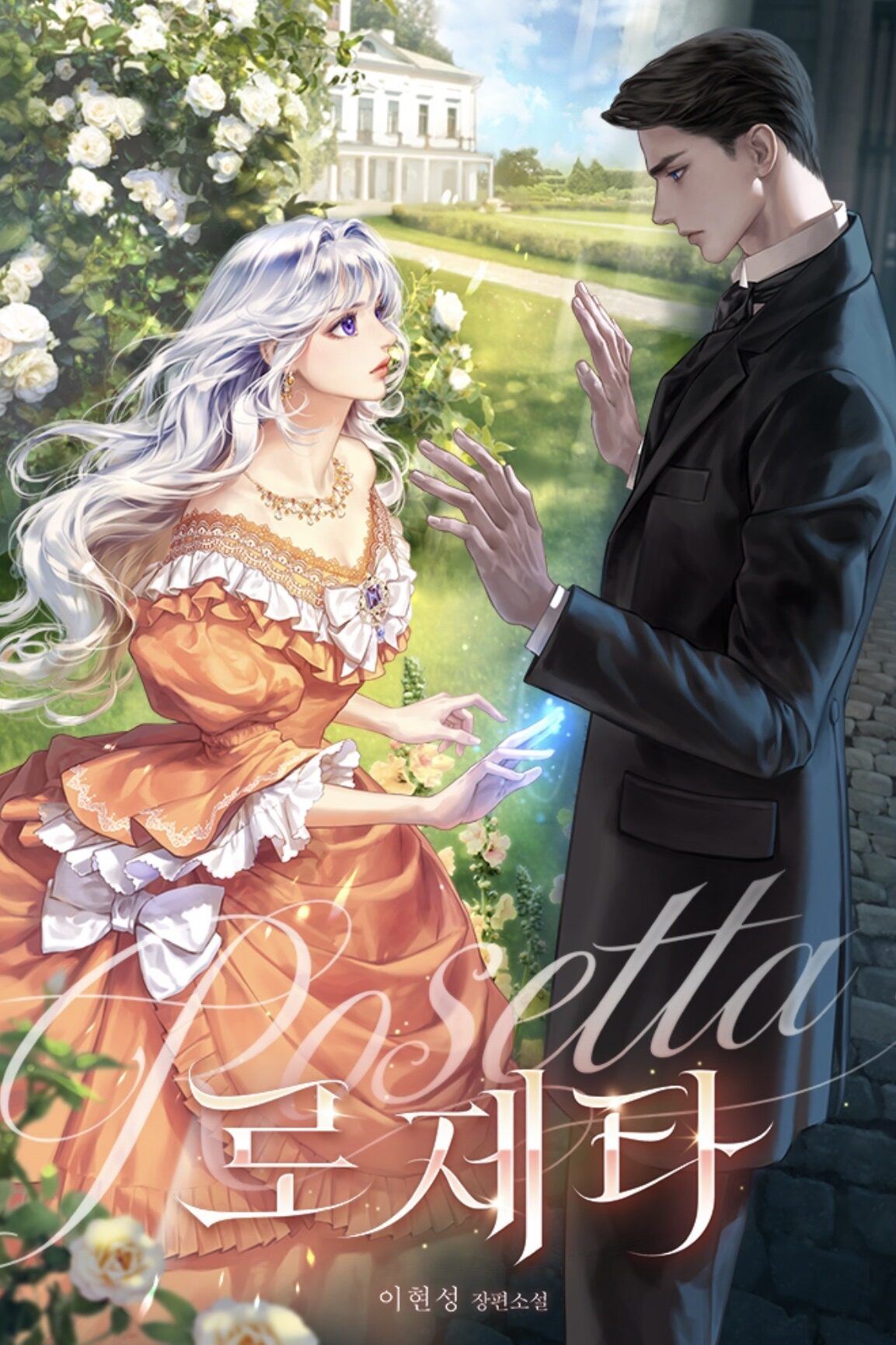
Rosetta Montero, the adopted daughter of Marquis Montero, has endured a decade of abuse and neglect after her adoptive family discovered she was not their biological child. The truth emerged when the Marquis learned that magic was hereditary, having switched his newborn daughter with the infant of the late Viscount and Viscountess Enervel to secure magical blood for his own lineage. Now, condemned to marry Kaelion Eizenwald, the exiled Grand Duke of the eastern Land of Monsters, Rosetta prepares to leave the only home she has ever known, carrying a heart hardened by ten years of silent suffering and unrequited longing for love.

The wedding carriage that arrives is a grim, steel-forged vehicle pulled by black stallions, adorned with claw marks and radiating an oppressive aura. Louis Silvaren, the Grand Duke’s commander, escorts Rosetta to her new life. As she departs, Rosetta reflects on the Montero family’s indifference—her adoptive father offers only cold wishes for safe travel, while her sister Vivianne masks her mockery with feigned concern. Rosetta has accepted that no apology will ever come, and she resolves to repay their kindness in her own time, driven by a deep-seated hatred born from their failure to show even basic decency during her formative years.

The journey to the Grand Duchy is treacherous, crossing through territories where monsters roam. Rosetta witnesses the massive magical barrier that protects the continent from the eastern threats, now cracked and crumbling with age. Upon arrival at the Grand Duke’s castle, she is stunned by the warmth of her new room—a sunlit, spacious chamber with a fireplace, a stark contrast to the damp, moldy storage room she endured at the Marquis’s estate. The servants, though cautious, treat her with impeccable politeness, their primary concern being whether she will endure the harsh land or flee in despair.

Rosetta’s meeting with Grand Duke Kaelion shatters her expectations. Far from the disfigured monster of rumor, he is breathtakingly handsome, casually charming, and surprisingly considerate. He gifts her a ring set with a rare Celea gemstone, offers her the freedom to live as she pleases within her allowance, and gently teases her about falling in love with him. His kindness is genuine, and for the first time, Rosetta experiences uncalled-for consideration. This unexpected warmth plants a seed of doubt in her singular focus on revenge, though she quickly reasserts her purpose: to bring the Montero family down from their heights of power.

As Rosetta settles into her role as Grand Duchess, she discovers her magical talent: alchemy. She awakens the ability to manipulate materials through precise formulas, transforming stone into ice and purifying monster blood without incantations. This rare gift, unseen in centuries, allows her to begin experimenting with monster corpses, aiming to create both medicine and poison. Her goal is twofold: to strengthen the Grand Duchy and to amass knowledge that could one day be used against her enemies. Meanwhile, Vivianne Montero, consumed by envy over Rosetta’s beauty and the Celea ring, plots to undermine her sister, believing Rosetta’s fate in the monster-infested east is a punishment she rightly deserves.

The story unfolds as Rosetta navigates her new life, balancing her growing affection for Kaelion with her secret agenda for vengeance. Kaelion, aware of Rosetta’s hidden pain and scars, chooses to support her rather than judge her, hoping she will find happiness in the land of monsters. Together, they face external threats from monsters and internal political intrigues, while Rosetta’s alchemical genius begins to transform the Grand Duchy’s fortunes. The narrative explores themes of found family, redemption, and the destructive power of unresolved trauma, as Rosetta slowly learns that revenge need not consume her entire existence.

Key turning points include Rosetta’s realization that Kaelion’s kindness is sincere, her discovery of her unique alchemical abilities, and her decision to use these powers to benefit the Grand Duchy while maintaining her covert plans against the Monteros. The story direction suggests a gradual shift from pure vengeance to a more complex relationship with Kaelion, as Rosetta discovers that happiness and justice are not mutually exclusive. Her journey is one of healing and empowerment, as she transforms from a victim of circumstance into a formidable force capable of reshaping her destiny and the destiny of those around her.

Latest Release
DateGroupRelease
2026-10-03dusk blossoms c22
2026-10-03dusk blossoms c21
2026-10-03dusk blossoms c20
2026-10-03dusk blossoms c19
2026-10-03dusk blossoms c18
2026-10-03dusk blossoms c17
2026-10-03dusk blossoms c16
2026-10-03dusk blossoms c15
2026-10-03dusk blossoms c14
2026-10-03dusk blossoms c13
2026-10-03dusk blossoms c12
2026-10-03dusk blossoms c11

Community Reviews

Rating(0 / 5.0, 40votes)
5 stars
0(0%)
4 stars
0(0%)
3 stars
0(0%)
2 stars
0(0%)
1 stars
0(0%)

Popular reviews

... Read More
Okay let me just say — this opening acts as a one-two punch that absolutely wrecked me. You start with a wedding that feels like a death sentence, right? Rosetta is being shipped off to the Land of Monsters, and the whole Montero family is dressed up in concern while really just gawking at the Celea ring like vultures. Vivianne literally pretends to be Rosetta for a hot second when Louis shows up. That moment had me yelling at my screen. But then — BAM — the backstory drops. The child swap. The murdered real parents. The fact that Rosetta's entire existence was built on a lie, and she didn't even get the courtesy of a sorry from the people who stole her life. 'I gave them enough chances.' That line sits in my head like a loaded gun. And the pacing? Genius. The author doesn't info-dump the whole truth at once. You get fragments first — the cold 'Travel safely' from the Marquis, the dismissive silence from the Marchioness — and only later do you connect the dots about what they actually did. By the time the backstory fully lands, you're already too invested to look away. Then the monster attack hits mid-journey and I was genuinely startled. The carriage that looked like it belonged on a battlefield turns out to be armored — that detail pays off immediately. And Louis, covered in blood but calm as ever, says 'It's not my blood' like it's nothing. Who IS this man?? Also the worldbuilding is woven so smoothly into the plot. The wall that's crumbling, the declining magic, the Day of Moonlit Protection — none of it feels forced. It all connects to why the East is the way it is and why Rosetta's marriage matters beyond just being a political move.
... Read More
Okay I need to talk about the scene where Kaelion gives Rosetta his robe. Like. Seriously. "You'll catch a cold. Just keep it." That's it. That's the entire line. And yet it hit me like a freight train. This man who sleeps outside because he feels guilty about his mother being trapped in ice, who maintains such calculated distance from everyone—including his own wife—removes his robe and drapes it over her shoulders without even thinking about it. And Rosetta! She was about to protest, got flustered, tried to give it back, and he literally pressed his finger against the back of her hand to stop her. Not her palm. The back of her hand. So specific. So intimate without being overtly romantic. "Those simple words felt unbearably warm." She pressed her lips together and held the tears back. I am NOT okay. What makes this even more devastating is knowing WHY he sleeps outside. His mother is still alive somewhere in the Imperial Palace, frozen in ice that will never melt. He couldn't save her. He was forced to kneel to his brother. And now every comfortable night he spends in a proper bed feels like a betrayal. So he sleeps under trees. And yet here he is, making sure Rosetta isn't cold. He told her not to come looking for him too often. He pushed her away at every turn. But when she sat beside him, he shifted slightly to make room. He let her lean against the tree. He didn't move away when her arm brushed his. These people are so bad at expressing anything normal lmaooo
... Read More
"A woman who wept openly in front of him. A woman who no longer concealed her feelings behind carefully constructed walls. For some reason, this sight brought him a quiet sense of relief." I need to sit with this for a second because THIS is the emotional core of the entire relationship and the author just served it to us in one paragraph. Kaelion's entire motivation isn't revenge. It isn't political strategy. It isn't even love in the traditional romantic sense — not yet anyway. It's that he wanted SOMEONE to be able to live freely in this harsh land, and the person he chose was the girl who couldn't cry when she needed to. The fact that she CAN cry now, in front of him, means she feels safe. That's it. That's the whole damn romance. And the way their dynamic has evolved is so satisfying. Remember how distant and formal he was in earlier chapters? "Your Grace" this, "Your Highness" that. But watch how he says "my wife" casually when Belkar is having a meltdown about the healing ointment. Three words. No fanfare. Just stated as fact. He's already claimed her in his head long before anyone else figured out what she is. Meanwhile Rosetta — she went from the Marquis's neglected adopted daughter to someone standing at her workbench casually creating miracles while the court mage kneels at her door. The power dynamic hasn't just shifted, it's been completely inverted. And she's not gloating about it. That's what makes her compelling. She doesn't need to gloat. The evidence is right there in front of everyone.
... Read More
OK I need to talk about the crying scene because my heart is ACTUALLY hurting right now. Rosetta has been through such trauma—beaten, pricked with needles, burned with hot skewers—and the Marchioness would then HUG her and call it love. THAT IS ABUSE, people. So when Kaelion just says 'Do not hurt yourself. Ever.' with that voice going quiet and serious, Rosetta just loses it. She literally can't stop the tears because NO ONE has ever looked at her wounds and told her she didn't have to suffer. Not once. And Kaelion doesn't try to touch her or fix it, he just says 'Take your time. The night is long, and I have nothing to do tomorrow.' That line DESTROYED me. He's giving her permission to fall apart with zero conditions. No 'be a good girl,' no 'you deserved it for misbehaving.' Just... you can cry. And then later when he tests the poison himself and she rushes to heal him, and she's wearing this stupidly proud puppy face? That's the moment where I realized they're genuinely falling for each other and I was screaming internally. The way he remembers her as a child—the girl who fell and didn't cry, the girl who swallowed her tears alone—and now she's crying BECAUSE someone finally saw her.chef kiss. This CP is so good it hurts.
... Read More
The symbolism in this chapter is layered and I'm obsessed with it. First: the rose. Rosetta literally names her brand 'Rosa' and says 'To some people, a rose is a beautiful flower. But to others, it becomes a thorn that draws blood before they even realize they've been pricked.' This is HER manifesto. She's not just making medicine—she's building a weapon. The Montero family thought they could discard her, hurt her, treat her as less than human. Now she's going to become something they can't control, something beautiful AND dangerous. A rose with thorns. Perfect. Second: flowers in darkness. Kaelion's mother told him 'Flowers bloom even in darkness' and he's been haunted by it—'No flowers ever seem to bloom in my darkness. Am I simply unable to see them?' This mirrors Rosetta's entire existence. She's been in darkness her whole life—abuse, isolation, poverty—and yet she creates healing. She creates beauty. She blooms in conditions where nothing should survive. And Kaelion, who thinks he can't see flowers, is the one who finally recognizes hers. Third: self-harm and healing. The cycle of Rosetta wanting to test on herself (because that's what abused children do—we learn to inflict pain on ourselves), Veloa stopping her, Kaelion telling her NEVER to hurt herself, and then the ointment that heals instantly. The physical healing mirrors the emotional one. She's learning that her body deserves protection, not punishment. That wound can close without her having to earn it.
... Read More
"Grandpa, you're going to die at this rate." Said while Rosetta is performing magic that Belkar calls a miracle. Said with zero filter, zero warmth, zero concern for anyone's feelings. This is Veloa at her finest. And then later: "You'll probably want to see my face again, but don't come looking for me too often." Kaelion says this like it's a threat. Like he's pushing Rosetta away. But the narration immediately undercuts it: "Unlike the cold boundary he had drawn with those words, he was always surprisingly generous." He makes room for her. He gives her his robe. He lets her lean against him. Every word he says is distance; every action he takes is closeness. I love how differently these two characters communicate. Veloa speaks her thoughts directly, rudely, without any social calibration. Kaelion speaks in carefully measured statements that mean the opposite of what he's saying. One is honest to the point of cruelty. The other is cruel in the name of protection. And Rosetta! Her dialogue is so disarmingly plain: "It just... happened." "There aren't really anything I can teach you." "I suppose it's difficult since it's my first time trying it." She has five mana circles and cannot cast a single incantation-free spell without straining, and her response is basically "sorry I can't help you, hahaha my bad." The way she apologizes for being extraordinarily gifted is both hilarious and genuinely characteristic of someone who spent most of her life alone and never learned how to claim her own worth. Even the knights' dialogue is great—pure comic relief: "It must've been a dream." "But aren't we already asleep?" They literally cannot accept reality and choose humor as an escape mechanism. Classic.
See all reviews

Custom lists

See all custom Lists