Richard Lyleberg’s Regret - Reviews

Richard Lyleberg’s Regret
+Add to Custom List
Sort
Add review
... Read More
I cannot stop thinking about the gloves. The text literally spends time describing how they were made with utmost devotion by an artisan family spanning generations, and then immediately says they wrapped around Richard's hands like an iron fortress. What a description. These gloves are armor and status symbol and vulnerability all at once. Because here's the thing—Richard comes back from brutally dismantling Lady Klein, the woman who tried to scratch his face with a parasol tip, and what does he do? He sits down in front of Katarina wearing the kindest expression he could produce. The text says 'Katarina Dietze made him that way.' That line hit me like a truck. This man just threatened someone's unborn child and casually revealed his mother's affair, and within seconds he's softening because SHE looks at him with those dark worried eyes. But also—can we talk about how BOTH of them are performing? He puts on kindness like a mask, and she pretends not to hear the nobles mocking her so she doesn't make HIM uncomfortable. They're both protecting each other through deception and it's devastating. And then he catches her arm when she tries to rush off to treat his wound, and says 'Are you telling me to spend hours without you, Katarina Dietze?' with complete indifference to everyone staring. He's drawing a line in the sand right there in front of half of Ordell's nobility. I'm not okay.
... Read More
I keep coming back to how the dialogue works on multiple wavelengths simultaneously. Let me give you the bracelet exchange as a case study because it's basically a masterclass in subtext: Katarina: "I don't need it. And I have nowhere to go wearing it." Translation: I don't believe I deserve this. I'm still thinking about how to escape, not how to exist in luxury. Duke: "Wear it when you bathe." Translation: I'm going to keep offering you things until you stop treating them as threats. Katarina: "That joke goes too far." Translation: I don't know how to handle someone who takes me seriously. Duke: "With you, Katarina Dietze, I'm always serious." Translation: This isn't a game to me. That entire conversation is about power, but not the crude kind. It's about who gets to define reality. He keeps reframing her refusals as hesitation rather than conviction. She keeps reframing his gifts as obligations rather than generosity. Neither is wrong — they're just speaking different languages. Then the dialogue shifts completely when we get to Sandra Dietze. Her lines are all weapons: "Wake up, you foolish girl." "When do you think the young Duke's heart might turn away from you?" "You should be holding on tight while you still have his attention." Every sentence is designed to induce panic. There's no warmth, no parenthood — just calculation disguised as concern. And Richard's dialogue? Sparse. Cold to everyone except Katarina, where it becomes urgent and raw. "Handle it like this." Four words, absolute authority. Then later, grabbing the maid's hair and saying "Lower your voice. Your lady..." — he's protecting her even in his rage. The author gives each character a completely distinct voice. You could read a scene blind and know who's speaking.
... Read More
Chapter 10 starts with violence so sudden it almost feels like relief. Richard swings that bottle and the gambling den freezes—not because they're shocked by the brutality, but because they recognize who's doing it. These are men who've been staring blankly at cards, wits gone, chips collapsing in rushes. They know hierarchy. They know that when the young Duke of Lyleberg enters a room, the rules change. The stakes were never about money; they were always about who gets to decide what happens next. Ralph Klein thought he was being helpful. His motivation is almost sympathetic in its corruption—he saw Richard being led around by a woman and decided to intervene, to manipulate the situation for his own gain. But Richard's response isn't proportional to Ralph's actions; it's proportional to Ralph's presumption. The real crime isn't meddling; it's thinking he understood what was happening between Richard and Katarina well enough to interfere. When Richard drags him across the table, when he mentions Grete by name and watches Ralph's struggle stop dead, he's not just defending his honor. He's establishing that some boundaries aren't negotiable. What keeps me up at night is the silence of everyone else. Three university classmates, members of Richard's private social club—they're familiar faces, men who've shared tables and drinks and secrets. And not one steps forward. Not one claims friendship strong enough to risk the Duke's wrath. The chips pile up, the bottles multiply, but loyalty? That's the one thing that collapses first when real stakes appear. Even the den's owner, this schemer skilled enough to lure nobles into his shabby palace, just watches. He knows better than to get involved in family business. And Fred Schroeder in the car, watching Richard's face grow clearer in the streetlamp glow, waiting for an explanation he's afraid to hear. Richard finally offers it: "I beat up a newspaper owner's son." Casual. Factual. Like he's reporting weather. The stakes weren't just Ralph's face or Richard's reputation—they were about what happens when you remind people that some consequences don't get reported in the morning papers.
... Read More
There's a whole language of physical objects running through this chapter that I think deserves more attention than it gets. Let me start with the most obvious one: the jacket. Richard gives Katarina his jacket with the absurd excuse that it's chilly, despite the text explicitly stating it's warm spring weather. This is a lie that everyone in the scene understands except apparently Katarina at first. The jacket becomes this tangible symbol of his protection and his claim—she walks away wearing it, and Sandra immediately recognizes its significance as a victory marker. It's armor and ownership simultaneously. Then there's the recurring motif of hands. Richard's hand catching Katarina when she stumbles. His hand beneath her chin lifting her face. His hand burning from the tea while he checks only hers. Katarina fidgeting with a hangnail. Hands are how this story communicates when words fail, and almost every hand gesture carries this weight of control and care that's impossible to untangle. The seafood disappearing is another layer I can't shake. Katarina's visceral disgust at fish with their eyes intact—this is presented almost comically at first, but it represents something deeper. She can't even face the fullness of what's on this table because she feels she hasn't earned it. The table is set for two people who belong together, and she's eating it like a thief. And heat, heat, heat. The wine dampening Richard's lips, the hot tea, the warmth around Katarina's eyes, the chill of the fountain water. Heat is the physical manifestation of everything neither of them can say directly. By the final scene at the fountain, Katarina is surrounded by it—warmth from his shadow, heat swelling behind her eyes, the whole atmosphere vibrating with unspoken desire and dread.
... Read More
I need to sit with this imagery for a moment because I think the author is building something really deliberate here. The pink diamonds. Vivid. New from the mine. Expensive. Something Katarina instinctively deflects because she doesn't believe she deserves beauty. They're presented as gifts, but they feel like tests — can she accept them without apologizing for taking up space? Can she let herself be adorned without feeling like a fraud? And then — the bruises. Also pink. Also on her skin. Also marks left by someone who supposedly loves her. The visual parallel is too sharp to ignore. One set of pink things is offered with genuine tenderness, wrapped in silk and careful words. The other is inflicted casually, hidden under long sleeves, covered with the excuse of discipline. Both mark her body. Both tell a story about what she's worth to the people around her. The hairpin he places in her hair — he does it himself, carefully, while she lifts her head almost against her will. The earrings he puts on her — she hears them click into place and feels suddenly heavy. These are intimate gestures. He's not just giving her objects; he's touching her, adorning her, making her visible. And she can't look away from the mirror because she's seeing herself through his eyes for the first time — as beautiful, as worthy, as someone worth spending enormous sums on. The grandmother clock in the entrance hall reads seven. Summer days are long. Time stretches. Katarina returns early from an outing and immediately walks into violence. The text keeps reminding us that she has no escape — not from her family, not from her past, not from the role she's been assigned. The jewelry shop is the only space where she can breathe, even if breathing there makes her anxious too. What is this story really about underneath? It's about who gets to decide what a woman is worth — and what happens when someone refuses to accept the answer everyone else has already given.
... Read More
I cannot stop thinking about Ralph Klein. The man has half his scalp shaved and stitches in his head and his first instinct is to read the morning paper with a satisfied smile because finally someone made Richard look bad. And then his sister Grete flings the newspaper at him and he treats it like it's made of gold — "Ralph Klein dusted off the daily paper as though it were something precious" — and rubs his cigar out on Richard's face in the photograph. This man's emotional state is a live wire and the author lets it arc freely. His dialogue with Grete is where his voice really cracks open: "What's the use of me giving you opportunities? What's the point of you feeding him that bastard's schedule day after day?" The word "that bastard" for Richard, who is apparently his own brother? The bitterness is so specific and personal. And then the reveal: "The young Duke is the one who did this to you…?" Ralph confirms it with such casual cruelty, and Grete just spirals into denial. "No way, no way." The repetition mirrors her own fractured understanding of what is happening to her. But the most striking dialogue moment is actually Richard's exchange with Sven. "Butler, have you been watching me since the day I was born?" "Perhaps that is why." And then: "It seems that in your eyes, I still look like a child who cannot even manage his own affairs." This is Richard asserting his dominance over the one person who has seen him since birth, and he does it while calmly adjusting his tie. The calmness is what makes it chilling. The author's narrative voice — that formal, almost gothic prose style — never breaks, and that steadiness makes every eruption of anger feel even more dangerous.
... Read More
I need to talk about this one line because it keeps replaying in my head: "With you, Katarina Dietze, I'm always serious." Said completely flatly while Katarina was making a joke about wearing jewelry in the bath. He didn't laugh. He didn't smile. He just... stated it like gravity. Like it was the most obvious fact in the world. That's either the most romantic line I've ever read or the most terrifying one, depending on whether you're Katarina in that moment (answer: terrified, probably) But here's what got me emotionally — it's not the big dramatic moments, it's the small ones. When she hides her hands behind her back because she's ashamed of how she looks. When she accepts the glass of iced water but nothing else. She's exhausted from existing in her own skin around him. And yet she stays. She keeps coming back even though she doesn't know how to receive kindness. Then the mother scene. Just brutal. Sandra slapping her like it's discipline instead of abuse, and Katarina just... folding. Not fighting back, not crying out — her body just shuts down. That's not acting. That's trauma response. The fact that her mother assumes she's faking it and gets angry at her for being dramatic? I literally gasped. And Richard — when he finds out about the bruises, when he laughs with this blank, hollow sound and then grabs that maid by the hair? The shift from tender to violent in one breath? I love him so much and I'm so scared for Katarina simultaneously. My chest actually hurts from reading this chapter.
... Read More
I need to discuss the dialogue in this section because the author is doing something really clever with Richard's voice. Throughout most of the text, he speaks in controlled, almost courtly language—polite requests, gentle reassurances, measured questions. And then he meets Lady Klein and suddenly we get 'so why the hell did you insult that woman in front of me.' This man who has been practically whispering to Katarina all chapter goes full street riffraff on someone else and the nobles are SHOCKED. The text explicitly notes that such coarse language came from 'the mouth of the heir who would inherit the Duke Lyleberg family' and I loved that reaction shot. It confirms that his gentleness with Katarina isn't weakness or default behavior—it's a CHOICE. He COULD be cold everywhere, but he isn't. His dialogue with Katarina afterward is this beautiful contrast: short sentences, soft questions, that devastating 'Are you telling me to spend hours without you.' He doesn't over-explain, doesn't grandstand. Just a simple statement that carries enormous weight because of everything he just did five minutes ago. And Katarina's dialogue! She stammers. She trails off. She says things like 'Not me, I, it's not me, but Young Duke... here, why, uh, the wound...' The fragmented speech perfectly captures someone whose emotional vocabulary breaks down around the person she cares about most. Meanwhile her mother's dialogue is pure weaponized concern: 'If the young Duke saw you, whatever affection he had would vanish too, child.' Every sentence is a calculation. The voice distinctions between these characters are razor sharp.
... Read More
Let me just appreciate how the author structures these chapters because honestly it's giving major "I have no emotional stability anymore" energy and I love it. Chapter 7 starts at maximum tension — the ball, the stares, the near-collision of gazes, Diana Adler's fake humility, Yulia's goading, and then Richard just... appears. No buildup, no announcement, he walks up and asks for a dance like it's the most natural thing in the world. The silence in that ballroom must have been DEAFENING. The author doesn't even describe it directly — they just show us through the gasps and the distant murmurs and Katarina feeling like she's the only one who exists in that space. Then the dream sequence hits at the end and it's like the author said "what if we just pull the rug out completely" and Katarina wakes up and it's just... lunch preparation with her mother being a menace. The transition from that raw, violent dream to the banality of choosing a dress is jarring in the best way. It mirrors Katarina's experience — she thought she'd processed three years of pain in a dream and then reality immediately undercuts it by treating this like a business meeting. The chapter titles themselves are doing heavy lifting too. "A Dream More Real Than Reality" — already telling you that the dream will expose something the reality has been hiding. "A Belated Apology" — but is it? Is Richard actually going to accept one? The title primes you to expect resolution while the text keeps pulling it further away. Masterclass in structural misdirection.
... Read More
There's so much symbolism packed into these chapters and I'm still not over it. Let's talk about the dresses first, because they're basically the central metaphor for everything. All those gift boxes from Richard, filled with dresses that cover Katarina from neck to toe. On the surface, it's a romance novel gesture—'he's spoiling her!' But read it again and it's clearly about control and construction. Sandra even thinks about it: 'Dressing up the outer shell just as he wanted was no difficult task.' The dresses are a physical manifestation of Richard reshaping Katarina into his ideal, and she's complicit in it because she's grateful for the attention. That line hit me like a truck. Then there's the cigar. So many times in this text—'a half-smoked cigar lay rolling on the floor,' 'he took out another cigar and put it between his lips,' 'a single concise flick, the length of the cigar broke away,' 'the second cigar was crushed out.' The cigar is Richard's instrument of intimidation, his pause button, his way of controlling the tempo of their conversations. Every time it appears, Katarina is smaller, more trapped. And the dream version of him? He's smoking WHILE gripping her arm. The smoke 'drifted over and scattered beside her cheek.' It's suffocating literally and figuratively. The most devastating symbol though is the jewel metaphor. 'It had been a jewel-like feeling she had possessed for the first time in her life. It was so precious, so dear, that she had believed something terrible would happen if she did not protect it.' She loved someone three years ago—Ordell? Hans?—and she called it a jewel. Now she reflects: 'Was this really a jewel in the first place?' The shattered jewel represents everything she lost by choosing the wrong person, and also everything she's risking by choosing Richard. Is this love or is it another kind of trap? The text keeps asking this question without answering it, and that's what makes it so compelling.
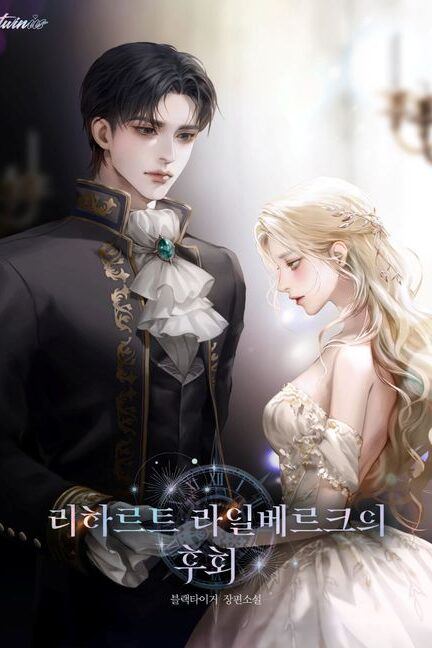
... Read More
There's a recurring image in these chapters that I can't shake—the way red and white play against each other. Katarina's hot back turning cold, the orange sky bleeding into night, then Ralph's blood staining Richard's white jacket, and finally that cigar smoke curling up pale against the darkness. Each color shift marks a boundary crossing: public to private, performance to violence, composure to unraveling. But it's the bottle that haunts me most. Richard snatches up a half-emptied whiskey bottle from the card table where the chips are piling up like a mountain. He doesn't use it as a weapon initially—he just holds it, lets the glass catch whatever light exists in that filthy den. Then he swings. The shards scatter across the table, mixing with the chips, mixing with Ralph's blood. The artificial smile at the corner of Richard's mouth becomes this permanent marker of what he's capable of when someone threatens what's his. And Ralph's sister—Grete. She's never in the room, never seen, but her absence is this constant pressure. She arranged the meeting at the theater, spied on Richard's movements, hoped to entangle her brother with a woman who was already taken. She's the ghost haunting both men, the future that was scripted without their consent. When Richard mentions her name, Ralph's struggle stops dead. Not because he's afraid of Richard—he's afraid of being known. The violence isn't about punishment; it's about exposure. The final image—Fred holding out a handkerchief to wipe blood from Richard's face, Richard ordering the car to the mansion while a newspaper owner's son lies bleeding on a card table—this is the theme crystallized. The aristocracy doesn't just own land and titles. It owns the spaces between violence and consequence, the distances where a shattered bottle becomes just another expense to be managed.
... Read More
Can we talk about how deceptively simple some of these lines are? "I have plenty of time." That's it. That's the line. He says it while checking his pocket watch like he's being casual, but the way he pulls her into the shop—it's possessive, tender, and completely oblivious all at the same time. The Duke doesn't know she's injured. He doesn't know about the maids. He just sees her stopping at a window display and decides she deserves the necklace. His dialogue throughout is so calm and measured, it's almost comical how unhurried he sounds when she's internally screaming. And Laura's dialogue! The shift from "You're going to marry him, right?" with that desperate, hopeful energy to "You wicked woman" when the answer comes—that reversal is chef's kiss. The way Laura says "It was my first time seeing the young Duke smile like that" hits different because we, as readers, have also been waiting for glimpses of this man's softer side. Laura becomes this weird mirror—she sees something real in him too, and it destroys her when she realizes Katarina won't capitalize on it. The clerk's polite "Welcome" and "This way, please" in the VIP room is almost comedic in its normalcy, right? Like the world keeps spinning properly for everyone except Katarina.

Leave a comment

You must be logged in to leave comments. or
