Richard Lyleberg’s Regret - Reviews

Richard Lyleberg’s Regret
+Add to Custom List
Sort
Add review
... Read More
Okay so let me just say this — the author really knows how to drop a bomb and then make you sit with it for a whole chapter. The banquet scene? That was like watching a slow-motion train wreck where everyone in the crowd is taking bets. You've got Diana Adler, all prim and proper with her "we only had a meal together once" denial, while Yulia is practically throwing her into Richard's arms like she's conducting a live operation. And then Richard just... ignores all of it and walks straight to Katarina. Not even close. Straight to her. Like the entire ballroom had been background noise and suddenly it wasn't. But the real plot twist — and I don't mean a cheap one, I mean the kind that rewires everything — is the dream sequence. Three years. Three years of silence, and in a dream his composure shatters into black dust. "What did I lack compared to that bastard painter?" That line absolutely gutted me. It's the question Richard never got to ask, and now we're hearing it for the first time. The author is doing something clever here by splitting his real reaction from what he showed at the ball. At the ball he's polite, almost gentle. In the dream he's raw, furious, broken. Which version is the real Richard? That ambiguity is going to haunt the rest of the story, I can feel it. And then — bam — morning comes and it's just Katarina needing a dress because her mother has apparently decided this lunch is a tactical operation. The plot isn't just moving forward, it's spiraling, and I am HERE for it.
... Read More
There's this one detail that absolutely broke me—the dust. Laura comes in and says "Oh my, there's so much dust here" and smiles like nothing's wrong, wiping down a surface that hasn't been touched in days. That single line tells you the entire economic collapse of the Dietze estate. Servants stealing spoons, running away, the mother weeping in her room, the father bedridden. None of that needed a giant exposition dump because the DUST ON THE NIGHTSTAND does the job. And the jewelry shop scene! The white walls "so white one might be afraid to touch them," the chandelier "of the sort one might expect only in a ballroom," the oak door with its rich grain. Every detail screams wealth and excess, and Katarina is standing in it with hidden bruises, trying to play the part of a girl who just happened to admire a diamond necklace. The contrast between the pristine, airless luxury of that VIP room and the grime of her actual living situation is brutal. Plane Tree Road at dawn—she runs there the same way she did three years ago when she left Ordell. Same road, different life, same desperation. The author keeps bringing us back to that image like a ghost motif, and it makes the whole world feel layered with history and repetition.
... Read More
"From now on, call me Katarina." That's it. That's the entire love confession of Chapter 1. Three words and I was wrecked. Think about what she's doing here. She's a count's daughter who's spent her whole life being called "My Lady"—a title, a status, an object in a system. And she runs across the country in the dark, through the night, to reach someone and the very first thing she asks for is to be called by her *name*. Not her title. Just her. Katarina. Kata-rina. She has to practically teach him how to say it. And Hans says it like it's difficult. Like her name is something heavy for him to carry. And she takes his hand anyway. That scene haunts me. Because by Chapter 3, we know it ends in ruin. The jewels run out. The love runs out. She's back at her family's decaying mansion with a corset meant for a child being strangled around her ribs, and her mother telling her to do whatever it takes to catch the man she turned down. The tragedy isn't just that she failed—it's that the version of herself who could say "call me Katarina" with such bright certainty no longer exists. The corset metaphor is doing so much work here. Literally and figuratively compressing her, making her fit into something she was never meant to be. Her body is being reshaped for a performance, just like her reputation is being rewritten for the ball. I keep coming back to this line: "Her hands were too shabby and inadequate to hold someone else's." She literally can't even believe she deserves Richard anymore. After three years of hardship, the romance isn't just dead—it's been replaced by shame. And that's the most devastating emotional beat in the entire prologue.
... Read More
Let me just sit with the Schwenk mine collapse for a second. Viscount Schwenk tried to sell an EMPTY iron mine and got arrested for fraud. That's the inciting incident that cascades into everything. Her father collapses. Creditors swarm. Servants steal and flee. Katarina runs to the Duke in the middle of the night because her entire world just imploded. And then—plot twist within a plot twist—the maids turn on HER because they saw the Duke's rare smile directed at her and now they think marriage is actually possible. Their hope curdles into violence when it's dashed. The timeline is doing heavy lifting here. Three years ago she left Ordell. Now she's back running the same road, desperate again. The parallel isn't accidental. Something about this man and this situation is a loop she can't escape. And that ending with the Duke kneeling to check her foot for a pebble—what a turn. He's being genuinely caring, genuinely attentive, and the reader is dying because we KNOW there's no pebble. We KNOW she's hiding injuries. The gap between his perception and reality is the entire engine of this story's tension. Every kind thing he does is also a wound. That's brilliant, honestly. Pain dressed up as romance.
... Read More
Let me just say this: the moment where he kisses her fingertips? I actually had to put the book down for a second. Because here's this guy who just got injured — Katarina literally clawed at him — and his first instinct is "Don't get hurt. And don't be in pain." Not "why did you hurt me," not even "are you okay" in a dismissive way, but genuinely, quietly, looking at her wound first. That's the Duke Lyleberg for you. He doesn't perform care, he just does it. And Katarina's reaction? Her heart racing, her neck flushing red, avoiding eye contact — she's so overwhelmed by affection she doesn't know how to process it. She keeps fleeing, keeps shrinking. Classic pattern. But then we cut to Sandra Dietze slapping her daughter across the back like it's nothing, and I swear my blood boiled. "Why are you acting so relaxed when his attention could leave anytime?" — this woman views her own daughter as an investment that needs continuous returns. She doesn't see Katarina as a person, she sees her as a failed stock. The most chilling part? When Katarina collapses after being struck, her first thought isn't to check on her daughter — it's resentment. "She's making me into a wicked mother." She's upset about the optics, not the harm. That contrast between the two men in Katarina's life — one who notices every bruise and one who inflicts them casually — is the relationship dynamic this whole book is built on. And then Richard finding those bruises on her body, realizing someone else put them there... I need to talk about this more because honestly the escalation from tender jewelry shop to "who dared touch what's mine" is giving me whiplash in the best way. This book is honestly so good at showing us what healthy versus toxic care looks like through parallel scenes. No words needed.
... Read More
Okay so the harassment subplot with the maids. THE MAIDS. How is Katarina supposed to function when women who can't even knock without permission are bursting into her room daily? And what's worse—they hit her in places her corset covers. This isn't just awkward social tension, this is straight-up abuse and the Duke has literally no idea. He's out there buying her diamond necklaces while she's sitting there white-knuckling through pain, pretending she stopped walking because she spotted jewelry. The moment where Laura grabs her arms and digs her nails in until Katarina bleeds—that was the most visceral scene in this whole batch. Laura goes from warm maid to feral in like three seconds. Her kids are waiting for money. Everyone in that mansion is desperate, clinging to coins, and Katarina is just... stuck between a Duke who doesn't understand and staff who see her as their last lifeline. And Lyleberg! Sweet summer child walking beside her saying "I have plenty of time" like everything is fine. The dramatic irony is making me clutch my chest. He pulled her into that shop by the hand, whisked her into a VIP room, and she's there thinking about how her bruised side is throbbing under layers of fabric. The tension between what he THINKS is happening and what ACTUALLY is happening is unbearable.
... Read More
Okay let's talk stakes, because on the surface this looks like a romance with some drama but the conflicts running underneath are actually pretty layered and genuinely dangerous. On the social level: Katarina is already the fallen woman. She ran off with another man, broke an engagement to the most powerful duke in the empire, and now she's showing up at a ball in a worn carriage while everyone watches her like she's already dead to society. Her mother knows this and is treating the lunch as damage control — a performance to recapture favor. That's a survival-level stake, not just a "will they-won't they" level. On the interpersonal level: Richard is doing something genuinely unpredictable. He could've ignored her. He could've sneered. He could've used this as revenge. Instead he asks her to dance, walks her out, protects her from the crowd, and says he only ever watched her. What does that MEAN? Is he setting her up for something worse? Is he genuinely softening? The ambiguity IS the tension — we don't know what weapon he's carrying, and that's scarier than outright hostility. And internally? Katarina can't even look at him without feeling like she's committing a sin. She's drowning in shame AND fear AND this weird hope that maybe, just maybe, he actually means what he said. Her stomach ache from the morning isn't just nerves — it's her body reacting to the fact that she has to walk into a room with the man whose face she dreamed about and pretend she's not absolutely terrified. The stakes keep escalating and I cannot look away.
... Read More
I need to talk about Hans because my feelings are complicated. On one hand, the early years with him read like pure romance—him whispering that taking care of her is his joy, the coastal village, the laughter over burned food. It's soft and warm and honestly makes you believe in love. But then the jewels run out and his paintings don't sell, and slowly, so quietly, he starts treating her like a burden. "If I were alone, I could have managed somehow…" That line is absolutely murder. It's not dramatic, not shouted—just said occasionally, like a sigh. But it's the moment the love story curdles. Meanwhile, Richard hasn't even entered the room yet and I'm already obsessed. He's described with this almost supernatural beauty—"a mask shaped by God with the utmost care"—and he hasn't looked at another woman since she broke his heart. That's obsession, sure, but it's also devotion in a way Hans never managed to sustain. What strikes me most is how both men represent different failures. Hans failed through gradual erosion—poverty wearing down affection until it became resentment. Richard failed through rejection—absolute, deliberate, public. One abandoned her through neglect, the other through her own choice. And now her mother wants her to go back to the man she chose to leave, which is such a deliciously twisted dynamic. Who does she actually owe loyalty to? Who actually deserves it? The mother-daughter relationship is just straight-up toxic though. Sandra calling her a "wrinkled thing" and weaponizing the family's decline against her—it's abusive on every level.
... Read More
Let me just lay this out plainly because the escalation in these chapters is genuinely scary: We start with a seemingly sweet scene — the Duke taking Katarina to his jewelry shop, buying her gifts, being tender. It feels like a romance chapter. Then we cut to her mother slapping her across the back and Katarina collapsing from accumulated stress. Then Richard discovers bruises that he didn't put there. Then he finds the maids standing in a line, and one of them trembles when their eyes meet. Who touched her? The text never tells us directly, but the implication is devastating. The maids knew. They stood there and said nothing. And Richard's response — grabbing one by the hair, not because he believes she's guilty but because her fear confirms the secret — this is a man who has lost all patience with people who hurt her. The stakes have shifted. This is no longer just about whether Katarina will accept the Duke's feelings or whether her family's secrets will surface. It's about physical danger now. Real, ongoing, unreported abuse happening behind closed doors. And the people who could stop it — the household staff, perhaps even the authorities — are either complicit through silence or incapable of acting. What Katarina stands to lose: her life, her safety, her barely-functioning mental health. What Richard stands to lose: control. The moment he realizes someone harmed her without his knowledge, he becomes unpredictable. And an unpredictable, powerful, deeply attached man is both the safest and most dangerous thing in Katarina's world. The suspense here isn't whether something bad will happen — it's already happening. The suspense is whether anyone will stop it before it gets worse. And honestly, after this chapter, I'm terrified for all of them.
... Read More
Okay, I need to talk about Chapter 7 because holy shit. Everything up until that point—the car ride, the lunch, the awkward silences—all of it felt like setup, right? Like we were inching toward something bigger but didn't know what yet. And then at the fountain, Richard just... drops the entire emotional nuke. "It began for me from the coming-of-age ceremony. I simply could not take my eyes off you." Wait. So all this time? Three years of her thinking she ruined everything, three years of him apparently moving on, and he was just... waiting? This completely reframes the entire narrative. Every cruel look, every distance, it wasn't resentment. It was restraint. And the way the author builds to this moment is masterful. Remember how earlier Richard kept doing these strangely considerate things—the jacket, removing the seafood without making a scene, attending to her burned hand like it was the most important thing in the world? At the time I thought, hmm, maybe he's just a polite duke. But re-reading those moments with knowledge of the confession, they're all pieces of someone who has been pining for years and finally found a way back into her orbit. The lunch wasn't random. The invitation wasn't random. He orchestrated this entire day with surgical precision. But then there's the darker thread—the part that makes me squirm. "Because you, Katarina Dietze, have no right to refuse what I want. If, as you said, you sinned against me." Is this romance or is this coercion dressed up in velvet? Because on one hand he's saying he loves her. On the other, he's essentially holding her past actions hostage. The plot is treading this incredibly thin line between romantic persistence and emotional manipulation, and I'm not sure the author even acknowledges the problem. What happens next when Katarina realizes the full weight of what she's agreed to?
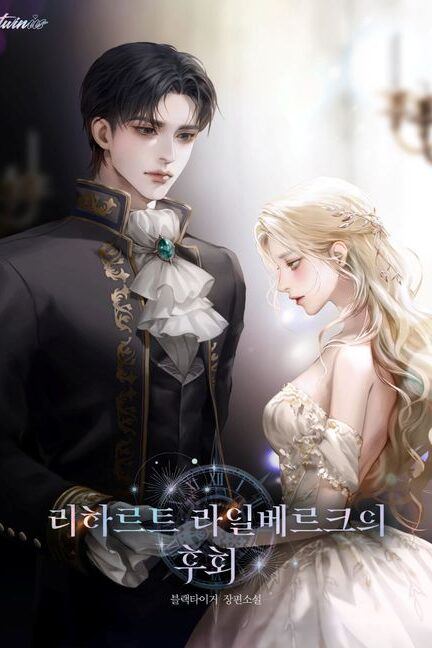
... Read More
The visual language in these chapters is actually insane. Let me walk through my favorites. The opening scene on the plane tree road—Katarina running instead of riding in her family's carriage, the dense greenery pressing in on both sides. It's almost cinematic. She's literally leaving behind the path she only ever traveled from inside a vehicle, and for the first time she's moving under her own power. The golden clock tower at Ordell Station, the quiet platform, the way Hans's large hands stroke her golden hair—this reads like a painting. Very soft lighting, warm tones, everything bathed in that special glow of first love at dawn. Then the manuscript shifts—hard cut to the corset scene—and the sensory details become brutal. Ribs compressing until they might shatter. Pale face. Suffocation. The corset is described as "a size fit only for a child" which is simultaneously funny and horrifying. Her family is trying to dress her like a doll, not a woman trying to survive high society. But the real worldbuilding masterstroke is the mansion itself. Dark mold spreading along the corners. Whitish dust on window frames. Stained windows creaking in the wind. Absurdly too few hands to maintain it. This isn't just background decoration—it's the family literally rotting from the inside because of the consequences of Katarina's choice. The physical decay mirrors the moral decay. And it's all Katarina's fault apparently. The ball scene is almost overwhelming in its sensory detail—the automobiles arriving, the chandeliers, the marble floor, Richard's tailcoat. It's opulent in a way that makes Katarina's shabby situation feel even more desperate by contrast.
... Read More
Okay so this whole nightmare sequence is genuinely unsettling and I need to talk about it. The way the author structures the dream—viscount Schwenk basically using her as a transaction, the public humiliation with Yulia, the physical abuse—it mirrors exactly what Katarina fears in real life but hasn't fully confessed yet. And then BAM, she wakes up and her face looks wrecked, and her mom immediately goes into scolding mode. The plot is layering these things carefully: every time I think Katarina is just having one bad dream, the author reveals there's ANOTHER layer to it. She thinks she knows what happened between her dad and Viscount Schwenk but clearly doesn't—the text says she can only make a rough guess. That gap in her knowledge is a ticking bomb. Meanwhile Richard is out here handling the external threats while she's still trapped inside the house, and the parallel between her nightmare and her waking life keeps intensifying. What really got me was that the chapter actually ENDS on this fragile moment where she's looking at his wound and trying not to cry, and then the next chapter immediately pivots to Richard confronting Lady Klein. The author is juggling three separate conflict threads—the Schwenk threat, the family debt, and the Klein rivalry—and somehow none of them feel messy. They're tightening like ropes around Katarina's neck and I'm just sitting here like absolutely not, this cannot be happening.

Leave a comment

You must be logged in to leave comments. or
