Research-Style Cultivation, Starting by Refusing to Be a Furnace - Reviews

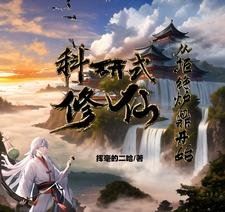
Research-Style Cultivation, Starting by Refusing to Be a Furnace
+Add to Custom List
Sort
Add review
... Read More
There is something genuinely funny about how this novel writes its protagonist's internal monologue. Let me give you the best example: 'I will obey the fairy's orders.' Bro. You just got your throat grabbed by a sexual predator from a demonic cultivation sect and your first response is to politely agree to whatever she wants? And then the narration continues with Wei Xing's internal thoughts being this chaotic mess of bargaining with his own survival: 'It's a good thing she doesn't want my whole life. Half of my life is half of my life. I'll risk it.' This is not the internal voice of a hero. This is the internal voice of a guy who is calculating risk like he's buying vegetables at a market. And that's what makes him feel real. The dialogue between the fake book seller and the customers is also great — the scholar saying 'Young Master, you have misunderstood. It's not me. You must have mistaken me' is the most smooth-talking scammer energy I've ever read. And then Wei Xing exposing him with this matter-of-fact 'Is it a book?' kind of interrogation that shows he's not stupid, just inexperienced. The enforcers' dialogue shift is masterful too. They start polite — 'Taoist priest, we are under the Myriad Desires Sect... please forgive me' — and within seconds of Wei Xing not cooperating, it becomes 'Pretending to be a Taoist priest is a dead end, brothers, take him down.' The speed of that tonal shift tells you everything about how fragile safety is in this world.
... Read More
I need to talk about the opening scene, because it's absolutely gorgeous. Wei Xing waking up in that dilapidated monastery, weeds growing wild, the wind moving through trees, sunlight stinging his eyes – the author paints this picture with such vivid detail that I could smell the damp earth and feel the heat on my face. This isn't background description; this is worldbuilding through sensory immersion. Let me highlight some of my favorite moments. The rain scene where Wei Xing kneels on the ground, crying, and the world goes quiet around him – wind stops, clouds freeze, trees cease rustling – it's like nature itself is mourning with him. Then the thunder crashes, and suddenly he's jolted back to reality. This sequence is cinematic perfection. I could see the film adaptation in my head. The monastery itself is a character. Broken doors and windows, a dry well with something glowing at the bottom, a stone statue of Qingyun Zhenjun that's worn smooth by wind and sand, tall sideburns still flying in an imaginary breeze. This place has history, and the author doesn't waste a single detail. Every element serves the atmosphere. What's brilliant about this worldbuilding is how it contrasts the mundane with the mystical. Wei Xing sees a village – dark-skinned men working in farmland, children playing, women washing clothes by the stream – and his first thought is pure relief: 'I finally see people!' This grounding in everyday life makes the supernatural elements feel more real. When he pulls that sword from the well, it's not just magic; it's earned through the weight of everything that came before. The Elder's palace scene is another worldbuilding triumph. We barely see her, but the author establishes an entire hierarchy – servants entering from outside the hall, her lazy position on a long chair, the incense smoke swirling in the hall. This is a cultivation world with its own social structure, and we get it in just a few lines. That's efficient worldbuilding. I also want to mention the symbolism in the setting. The fire that burns the temple, Wei Xing using door frames and window pieces as kindling – this destruction is also renewal. He's literally burning away his old life to survive in the new one. The stone statue that emits a faint light when he prays? It's as if the world itself is acknowledging his arrival. The color palette of this novel is striking too. Red robes, cyan-white Taoist garments, dark clouds, white clouds, red pupils, green vegetation, brown mud, golden sunlight. The author thinks in images, and it shows. Every scene has a visual identity that makes it memorable.
... Read More
I need to talk about the atmosphere in these scenes because the author is painting with shadows and there's something deeply unsettling about how the world feels right now. The cave abode sequences have this claustrophobic quality — Wei Xing pacing in his courtyard, staring outside the gate, walking back and forth unable to sit still. The mountain setting of Dan Peak is always there in the background but it feels less like a peaceful cultivation retreat and more like a cage. When Dan Wu appears at his door in the early morning, it's described as cold outside, and I genuinely felt that chill. But the real standout moment has to be the pill refining room. Let me just say this: thirty-four flesh pills sitting in a storage bag, and when Dan Wu opens it, they're described as 'meat balls rolling out, about the size of a palm, quite heavy, almost like a human's.' The author doesn't even need to spell it out — the implication lands like a hammer. Wei Xing measures one with his hand and the description is clinical enough that you can feel his growing dread. Then during the actual refining, the furnace is two or three people tall, roaring with Earth Fire, and Wei Xing hears a voice echoing in his ear when he tosses in the first flesh pill. The text says: 'Looking at the meat ball constantly rolling and unfolding in the furnace, it looked like a corpse, which was very frightening.' This is horror writing disguised as cultivation fiction. The blurry vision, the fading voice, the way Dan Wu's angry shout pulls him back to reality — it's cinematic in the best possible way. And Yan Hong's entrance, that woman in red with her 'undisguised, predatory gaze, as if she had already regarded him as prey' — the color red here isn't romantic, it's violent. It stains the whole scene.
... Read More
"In order to find the reason for my coming here, to be able to return to Earth one day and reunite with my family, it is all worth it." This line came at the end of the chapter and it just… landed. Right after all the spectacle — the floating peaks, the golden halls, the flying disciples — Wei Xing is standing in a slightly dilapidated courtyard with weeds growing everywhere, and he's feeling grateful. Not because he's achieved anything monumental, but because he's one step closer to going home. I keep thinking about that jade token from the Enchantress. The text says he recalled 'the life-and-death moment that day' and felt a chill. Whatever happened between him and that character, it wasn't just plot convenience — it left a mark on him. And now the token has flown away on its own, which feels like a small death. Like a chapter is closing whether he's ready for it or not. The fact that his cave abode is empty, overgrown, unused — it echoes his own situation. He's arrived at a place that looks magnificent on the surface but is fundamentally abandoned and cold. And yet he's still choosing to believe it's worth it. That optimism despite everything is what makes him compelling. He's not here because he wants to be an immortal. He's here because he wants to come home. Everything else is secondary. I just hope whatever is waiting for him on Earth is as real as his determination to get back.
... Read More
I am STILL processing what happened in that mountain clearing. A woman falls from the sky literally, is half-dead,抓住 Wei Xing by the throat, and then proceeds to drain HALF HIS LIFE FORCE as payment for helping her recover. And then she gives him a jade token like it's a fair trade! Let me count the ways this is deeply messed up. The power dynamic here is wild. She grabs his throat, squeezes until he can barely breathe, and he's begging for his life. Then she softens slightly because he's dressed as a taoist — not out of kindness, but because she's assessing whether he's useful. Her line about his 'promiscuous root nature' being 'not very useful to me' hit different in the worst way possible. She's basically appraising him like livestock. But here's the thing that made me pause — she actually kept her word. She didn't kill him. She gave him something of value (the jade token, information about the monastery). There's a transactional fairness to her that's almost respectably evil. Like, if you're going to be a predator, at least be honest about it. And Wei Xing's response?! 'Half a life is half a life. I'll risk it.' The man went from being choked to death to negotiating his own exploitation with the enthusiasm of someone buying groceries. This relationship is built on pure asymmetry and yet somehow it's the only one he has right now in this entire new world.
... Read More
I keep thinking about that fake book. The scholar's trick was elegant in the grossest way — a cheap booklet called 'Feelings on the Pastoral' hidden under a fabricated cover pretending to be some rare cultivation manual. He sold the SAME fake book to MULTIPLE people, claiming each one had a special destiny with him. The book itself is a symbol of this entire world: appearances are deliberately manipulated, truth is packaged in misleading wrappers, and the only people who benefit are the ones willing to lie. Wei Xing tearing off the cover and revealing the real title is almost a thematic statement — stripping away false pretenses to find what's actually there. But the liar disappears before he can be punished. Truth has no power here. Only information does. And then the jade token appears — another object that carries hidden meaning. To Wei Xing, it's a key to safety and advancement. To the purple-robed woman, it's practically a business card, a marker of her status. To the Myriad Desires Sect enforcers, it's a terrifying symbol of their own sect's hierarchy and the dangerous inner-circle politics they're caught in. The same object, three completely different meanings. That's this novel's central metaphor, isn't it? Nothing means what it appears to mean. Cultivators look like immortals but act like predators. A jade token looks like salvation but makes you a target. Even Wei Xing's encounter with the woman — described with such visceral physicality — turns out to be less an assault and more a cold, calculated transaction where both parties think they're getting something. This world runs on hidden layers. And Wei Xing is just learning to see them.
... Read More
Okay so I need to talk about this fake book seller scene because honestly it is THE perfect introduction to this world's underbelly. Wei Xing catches this guy trying to pass off a cheap booklet called 'Feelings on the Pastoral' as some rare cultivation manual. The man even tried selling it to multiple customers claiming it was an 'ancestral trick that increases offspring' — bro really tried that?? Wei Xing tears off the fake cover, reveals the real title, and the scammer just... disappears. Poof. Gone. No consequences, no reckoning, just Wei Xing mocking himself for being careless. This scene is genius for worldbuilding disguised as a minor incident. It immediately establishes two things: the cultivation world has its grifters and scammers just like the mortal world, AND Wei Xing is still figuring things out and making rookie mistakes. And that transition from this street-level scam to Wei Xing learning about the cultivation world over the next month? Smooth. He then sets off for Qingyuan Prefecture seeking information and runs straight into a falling immortal woman — talk about escalating stakes! What I love is how the plot keeps feeding Wei Xing opportunities that come with horrific strings attached. The jade token the purple-robed woman gives him is supposed to be his golden ticket to a monastery, but it literally makes him a target. The Myriad Desires Sect is hunting her, they find him, see the token, and suddenly the people who were about to arrest him are now TERRIFIED. Dramatic reversal! The plot keeps doing these little curveballs that keep you turning pages.
... Read More
Okay so let me just say—this twist where Wei Xing gets mistaken for an Immortal Sect member is genuinely brilliant plot engineering. Think about it: he's literally at his most vulnerable (torn clothes, hungry, no money, weird half-zombie appearance) and yet the entire social hierarchy of this world accidentally works IN his favor. The shopkeeper practically bows to him. This is such a clever inversion of expectations. What really got me is how the author layers multiple plot threads simultaneously. We have Wei Xing trying to survive and find answers about his identity, the black-clad search parties closing in on him with that jade pearl tracking technique, and the villagers' hatred of Taoists all running in parallel. These aren't just subplots—they're converging on a collision course. The bear chase opening is the kind of hook that makes you immediately understand this protagonist's situation: he has no memory, no context, and the world is actively dangerous. But then the social danger turns out to be even more interesting than the physical danger. His own appearance—the Taoist robes—is what determines how people treat him, whether they're terrified or reverent. And that dinner scene with Old He? 'This was the best and most delicious delicacy he had eaten recently.' One sentence. That's it. But it tells us everything about Wei Xing's vulnerability while also humanizing Old He in a way that makes the world feel real. Tiny plot beats like this matter more than big explosions sometimes. My only question: the author clearly set up the search parties as a ticking clock, but why does the Elder want Wei Xing specifically? The jade pearl tracking, the secrecy—it all points to something bigger than a missing disciple. I'm guessing his memory loss isn't coincidental either. What do you think?
... Read More
The pacing here is a masterclass in controlled escalation. It starts SLOW—Wei Xing eating, sleeping, looking in a mirror. You could literally feel the characters relaxing into the scene. Then the shopkeeper drops the Qin Yong bomb and suddenly everything speeds up. He's on a horse, changing outfits, trying to ride (and failing), arriving at a county town, overhearing gossip, getting scammed, and then SPOTTING THE SCAMMER AGAIN—all within what feels like two days of story time. The structure does something really clever: it gives us a breathing room in the middle (the horse-riding comedy bit, the travelogue description) before snapping back to tension. And that ending! He's striding toward the scholar-beggar with purpose, ready to confront him, and then—cut. No resolution, no payoff. Just pure forward momentum. The author understands that pacing isn't about constant action; it's about knowing when to let the reader exhale and when to punch them in the gut. This section does both beautifully.
... Read More
Okay, full disclosure: I read the rain scene and I actually teared up. Wei Xing kneeling on the ground, sobbing to parents who can't hear him, the thunder cracking like God himself is laughing at his misery – it was devastating. And then that moment where he looks at the fire and says 'Burn, burn, it's better to burn it clean!' That's not just plot; that's catharsis. That's a character choosing to let go of everything he knew and step into the unknown. The emotional journey in this opening chapter is brutal. Wei Xing goes from confusion to horror to grief to determination in what feels like minutes but reads like an eternity. When he looks at his reflection in the water and realizes this is his new face, that's when the despair hits. The text says his scalp tingled and a chill rushed to his mind. I felt that. I literally felt that chill. But what makes this emotional arc work is the humor. The author doesn't let us wallow in misery for too long. Wei Xing cursing about the hickeys on his body? I laughed until I cried. 'Who doesn't abide by women's virtue, randomly kissing people?' This is grief processed through comedy, and it's incredibly realistic. Real trauma isn't solemn; it's messy and funny and heartbreaking all at once. The mother-father relationship is the emotional anchor here. Wei Xing's promise to kowtow three times and bow nine times every day if Qingyun Zhenjun sends him home – it's childish, desperate, and profoundly moving. This is a son who misses his parents so much he'll bargain with gods. That line 'If I go back looking like this, I guarantee I'll immediately get you a daughter-in-law!' broke me. He's so far from home and yet still thinking about disappointing his parents. I also want to talk about the loneliness. Wei Xing walking down the mountain, supporting his sword, humming that little Taoist tune – there's something profoundly sad about that image. He's alone in a world that doesn't understand him, carrying a sword he doesn't fully understand, heading toward an uncertain future. And yet he's humming. That's resilience. The dream sequence with the dying man reaching out and the woman in the red scarf – it's creepy and sensual and haunting. This woman feels like temptation, like danger, like the thing he wants and fears most. The author is planting emotional threads that will definitely pay off later. I'm emotionally invested in Wei Xing. Not because he's OP or handsome or clever, but because he's human. He's scared, he's confused, he's funny, he's brave, and he's hurting. That's the kind of protagonist who makes you care.
... Read More
"This group of ants is really troublesome." That line hit me way harder than it should have. The young Taoist is looking down at thousands of devout worshippers and calling them ants. Then he sprinkles something from a red bottle — a red mist — and the text says "just like throwing fish food." The mortals inhale it and become even more fanatical. This is not a spiritual system. This is a farming operation. The wish power collection scene is honestly one of the most chilling things I've read in this novel. The Taoist stands above the crowd, collecting their devotion like it's some kind of currency, and he's visibly disgusted by them the entire time. 'Eat it, eat it, eat more so you can grow faster.' The mortals are livestock. Their faith is fertilizer. And Wei Xing witnesses all of this before he even gets past the outer gate. What's fascinating is how this mirrors the structure of the temple itself. The central peak is highest, the others orbit around it, and mortals are below everything — literally and figuratively. The hierarchy is baked into the geography. And then Wei Xing, a mortal himself, gets passed up the chain because of a token from some unnamed Fairy. Is he escaping the system or just climbing into a different cage? The jade token disappearing at the end feels symbolic too — like the door to whatever helped him get here is closing, and now he's truly on his own.
... Read More
"So you think this is a Daoist temple?" Wei Xing asks, and the real question hanging in the air is: why does nowhere feel honest? The dialogue in this passage is extraordinary because of what it refuses to say. Almost everyone in Qingyuan Temple is performing politeness while meaning something else entirely. Let me walk through a few exchanges that destroyed me: Dan Qi introduces Wei Xing to the other senior brothers with practiced warmth — "From now on, we are his Senior Brothers, so we need to take care of him more." Sounds genuine, right? Except Dan Qi himself knows these brothers probably got "picked" and left. The kindness is real, but so is the helplessness. He's taking care of a lamb by standing between it and the butcher. Master's dialogue is sparse and devastating. One word: "Hmm." That's all it takes. The contempt in that single syllable says more than any insult could. And then: "You still need to cultivate well and never be unenterprising" — spoken to a boy he already considers livestock. The cruelty isn't in shouting; it's in the flat, bureaucratic tone. But the real highlight is Wei Xing's internal monologue, which is where the author's voice truly shines. The way he thinks — scientific, deductive, almost clinical even in terror — creates this incredible dissonance. He's processing his own commodification like a lab report. "The first thing is easy to solve, I can just ask Seventh Senior Brother." Even as he's unraveling, he's formulating methodology. That voice is so distinct, so unmistakably modern, that it cuts through the cultivation genre clichés like a scalpel. And Dan Qi's explanation of the dual cultivation system? Delivered with such casual, almost envious warmth — "Those who want to go for dual cultivation can naturally follow the Fairies back to the sect" — that it reads like a menu description. That tonal disconnect between content and delivery is where the horror lives. Nobody in this story is lying aggressively. They're all just casually describing atrocities like they're talking about the weather.

Leave a comment

You must be logged in to leave comments. or
