Relying on beauty to commit crimes in the Escape Game - Reviews

Relying on beauty to commit crimes in the Escape Game
+Add to Custom List
Sort
Add review
... Read More
The ruby amulet and Zizhuo aren't separate threads—they're the same thread. Think about it. Li Xi receives an amulet from someone (Li Xi himself, in a timeline loop that presumably connects to the whole system mechanics of this world), and Duan Zhen keeps it close, in his inner pocket, next to his heart. Meanwhile, Zizhuo is this ghost character we've only heard about—a sickly, shy ten-year-old brother who never speaks, just smiles. Duan Zhen chose gifts for him personally every time he came home from the military. The amulet is tangible proof that Duan Zhen paid attention to someone. Zizhuo is the memory of that attention. And Li Xi—he's the living replacement, the boy who looks like the kid Duan Zhen couldn't fully protect. There's something almost cruel about the geometry here: Duan Zhen's capacity for tenderness is real, but it's anchored to someone who exists in the past tense. The amulet is a relic of that past tenderness, passed to Li Xi almost accidentally. Is Li Xi being cherished or archived? That's the question the symbolism is whispering. And then there's the twin demon angle—the Dawnlight Empire that they destroyed. Empires fall, brothers die, identities get replaced. The cyclical nature of destruction and rebirth in this world mirrors exactly what's happening in Li Xi's personal life: he's being reborn as Zizhuo's substitute, just like the twins were reborn as demons after their deaths. The author is building a thematic through-line about people becoming echoes of people who came before them, and Li Xi is standing at the intersection of all of it.
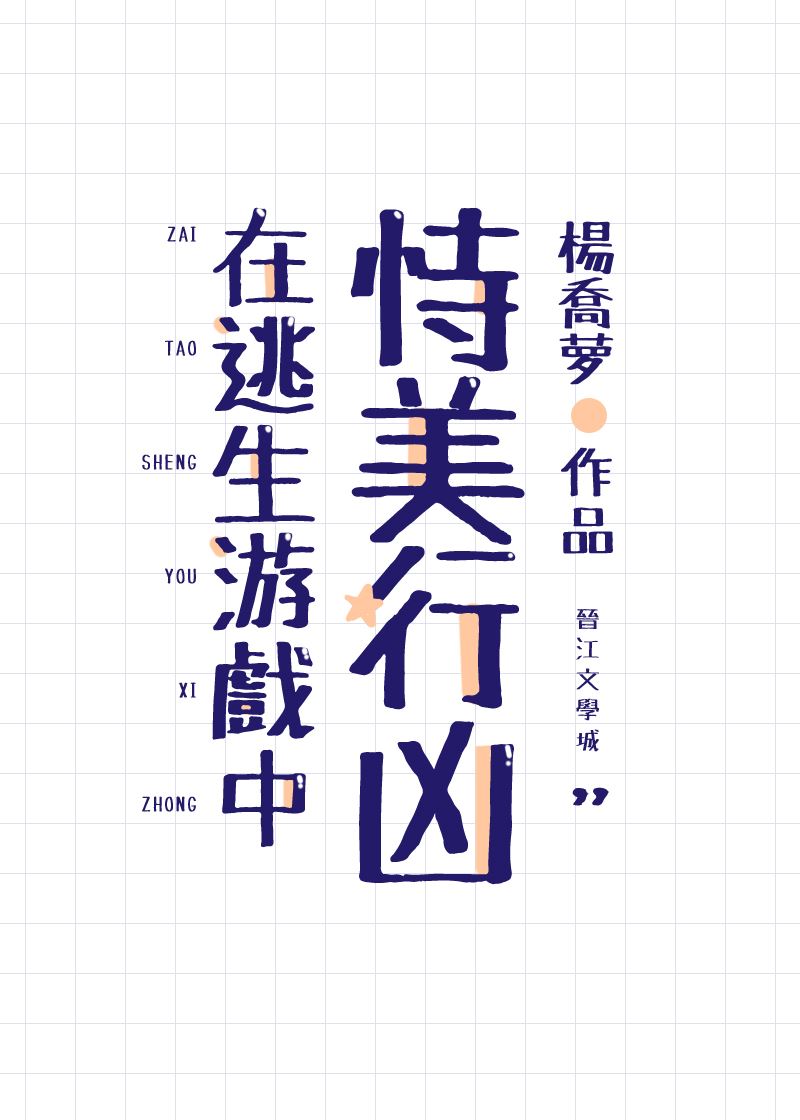
... Read More
Okay so I need to talk about Duan Zhen because this guy is carrying an entire emotional arc on his back and I am HERE FOR IT. Like, think about it—Li Xi just got transformed into this 'mature rose ready to be plucked' situation, right? And what does Duan Zhen do? He sits there INTERNALIZING every single desire, sighing to himself, letting Li Xi fall asleep on his chest while his mind is clearly elsewhere. The author drops this line: "Every time he saw Li Xi, he wanted to kiss the corners of his eyes until they turned red." And then Li Xi just... falls asleep. On him. While Duan Zhen wraps his arms around him and inhales that candy scent. This is the kind of character detail that makes me want to scream. Duan Zhen isn't just some stoic leader type—he's actively, painfully trying to respect boundaries that don't even exist yet because Li Xi keeps quelling any further desires with spells. Who is this guy to his partner and what has his partner done to deserve someone this considerate? But then you have Dan Zuo watching all this unfold like "I have consumed a ton of dog food but I am calm about it." The friendship dynamics here are so rich. Everyone has their role: Duan Zhen the meticulous planner, Li Xi the emotional anchor, Dan Zuo the weary observer. None of them feel flat. Hewlett being dismissive but ultimately cooperative adds another layer—these demon lords aren't villains, they're complicated people making hard calls.
... Read More
I literally gasped when Clemens' message popped up. One second you're watching these two have this incredibly tender moment—holding hands, talking about love, everything soft and warm—and then BAM, the system interrupts like a bucket of ice water. "Congratulations to (anonymous) for successfully clearing the tenth level of Clemens." My jaw dropped. Who the hell just straight-up fought Clemens at his hardest level and survived? The way the author set this up was masterful. All that buildup with Li Xi explaining the city, the reconstruction, his dead family—it felt like a breathing room chapter. You thought you were in for a slice-of-life interlude. And then the cliffhanger hits so hard. I immediately went back to re-read the ending three times because I couldn't believe someone dared to go at Clemens head-on without backing down. Also, the detail about "only one person survived" hit me like a truck. That's not just worldbuilding—that's a plot bomb waiting to go off. Who is this person? Why did they survive? And more importantly, why did they survive when everyone else clearly didn't? I need answers yesterday. The pacing here is exactly what I love about this author. They let the characters breathe, let us fall in love with the moment, and then yank the rug out completely. Can't wait for the next chapter.
... Read More
Okay so this batch has been absolutely cooking with plot revelations and I need to talk about it. The whole premise of the main system tampering with people's memories just keeps getting darker and more layered. Dan Zuo stealing info from those wristbands was such a smart move, and then Duan Zhen's realization that even Li Xi got affected? Chilling. But the real plot bomb dropped when Li Xi casually mentioned lifespans. Two hundred years for ordinary people, magic users live longer, and Duan Zhen is apparently from a world where normal human lifespan applies. Meanwhile Li Xi is over two hundred years old, Hest is almost a thousand. That age gap revelation hit me like a truck. It completely reframes everything about their relationship - Duan Zhen's hesitation about giving Li Xi hope now has a whole new dimension of practical impossibility. I also loved the setup with Hest and Moduna being these legendary figures who are hundreds of years old. The author is clearly building toward some massive confrontation. And the fact that people don't die in this game but newcomers still aren't speaking up? That mystery about why they're silent is keeping me on edge. What did the main system make them forget? The subplot about Duan Zhen not sleeping at all after last night's awkward encounter felt really grounded amidst all the supernatural stuff. It made the character feel human. And that moment where he just nodded at Dan Zuo without saying anything? I felt that. Sometimes you just can't find the words when everything hits all at once.
... Read More
The way this chapter establishes the world without info-dumping is gorgeous. We get all of this — the high-security neighborhood, the wealthy and influential residents, the multiple security checkpoints they pass through — and it's all woven into the narrative naturally. You can feel the level of protection around Duan Zhen's family without the author stopping to explain 'this is a secure compound because...' But the real worldbuilding gem is the photo album scene. 'When Ah Zhen first learned to walk, he refused to get off a frilly skirt, so I put it on him.' What a tiny, specific detail that tells us SO much about this family — they have history, they have inside jokes, they have a daughter who dressed her son in a skirt because he wouldn't take it off. It makes the household feel lived-in and real. The transition from warm domesticity to explosion-shaken reality is jarring in the best way. One second Li Xi is squeezing Duan Zhen's hand and calling him cute, the next the ground is shaking. The setting itself seems to demand that peace never lasts for these two.
... Read More
The author of this book has zero respect for my ability to sleep and I am here for it. Chapter 280 starts with a casual conversation that has the tense energy of a standoff. Three sentences in and we're already at "you should leave my world." By paragraph five, the twins are closing in. Within a page, Li Xi is fighting two ancient demon lords, Duan Zhen is moving faster than any human should, and someone's getting their memories ripped open. And somehow, somehow, the author manages to fit in a genuinely funny moment with Xia Qirong complaining about having a small brain right after Duan Zhen literally punches a mirror image into oblivion. That tonal whiplash IS the pacing. It's deliberate. The fight scenes move at the speed of panic - short paragraphs, clipped dialogue, the narrative bouncing between characters like a camera trying to capture everything at once. Then immediately after the emotional peak of the confession, we cut to the twins leaving and the group trying to process what just happened. That breathing room is what makes the next punch hit harder. The cliffhanger structure here is masterful. We get three separate unresolved threads in the last few paragraphs: Li Xi revealing he expects to be defeated (wait, WHAT), the mystery of what Shen Su is hiding (again, WHAT), and the chapter literally ending mid-sentence about Duan Zhen. I don't care that it's incomplete - it's the most effective chapter break I've read in months. The only thing I'd change is maybe give us a moment to breathe between the demon lord confrontation and the castle revelation. But honestly? I probably wouldn't have waited anyway.
... Read More
This chapter is a masterclass in pacing manipulation. Let me explain. We start with the group scattering—Duan Zhen and Dan Zuo on one track, Xia Qirong and Shen Su on another. It's methodical. Almost calm. Li Xi's POV gives us comedic relief (candy, chips, boredom), which actually works because it lets you exhale right before the tension snaps back. Then we cut to Duan Zhen finding the candies. The investigation beats are steady but purposeful. We learn about Li Xi's trap, the relationship dynamics, the plan to find the lift. It's exposition but it doesn't feel like exposition because it's driven by survival urgency. And then—BOOM. Mirror images in a dark passage. One of them pushed Sun Le. Who's real? Who's fake? The chapter just... stops mid-revelation. "Just as he was about—" CUT TO BLACK. I literally had to put the phone down and stare at the wall for a second. The author is evil. Absolute villain. And I am here for it every single chapter.
... Read More
I need to address the structure of these chapters because the author just absolutely SLAYS with how they handle time jumps. We go from a steamy morning-after scene... and then suddenly it's been HALF A MONTH and Li Xi has only investigated two worlds. The transition is so clean I didn't even resist it. Most authors would pad this out with filler but here it just... works. The half-month gap serves multiple purposes: it shows us Li Xi is dedicated to the quest, it gives Duan Zhen and Hewlett time to actually bond during training, and it builds this quiet longing on both sides. Then the communicator scene arrives and the pacing shifts beautifully. Remember how it goes from 'Xia Qirong found someone who passed the ninth level' to Duan Zhen softening and saying 'you've been working hard lately'? That pause with just electrical crackling? The author lets silence do the work there. It's not every chapter that trusts its readers to sit with an almost-conversation. And the ending—Li Xi showering, blow-drying his curly hair, changing into a new outfit, and THEN knocking on Duan Zhen's door. This whole sequence unfolds in real time and I was right there with him, feeling the anticipation. The scene transitions from domestic banter to the towel scene to the lap scene to the sofa pinning—all within a few paragraphs—and somehow it never feels rushed. The pacing of intimacy here is masterful. It accelerates naturally, like real life, and just... ends on that giggling note. No cliffhanger, just a perfect little pocket of joy.
... Read More
There's something deeply symbolic about the fixation on eyes in this passage and I can't stop thinking about it. Dr. Gu wants to collect Li Xi's eyes specifically — calling them "the most precious part of my collection." But here's the thing: Li Xi also keeps flipping his hat back and forth, visibly disgusted by the places the doctor has touched. The hat is a costume, a disguise, part of the fabricated identity. So we have this whole layering: eyes as objects of desire and collection versus the hat as protection and performance. And then there's the hospital itself — circular architecture where the beginning and end connect. Rules governing every hour of the day, punishments for violations, rooms you can't leave at night. It reads like a system designed to strip away autonomy, and the eye-collecting doctor is just the most visible symptom of that. The question the text keeps quietly asking is: what do we give up to survive inside a system that treats us as resources? Li Xi is clearly strategizing his way through, but you can feel the cost accumulating.
... Read More
The dialogue in this section is somehow both hilariously deadpan and genuinely charming, and I don't think that's an accident on the author's part. The stranger mermaid is written with such enthusiastic simplicity—"You look so beautiful, as if kissed by the Sea God"—that you can't help but love him even as he's offering to share a harem. His dialogue has this bubbly, unguarded quality that makes the mermaid kingdom feel alive rather than like background set dressing. And then Li Xi's responses are totally different register. Polished, measured, constantly performing. He's never just answering; he's always calculating what answer gets him closer to the witch information. The contrast between their voices is what makes their interaction work so well. One is raw honesty dressed in superficiality, the other is refined manipulation hiding genuine vulnerability. My favorite exchange has to be the whole "human-m mermaid" sequence: Li Xi drops the bombshell like it's just a practical concern, the mermaid goes silent thinking it's taboo, then immediately recovers with "Falling in love with food is such a romantic thing!" I literally screamed reading that. It's absurd and weird and completely memorable. And the narrator's voice itself has this wry, slightly amused tone throughout—never taking itself too seriously, which lets the darker undertones (bloody water, armed humans, faction warfare) land harder by contrast. The translator's birthday note at the end is a fun meta touch but doesn't interfere with the reading experience.
... Read More
You know that scene where the thin door does zero soundproofing and you can hear MONSTER CHEWING through the wall? My skin actually crawled. That's not just atmosphere, that's architectural dread. The hospital isn't a refuge; it's a stage where safety is an illusion sold by fluorescent lights and pink-uniformed nurses who threaten you for 'breaking rules' while monsters gnaw outside. And breakfast? Oh my god, the buffet with untouched food while everyone sticks to dry biscuits from their backpacks. That's not detail—that's worldbuilding as betrayal. The author makes you feel the hypocrisy of normalcy. Even the candy scene is loaded: Li Xi popping orange-flavored sweets like it's just another Tuesday, while Duan Zhen is analyzing escape routes. Two realities colliding at the same table. And then Bai Hua's group walks in—another team, another power dynamic, another set of eyes assessing threat levels. The setting isn't backdrop; it's the antagonist wearing scrubs. I keep replaying the line 'The hospital in the daytime feels more like a fantasy realm.' That's the thesis. Day is performance. Night is truth. And those three beds? They're life rafts in a sea of chewing. The environment doesn't just host the story; it devours the characters piece by piece. Brilliant. Absolutely devastatingly brilliant.
... Read More
The description of the back mountain is deceptively pretty. On the surface it's a top-tier hospital with hills meant for patients to relax. Cobblestone paths, trees, shrubs, flower beds. Everything looks postcard-perfect. But then you notice the patients are all frail, sickly pale, stopping after a few steps to catch their breath, with caregivers practically dragging them along. And the author keeps reminding you that this is an illusion—that the hospital reverts to its dilapidated state at night and the people turn into monsters. And then they turn the corner and there it is: a field of roses so red they look like they're dripping blood, blooming brilliantly under the sunlight, and half a finger bone sticking out of the bush nearby. The contrast between the beauty and the gore is absolutely chilling. "Exuding a chilling beauty" is the exact right phrase because that's what makes these roses so wrong—they're supposed to be beautiful, they're supposed to be romantic, but they're fed by death. I also can't get over the sensory detail of Li Xi sniffing around Duan Zhen's neck like a puppy. The author describes the air as having a foul smell of dark magic underneath everything else, but Li Xi can detect it while everyone else only smells plants. It's such a small moment but it builds the world in a way that tells you this place has layers, and Li Xi's psychic ability is the key to seeing through them. The hospital setting itself is genius because it's supposed to be a place of healing and it's become something so twisted. Clemens' influence is everywhere even when you're not looking directly at it.

Leave a comment

You must be logged in to leave comments. or
