Relying on beauty to commit crimes in the Escape Game - Reviews

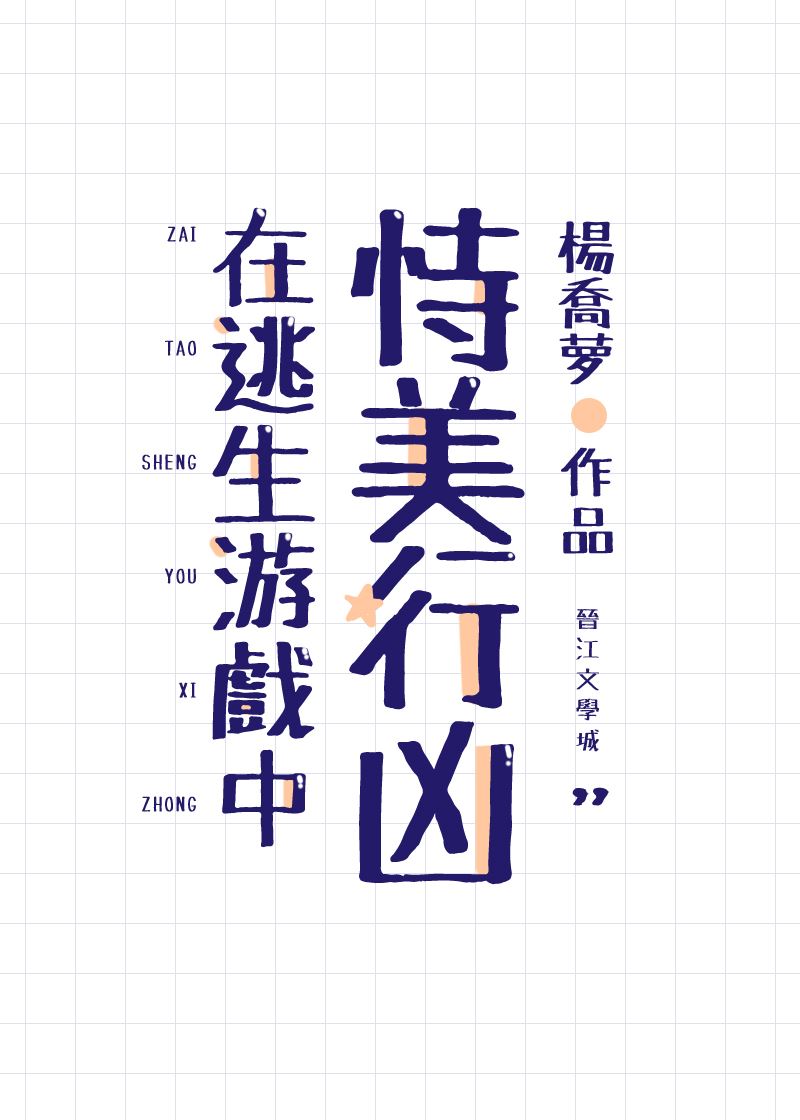
Relying on beauty to commit crimes in the Escape Game
+Add to Custom List
Sort
Add review
... Read More
This chapter takes something terrifying—being trapped with undead—and raises the stakes in clever ways. First conflict: the hand through the wall. Personal, immediate, visceral. Duan Zhen dodges by inches. That's close enough to make your heart race. Second conflict: Li Xi wants to fight. Duan Zhen wants caution. Their disagreement isn't resolved easily. Li Xi pushes past him. That's character-driven conflict, not just plot convenience. Third conflict: Li Xi uses his power and collapses. Now the stakes shift from survival to consequence. What does this mean for their mission? What else is lurking? The author maintains tension by never letting the reader breathe. Even after the undead are gone, there's the mystery of why Li Xi collapsed, the question of what's next, the lingering threat of the Duke's mansion. Every resolution plants a new seed of uncertainty. That's how you keep readers turning pages.
... Read More
I swear I almost dropped my phone reading this. The way Li Xi just… melts into Duan Zhen. Not even dramatic confessions or anything—just a scared boy pretending he's not scared because the big bro says 'I'll be here.' And then that line, 'His hand almost covered half of Li Xi's face,' you don't even need drama, you just need proximity and the reader's heart just… breaks open. What made it worse? He was literally dreaming about abs while cuddling him. I SCREAMED. The author knows exactly what they're doing. And then—DISGUSTING GUY COMES UP. Doctor Gu. You can just feel the shift in the air, right? Duan Zhen instantly reads it as fear again. Li Xi's face darkens and Duan Zhen pats his back like 'don't worry we'll go together.' That tenderness is so lethal. Meanwhile Bai Hua shows up, all polite and concerned, but Li Xi's eyes go cold. Not interested. The whole breakfast scene where he feeds Duan Zhen that milk candy first, then reluctantly shares with Xia Qirong, it's so quietly powerful. The contrast between 'you're the priority' and 'fine, here's one piece' speaks volumes. The romance isn't shouted; it's whispered in shared breaths and tucked-in hair. And I'm here for it. Who else is obsessed with how Li Xi keeps testing boundaries while desperately wanting safety? Does anyone else think Duan Zhen already knows exactly what he's doing? I need the next chapter immediately.
... Read More
This hospital isn't just a setting. It's an argument. On the surface it pretends to be a place of healing—critically ill patients come in, get treated, go out changed. But the changed personalities? The soul-extracting contracts disguised as medical paperwork? The monsters that hunt you once you're declared dead? This place doesn't cure people. It consumes them and spits out something else. The contract is the central symbol and it's horrifying precisely because it looks like something mundane. A stack of papers. A signature. Standard bureaucratic procedure. But beneath the visible text, written in magically imbued ink only certain people can read, lies the real terms: your life, your death, your soul, all transferable at the stroke of a pen. That's not fantasy world-building—that's a metaphor for every system that has ever asked vulnerable people to sign away their autonomy in exchange for promised safety. The fact that this is hidden within a hospital, an institution people already trust with their lives, makes it even more chilling. What other 'standard procedures' are we accepting without reading the fine print? Li Xi, as a demon lord who understands souls intimately, is the only one who can see through the deception. His visibility into the hidden text mirrors the theme itself: true understanding requires looking beneath the surface, and most people are too exhausted or scared to do that. The race that 'lived in darkness, trying to conceal themselves, was practically invisible'—this feels like it's echoing the same idea on a larger scale. Things that hide in plain sight are the most dangerous ones.
... Read More
I need to talk about how these characters actually speak to each other, because the dialogue here is doing SO MUCH heavy lifting without anyone realizing it. Let's start with Li Xi's performance. Every word he says to Duan Zhen is carefully chosen: "I was frozen in fear just now, my mind went blank, and I couldn't move... I must have caused you trouble, didn't I?" On the surface, this is a scared boy apologizing for being scared. But read it again. He's MANIPULATING Duan Zhen's empathy. He's engineering a situation where Duan Zhen will never think to doubt him, where every interaction reinforces the image of Li Xi as fragile and dependent. And the brilliance is that Duan Zhen doesn't just believe it — he actively constructs excuses for Li Xi's behavior. "It was quite normal, after all, Li Xi was a timid and delicate child." Meanwhile, Duan Zhen's dialogue is all restraint. Short sentences. Terseness. "Just came out to take a look." "Let's go." "Take a rest." He never says what he's actually feeling. He never says I was worried. He never says I came running because I couldn't stand the thought of something happening to you. The subtext is screaming but the text stays perfectly controlled. And then there's the occasional flash of genuine warmth: "Even if you can't fight back, you can't just stand there." That line. It's a reprimand wrapped in concern wrapped in admiration. Duan Zhen respects Li Xi's survival instinct even while chastising his passivity. The layers. The narrative voice is doing something interesting too — it shifts between external observation and Li Xi's internal calculations so seamlessly that you sometimes forget which perspective you're in. One moment you're watching Li Xi act terrified, the next you're inside his head understanding exactly what he's planning. That duality IS the story.
... Read More
Okay so the whole mirror image sequence is actually really clever on a plot level. You've got Sun Le fighting someone who literally copies every move he makes, and then they both say 'split up' in unison. That detail is chilling because it means the fake isn't just physically mimicking — it's reading their mind or at least matching their instincts. The narrative does something subtle here: it makes you wonder whether the separation was tactical or manipulated. And it probably was manipulated, because immediately after we cut to Duan Zhen's group and the text drops this line about the demon lords not interfering with their search for hidden rooms. That silence is more threatening than any attack would be. It implies they're being herded, played with, rather than genuinely opposed. Then Li Xi shows up and it's a whole twist on top of a twist — he's a demon lord, he's been watching, and he casually reveals the twins' plan is just to 'play with' the characters. But then he adds 'but that's probably a lie.' Classic narrative misdirection. The author is layering unreliable information the way a magician layers misdirection. Every revelation comes with a built-in doubt. And that ending with Hest and Moduna holding hands, smiling slightly — it's not a battle cry, it's something far worse. They're not enraged; they're delighted. The plot structure here understands that tension comes from anticipation, not action.
... Read More
"There can be many talismans, but only one token of affection." I literally had to put the phone down because my heart did that thing where it skips and then pounds all at once. Duan Zhen is such a straightforward, honest person and he just... said it. Like it was the most natural thing in the world. And Li Xi's reaction? Absolutely priceless. He turned away, got flustered, blushed, snapped at him—everything a tsundere should do. But then we find out later that the carving on the ruby was literally just the word "love" in a childish font with a tiny heart shape. AHEM. This man gave his boyfriend a ruby engraved with the word LOVE and then acted all embarrassed when asked about it. Classic Li Xi. But what really got me was the context of that whole scene. Li Xi has been carrying so much weight—his family destroyed, this rebuilt city that reminds him of the past, always watching from afar instead of living there. And then with Duan Zhen, he lets his guard down. He holds his hand. He smiles. He says "I think about you every day" like it's nothing, but we know it's everything. Duan Zhen's response too—he doesn't push, he doesn't keep asking. He sees Li Xi getting flustered and stops, protects him. That's real intimacy, friends. That's not just romance fluff, that's two people who actually understand each other. I'm not crying, you're crying. Also side note: the dynamic where Li Xi uses personas strategically but genuinely softens around Duan Zhen? chef's kiss.
... Read More
Let me just say: the 600-second countdown is the backbone of this entire chapter and it's executed perfectly. Moduna starts counting. The text doesn't stop at 600 — it tracks progress: "two hundred," "five hundred," "six hundred." Each number is a pulse. You can feel time slipping. And because the count echoes even on the second floor (demon lord trick, obviously), there's no safe distance from the ticking clock. The structure mirrors the game itself: start with rules exposition → scatter into hiding → build tension through the countdown → resolve with Moduna's arrival → leave on a cliffhanger (no response from Dan Zuo). It's a mini-arc within the chapter. What I love most is how the pacing shifts between perspectives. We cut from Duan Zhen hiding under the bed to Hest and Li Xi on the spire, then back to Duan Zhen encountering the water ghost. Those perspective switches prevent monotony while raising the stakes — we know things Duan Zhen doesn't (like who's really coming for him). And that ending! "strangely, there was no response from Dan Zuo inside. In such a situation, it was impossible f" — the sentence literally cuts off. I had to immediately click to the next chapter. That's not a flaw, that's craft.
... Read More
The dialogue here is delicious. Li Xi sounds exactly like what he is: noble, educated, slightly arrogant, but with warmth buried beneath the ice. His exchange with Duan Zhen is perfect. First he's all business—'Keep up or get eaten.' Then immediately after, he softens: 'I'll have the steward teach you tomorrow.' That whiplash is so human. So real. And Duan Zhen's responses! He's observant, apologetic when appropriate, but never weak. His 'Yes, I'm very sorry' could come across as servile, but the narration tells us he's watching, learning. There's intelligence behind the deference. The necromancer reference—'Is it some necromancer trying to attack the city while my father is away?'—tells us so much about Li Xi's world. He thinks in terms of threats, of duty, of family obligations. That's who he is. The author doesn't over-explain through dialogue. Characters reveal themselves through what they choose to say and what they hold back.
... Read More
"Don't move around." That's it. That's the whole vibe. Duan Zhen's one line when Li Xi is literally pawing at his newly formed merfolk tail and I am deceased. Let me explain because my heart cannot handle the subtext density in this chapter. From the very beginning, Duan Zhen is the straight man to Li Xi's chaos. When Li Xi starts blabbing about marriageable age and common-law marriage, Duan Zhen doesn't even engage with the content—he just furrows his brows and states the legal age for men is 22. The fact that Li Xi almost slips about his own age mid-conversation AND Duan Zhen catches it? That's not accidental. Duan Zhen notices everything about Li Xi. He's the one who pieces together that Li Xi hasn't disclosed his true age. He's the one who feels "something was off" and can't quite name it until moments later. But then the tail scene hits and the whole power dynamic flips. Li Xi is the one touching, provoking, making suggestive comments about "matching tails" while Duan Zhen is internally short-circuiting: "Was Li Xi intentionally trying to act indecent? He practically touched Li Xi's lower half all over!" And yet Duan Zhen's external response is literally just "Don't move around." Cold face, warm brain, I'm trembling. The sea god's reaction too—completely unreadable, half-closed eyes, that predatory smile that switches from indifference to something far more unsettling when looking at Li Xi. Three-way tension and I haven't even gotten to the mating song part yet.
... Read More
There's a recurring image in these chapters that I can't shake: Li Xi's cold hands and the various ways bodies are being damaged, transformed, and repaired. The coldness motif is everywhere. Li Xi is perpetually cold—magically so, probably connected to his merman nature or whatever energy entered him. But coldness also symbolizes his emotional state: guarded, survival-oriented, unable to fully warm up to anyone despite desperately wanting to. His physical coldness contrasts with Duan Zhen's warmth, creating this beautiful symbiosis where they literally complete each other's temperature regulation. Then there's the body horror of the transformation pool. The idea that you must AMPUTATE yourself to belong somewhere—that's not subtle symbolism, it's practically shouting. These characters are repeatedly forced to sacrifice parts of themselves to survive. Li Xi lost his human form temporarily when he first entered this world. Duan Zhen watches his friend get hurt and can only repeat 'eighteen years old' like a prayer. The merfolk they encountered were tortured and controlled. Everyone in this story is paying a bodily price for something they want. The red marks on Li Xi's waist are another loaded image. They start as evidence of abuse—evidence of violence done to him—but by the next morning, Duan Zhen and the reader both notice they look 'like traces of some kinky play.' The same marks mean completely different things depending on who's looking and what they're willing to see. That shift from trauma to intimacy is the whole story in miniature. And Ukel's octopus form crawling from shadows, transforming back and forth—that shape-shifting, that refusal to stay in one form, mirrors the central question of identity and belonging that runs through everything. What are you when you've cut away everything that made you human?
... Read More
"You're welcome. It's all experience accumulated by seniors." This message from Duan Zhen hit me in a weird way. It sounds so casual, but then Li Xi sends this voice message saying, "No one has ever told me these things. I…" and then switches to text to say if he comes back alive, he'll repay him. That pause! That break in the voice note? That felt painfully real amidst the games. It reveals just how isolated Li Xi probably is despite being surrounded by a team. But the dynamic shifts so sharply when they meet in person. Li Xi is playing the part of the shy, nervous newbie, all hunched shoulders and trembling voice, acting like a stray cat. Duan Zhen tries to reassure him: "No need to be nervous." But is he? The text mentions Duan Zhen was "momentarily dazzled by his smile." That's a crack in the armor. Li Xi notices it immediately—of course he does—and uses it. He basks in the praise, letting his face light up with a happy expression while internally keeping score. There's a sweetness to it, sure, but it's laced with danger. Li Xi is dependent on Duan Zhen's guidance for the Clemens' world assignment, yet he's also managing Duan Zhen's perceptions. The contrast between the tender text exchange—where Li Xi calls the info "precious"—and the performative vulnerability in the room is fascinating. You feel for him because he's constantly guard-up, even when he's smiling.
... Read More
This whole chapter is built on tension and I need to talk about WHY it works so well. On the surface, the stakes seem simple: Li Xi needs to get closer to Duan Zhen to find out who Zizhuo is. But the author keeps layering in additional dangers and complications that make every interaction feel risky. Let's start with the immediate physical stakes. Li Xi is heading into Clemens' world — a level five dungeon that's described as significantly harder than the low-level instances. Monsters at a "new level" of strength. A devil who likes killing and blood. And Li Xi is supposedly going ALONE. This isn't background flavor text; this is the sword hanging over his head the entire time. He's playing a dangerous social game while walking toward a genuinely dangerous assignment. But the psychological stakes are where this chapter really shines. Li Xi is maintaining a carefully constructed persona and if it slips even once, everything falls apart. Watch how the author builds this tension — Li Xi "quickly adjusted his expression" before Duan Zhen arrives. He "froze for a moment" when asked about his team but managed to compose himself. His complex expression "quickly vanished." These micro-moments of near-failure remind us constantly that his performance is fragile. And Duan Zhen? He's perceptive. The text says "Seeing the subtle change in Duan Zhen's gaze, Li Xi knew that his deliberate guidance had succeeded." This is the heart of the conflict — Duan Zhen might notice something is off. He's already furrowing his brows, studying Li Xi, trying to reconcile this timid canary with the reality that he's been in five instances. The reader knows Li Xi is faking it, but Duan Zhen is smart enough that we worry he might figure it out. There's also the team conflict simmering underneath. Xia Qirong almost blows Li Xi's cover by being too helpful. Sun Le has to physically intervene. These people are surrounding Li Xi and while they mean well, their involvement creates additional risk. Every conversation they have, every whisper, could compromise the plan. The loner angle is particularly brilliant from a stakes perspective. By having Li Xi claim he'll do missions alone, the author raises the danger level exponentially. A lone tasker in a level five dungeon is basically signing their own death warrant — which is exactly why Duan Zhen offers to help. The stakes are life and death, and everyone in the scene (except maybe Li Xi, who knows he's prepared) understands this intuitively. What makes me most anxious though is the timeline. Li Xi has a plan, yes, but plans depend on variables he can't fully control. Duan Zhen's reactions, the behavior of monsters in Clemens' world, the actions of his own team members — none of this is guaranteed. The author has set up a pressure cooker and is slowly turning up the heat. Every chapter feels like one wrong word away from everything unraveling. I'm emotionally invested now and I don't even know why. Maybe it's the combination of high stakes, tight pacing, and the knowledge that Li Xi is walking a literal tightrope. But honestly? I'm hooked. The conflict here isn't just about whether Li Xi will succeed — it's about what happens when the performance finally cracks.

Leave a comment

You must be logged in to leave comments. or