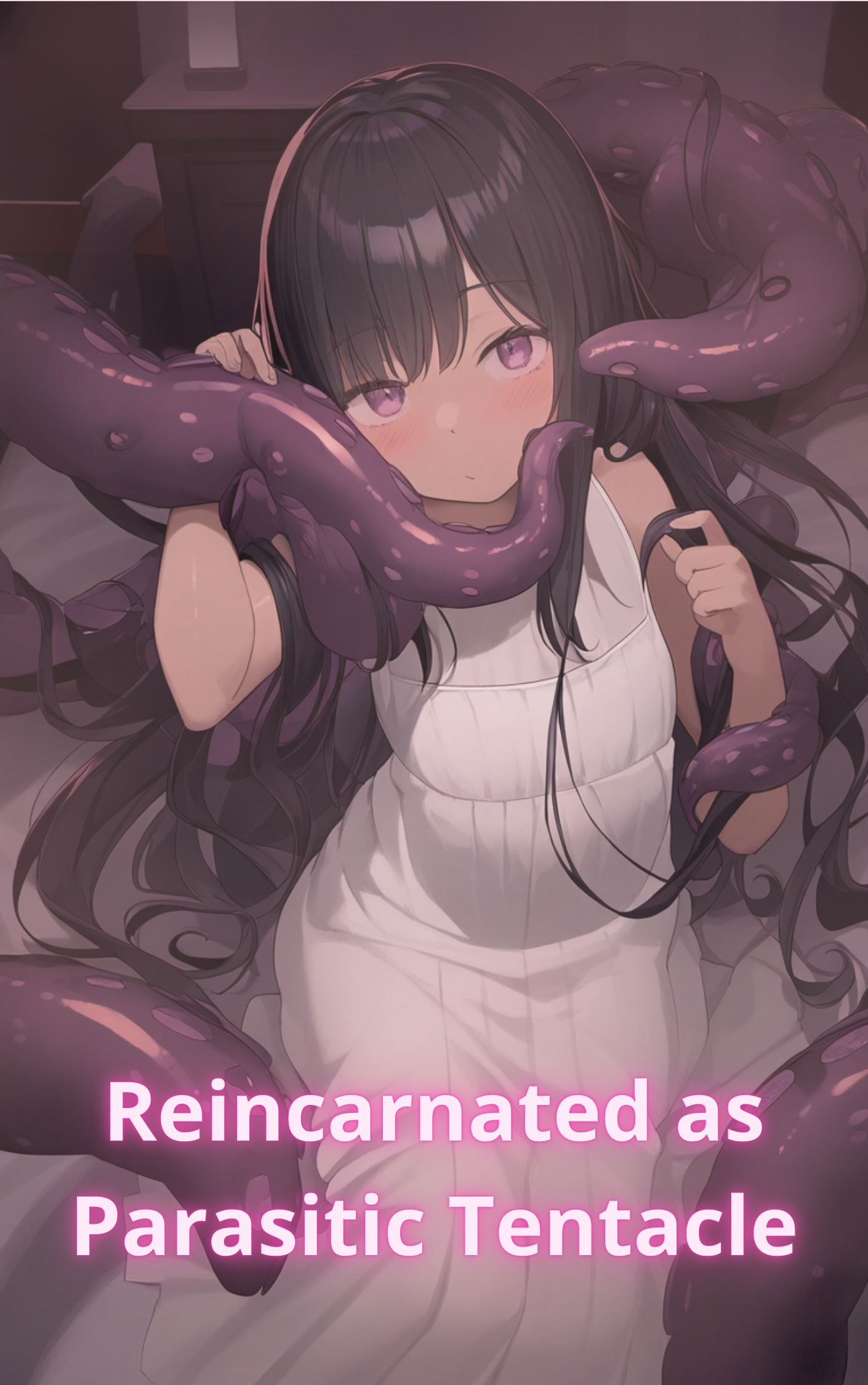
I have been thinking about this book a lot since finishing these chapters, and the central theme that won't leave me is symbiosis—what it means to be dependent on another living being, and whether that dependence can become something meaningful rather than purely exploitative.
Hiro is literally a parasite. He absorbs nutrients from Cecile. He uses her body as a vehicle for his own growth and pleasure. By every biological definition, he is a thief. But the book keeps complicating this. He chooses Nutrient Efficiency to reduce the burden on her. He chooses Adrenaline and Amphetamine injections to boost her stats rather than drain her. He evolves not to consume her but to protect her—well, initially to expand his reach, but the fact that he restrains himself shows something. The symbiote evolution path is literally described as mutualistic. The parasitic tentacle path is described as dangerous and something "races of order are advised to exterminate upon sight." Hiro is standing at a thematic crossroads and every choice he makes is a vote for which side he is on.
The stat system itself is a metaphor. Hiro starts at STR 1. Cecile has STR 15. He cannot survive without her. His growth is entirely dependent on hers. This mirrors real-world relationships where one person's strength comes from another's support. Is that parasitism or partnership? The book refuses to give a simple answer.
Then there is the motif of communication—or the lack thereof. Neither Hiro nor Cecile can speak to each other. He is trapped inside her body with no way to express his thoughts, his intentions, his care. She is trapped outside, unaware, trying to navigate a dangerous world alone. The barrier between them is physical and existential. And yet, somehow, a bond forms anyway. He learns her body's responses like a language. She unknowingly carries his survival in her womb. They are connected without connection.
The evolution choice at the end is the ultimate thematic statement. Symbiote vs. Parasitic Tentacle vs. Endul Worm. Each path represents a different philosophy of relationship. Serve another. Consume and multiply. Or exist purely for silk production, detached from any host altogether. Hiro chooses the tentacle—not because he is purely evil, but because he wants more. He wants expansion, variety, control. But he also shows restraint. The tension between desire and compassion is what makes this thematically rich.
I keep wondering: can a parasite ever truly care for its host? Or is all care just sophisticated self-interest? The book seems to be saying yes to both, and that ambiguity is where the real depth lives.