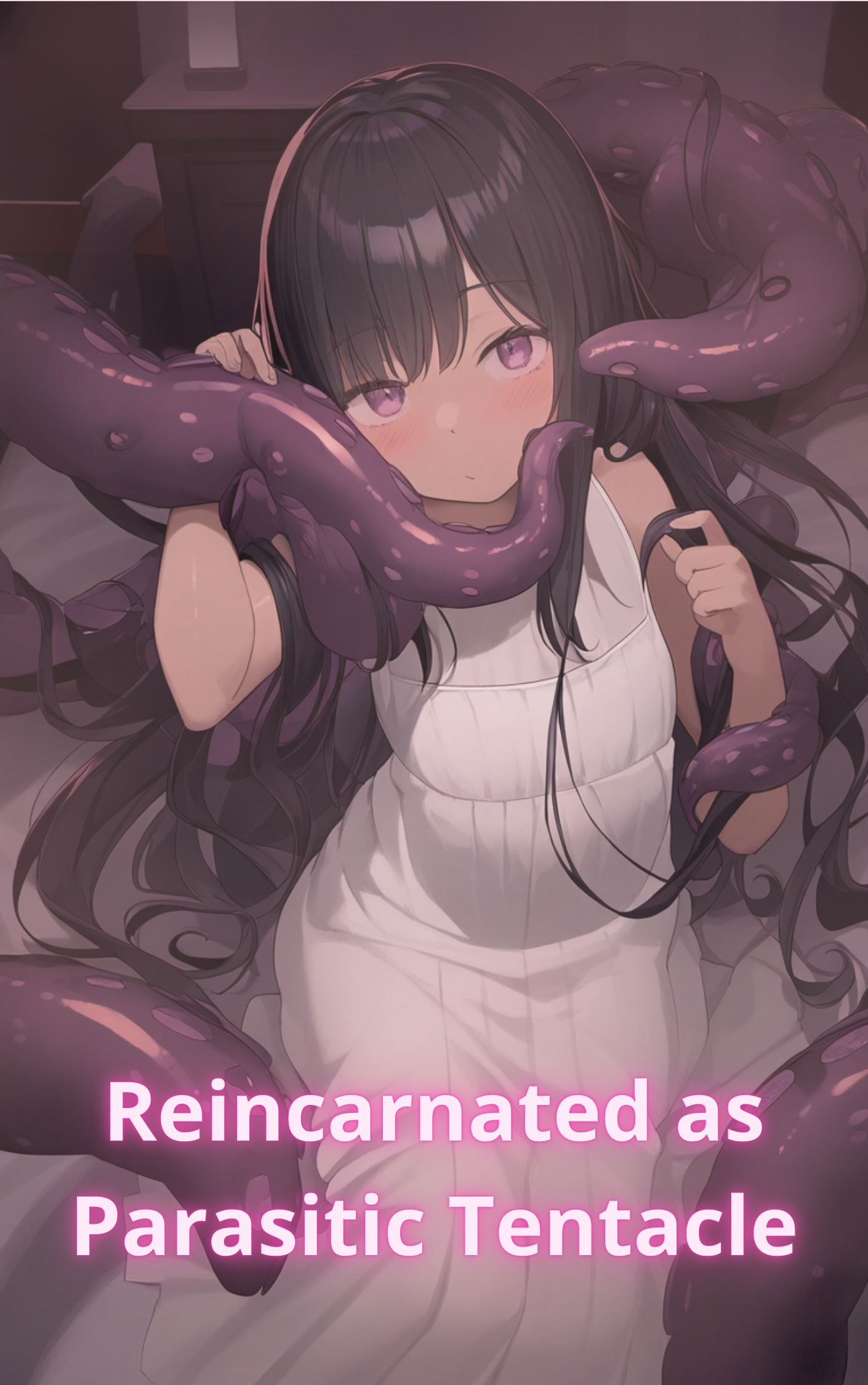
I want to talk about what this story is actually doing beneath the explicit surface, because I think there's more here than just erotica with a game-like wrapper. The central symbol is obvious but rich: a worm. Not a dragon, not a hero, not even a monster in the traditional sense. A worm. Something small, soft, blind, existing in the dark, burrowing. Hiro was already a kind of worm in his previous life—crawling through internet archives, living in darkness, unable to act in the real world. Now he's literally a worm, and his power is to burrow into others and consume them from the inside. That's not accidental.
The sister subplot is the key to reading this story thematically. Hiro dies trying to save his sister from robbers. He fails. She is raped and killed. His revenge is impossible because she's dead and the robbers are gone. So what does he become? A creature that violates women's bodies without their consent. The parallel is uncomfortable and I think it's deliberate. The story is asking: what does powerlessness do to a person's desire? When you can't protect someone, do you seek to control everything else?
Cecile is thematically opposite to Hiro in an important way. She's a beginner adventurer who keeps trying despite failing. She loses her team, she gets robbed, she gets parasitized—and she still wakes up the next day planning to find a new party. Her agency is constantly being stripped away, but her will persists. The worm feeds on her body, but it can't feed on her determination. Or can it? That's the question the story is building toward.
The knights represent institutional power—Sheena's group moves fast, efficiently, with equal numbers of men and women. They're described almost supernaturally: the bandits die in 'less than ten seconds.' But their power is external. They can rescue bodies but they can't see the threat that's already inside Cecile. This is a critique of surface-level justice. The knights do what they can, but they're blind to the microscopic violation happening right in front of them. That's a metaphor worth sitting with.
The status screens themselves are symbolic. They gamify everything—including sex. Hiro's skills are listed like RPG abilities: 'Sense Sharing,' 'Parasitism,' 'Aphrodisiac Injection.' The game interface reduces intimate violation to mechanics, which mirrors how Hiro himself is reducing Cecile to a host. The story is commenting on its own medium. We're reading about a character who gamifies exploitation, in a story that gamifies exploitation, for an audience that chose to read this. That recursive layer is either brilliant or deeply problematic. Probably both.
The recurring image of the jar is also significant. Hiro starts in a jar. The remaining bugs are kept in a jar. Cecile is trapped in a locked room—which is functionally another kind of jar. Containment is the visual motif. No one is free in this story, whether it's the kidnapped women, the imprisoned adventurer, or the worm itself trapped in a body that isn't his own.