Red Riding Hood - Reviews

Red Riding Hood
+Add to Custom List
Sort
Add review
... Read More
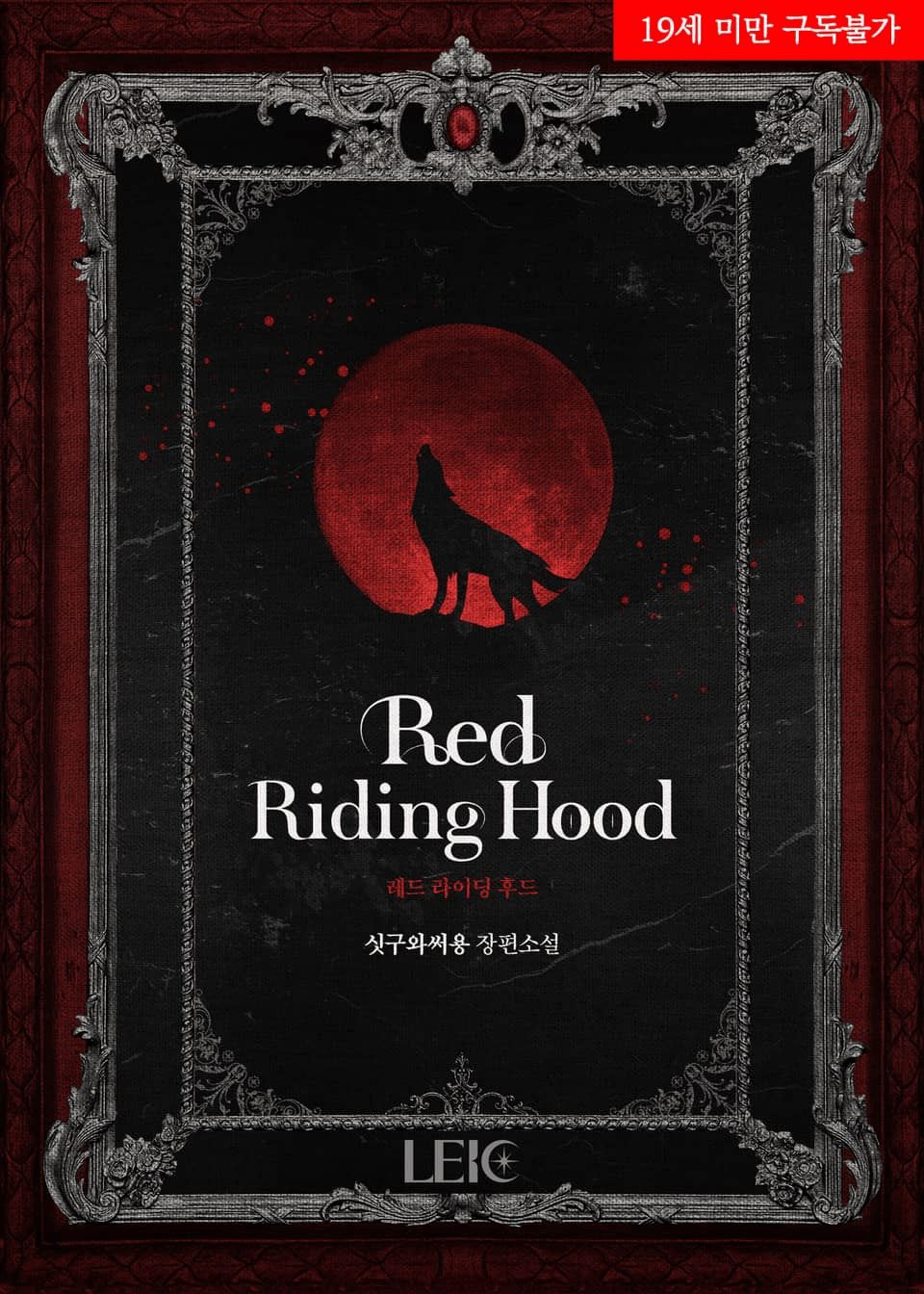
"We are all born with pure souls. Yet our souls are trapped in the sinful flesh, forcing us to live lives where we cannot feel full without killing, and cannot possess without taking." Every time Quiel speaks these lines—first as a child parroting his father's doctrine, then as a man weaponizing that same vocabulary to justify his obsession—I feel my stomach drop a little more. The author has given him a voice that is indistinguishable from genuine religious fervor, and that's the whole horror of it. He isn't lying. He genuinely believes his obsession is divine. He genuinely believes saving Cinq requires damning her. The internal monologues are where this book truly shines. They read like confessions whispered through a screen, like a priest dictating his sins directly to God while simultaneously committing them. The syntax itself is breathless and虔诚—long, cascading sentences that pile image upon image until you're drowning in devotion. 'Your lowered eyelids shimmered like pearls, and the flutter of your lashes was like the wings of a butterfly. Your small, upturned nose seemed blessed simply for existing.' This is someone narrating his own possession and calling it worship. And the contrast with Carbreux! The old man's dialogue is crude, physical, wheezing—'rancid smell wafted from his mouth,' 'phlegmy voice'—while Quiel's is lyrical, theological, elevated. Father is all degradation; son is all transcendence. But Quiel is the more dangerous one, and the author makes us feel that through the very texture of his speech. His voice is too beautiful, too persuasive, which means we can't trust a single word he says. Every beautiful sentence is a trap.
... Read More
Okay so this chapter? I literally stopped breathing at a few points. Let me start with THE moment—when Cinq, half-asleep from that sweetened wine, looks at Quiel and goes, "An angel…?" And Quiel's entire world just… melts. The text says his back was drenched in cold sweat from walking those ten steps to her bedside, like he was a caterpillar on a spider web, and then ONE smile from her makes all of that unbearable tension just dissolve. I've read so many romance novels and I can't remember one where longing is described with this much raw, almost painful tenderness. What gets me is how QUIET it is. No grand declarations, no dramatic music. Just a guy who has been holding himself back from even touching her hair without permission, and she in her sleep calls him an angel and suddenly all his restraint means nothing because he gets what he wanted. And then it twists. Because later, when she comes back to him after killing Vinya—and she LIED to his face about it, by the way, said a wolf did it while he buried the body himself—Quiel's reaction isn't relief. It's fury mixed with something else he can't name. He grabs her hand and presses it to his mouth under the mask and she screams. She SCREAMS. And then he sends his dogs after her. I'm sitting here like—bro, you drugged her, you manipulated her into murdering her abuser, and now you're mad she didn't play the role you wrote for her? And yet... and YET my heart still aches for him. The man writes himself a eulogy every night. He calls his own feelings "filthy longing, vile desire" and says "this cannot be love." But he bakes her favorite pastries with angel-shaped fèves every single morning and waits for her to come back. That's not a monster. That's someone who loves so badly he doesn't know how to be anything else.
... Read More
This chapter is an absolute masterclass in contrast. On one hand, you have this frozen, icy pond in the dead of winter — bleak, dangerous, the water black and cold. Cinq walking carefully along the thin ice, worried about falling in, wringing out her red skirt by a fire. It's harsh and survivalist. And then on the other hand, the Wolf describes Kalasca, and suddenly the entire scene transforms. His voice becomes almost musical — spring flowers, summer fruit, autumn wheat fields that shimmer like gold. He tells her the wheat is the same color as her hair and I literally gasped. That kind of detail doesn't come from nowhere; it shows that even while describing this place she's never seen, his mind keeps returning to her. The author also does something brilliant with the pond setting itself. It's both beautiful and dangerous. The ice looks solid but isn't. The water is clear but deadly if you fall through. And Cinq literally walks onto it anyway, distracted by the Wolf's stories, because she's too busy watching him to notice her own footing. That imagery is doing so much work. Oh, and Gybi — the lame warhorse — I love that the author kept giving him little moments. The bird droppings on his saddle, him snorting agreement with the Wolf's pirate story, biting his mane when panicking. This horse feels like a real character, not just a mount. The world building here is all woven into character interactions rather than info-dumps, which is exactly how you do it right.
... Read More
I need to discuss the stakes in this chapter because they operate on multiple levels simultaneously and the author never lets you forget any of them. At the surface level, there's the immediate physical conflict — Cinq falls into freezing water and almost drowns. The Wolf is genuinely terrified, and he yells something about Manann's pirate ships being less scary than seeing her in the water. That's not hyperbole coming from a battle-hardened knight. But the real conflict, the one that drives everything, is the fear of abandonment. Cinq has spent this entire chapter listening to the Wolf talk about Kalasca, about his knights, about a world she doesn't understand and doesn't belong to. She's shrinking smaller and smaller with every detail he shares. And the stakes she faces aren't about life or death — they're about heart. What if he saves her, marries her, brings her to this beautiful place... and then realizes she doesn't fit? What if she becomes disposable again? That's her terror. The author makes us feel it so viscerally because Cinq has never felt this fear before. She never cared what villagers thought, never cared about belonging anywhere. But loving Ylfus has changed her, and that change comes with vulnerability. When she finally speaks her fear, the stakes become even higher because now he HAS to respond. And he does — not with empty promises, but with a proposal and a future laid out in golden wheat fields. The conflict resolves, but the tension remains underneath, which is honestly more realistic and more compelling than a neat little bow.
... Read More
The dialogue in this section is so stylized it borders on theatrical and I cannot stop thinking about it. The White Goat especially—his speech patterns are unlike anyone else's. 'Dear Cinq. My sweet little liar, my sinful lamb.' That is not how a normal person talks. That is how a CHARACTER who carries centuries of religious symbolism in his mouth talks. And he doubles down: 'I can be the one who understands your sorrow, anger, and despair. Only I can do that.' He's basically performing sainthood at this point. The cadence is deliberate, rehearsed almost. You can hear the priestly resonance in every syllable. Cinq's voice contrasts beautifully against that. She's short, sharp, grounded: 'Priest, I don't need forgiveness. I really haven't done anything wrong!' No flowery language, no submission to his framing. She shuts him down and walks away. Her dialogue feels like someone who has stopped playing along with the stories others want to impose on her. And then Ylfus—oh man, Ylfus. His lines are sparse but loaded. 'The better to hold you close with.' 'The better to see your beautiful face with.' He's playing with the fairy tale framework knowingly, turning nursery rhyme structure into something sensual and intimate. When he whispers 'Cinq. Cinq…!' during their intimate moments, it stops being dialogue and becomes something more primal—less words, more sound, more need. The shift from crafted speech to broken breath tells you everything about where his character lives emotionally.
... Read More
Let's talk about the atmosphere in these opening scenes because something is VERY off and I love that the author doesn't spell it out. Cinq walks through this village and EVERYONE is being weirdly nice to her. The Cow doesn't yell at her for breaking milk bottles—the SAME COW who presumably would have lost his mind before. The cabbage gives her extra. Even the Fish apologizes. Like, full-on groveling apology from a fish. That is not normal behavior for this village, and the text makes it clear Cinq feels it too: 'It was as if… Everyone was trying to win her favor.' Win her favor for WHAT? The implications are chilling and the author is smart enough to let you sit with that dread. Combined with the visual theme of veils lifting—her headaches fading, her dizziness clearing, the translucent layers between her and reality dissolving—every scene becomes doubled. When she looks at the Cow, she sees not a cow but 'a person wearing a cow's head.' When she turns around from the White Goat, she sees a beautiful white-haired man with pink eyes instead. The world is literally revealing its true face as her perception clears. And the sunset description? 'A fiery golden sunset spread like a blaze'—it's breathtaking but it comes right after she's been having visions and seeing through disguises. Is that beauty real or is it part of whatever is peeling away? The gray temple, the stone wall, the plate of wine and galette left like an offering—this whole sequence feels like a ritual space even if no one calls it that out loud.
... Read More
I keep coming back to one line and I can't stop thinking about it: 'Everything in this village was gray. Damp moisture seeped into everything, fostering mold and moss. Even newly sprouted shoots and snowflakes descending from the sky were quickly stained the same dull color.' That sentence contains the entire emotional architecture of this novel. The world here isn't just a backdrop—it's a character. A suffocating, rotting, beautiful character that absorbs everything. And yet—AND YET—this author manages to make Cinq visually burst out of every gray scene like a wound in the film. The red hood. The golden hair. The blue eyes described as 'a pristine blue that neither pale snow nor damp moss could ever dare face.' She's not just a character, she's a chromatic rebellion against the entire world. When she jumps into the puddle and Vinya screams, I physically laughed out loud because the color theory alone is doing so much work. But the scenes that absolutely wrecked me are the quiet ones. Cinq sleeping like a baby bird on a thin blanket, arms bare, clutching a cushion. The long veil fluttering behind Quiel at night like wings as he walks toward her room. The ice-cold stone wall he presses his forehead against while listening to her cry from outside. These aren't descriptions—they're paintings, and they're haunting. The temple itself, the Gray Temple, the beast masks, the graveyard where red butterflies flit among tombstones—all of it creates this claustrophobic, gothic fairy-tale atmosphere that feels lived-in and ancient. You can smell the damp, the rot, the moss. You can feel the cold stone. This world doesn't just exist on the page; it seeps into your ribs.
... Read More
Can we just... can we talk about Ylfus for a second? Because I genuinely cannot. I am not okay. He's a paladin. He's lived his entire life in abstinence. He's seen battle, he knows about these things from mercenaries' crude stories—but he's never actually experienced it. And here he is with Cinq, his bride, and the way he talks to her. 'I'm sorry, Cinq. I'm... a bit... no, quite a lot bigger... But don't worry, Cinq. It'll all fit. Because you and I were made to fit together.' That line. That absolutely unhinged, tender, slightly ridiculous line. It's so earnest and so completely vulnerable for a man who is literally described as a great knight, a paladin, the Wolf. He's worried about hurting her. He's asking for permission repeatedly. 'Is it alright if... I continue...?' And when she nods through tears, he doesn't just take—he comforts her. He licks her tears from her lashes. He kisses her forehead, her nose, her cheeks, her ears. He holds her left hand the entire time. This man could probably bench press a horse and he's holding her hand like she's the most precious thing in the world. And then the aftermath—she's crying, overwhelmed, saying 'I can't get married anymore' because she wet herself and felt shameful. And his response? 'Little one, that's not it. It's not like that. Even if it were, it wouldn't matter... This is because it felt so good, because we fit so perfectly together.' He reframes her shame as proof of their connection. He tells her 'I love you' while still inside her. While pepperering her face with kisses. 'Cinq, my Cinq. Of course I won't die. I just met you, I just learned this, so how could I?' The CP energy here is absolutely nuclear. Everything about their dynamic screams mutual devotion. He's gentle despite being overwhelming. She's terrified but chooses to trust him anyway. And the final moment—she teases him by threatening to make him lose control, he chuckles and holds her close. This isn't just lust, it's tenderness wrapped in raw physicality. What gets me is the contrast. Cinq has spent her whole life being treated as disgusting, sinful, broken. And here is this man who looks at her with genuine awe and love, who calls her 'my bride' and 'little one' and 'my Cinq' with such reverence. The emotional journey from her fear to her tentatively accepting his love—'Don't die. Please'—that's the most intimate line in the entire chapter. She's not asking him to stop. She's asking him to stay alive.
... Read More
Okay, I need to talk about how these characters SPEAK because the dialogue writing is genuinely exceptional here. Ylfus's voice is instantly recognizable. He's a knight, a warrior, a paladin—but he doesn't sound like any of those things when he talks to Cinq. His sentences are fragmented, breathless, almost childlike in their sincerity. 'Uh, ugh. Ha, uh.' His own internal monologue when describing her breaks down into incomprehensible sounds. This isn't a polished nobleman delivering speeches. This is a man who has never felt anything like this before and doesn't know what to do with himself. Compare that to how he speaks in other contexts. When he receives the hawk's message: 'Hahaha! Cinq, listen to this! Sir Brian's knights have finally won!' — there's joy, directness, informality. No noblesse oblige. He includes her in his excitement immediately. 'Then, Cinq, we'll leave this place together.' Not 'I will return with my knights.' Not 'we shall depart when the time is right.' Together. Simple. Certain. Cinq's dialogue is just as distinct. She's quieter, more tentative, but when she speaks it matters. 'But... but this is our first night. We... can't stop, can we?' That's her making a choice despite fear. Later: 'Don't die. Please.' Those two words carry more emotional weight than any monologue could. And her teasing at the end—'If you don't open your eyes, I'll make that pretty fluid come out again'—that's Cinq finding her voice, her power, her playfulness. She's not the broken girl anymore. The village dialogue is where the author shows range. The Pig's lines are casual, gruff, almost mundane: 'What's this, Cinq! When did you come in? Buying more meat? Aren't you eating too much lately?' The crude jokes are offhand, not malicious—which makes them worse somehow. The whispering behind the sausages is fragmented, incomplete, creating this sense of a community talking about someone without them present. It's realistic in a way that's deeply uncomfortable. One line that absolutely destroyed me: 'Cinq, little one. Don't cry.' The way Ylfus switches between passionate lover and gentle comforter, never losing his voice either time. His dialogue during the intimate scene is raw and breathless; afterwards it's soft and steady. Same man, different register, both authentic.
... Read More
Let me just say — the pacing in these chapters is absolutely INSANE and I have notes. We open with the White Goat touching Cinq's fingers. That's already terrifying. Then he SENDS THE DOG-HEADED CREATURES after her. The chase sequence hits HARD and FAST — she runs, they catch her, ONE BLOW and she's on the ground, kicks rain down, they strip her shoes, she's left alone bleeding. This section moves at a breakneck pace and it's deliberately brutal. You don't get to breathe. You don't get to process. It just HAPPENS and that's what makes it so horrible. Then — and this is where the author is a GENIUS — the pace SHIFTS. COMPLETELY. Cinq walks through the forest and encounters Six's ghost. The prose slows down. Becomes dreamlike. The wind becomes a tongue, the branches crack like bones being crushed — these extended metaphors force you to SLOW YOUR READING. The author wants you to feel disoriented, lost, caught between death (Six pulling her toward the forest) and life (Vinya's house calling her). And then — HOME. The wolf is there. And the pacing here is almost glacial compared to what just happened. Every action is deliberate: he speaks, she responds. He boils water. He soaks a towel. He brings a basin. He kneels. He applies ointment. The sentences stretch. The physical descriptions linger. It's like the author is deliberately making you SAVOR every gentle moment because you know how close we just came to something unspeakable. The romantic scene that follows maintains this slow, reverent pace. Long descriptive passages. Dialogue interspersed with action. The author refuses to rush through anything. Even the erotic content is paced with pauses — questions, hesitations, Cinq's internal reactions. It's not a quick scene; it's an EXPLORATION. The structure here is basically: Terror → Disorientation → Safety → Intimacy. Each section has its own rhythm, and the transitions between them are jarring by design. You go from "ruthless kicks rained down on her small body" to "he boiled water, soaked a towel, and wiped her face" and the contrast is SO sharp it's almost painful. My only complaint? I wanted MORE of the wolf and Cinq moments after the intimate scene. The chapter ends mid-climax basically and I am NOT READY for that.
... Read More
There's something deeper happening in these chapters that I can't shake. Let me try to articulate it. The central symbol that keeps coming back to me is the red hood. Cinq wears it when she goes to the village. Red in a gray world. She's literally the only colorful thing in a monochrome setting. And the narrator calls her a 'red butterfly'—fragile, beautiful, out of place. But butterflies also symbolize transformation. Cinq has been through hell, and she's emerging. The red hood is her armor and her flag. Then there's the lamb. 'A sheep with fleece as white as clouds lay still. Headless.' This is loaded. The lamb is the ultimate symbol of innocence, of sacrifice. Headless—that's erasure. This is a world that destroys innocence and pretends it didn't happen. The slaughtered animal is literally on display, part of the commerce, while the villagers discuss Cinq's 'sins' behind hanging sausages. The connection between the headless lamb and Cinq's treatment by this society is not subtle, and that's the point. The brothel itself is a symbol of how this society handles women's bodies—commodity, sin, disposal. The 'nasty old brothel mistress is gone,' and now a new one arrives. The system continues regardless of who runs it. Cinq has been treated as if she were part of that same machinery, even though she clearly isn't. The villagers say 'She's committed sins too'—but what sin is that? Existing as a woman who wasn't born into this particular social hierarchy? The galette from the temple is another symbol worth noting. Food as blessing, as community, as acceptance. Cinq hopes the priest will give her some. She wants to be included in the New Year's celebration. But the village that offers her warmth (the cabbage vendor) also offers her judgment (the butcher's gossip). She's caught between belonging and exclusion. And Ylfus—his name means 'Wolf' in some etymologies. He's the predator who protects. The knight who is also beast-like in his passion. There's a symbolic tension there that mirrors Cinq's own duality: she's been seen as broken but is actually becoming whole. The intimate scene is about her reclaiming her body from shame—that's the deepest theme running through everything. Her tears during sex aren't just from pain; they're from the release of carrying shame for so long. When Ylfus says 'we fit so perfectly together,' he's talking about more than bodies.
... Read More
I need to appreciate the structural choices here because wow. This section spans what I think is roughly eight chapters (40-47) and covers an enormous amount of ground. We go from an extended intimate scene → the next day → receiving news of military victory → a seemingly calm shopping trip → a disturbing encounter at the butcher shop → an unresolved cliffhanger. That's a LOT of narrative territory for what reads like a continuous flow. The pacing of the intimate scene itself is deliberately slow. The author doesn't rush. There are moments of pain, adjustment, fear, then gradual pleasure, then the first climax, then the second wave. Each beat lands before the next begins. The prose slows down exactly when it should—when Cinq is struggling to breathe, when Ylfus is whispering into her ear. Then after the scene concludes, there's a natural cooldown. The hawk returns. The news is delivered. This is what good pacing feels like—never forcing, never rushing, letting scenes breathe. But then the shift to the village is where the author shows real skill. The news of Sir Brian's victory resolves the external military conflict, which could've been a letdown—like 'oh, the war's over, now what?' Instead, the author immediately pivots to something more dangerous. The village that Cinq thought she understood reveals its true nature. The pace quickens slightly as she moves from shop to shop, building unease. The milk shop is minor. The cabbage vendor is warm. Then the butcher shop—everything changes. The pacing tightens. The dialogue becomes coded, threatening. The hanging sausages as curtains creates this theatrical sense of hiding, of secrets behind facades. The chapter ending is an absolute masterstroke of cliffhanger construction. 'Outside, she found herself...' — and then nothing. Mid-thought. Mid-action. Whatever she found herself doing, we don't know. The reader is left hanging in the most painful way possible. What's interesting is how the author handles the transition between internal and external conflict. The first half is deeply internal—two people discovering each other physically and emotionally. The second half is external—war news, village politics, social judgment. The bridge between them is the New Year's Eve setting, a liminal time that marks endings and beginnings. Perfect structural choice.

Leave a comment

You must be logged in to leave comments. or
