Summary

... Read More

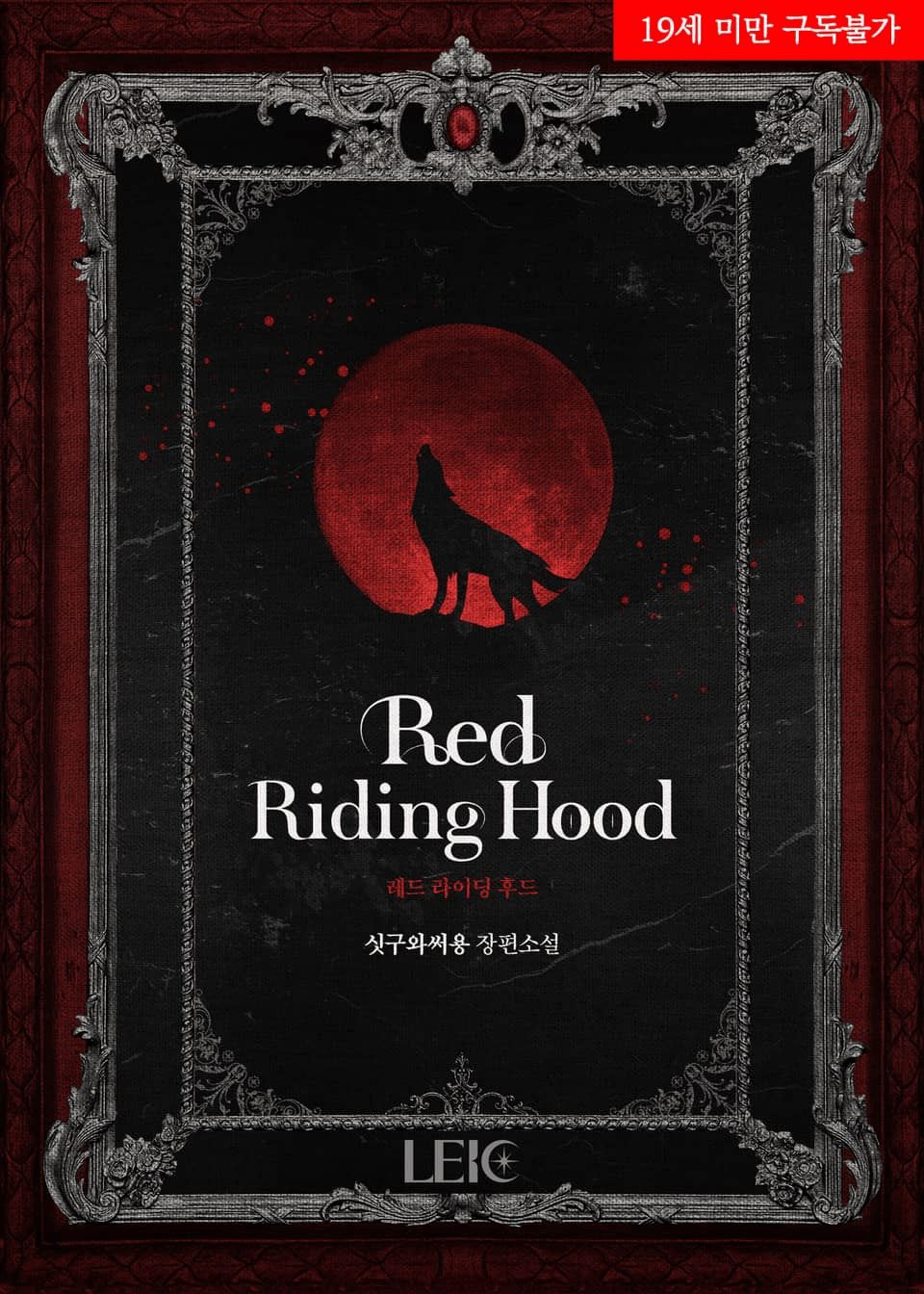
Cinq, known as Red Riding Hood, lives in the gray, ash-covered village of Mindie, a place inhabited entirely by non-human beings who resemble animals in human guise. The fish-headed shopkeeper, horse-headed coachman, and pig-like villagers treat her with hostility and contempt. Her only companion was Six, another human who cared for her until dying of illness. Six's death leaves Cinq isolated and vulnerable under the control of Old Vinya, a brothel keeper who exploits Cinq’s beauty for profit. Cinq is summoned by White Goat, the goat-headed priest who holds religious and social dominance over the village. White Goat claims Cinq as his own, vowing to remove her red hood, which symbolizes her virginity and innocence. He warns her to beware the Black Wolf, a mythical beast prophesied to bring blood and death.

While returning home through the dark forest, Cinq is plagued by hallucinations and whispered voices from the wind, urging her to submit to her fate. She encounters the ghost of Six, which beckons her into the shadows, but Cinq refuses and continues to Vinya’s house. Inside, she discovers Vinya dead and a massive figure in black armor standing over the body. The figure reveals himself to be a man, not a wolf, though he wears a wolf-shaped helmet. He introduces himself as Ylfus Gracian, a paladin who fled a brutal civil war after being betrayed and left for dead. Ylfus explains that Vinya attempted to poison him, leading to her accidental death. Cinq, initially terrified, realizes Ylfus is human like herself. She decides to hide him and tends to his severe battle wounds, administering medicine and cleaning his injuries. During this time, she drinks Vinya’s special tea, which induces hallucinations but also grants her courage and numbness to pain. Ylfus later reveals the tea is poison, meant to keep Cinq compliant and docile.

After treating Ylfus, Cinq goes to the temple to report Vinya’s death to White Goat. She lies, claiming a wolf killed the brothel keeper. White Goat becomes enraged upon hearing Cinq declare her freedom from Vinya. He asserts that she belongs to him and commands his dog-headed servants to capture her. Cinq is beaten and stripped of her shoes, forced to walk barefoot through the forest in pain. She returns home, where Ylfus discovers her injuries. Overcome with rage and tenderness, he cares for her wounds and confesses his love, initiating an intimate relationship that helps Cinq heal emotionally and physically. Their bond deepens as they share domestic life, with Ylfus learning about the supernatural elements of Mindie and Cinq learning about Ylfus’s past as a noble knight.

Ylfus’s backstory reveals he is the heir to the Gracian family, who joined the Holy Order of Paladins to escape arranged marriages. He fought in a war between two royal brothers, Brian and Sidney. Betrayed by King Sidney’s forces, Ylfus was left for dead on the battlefield. Guided by the voice of his mentor, Sir Philip, he chose to live rather than die as a beast of war. He escaped into the forest, where he found Cinq. For Ylfus, Cinq represents the redemption of his humanity and the fulfillment of his vow to love and protect. The narrative shifts between Cinq’s present experiences and Ylfus’s past, highlighting the contrast between the corrupt, monster-filled village and the pure, human connection developing between the two protagonists.

As Cinq recovers, she begins to reject the hallucinogenic tea, experiencing clearer vision and stronger emotions. She acknowledges the spirits in the forest, including the ghost of Six and a shy Angel who watches over her nights. The Angel’s absence coincides with Ylfus’s arrival, suggesting he has replaced the divine guardian in Cinq’s life. The couple prepares to leave their secluded home to hunt for meat, requiring Cinq to venture into the dangerous village. Ylfus, still recovering, accompanies her on a cane. Their relationship evolves from gratitude and dependency to mutual love and partnership. Cinq begins to see Ylfus not just as a savior but as a companion who shares her burden. The story establishes a central conflict between the oppressive, supernatural society of Mindie and the growing bond between two humans seeking freedom and love.

The narrative explores themes of identity, liberation, and the nature of monstrosity. The villagers, despite their human-like appearances, exhibit cruel and monstrous behavior, while Ylfus, a man with a warrior’s exterior, displays tenderness and devotion. Cinq’s transformation from a submissive victim to an empowered individual is marked by her rejection of Vinya’s poison and her acceptance of Ylfus’s love. The white hood, once a symbol of her vulnerability and sexual availability to the priest, becomes a token of her resilience. Ylfus’s desire to protect Cinq aligns with his paladin vows, yet he chooses a personal path of love rather than blind religious duty. The impending confrontation with White Goat and the dog-headed enforcers looms as the next major conflict, threatening to disrupt the fragile peace Cinq and Ylfus have built.

Cinq’s internal struggle with her past trauma and fear of the forest spirits is gradual. She learns to distinguish between hallucinations and reality, aided by Ylfus’s steady presence. The ghost of Six remains a haunting presence, representing Cinq’s grief and the loss of her only previous connection. However, Cinq’s commitment to living in the present with Ylfus begins to overshadow her mourning. The angelic figure serves as a subtle spiritual guide, reinforcing the theme of divine protection through human love. As they prepare for the hunt, the couple’s dynamic reflects a growing equality, with Cinq contributing domestic care and Ylfus providing physical protection and emotional support. The story sets the stage for a broader conflict involving the supernatural hierarchy of Mindie, with Cinq and Ylfus positioned as outsiders challenging the established order.

The climax of the prologue and early chapters centers on the reunion with Gybi, Ylfus’s horse. The arrival of the horse symbolizes Ylfus’s potential return to his former life as a knight and his connection to the wider world beyond Mindie. Cinq fears this might lead to Ylfus leaving her, revealing her insecurity about their transient safety. Ylfus reassures her, emphasizing his commitment to staying by her side. The horse’s return also hints at future adventures and the possibility of escaping the village entirely. The narrative balances intimate character development with the looming threat of the supernatural forces in Mindie. Cinq’s journey toward self-discovery is intertwined with Ylfus’s quest for redemption, creating a dual arc that drives the story forward.

The description of Mindie’s gray, desolate landscape mirrors the emotional state of its inhabitants, who are trapped in cycles of abuse and fear. Cinq’s red hood stands out as a vibrant symbol of life and defiance against the drab surroundings. Her interactions with the animal-headed villagers highlight the absurdity and cruelty of their society. The fish shop owner’s crude behavior and the horse coachman’s threats illustrate the lack of empathy and humanity in the village. In contrast, Ylfus’s gentle treatment of Cinq and his reverence for her body challenge the objectification she has endured. The story uses these contrasts to critique societal norms and advocate for personal autonomy and compassionate relationships.

As the narrative progresses, Cinq’s health improves, and her confidence grows. She begins to plan for the future, considering how to sustain her life with Ylfus. The decision to hunt for meat requires navigating the dangers of the village, setting up potential obstacles and confrontations. Ylfus’s injury limits his mobility, making Cinq’s role even more crucial. Their partnership is tested by external threats and internal doubts, but their love provides a foundation for overcoming these challenges. The story concludes with the couple preparing for their journey, symbolizing their readiness to face the unknown together. The underlying tension between their desire for freedom and the constraints of their environment creates a compelling narrative arc.

Latest Release
DateGroupRelease
2026-09-27citrus aurora c69
2026-09-27citrus aurora c68
2026-09-27citrus aurora c67
2026-09-27citrus aurora c66
2026-09-27citrus aurora c65
2026-09-27citrus aurora c64
2026-09-27citrus aurora c63
2026-09-27citrus aurora c62
2026-09-27citrus aurora c61
2026-09-27citrus aurora c60
2026-09-27citrus aurora c59
2026-09-27citrus aurora c58

Community Reviews

Rating(3.8 / 5.0, 57votes)
5 stars
17(30%)
4 stars
15(26%)
3 stars
20(35%)
2 stars
5(9%)
1 stars
0(0%)

Popular reviews

... Read More
I keep coming back to colors in this text. They're not accidental. I'm pretty sure the author is building a whole visual language here. Cinq wears a RED HOOD. Not once but repeatedly emphasized. When she heads to the village, she's described as "like a red butterfly" flitting through gray streets. Red = life, passion, danger, sexuality, but also FREEDOM. The moment she says "no one can take off my red hood"—that's her claiming herself. The hood was probably imposed on her (prostitute marker?) and now she's redefining what it means. Then the White Goat priest wears PURE WHITE robes. But his fingers carry "the scent of grave soil." His mouth is "pink." Everything about him is constructed purity masking something rotten. The lamb outside the church—white, fluffy, well-cared for—is apparently there for "a use." Isn't that just the most chilling detail? A sacrificed innocence wearing the costume of purity. And the Wolf himself—his body is described as dark bruises, blood, hardened armor, swollen and inflamed. He's literally carved up, hammered like iron on an anvil. His quote about becoming finer steel vs. being reduced to a bloodied mess? That's the thesis of the entire book written in one metaphor. He was supposed to be refined by suffering but instead was broken by it. And yet—he survived. He chose to live. The blood-soaked underpants scene is also weirdly symbolic when you think about it. The Wolf's most vulnerable, human moment happens while wearing someone else's (Vinya's!) underwear. Power dynamics flipped. The brothel keeper's remnants become the Wolf's temporary clothing. Symbolically? Vinya's control is being replaced by something else entirely. Also—Cinq drinking Vinya's tea twice in one day. That's not just a plot device. That's her reaching for clarity, for the ability to act when fear would normally paralyze her. The tea is a proxy for courage. She literally chemical-assists herself into bravery. That hit me harder than I expected.
... Read More
The atmosphere of this book is basically grief made physical. The village of Mindie isn't just gray; it's 'ash-draped,' 'withered,' 'emaciated.' Even the dogs look sad. Cinq walks through it leaving 'ashen footprints.' That's not a setting; that's a mood ring for her soul. She's mourning Six. She's terrified of Vinya. She's trapped under White Goat's 'gentle' gaze. And then the Wolf appears. But it's not romance—not yet. It's safety. It's confusion. It's the first time someone else in this fucked-up world admits they didn't want to hurt Vinya. Let's talk about Cinq and Six. Six is dead, but her presence is everywhere. The cream stew Cinq imagines cooking. The dirt and tears Cinq sprinkled on her face. The shadow on the path that says 'Tonight's dinner is roasted pork.' That line! It's domestic, normal, warm—and it's coming from a ghost. Cinq rejects it. She chooses the hard path. That's love, isn't it? Not following the dead into the dark, but honoring them by surviving. It broke my heart a little. I literally sat there going 'oh, sweetie, no, don't go into the spooky forest, just eat your cheese bread.' Then White Goat. 'I will be the first to remove your red hood.' Religious symbolism? Sexual threat? Both? The scent of 'cold ashes and rotting meat' on his breath makes my skin crawl. Cinq freezes. She wants to run but can't defy him. That's trauma response 101. And then the Wolf saves her. But his touch is 'rough and massive, saturated with the smell of leather and metal.' Not soft. Not gentle like White Goat's fake tenderness. Real. Rough. Honest. When he apologizes, it's raw. 'Anyway, I'm sorry for the trouble.' That's it. No grand speech. Just accountability. And Cinq's reaction? She inspects him. She pulls off his helmet. She discovers he's human. And what's her emotional state? Relief? Curiosity? The text says 'Although relieved to encounter another human, Cinq couldn't help but feel a bit bewildered.' Bewildered. Not scared. Not thrilled. Just... confused. Because her whole world has been monsters and predators, and the monster turned out to be a man. The man turned out to be kind. The kindness feels alien. That's the emotional journey right there. Disorientation. Hope. Terror. And that's what keeps me turning pages. Not plot twists. Just the quiet, devastating moments of a girl trying to figure out who to trust in a world that rewards cruelty.
... Read More
I need to talk about how this chapter handles one of my absolute favorite plot devices — the seemingly small moment that unravels everything. The ice cracking under Cinq's feet isn't just a physical danger, it's the exact moment her deepest fear finally surfaces. Up until that point, she's been holding it together, pretending she's fine with the Wolf talking about Kalasca and his knights, pretending she doesn't care that he has a whole world she doesn't belong to. And then — crack. Ice gives way, she falls in, and suddenly all that suppressed emotion comes spilling out like floodwater through a broken dam. The line 'Don't speak as though I'm precious to you, when you're just going to leave me behind!' — I genuinely sat up in bed reading that. It's so painfully honest. She's not being dramatic, she's being terrified. And what makes the plot even more satisfying is how the author then turns it around. The Wolf doesn't brush it off or get annoyed. He actually asks her to come with him. The entire setup — his past battles, his homeland, his duty — all of it was leading to this moment where he has to choose between his world and her. And he chooses her. That proposal scene? Chef's kiss. But honestly, the part that made me lose it was the blood vow. Who needs a fancy ring when you can draw blood and press your palms together? It's raw and primitive and absolutely perfect for these two characters who don't care about ceremony.
... Read More
This book is obsessed with a single devastating question: can you save someone by corrupting them? And it wraps that question in layers of symbolism so dense they practically glow. The gray of Mindie is the most pervasive symbol—gray soil, gray tombstones, gray snow, gray mold. It's the color of spiritual death, of acceptance, of giving in. Quiel's fear isn't just that he'll die here; it's that he'll become gray: 'I'll end up the same.' Neither sprouts nor snowflakes wanted this fate, but they're stained anyway. Cinq is the only thing that resists the gray, and her red hood is literally a flame in a funeral procession. But here's what gutted me: the beast masks. Every resident of Mindie chose to wear them—to hide their shame, to become something non-human. Quiel tells Cinq she must 'don a beast mask, crawl to his feet, and beg for forgiveness' if she's to be saved. Her salvation requires her to become like them. To accept the logic of this world. To stop being pure and start performing repentance for sins she may not even understand. The theology is inverted at every turn. 'Our God cherishes even our sins, delighting in the sweetness of the stains upon our pure souls.' This isn't Christianity; this is blasphemy dressed as faith. And Quiel is its high priest—not because he's holy, but because he's the first person honest enough to admit that his desire for Cinq is itself the sin that makes salvation possible. He is both the sinner and the saint, the demon and the angel, and that contradiction is where the book finds its terrible, aching beauty.
... Read More
Alright let's talk about voices because this book has SEVERAL and they're doing different things. The Wolf's dialogue is immediately distinctive. He calls her "little one" constantly but it's not creepy—it's affectionate, almost playful, like a beast who's discovered he can use words now and he's enjoying himself. His lines have this gravelly warmth to them: "Little one, I'm truly sorry. I didn't mean to startle you, but I couldn't help it." Bro. He's a literal wolf-man apologizing for his pants erection while she's treating his wounds and I am SCREAMING. But also—the humor works because it's grounded. He's genuinely embarrassed. His voice carries weight even when he's being funny. Cinq's voice is sharper, shorter, drier. She doesn't waste words. When she says "Then pay me for the medicine later," there's this entire personality in three words. She's tough, practical, and clearly done with nobody's nonsense. I love her voice. And then—the White Goat. Oh god. His dialogue shifts so subtly it's scary. Starts soft: "How is the light of your soul today? Did you, perhaps, commit a sin last night that cannot be spoken of to others?" All silky and gentle. Then: "Cinq! Freedom, you say?!" That line alone did more work than ten pages of exposition. The author uses dialogue as a weapon there. One moment the priest is a whisper, the next he's roaring. And Cinq's response—"Of course"—so calm, so defiant. Her voice never breaks even when she's terrified. That's character writing at its finest. One complaint: sometimes the Wolf's dialogue feels almost TOO charming, like he's narrating his own romance novel. But honestly? That might be the point.
... Read More
The stakes in these chapters are OFF THE CHARTS and I need to talk about why this works so well. On the EXTERNAL level, Cinq is caught between multiple threats. The White Goat — who has clearly established himself as a predatory, manipulative figure — wants her. The dog-headed laborers are his enforcers. They attack her with overwhelming force. One punch and she's down. Multiple kicks. They strip her of her shoes. This isn't just violence — it's a POWER DISPLAY. They're telling her: you belong to us. You have no protection. But here's what makes the stakes even MORE tense — Cinq is ALREADY emotionally devastated. Vinya is gone. Six is dead. She has no one. When she walks through that forest alone, barefoot, bleeding, the question isn't just "will she survive physically" — it's "will she survive emotionally?" Will she succumb to Six's ghost? Will she just... stop? The INTERNAL conflict is equally brutal. Cinq has spent her whole life hardened herself. She describes herself as "something hard and unyielding, like a stone of the earth." She believes nothing can hurt her because she's already stopped feeling. But the wolf — through tenderness, through genuine care — cracks that shell. And this terrifies her MORE than the violence did. Because violence she understands. Vulnerability? That's unknown. That's dangerous. "She felt like a baby bird inside a thick eggshell, as though something inside her might awaken if the shell were tapped further." — this is the core conflict RIGHT HERE. The conflict isn't just survive vs die. It's STAY BROKEN vs GET HEALED. And healing is scary as hell because it means you have something to lose now. The scene with the wolf raises the stakes dramatically because it's not just romantic — it's TRANSFORMATIVE. Every moment of intimacy is also a moment of choice. Cinq chooses to trust him. To be vulnerable. To want pleasure. To say "please love me." These are HUGE stakes for someone who's been treated as prey her entire life. And the White Goat's parting line — "You charming little liar. You'll come back to me in the end" — is a THREAT that hangs over everything. He's not done with her. The conflict isn't resolved. It's escalating. Cinq thinks she's safe now but she's not. And that cliffhanger energy is exactly what keeps you turning pages at 2 AM.
See all reviews

Custom lists

See all custom Lists