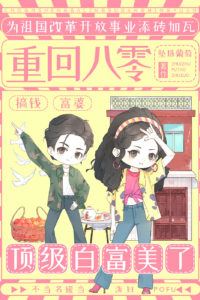
There's a lot happening beneath the surface of this passage, and I want to talk about the symbols the author keeps dropping like they're nothing but they're actually everything.
The stinky sauce. Right at the beginning, Lin Xiaqing has this epiphany about the sauce jar—"the stinkier, the tastier." She sees it as her first pot of gold, a product with unique value that she can sell strategically in the city. But then there's the lard. The lard is worth more. It's liquid cash. It could solve the immediate problem. But she refuses to sell it. The sauce is something she can transform, something she can build into a business. The lard is just... money. The sauce represents her future, her ambition, her agency. The lard represents survival. And she chooses the harder path—the one that requires work and creativity instead of taking what was given to her as charity.
This is the central moral question of the passage: what kind of person do you become when everything is hard? Lin Xiaqing's answer is that you hold the line. "There were some lines she would never cross." Not because it's easy, but because once you cross them, you can't come back. That's the theme—and it's not stated as a lecture. It's stated as a girl's quiet decision in a dark room before dawn.
The window bed. Everyone wants it. Jin Yang wants it because he saw apples. Lin Xiaqing wants it because it's the best bed. The nurse says everyone likes the window seat—bright, with a view and fresh air. But Jin Yang's reason is different. He's starving. He's exhausted. He sees food and he wants it. The window bed becomes a symbol of desire itself—what each person wants from it reveals who they are.
Then there's the apple peel superstition. This is such a small detail but it carries so much weight. Lin Xiaqing makes a bet with herself before every important decision: if the peel stays whole, good luck; if it breaks, danger. This isn't just character flavor—it's a symbol of her relationship with fate. She's a rural girl in the 1980s who's trying to navigate a world that doesn't have rules for people like her. So she creates her own rituals. She tries to read signs. She prepares herself mentally for whatever comes. The apple peel snapping right before Pockmark kicks the door in—that's not just dramatic irony, that's the author telling us that Lin Xiaqing's intuition is correct and the storm is coming.
The car. Jin Yang's Crown 122. He brought it from Hainan through "some tricks and smarts." It's damaged, fragile, Japanese. He's from Beijing, connected, refined. The car is a symbol of his world—imported, valuable, but also vulnerable. One tap to the rear and it's toast. Meanwhile, Pockmark's gang represents the local world—brutal, opportunistic, unrefined but dangerous in their own way. The car crash is the collision of two worlds, and Lin Xiaqing is caught in the middle of both.
The anti-crime campaign. The text mentions it repeatedly—"the ongoing anti-crime campaign was in full swing," "the nationwide crackdown on crime." This isn't just background. It's a thematic element. The campaign represents the state trying to impose order on a society that's opening up and becoming more chaotic. Pockmark's gang is reckless BECAUSE of the campaign—they're acting out while the crackdown is happening. Jin Yang's father, Deputy County Chief Lu, IS the campaign. The system is both the problem and the solution, and Lin Xiaqing has to navigate both.
And the camphor trees. Half trees, half sky. That's the visual frame for the entire hospital scene. Lin Xiaqing is looking at a world that's split between the grounded and the open, between the earthly struggle and something higher. She's a girl who wants to rise but is anchored by her mother's illness. Jin Yang is the same—trapped in a hospital bed but connected to a world far above it. The trees and the sky are both there, and neither is complete without the other.
This book is about people who are trying to hold onto their dignity while the world around them is changing faster than they can keep up. The 1980s setting isn't just a backdrop—it's the actual engine of the story. Reform and Opening Up is happening. Old rules are breaking down. New opportunities are appearing. And these characters are navigating all of it with whatever integrity they can muster.