Reborn Eldest Sister is Busy Farming - Reviews

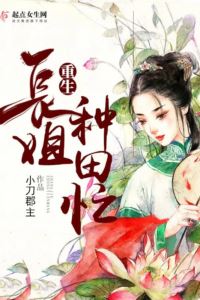
Reborn Eldest Sister is Busy Farming
+Add to Custom List
Sort
Add review
... Read More
I need to talk about how vividly this world is painted because honestly, I could smell the salt air and feel the calluses on everyone's hands. The opening scene with the salt transporters is one of the most brutal worldbuilding moments I've read. Men stripping to the bone to soak in salt pools, drying their clothes in them, boiling the fabric to extract salt to reuse it—all to save a few coins. That's not just setting, that's a whole economy of desperation laid bare in three sentences. You immediately understand that every single grain of salt in Tangjia Village represents someone's suffering. And the refining pool scene! Several hundred clan members, young and old, all consuming salt daily, some dying from poisoning because the filtration is so crude. The image of people literally DYING from bad salt while the wealthy get fine processed salt at high cost—it's a microcosm of the entire class system in this village, and it's devastating. But the scene that absolutely wrecked me was Chen Niangzi walking from door to door. The author doesn't even need to describe much—just the image of her knocking, being scolded, driven out like a fly, and then Aunt Liu's eye bags and that fake 'kindly' face. The detail about Aunt Liu's dress being Su Embroidery that's only passable quality, and how Chen Niangzi notices the hem is too long because Aunt Liu lost weight—probably from stress or fear. Every tiny detail builds this suffocating atmosphere of a village where everyone is complicit in bullying because they're afraid of being next. Chen Niangzi stumbling home, clutching the shoes to her chest, trembling with restrained emotion—that visual is cinema-level. And then Tang Wanwan catching her as they both tumble to the ground, the sharp pain in her back, the children rushing out. The domestic chaos of it all, the rawness of it. This isn't a fantasy world with castles and dragons; it's a world where a mother fainting from injustice and her children trying to help is the most dramatic thing that happens. The mountain setting with the bee discovery at the end adds this wild, untamed quality that contrasts beautifully with the claustrophobic village. Tang Wanwan spotting that honeycomb on a tree—it's like the world itself is offering her a weapon.
... Read More
Okay so the salt situation in this village is honestly wild. I kept thinking about how something as basic as salt can completely unravel a community. Tang Jianfei was hauling government shipments, right? And some transporters were literally stripping naked to soak in salt pools because they were that desperate. That detail alone tells you everything about how tight life is here. And then the whole thing falls apart after Tang Jianfei's 'mishap'—which I'm sure we'll learn more about later. The replacement guy flakes out, prices skyrocket from a few coins to over a dozen, and now people are actually DYEING from bad salt. Tang Wanwan notices the purplish tint on Wang Shi and Granny Zhang's faces. That's such a brilliant plot detail because it means the villains are suffering too, which adds this delicious layer of poetic justice even before the revenge kicks in. But what really got me was how the salt problem connects to everything else. It's not just a background detail—it's the reason Chen Niangzi is out there working herself to the bone making shoes, and it's why Granny Zhang and Wang Shi have so much control over the village. Food is power, and they're weaponizing it. Then Tang Wanwan finds that backpack. A glowing, iron-tough bamboo backpack in a dilapidated mountain cottage? That's not just a convenient item drop—that's a plot bomb. The Lu Ban Ancestor's Artifact Compendium reference tells me this world has a whole system of legendary artifacts, and Tang Wanwan just stumbled into one. I'm genuinely curious what else is waiting for her up that mountain. And the bee discovery at the end? Perfect. She's not going to charge in with a knife like her old self would have—she's going to use her crafting skills and some WILD BEES to take down her enemies. That's the kind of clever, underdog victory that makes this story so satisfying.
... Read More
The pacing in these chapters is absolutely masterful, and I want to break down why it works so well. It starts slow and heavy—the salt problem, the economic struggle, the worldbuilding. This isn't filler; it's laying the foundation for why everything that follows matters. When Tang Wanwan realizes the salt supply is broken, she immediately connects it to the poisoning symptoms on Granny Zhang and Wang Shi's faces. That's a brilliant structural move—planting a detail early that will pay off later. Then the backpack discovery. This is where the pacing shifts. It goes from 'oh this is a struggle story' to 'wait, there's actual magic/technology here?' The transition is smooth because Tang Wanwan's emotional state carries us—she's grieving her father, wondering about fate, and then BOOM, the backpack glows dark red. The pacing here is perfect because it mirrors her own dawning realization that maybe, just maybe, things are about to change. And then—immediately after that high—Chen Niangzi's scene hits us like a truck. The author doesn't give us a breather. One moment Tang Wanwan is feeling powerful with her new gear, and the next her mother is being destroyed by the village. The contrast is brutal and intentional. It raises the stakes from 'oh this girl might have a cool adventure' to 'her family is literally being crushed right now.' The sequence of Chen Niangzi being bullied, then collapsing, then Tang Wanwan's reaction, then Tang Xiaoyi declaring himself a 'true man'—it all flows naturally. Each beat builds on the last without feeling rushed or dragged out. And the ending? Tang Wanwan seeing the bee, her mind racing with ideas, deciding NOT to charge in with a knife. That's the perfect structural pivot. The tension has been building for chapters, and now it's about to explode in a new direction. I need to know what happens next immediately.
... Read More
Let me just say this first: the dialogue in this book is NOT flashy. It's not full of witty banter or memorable one-liners. And that's exactly why it hits so hard. Take Wang Jia Xifu's conversation with Chen Niangzi. The woman says things like 'Heh, Chen Niangzi, don't put on a brave face. I'm the only one willing to offer five wen.' That 'Heh'—that single word does so much work. It's condescending, dismissive, and completely unbothered. You can practically hear the smirk. And then Chen Niangzi's response: 'Wang Xiaoniangzi, I don't know where you heard these things or if you've been listening to gossip. My shoes are ten wen a pair, and I won't sell them for a single wen less.' That's not dramatic. That's not a speech. That's a tired mother standing up for herself in the only way she can. And it's devastating because it's so REAL. Aunt Liu's dialogue is equally brilliant in its ordinariness. 'Yuzhen, you should just accept your bad luck. Who told you to provoke someone you shouldn't have?' She's not a villain—she's worse. She's a bystander who's been corrupted by fear. The way she tugs at her hem unconsciously while talking, then gets flustered when Chen Niangzi compliments her dress—that's character revelation through dialogue and body language combined. But the dialogue that got me was between the children. Tang Xiaorou saying 'Brother, do you dare to go? Grandma and the others are so fierce, fiercer than the tigers on the mountain!' and Tang Xiaoyi slapping his chest and declaring 'Big Sister said I'm a man now. As long as I'm not afraid in my heart, I am a true man—the master of this household.' These kids are speaking like children but carrying the weight of adults. Tang Xiaoyi's voice is distinct—he's trying so hard to be brave, and it's heartbreaking because he's so young. And Tang Wanwan's dialogue shifts throughout these chapters too. She goes from panicked daughter catching her fainting mother to the cold, calculating strategist who decides to use bees as weapons. Her voice matures in real time, and the dialogue reflects that perfectly. The author's narrative voice is also worth noting. It's intimate, almost conversational, like someone telling you a story they can't believe. There's a warmth to it even when describing cruelty, which makes the cruelty feel even more real.
... Read More
This story is about so much more than a girl getting revenge on her mean relatives. Let me unpack what's really happening beneath the surface. Salt is the central symbol here, and it's doing heavy lifting. 'Food is the essence of strength, and salt is the essence of food.' That's not just a proverb in this story—it's the thesis. Salt represents survival, but it also represents control. Granny Zhang and Wang Shi control the salt supply, and through it, they control the entire village. The fact that they're showing purple discoloration from bad salt is the story's way of saying: the tools of oppression eventually poison the oppressors too. Then there's the metaphor of 'a married daughter is like spilled water—how can water that's been poured out be gathered back up?' Aunt Liu says this almost casually, but it's the ideological foundation of everything that's happening. Chen Niangzi is being crushed not just because Granny Zhang is evil, but because the entire social structure treats her as disposable. She has no rights, no voice, no safety net. When she asks 'why is everyone targeting me like this?' and Aunt Liu replies 'the kind often get bullied,' it's not just plot dialogue—it's a commentary on how systems of oppression punish empathy. The backpack is another powerful symbol. Found in a 'dilapidated mountain cottage,' it represents the forgotten potential of people like Tang Wanwan. Her father left it for her, but she had to earn it—had to wipe it clean, had to prove herself worthy. The dark red glow isn't just magic; it's the story saying that heritage and identity are waiting to be reclaimed. And the bees? I think they represent something crucial. Bees follow sweetness. Tang Wanwan is about to use this natural instinct against her enemies—offering them something sweet and then striking. But bees also represent community, organization, and collective power. The village has used its collective power to crush Chen Niangzi; now Tang Wanwan is learning to harness that same energy for justice. The deepest theme here, I think, is about what it means to be 'a true man' or a true person in a world that tells you you're nothing. Tang Xiaoyi declares himself the 'master of this household' at a young age, and Tang Wanwan transforms from someone who would grab a knife in anger to someone who plans strategically. They're not accepting the identity the village has assigned them. The story is about reclaiming agency in a world that wants to keep you small.

Leave a comment

You must be logged in to leave comments. or