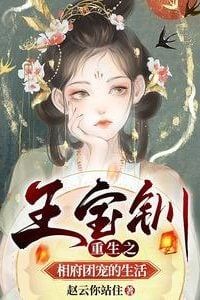
Rebirth of Wang Baochuan: The Prime Minister’s Cherished Gem
+Add to Custom List
Genres:
Novel Info

Summary

... Read More

Wang Baochuan, the third daughter of Prime Minister Wang Yun, lived a tragic life in her past existence. Despite her noble birth, she defied her family to marry the impoverished Xue Pinggui, enduring eighteen years of hardship in a desolate cave while he rose to power. Upon his ascension to the Emperor, he neglected her, favoring Dai Zhan, a princess from Xiliang. Wang Baochuan suffered physically and emotionally, losing a child and aging prematurely. Her final moments came when the Emperor lured her to the Imperial Garden under the pretense of affection, only to watch coldly as she fell into the freezing lake after being drugged, allowing her to drown while he feigned rescue. In her death, she realized her entire life had been a manipulation, and her sacrifices had meant nothing to the man she loved.

Wang Baochuan awoke to find herself reborn eighteen years into the past, before she had ever met Xue Pinggui. Her hands were soft, her body healthy, and her family was still intact. Determined to alter her fate, she resolved to avoid the tragic path that led to her suffering. She recognized that her previous life’s misery stemmed from blind devotion to a man who valued power and status over loyalty and love. With her memories intact, she planned to dismantle the schemes that had ruined her family and herself, starting with exposing the true nature of those around her, particularly Wei Bao, whose actions in her past life had set the tragic events in motion.

Wei Bao, a man from a military family, had previously pretended to be a bandit to kidnap Wang Baochuan, an act that had led to her meeting Xue Pinggui. In this new timeline, Wang Baochuan prepared a unique dagger with jagged edges to leave distinct wounds, ensuring evidence could be traced. When Wei Bao attempted his kidnapping scheme during a temple visit, she fought back, injuring him with the dagger. She then orchestrated a scenario where Xue Pinggui, whom she now viewed with disgust, would rescue her, thereby severing any romantic connection before it could begin. She deliberately distanced herself from Xue Pinggui, rejecting his moralizing and highlighting the vast social gap between them, ensuring he remained just another stranger in her life.

Meanwhile, Wang Baochuan encountered Bai Yu, a mysterious and skilled warrior who had saved her from assassins sent by Xiliang. Unlike Xue Pinggui, Bai Yu showed her genuine respect and kindness. Wang Baochuan, aware of the political dangers surrounding her, used the incident to her advantage. She claimed to have had prophetic dreams, warning her father about a fire at Chengqing Palace, which came true, thereby establishing her credibility and gaining her father’s trust. This allowed her to manipulate family dynamics, turning her parents against the Wei family and protecting herself from forced marriages.

The story progresses as Wang Baochuan navigates the treacherous court politics of the Great Tang. She learns that Xue Pinggui’s rise to power is intertwined with the Xiliang princess, Dai Zhan, and that his ambition will eventually lead to the downfall of her family. By exposing Wei Bao’s criminal activities and distancing herself from Xue Pinggui, she aims to protect her family from the political purges that occurred in her previous life. Her relationship with Bai Yu deepens, offering her a potential path to a different future, one not defined by sacrifice and suffering. As she continues to unravel the conspiracies around her, Wang Baochuan transforms from a naive noblewoman into a shrewd strategist, determined to control her own destiny and ensure the prosperity of her family.

Latest Release
DateGroupRelease
2026-08-11shanghai fantasy c172
2026-08-11shanghai fantasy c171
2026-08-11shanghai fantasy c170
2026-08-11shanghai fantasy c169
2026-08-11shanghai fantasy c168
2026-08-11shanghai fantasy c167
2026-08-11shanghai fantasy c166
2026-08-11shanghai fantasy c165
2026-08-11shanghai fantasy c164
2026-08-11shanghai fantasy c163
2026-08-11shanghai fantasy c162
2026-08-11shanghai fantasy c161

Community Reviews

Rating(3.9 / 5.0, 28votes)
5 stars
11(39%)
4 stars
7(25%)
3 stars
6(21%)
2 stars
4(14%)
1 stars
0(0%)

Popular reviews

... Read More
The way this section ramps up is actually kind of masterful. You start with Wei Bao getting scolded by his brother—which is already petty and infuriating—and then instead of letting that simmer, the author just... sends him to a brothel. Like, the very next morning he's hungover and immediately kicks a beggar. That's not a character arc, that's a character spiral. And then Xue Pinggui shows up, saves the beggars, and Wei Bao's response is to raid their house at night. The pacing here is relentless—every scene escalates the threat. But then it cuts to Wang Baochuan's perspective and suddenly we're in this almost domestic space with marriage portraits and sisterly conversations. It's a breath of calm before the ambush. And the ambush itself? Chapter 12 starts mid-crisis. No warning. Just a curved sword at the coachman's neck. I literally gasped. The author knows exactly how to keep you turning pages—alternate between character-driven downtime and pure action, and never let the tension drop for too long.
... Read More
The pacing in this section is absolutely relentless and I am here for it. Let me walk through how the author structures these chapters because it's genuinely masterful. Chapter 8 opens with Wang Baochuan in a moment of quiet reflection—making peony oil, thinking about her past life, calculating her next move. It's a slower, more introspective chapter. But then Chapter 9 hits like a truck: refugees jump the wall, swords are drawn, a Xiliang princess is captured, and two border cities change hands. All in one chapter. The transition from domestic tranquility to geopolitical earthquake is jarring in the best possible way. And then Chapter 10? It pulls back. We get Wei Hu and Wang Yinchuan in a carriage, fuming about lost credit and shifting family dynamics. The author knows the reader needs a breather after that climax, so they give them political maneuvering instead of more action. It's a different kind of tension—quiet, simmering, but no less gripping. The Wei Bao subplot is also paced perfectly. We see him get beaten in the street early on, then we see his father being reprimanded for it, and we know this is building toward something. The author isn't rushing to resolve it; they're letting the consequences accumulate like interest on a loan. One thing I will say—the transition between Wang Baochuan's internal monologue and the action scenes could sometimes be smoother. There are moments where I had to reread a paragraph to figure out whose perspective I was in. But these are minor quibbles in an otherwise tightly controlled narrative engine.
... Read More
I keep coming back to this one image: Wang Baochuan in the courtyard, carefully making peony oil, and her maid Xiaolian remarks that she's been paying more attention to her appearance lately. And Wang Baochuan's internal response—"When have I ever not cared about my appearance? When I was digging wild vegetables! My hair was unkempt, I wore coarse linen clothes, and my hands were rougher than those of my servants!" That hit me like a freight train. Because it's not just about vanity or romance. It's about a woman who voluntarily stripped herself of everything—her status, her beauty, her comfort—because she believed love was worth more than all of that. And now she's putting it back on, not for a man, but for herself. The emotional whiplash of that realization is something the author handles with such subtlety. And then there's Bai Yu, sitting in a teahouse with his coarse porcelain bowl, looking at refugees, thinking that being reprimanded daily is a small price if it means they eat. No grand speeches, no dramatic music. Just a man who chose to be invisible so he could do visible good. That's the kind of quiet heroism that stays with you. The romantic tension between Wang Baochuan and Xue Pinggui is... well, it's complicated by design. She's trying to avoid the fate she had in her previous life, and he's still operating on whatever misunderstanding brought them together the first time. The text doesn't force a romance where it doesn't belong, and honestly, that restraint makes every glance between them feel more significant. I also have to mention the mother-daughter dynamic. Mrs. Wang coming to discuss marriage arrangements, Wang Baochuan deflecting with promises she doesn't intend to keep—it's so recognizably real. Every daughter who's ever been gently pressured into a life she didn't choose will see themselves in that scene.
... Read More
There are so many layers to unpack in this text if you're willing to look past the surface plot. Let me start with the most obvious symbol: the porridge. Bai Yu's porridge stall isn't just a plot device—it's a statement. In a world where the Prime Minister's daughter can make peony oil with seven different steps and bury it in the ground for a week, here's a man giving away free food to refugees and getting punished for it. The contrast between luxury and survival isn't just thematic; it's the entire moral architecture of the story. Then there's the jade pendant. That small piece of carved stone is what identifies Dai Zhan as Xiliang royalty, and it's what turns a desperate escape into a diplomatic triumph. But symbolically, it represents identity itself—something you carry on your person, something that defines you whether you want it to or not. Wang Baochuan reads that pendant and changes the course of two nations. A trinket. That's the kind of detail that makes you think about how much weight objects carry in our lives. And Wang Baochuan's transformation from digging wild vegetables to making peony oil—it's not just about appearance. It's about reclaiming agency. In her past life, she stripped herself of everything for a man who couldn't see past her status. Now she's putting those things back on her own terms. The peony oil, with its seven-step process and seven days buried underground, is almost a ritual of self-reconstruction. The border cities gained at the end—two pieces of land traded for one princess—are also deeply symbolic. Human lives, political marriages, territorial claims—all of it reduces to numbers on a ledger. And Wang Baochuan, the woman who once thought love was more important than all of that, is now playing the game at the highest level.
... Read More
Okay I need to talk about this one moment because it genuinely hit me. Bai Yu says to Wang Baochuan: 'Don't be afraid, even if you die, you'll die after me.' And I just—what. This guy has known her for literally two seconds and he's already ready to go out in a blaze of glory protecting her. Meanwhile she's over there calmly directing him through escape routes like she's got a GPS in her head. The contrast is everything. He's all noble sacrifice and she's all 'trust me, I know this place.' It's not some slow-burn romance at all—it's full-speed-ahead danger and trust. And the fact that she asks 'Do you trust me?' and he says yes without even hesitating? That's the kind of moment that makes you want to shake the book. Also wild that she's had a past life and he has no idea, and she's carrying all this trauma about wild vegetables while he's just riding in on a white horse shooting assassins. The CP energy here is chaotic in the best way.
... Read More
There's this recurring image of edges and boundaries in this section that I can't stop thinking about. Wang Baochuan is constantly on the edge—of marriage she doesn't want, of political danger she can't escape, of her past life memories colliding with her present. The cliff at the end of Chapter 12 isn't just a physical location, it's the literal edge of her old life. She knows this place from her past life—the mulberry trees, the shepherd's purse, the red berries on the cliff edge. Everything she remembers from her first life led her here, to this exact moment with this exact person. And Bai Yu? He's standing on the edge too, metaphorically. He's the third prince, mother of humble birth, no support, walking on thin ice. Both of them are people with no real power in this world, and yet they're the ones who end up facing assassins together. The wild vegetables she can't stop dreaming about—they're the taste of her suffering, the reminder that she's lived before. Every detail is layered.
See all reviews

Characters

See all characters

Custom lists

See all custom Lists